
Things You Should Wash in Cold Water: 7 Garment Types
If you are deciding what clothes should be washed in cold water, start with the care label and choose the lowest temperature the garment allows. Cold water is a practical choice for many everyday loads, but it does not replace the right cycle, drying method, hand-wash instruction, or dry-cleaning direction.
Consumer Reports found that cold water can clean clothes as well as warmer settings in its testing. The publication also reports that most modern detergents are made to work in cool water, and that cold washing can help clothing last longer than warm or hot cycles while using less energy.
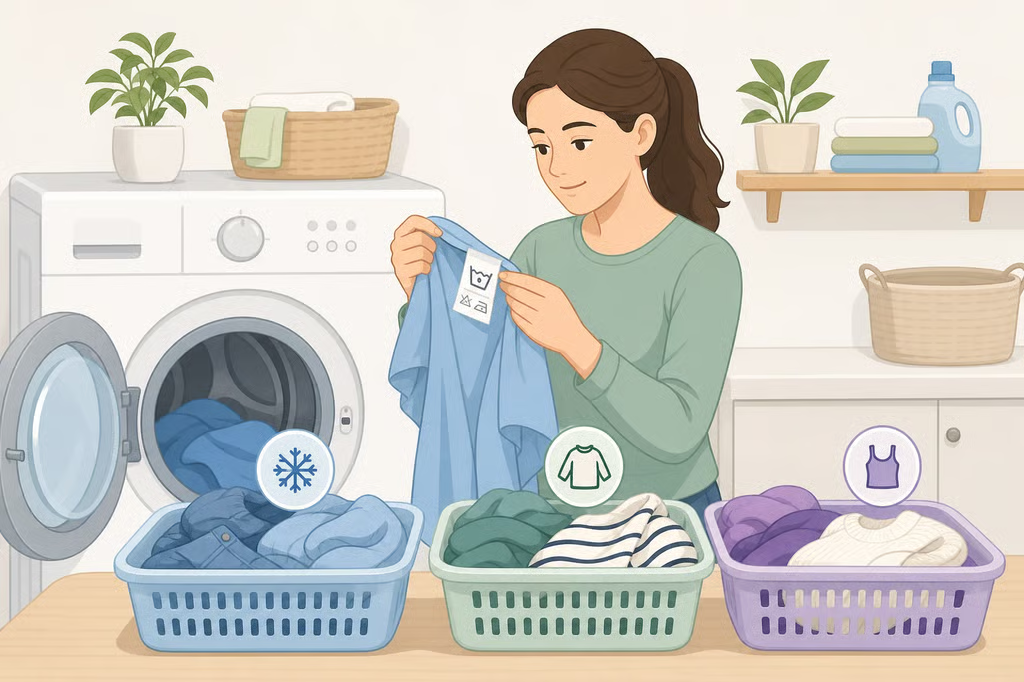
That makes cold a useful starting point, not a universal command. Use this order when sorting:
- Read the garment’s care label.
- Check the water temperature and cycle instructions.
- Separate anything marked hand wash, dry-clean only, or wash separately.
- Choose cold for compatible items.
- Follow the label for drying, since a cold wash does not change the garment’s drying requirements.
What to wash in cold water vs. what needs special care
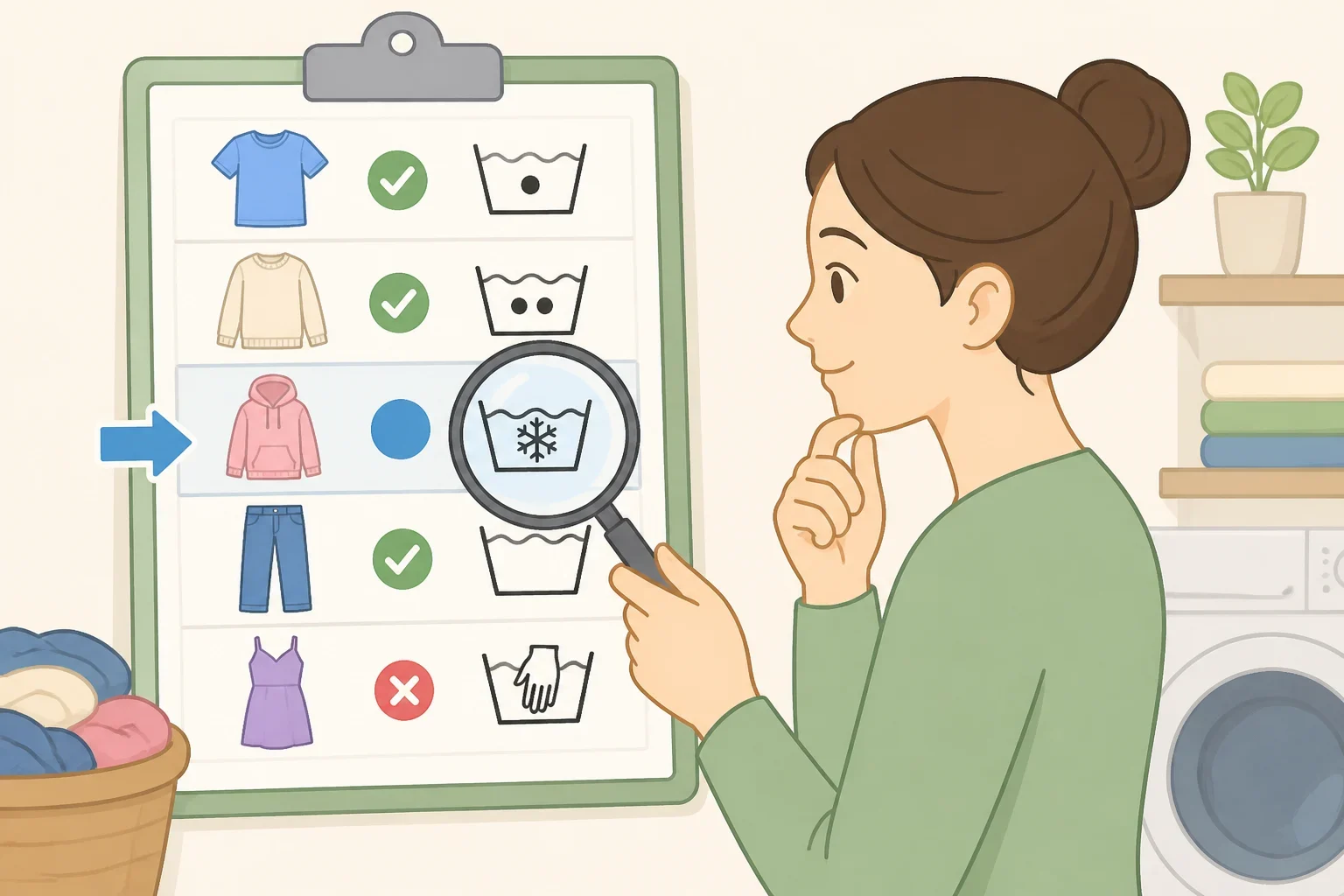
The seven categories below are best treated as a checklist of garments to inspect for cold-wash instructions. Some commonly allow cold machine washing. Others may allow cold water but still require a delicate cycle, hand washing, air-drying, or professional cleaning.
The temperature is only one part of the decision.
1. Dark and richly colored clothing
Black trousers, dark shirts, jewel-toned pieces, and other saturated garments are good candidates to check for cold-wash directions. If the label permits cold machine washing, sort them with compatible colors rather than treating them as part of a completely mixed load.
Turn a garment inside out only when that fits the care instructions. For a new or especially dark item, follow any direction to wash separately. The label may also specify a gentle cycle or a particular drying method, so do not stop at the water-temperature line.
Cold water does not guarantee that every color will remain unchanged. When the garment is expensive, unusually dark, or marked with special instructions, let the tag decide how it enters the load.
2. Denim
Denim belongs in the category of garments to check, not garments to wash automatically in cold water. Read the instructions for the individual pair. One pair may permit cold machine washing, while another may call for a gentler cycle, separate washing, limited washing, or a specific drying method.
If cold machine washing is allowed, sort the jeans with items that have compatible care instructions. Turn them inside out only if the label permits it, and check the pockets before starting the cycle.
Do not assume that choosing cold means every other setting is flexible. The cycle and drying instructions remain part of the garment’s care directions.
3. Activewear with spandex or elastane
Leggings, sports tops, cycling shorts, compression pieces, and similar garments should be checked for both fiber content and construction. Look for spandex or elastane in the garment information, then follow the instructions for temperature, cycle, detergent, and drying.
When cold washing is allowed, select the cycle named on the label. Keep the garment with pieces that can tolerate the same treatment, and follow any instruction about fabric softener or air-drying.
Activewear is not one uniform category. A lined sports bra, swimsuit, compression garment, and loose athletic shirt may carry different instructions. If a piece says hand wash, gentle wash, or air-dry, do not treat the cold-water setting as a substitute for those directions.
4. Delicates and lingerie
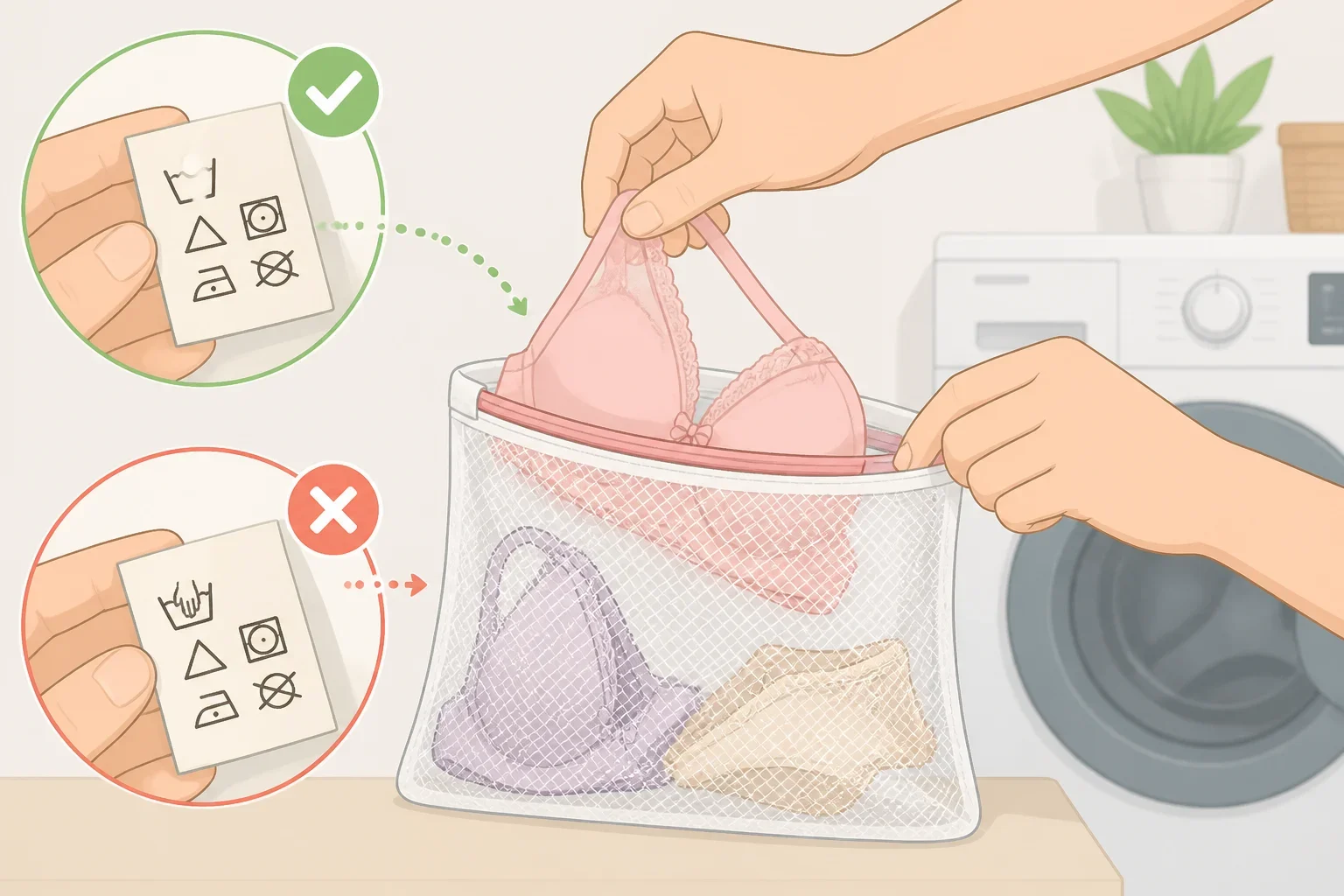
Bras, lace garments, fine camisoles, hosiery, and other delicate pieces need a closer look before they go into a machine. “Hand wash cold” is a method instruction, not simply a request to press the cold-water button.
For a machine-washable item, use the cycle named on the label. A mesh bag may be useful only when machine washing is already allowed by the garment instructions. It cannot turn a hand-wash-only piece into a machine-safe one.
Sort delicate items away from clothing that has a different care requirement. If the label calls for air-drying or another specific drying method, follow that step even when the wash itself uses cold water.
5. Wool and wool-blend sweaters
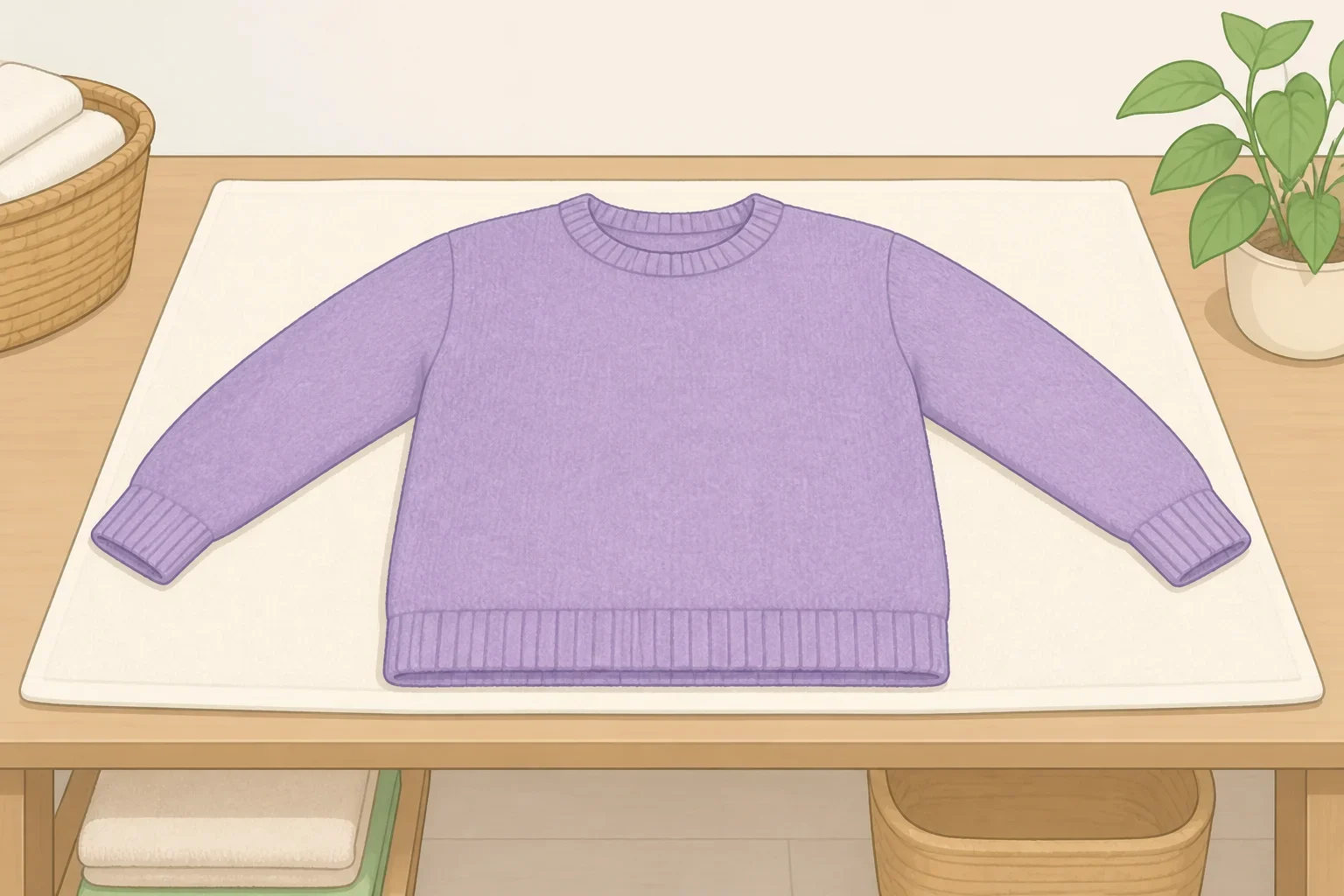
Wool sweaters should be sorted according to their exact care instructions. “Hand wash cold,” “machine wash cold,” and “dry-clean only” point to different routines. Check the entire label before adding the sweater to a load.
For a hand-wash-cold garment, use the hand-washing method specified on the label. If machine washing is allowed, select the named cycle rather than substituting a regular setting.
Read the drying directions before washing, too. A sweater that says to lay flat should be handled that way after washing. Cold water does not make a garment suitable for hanging, tumble-drying, or any other method the label does not allow.
6. Swimwear
Swimsuits, trunks, rash guards, and cover-ups should be sorted by their individual labels. Some may permit cold washing, while others may call for hand washing, a particular cycle, or air-drying.
Check the instructions for lining, padding, ties, decorative details, and any other construction that could affect the recommended method. If the label permits machine washing, use the specified cycle and keep the garment with items that have compatible instructions.
Do not treat swimwear like a basic cotton T-shirt just because both pieces can be labeled for cold water. The full care routine matters, from washing through drying.
7. New or recently dyed garments
A new garment, especially one with a deep color or a separate-wash instruction, deserves attention before it joins a regular load. Read the care label and follow any direction to wash alone or with similar colors.
If cold machine washing is permitted, use the recommended cycle. Turn the garment inside out only when the care instructions support that choice, and keep the first wash simple rather than combining it with pieces that have very different requirements.
Cold water is not a promise that color will never move between garments. If the label says to wash separately, keep the item separate. If it says hand wash or dry-clean only, use that method instead of treating cold water as a workaround.
Keep the cycle and drying method attached to the decision
A common laundry mistake is to treat water temperature as the whole care routine. It is not. A garment can allow cold water and still require a gentle or delicate cycle, hand washing, separate washing, air-drying, flat drying, or professional cleaning.
Use the label’s wording as the sorting cue:
If the label says Use as your starting point Machine wash cold Cold water and the listed machine cycle Hand wash cold The specified hand-wash method Cold, delicate, or gentle Cold water with the matching cycle Warm or hot Follow the stated temperature Dry-clean only Do not substitute a cold machine wash Wash separately Keep the garment out of a mixed load No clear instruction Check the garment manufacturer or ask a professional cleaner before washing
When the label is missing or unreadable, fiber content alone may not tell you enough. Construction, trim, lining, finish, and the manufacturer’s intended method can all affect the safest choice. If the item is valuable or difficult to replace, getting care guidance is more practical than testing it in a full load.
When cold water is not the right call
Cold water is a strong default for compatible routine loads, but it should not override the garment label. A piece marked warm or hot should be handled according to that instruction. A piece marked hand wash or dry-clean only needs the method named on its label.
Consumer Reports notes that hot water may provide an extra germ-killing boost. That is a limited reason to consider heat, not a general promise that any hot-water cycle sanitizes every load. Before using a washer’s sanitize setting, follow the machine manufacturer’s instructions and confirm that the garment can tolerate the cycle.
The same hierarchy applies when a load has a specific cleaning concern:
- Check the garment label.
- Identify whether the item requires a special cycle or method.
- Follow the washer manual if using a sanitize setting.
- Choose the lowest temperature that fits both the garment and the cleaning need.
- Do not use heat as a substitute for identifying a stain or following suitable stain-care directions.
For an item with visible soil or a particular stain, start with the garment’s care instructions and an appropriate treatment for that type of mark. Turning up the temperature without checking the fabric, cycle, or label is not a complete laundry plan.
A practical cold-water sorting routine
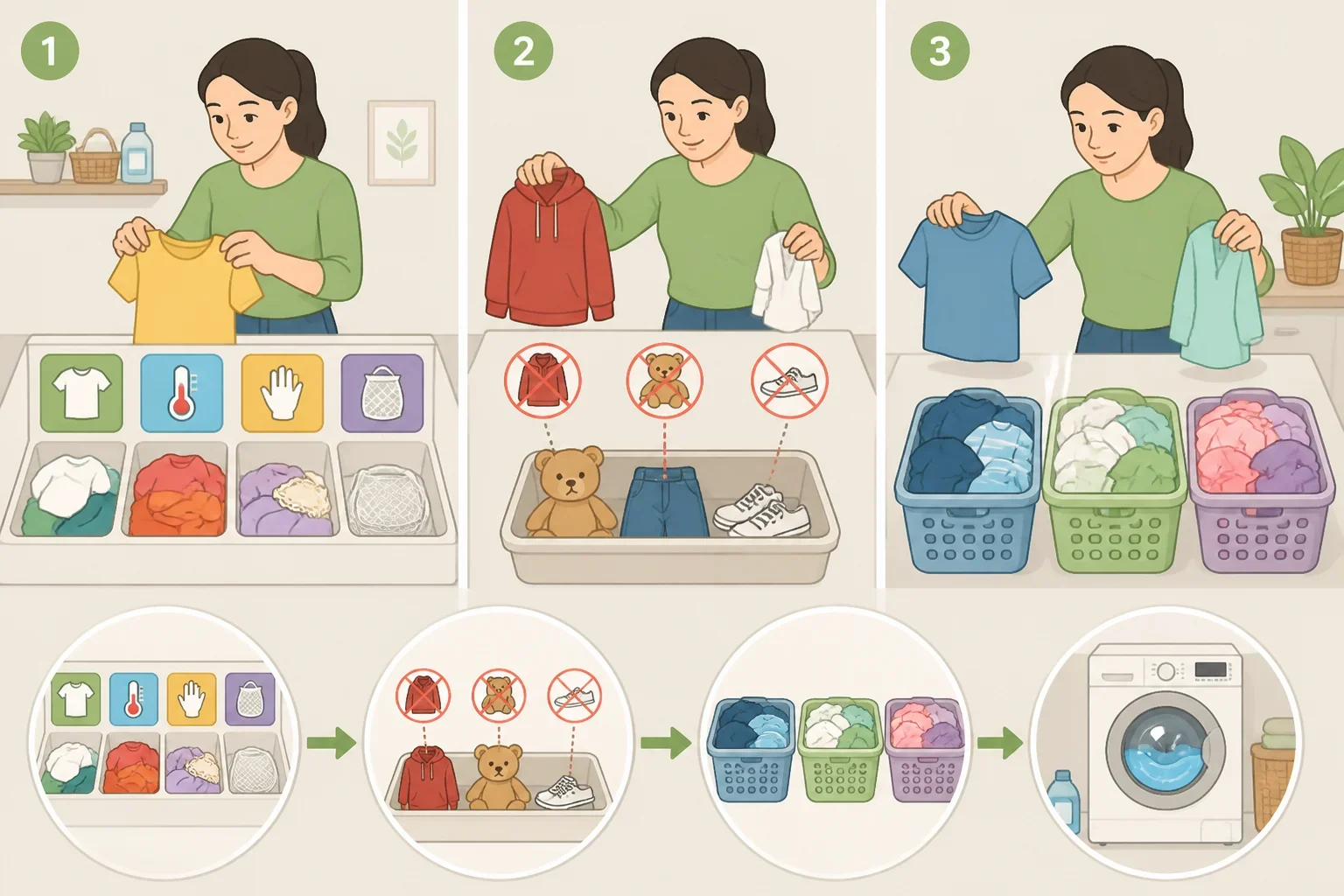
Use this sequence at the washer:
- Read every label. Check the temperature, cycle, drying method, and any instruction to wash separately.
- Set aside restricted pieces. Pull out hand-wash, dry-clean-only, and special-care garments.
- Group compatible items. Sort by color and by care requirements, not just by what happens to be in the hamper.
- Choose cold where permitted. Match the cycle to the label.
- Handle exceptions separately. Use the instructions for delicate, wool, swimwear, activewear, or newly colored pieces instead of folding them into a standard load.
- Dry as directed. Keep the garment’s drying instructions with the wash decision.
Cold water is a sensible choice for many everyday garments, and Consumer Reports’ testing supports its cleaning performance, energy benefit, and potential to help clothing last longer. At the next wash, separate the special-care pieces first, read their labels, and use cold on the compatible items. Save warmer settings or a sanitize cycle for situations where the garment, the machine instructions, and the cleaning need all point in the same direction.
