

- 3-Box Decluttering Method: Sort Without Overwhelm
- What the 3-box decluttering method includes
- Why the keep, donate, and trash method may help when you feel overwhelmed
- The 3-box method leaves out a relocate box
- Prepare the three destinations before you start
- How to use the 3-box method
- Finish the session before starting another one
3-Box Decluttering Method: Sort Without Overwhelm
A decluttering session can stall when every item creates several decisions at once: Keep it? Sell it? Donate it? Move it somewhere else? The 3-box decluttering method narrows the first sort to three destinations: Keep, Donate or Sell, and Trash.
To try it, choose one small area, prepare clearly marked containers or floor spaces, and handle every item in that area before expanding the project. The method is designed for people who get overwhelmed, overthink the process, or become distracted while sorting, according to a professional organizer quoted by Homes & Gardens. It is not a guarantee that decluttering will feel easy, but limiting the choices can give a difficult session a clearer path forward.
There is one important boundary. Items that belong in another room do not get their own permanent fourth box. They form a small temporary pile, then return to their proper places after the main sort.
What the 3-box decluttering method includes
Start with one defined area, such as a single drawer, shelf, bathroom cabinet, or section of a closet. An entire room can wait. The first goal is a finished section, not a larger mess spread through the home.
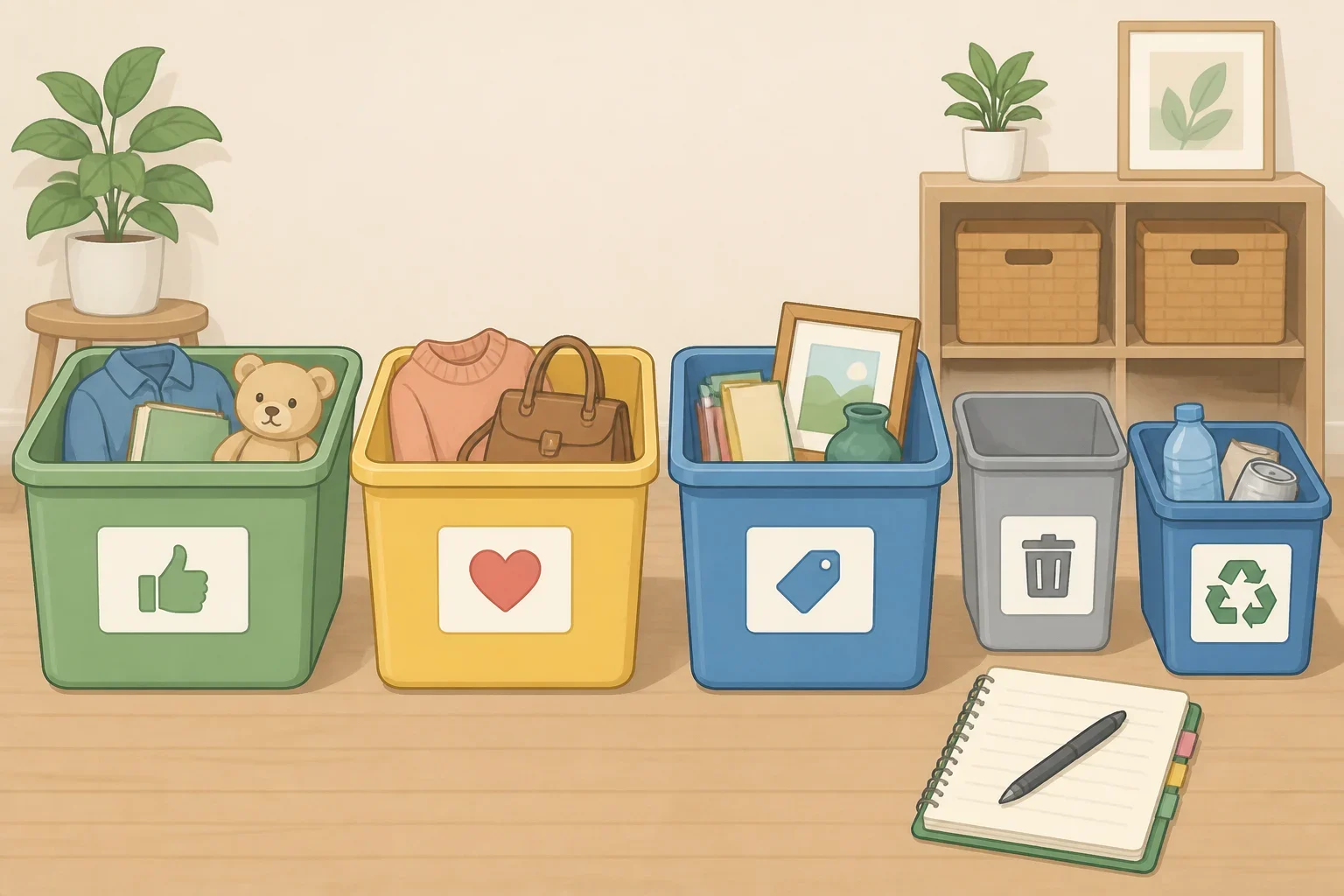
Sort each item into one of three destinations:
- Keep: Items that are used, needed, or genuinely valued.
- Donate or sell: Items that are suitable to pass along and worth donating or listing.
- Trash: Items that are no longer usable.
“Box” does not have to mean a cardboard box. It can be a bag, basket, designated floor space, or clearly marked area. The method’s supplies can include a Keep area, a bag for soft donations, a lightly wrapped box for breakable donations, and separate containers for recycling and trash, as Homes & Gardens explains.
The three destinations simplify the first decision. They do not eliminate the follow-up. A Donate or Sell item still needs to leave the house, a Keep item still needs a home, and anything placed in Trash or recycling still needs to be handled through the appropriate route.
Why the keep, donate, and trash method may help when you feel overwhelmed
The appeal of the keep, donate, or trash decluttering method is its restraint. There is no need to decide immediately whether an item should go to a sibling, be listed online, be saved for a future project, or be moved to another room. Those possibilities can multiply quickly, particularly when several household members are sorting together.
The organizer interviewed by Homes & Gardens says adding categories can make decision-making more overwhelming. Fewer categories may mean less decision fatigue and less chance of getting stuck, according to the same source. That is an explanation of how the system is intended to work, not proof that it prevents overwhelm for every person or every type of belonging.
The distinction matters. The boxes themselves are not magic, and a three-way sort will not settle a sentimental or jointly owned item without discussion. The useful part is the narrow first decision: keep it, pass it along, or remove it.
That makes the system practical for decluttering when overwhelmed. Instead of trying to solve storage, resale, relocation, and disposal at the same time, finish the first sort before taking on the next task.
The 3-box method leaves out a relocate box
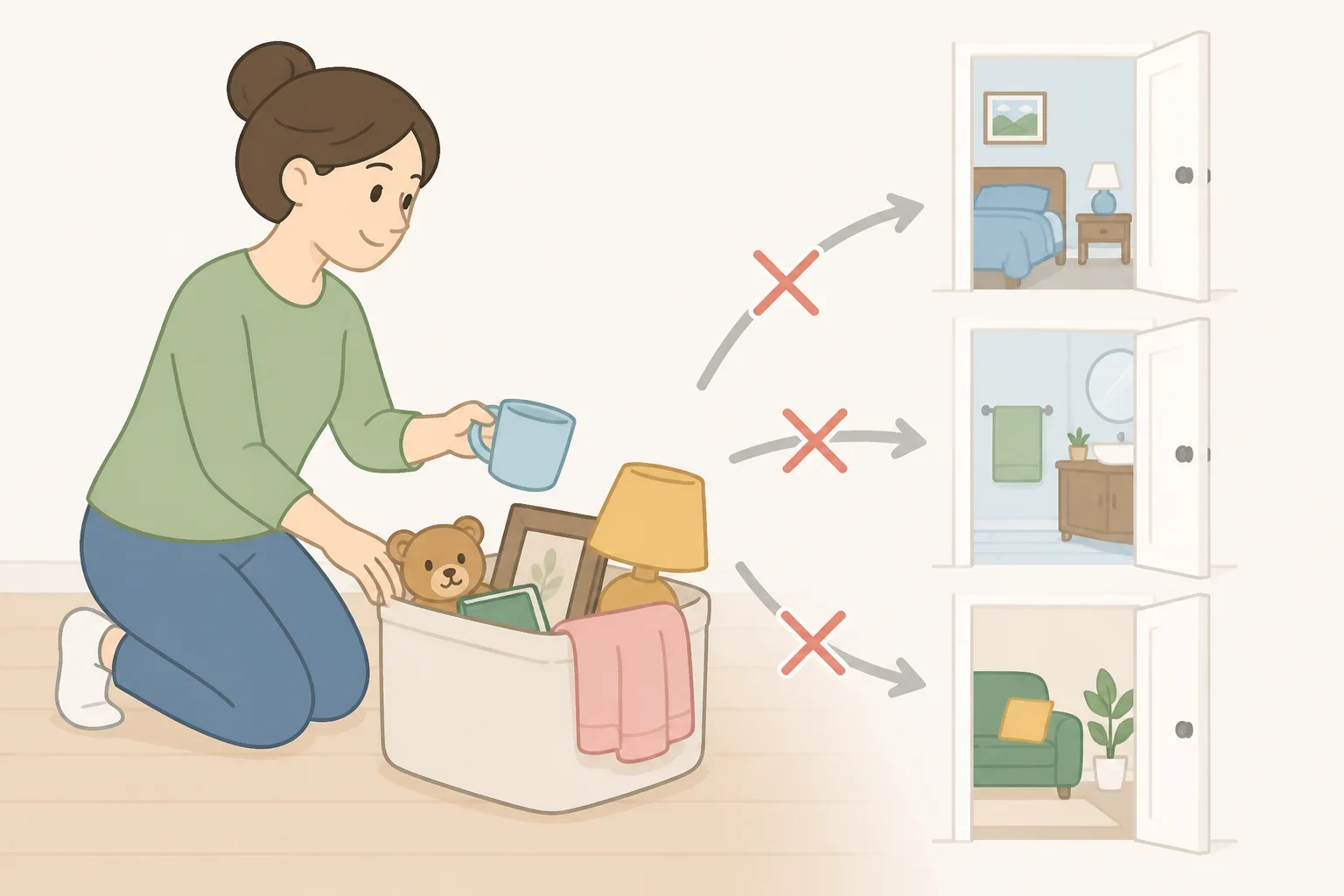
A mug in a bedroom, a screwdriver in a kitchen drawer, or a book on the wrong shelf can interrupt an otherwise simple sort. The instinct is to carry each item to its proper home immediately. Resist that detour.
The method deliberately leaves out a formal “relocate” box because that category can become a large, undefined pile and create more decisions later, according to Homes & Gardens. Instead, make one small temporary pile for items that already have a clear home elsewhere.
The pile should stay limited. It is not a place for items that need a new storage solution, a conversation, or a future decision. Those belong in the main three-way sort.
When the area is fully sorted, spend 15 minutes returning the relocation items to their proper places, a time recommendation attributed to Homes & Gardens. Treat that as a focused guideline, not a requirement that every session must meet. The point is to handle relocation once, at the end, instead of allowing it to break the session into a string of errands.
Prepare the three destinations before you start
Preparation should remove interruptions, not become another organizing project. Set up the following before touching the first item:
- A clear Keep area, such as a chair, counter, bed section, or empty shelf
- A bag for soft donations
- A lightly padded box for breakable donations
- A container for recycling
- A trash bag or bin
- A small temporary area for relocation items
Choose a contained starting point. A drawer or shelf is easier to finish than an entire room, and a finished section gives the next session a clear boundary. If the chosen area is larger, divide it into smaller sections and stop after one is complete.
For shared belongings, agree on who makes the final decision before sorting. If an item is valuable, sentimental, or jointly owned, pause for a conversation instead of quietly putting it in Donate or Sell. The three-box system reduces routine decisions, but it should not turn a household disagreement into a disposal decision.
How to use the 3-box method
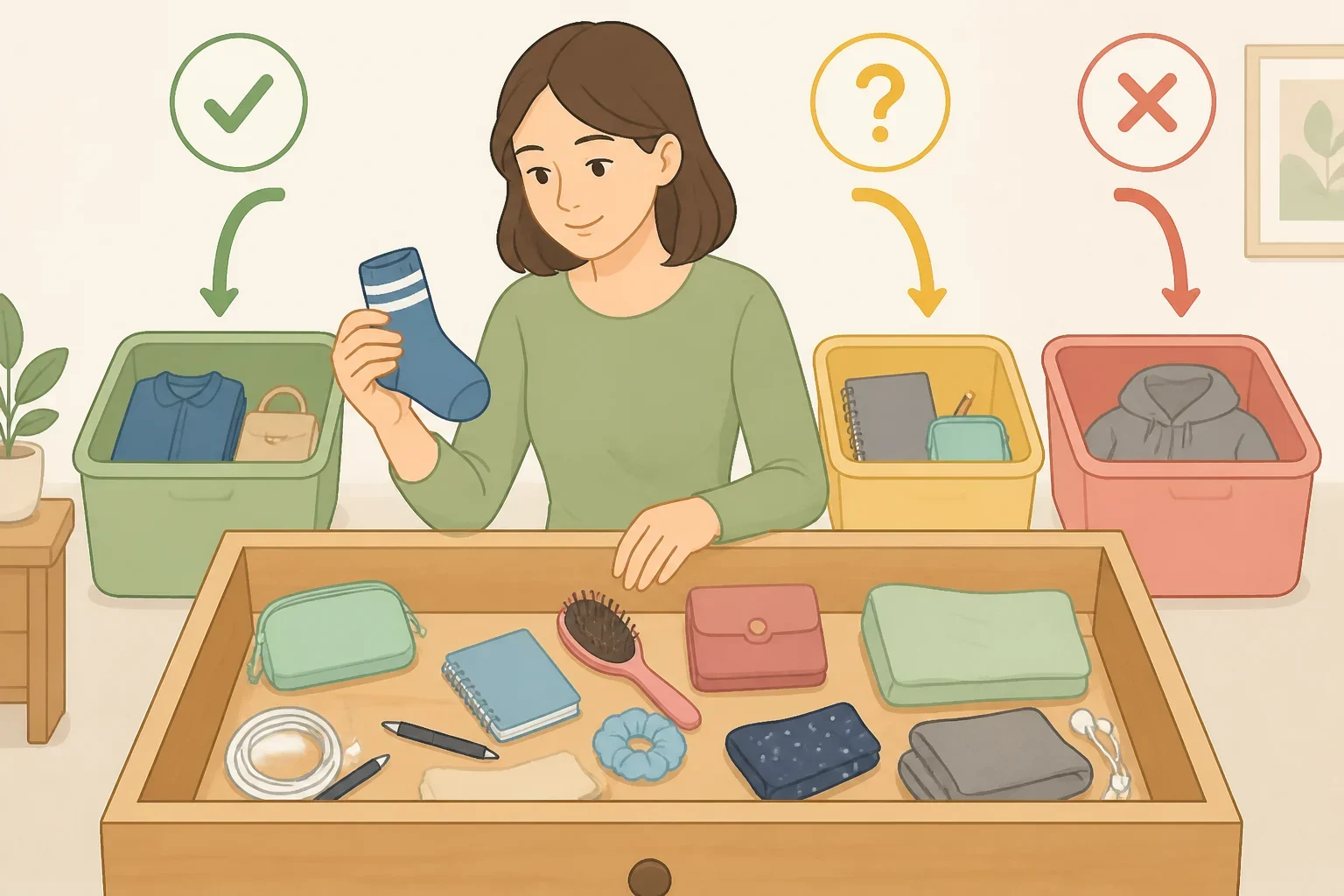
1. Sort one small area
Remove the contents of one drawer, shelf, or closet section. Keep the boundaries visible. If the project begins in a kitchen drawer, do not move on to the pantry because you find an item that belongs there.
Pick up each item and make a first decision:
- Keep it if it is used, needed, or sincerely valued.
- Donate or sell it if it is suitable to pass along.
- Put it in Trash if it is no longer usable.
Do not create a broad “decide later” pile for ordinary items. That simply preserves the original decision. A genuinely difficult item can be set aside briefly, but the pause should remain small and intentional.
The method is not a demand to make every emotionally difficult decision instantly. It is a way to keep routine decisions from spreading across the entire session.
2. Keep relocation separate
Place items that belong elsewhere in the small temporary relocation pile. Do not walk each item to its destination as soon as you find it. That changes a sorting session into a series of interruptions, and the new room may offer fresh distractions.
Do not let the pile become an undefined fourth category, either. It should contain only items with an obvious home elsewhere. If an item has no clear destination, return to the three main choices.
After the area is sorted, use the focused 15-minute period to return relocation items, following the recommendation from Homes & Gardens. Completing that step before moving to another area protects the momentum of the session.
3. Give Keep items a real home
Process the Keep area after the main sort is complete. Each item still needs a practical place to live. The organizer quoted by Homes & Gardens describes this as the point when kept items return to their existing homes or receive a new place in the home.
Make the destination specific. “Keep in the office” is less useful than “keep in the top desk drawer.” If the item has no workable home, pause before creating another mystery pile. Either make a small storage adjustment or reconsider whether the item belongs in Keep.
This is where the sort becomes useful in daily life. A kept item should be easy to find and easy to put away again.
4. Finish Donate or Sell items promptly
Donate or Sell is one sorting destination, but the follow-through differs.
Place donation items together and prepare them to leave the house. For items intended for sale, choose a listing deadline before they disappear into storage. Without a next action, a “sell someday” pile can become long-term clutter.
If an item requires more time, research, or negotiation than it is worth, donation may be the more practical choice. The method does not require every usable item to become a sale project.
5. Use the six-month option sparingly
Some items are genuinely uncertain, especially sentimental belongings or things that may be needed later. For a small number of low-risk “maybe” items, the organizer cited by Homes & Gardens suggests boxing them and, if they have not been needed after about six months, donating the box without reopening it. That timeframe is attributed guidance, not a universal rule.
Do not use this option as a catch-all fourth box. Documents, valuable items, shared belongings, and anything difficult to replace deserve a more deliberate decision. The purpose is to defer a handful of uncertain choices, not to hide an entire category from the sorting process.
Finish the session before starting another one
Once the area is sorted, complete the exit steps while the decisions are still fresh:
- Return relocation items during the focused 15-minute period.
- Put Keep items in their assigned homes.
- Close donation or sale bags.
- Set a listing date for anything being sold.
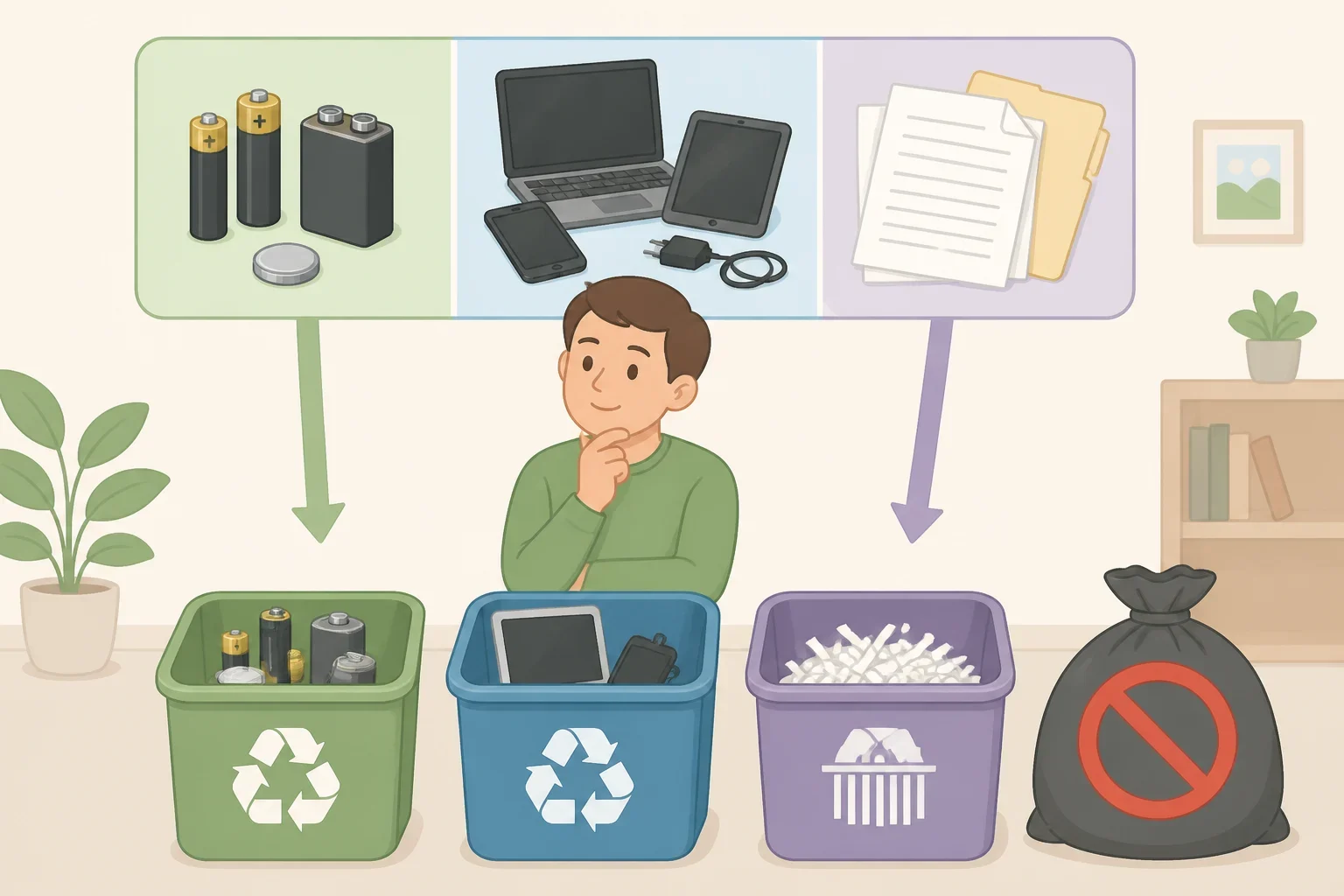
- Move recycling and other follow-up items to the place where they will be handled.
- Remove ordinary trash according to the household’s normal routine.
A bag by the front door can be useful briefly, but it needs a next action. Schedule the donation drop-off, prepare the sale listing, or identify where the recycling will go. Otherwise, the exit category becomes a new form of clutter.
Start with one drawer or shelf. Set up the three destinations, keep relocation to one small temporary pile, and finish the area before expanding the project. The 3-box decluttering method works as a limited sorting framework: fewer first decisions, fewer detours, and a clear next action for every category.
