
- Home equity agreement vs HELOC: What to know before you borrow against your home
- The basic difference between a HELOC and a home equity agreement
- Home equity agreement vs HELOC: Which household questions matter?
- What the CFPB model shows about cost
- What disclosures and complaints can reveal
- What to compare before signing
Home equity agreement vs HELOC: What to know before you borrow against your home
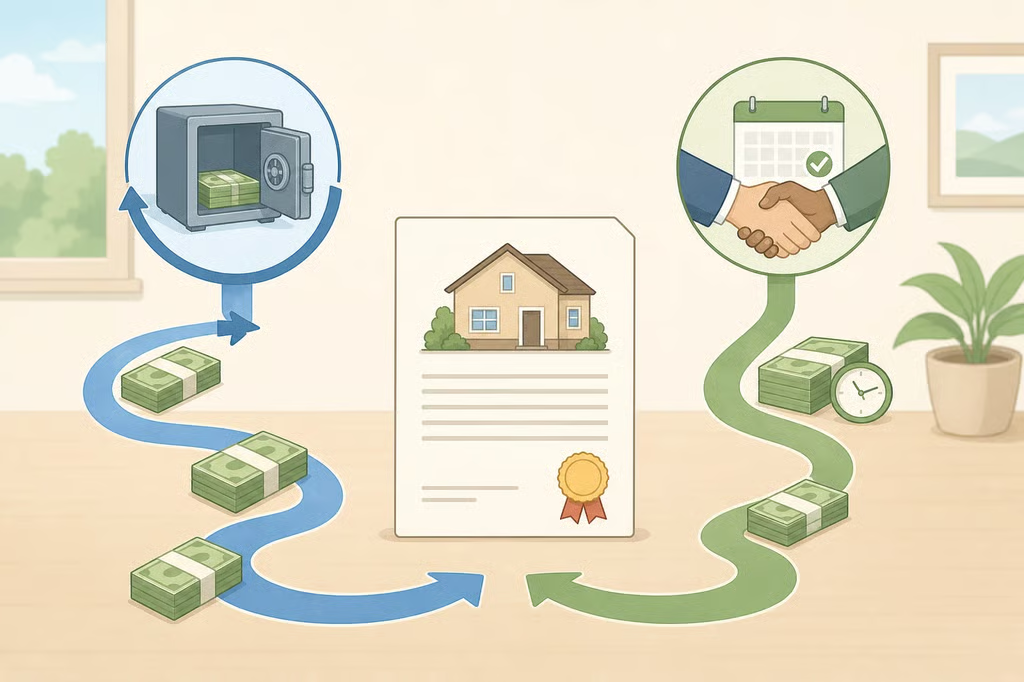
Homeowners often see two very different pitches for accessing home equity: a HELOC offers a revolving line of credit, while a home equity agreement promises cash now without regular payments to the agreement company. The fine print behind each works differently than the marketing suggests.
A HELOC creates monthly repayment obligations. A home equity agreement provides one upfront payment and defers repayment through a future settlement tied partly to the home’s value. That is the practical difference at the center of any home equity agreement vs HELOC comparison.
The choice affects more than the cash received. It can change the household budget, add a lien to the property, complicate future refinancing, and determine how much may eventually be owed. Both arrangements use the home as collateral or otherwise secure the provider’s interest in the property, so failing to meet the requirements can put the home at risk.
This is general educational information, not financial, legal, mortgage, or tax advice. Borrowing against a primary residence is a consequential personal decision. The actual contract, loan disclosures, payoff calculations, and household circumstances should be reviewed with a HUD-approved housing counselor and, depending on the question, an appropriately licensed financial, mortgage, or legal professional.
The basic difference between a HELOC and a home equity agreement
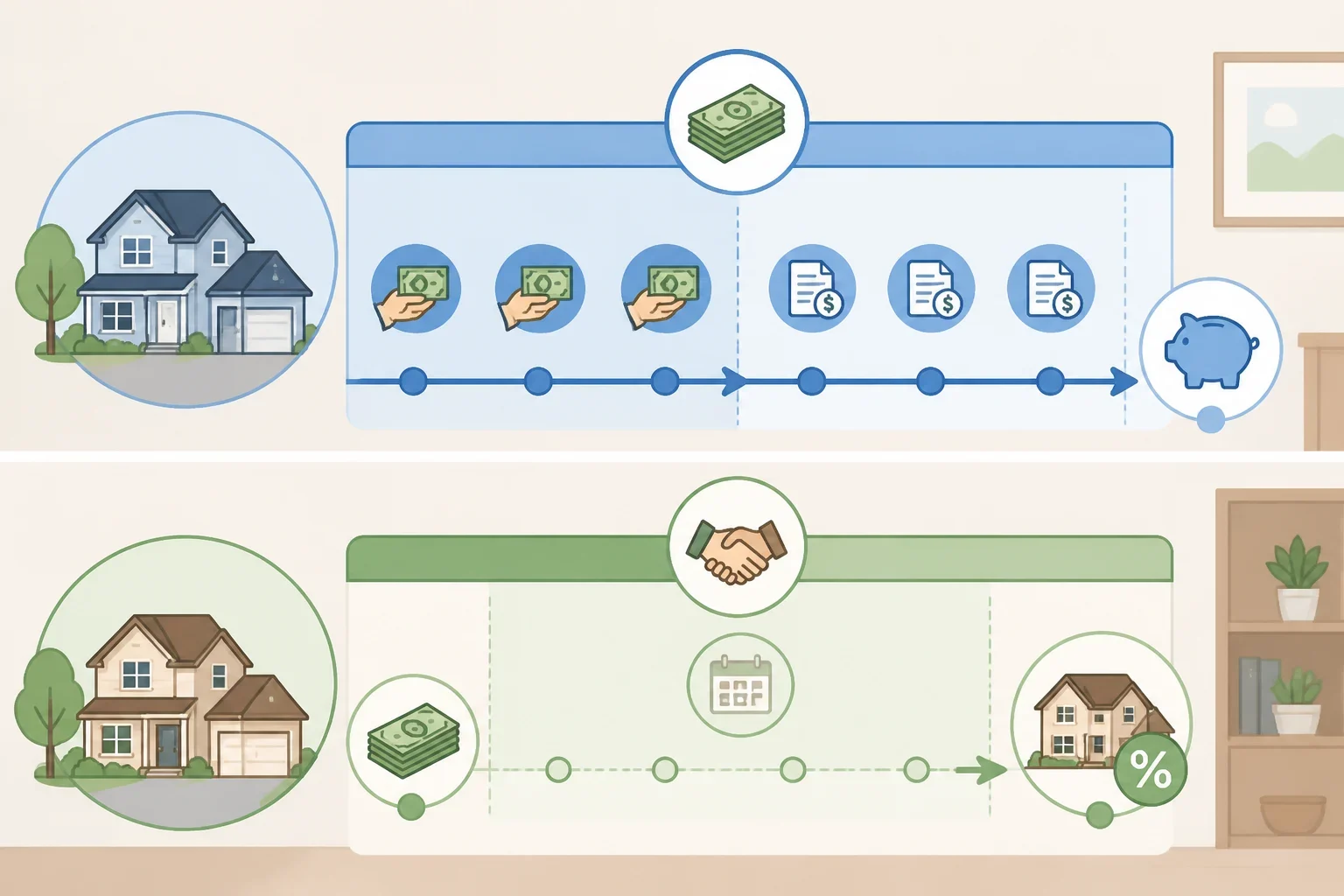
Home equity is the value of a home minus the amount still owed on existing mortgages. A HELOC, or home equity line of credit, is an open-end line of credit that lets a homeowner borrow repeatedly against that equity up to an approved limit. It may feel somewhat like a credit card secured by the home, but the repayment terms and consequences are very different. The CFPB’s HELOC explanation describes how the product works.
A home equity agreement may also be called a home equity investment, HEI, or shared equity agreement. The homeowner receives one upfront payment and later repays a single settlement amount based partly on the home’s value. The homeowner generally keeps the right to live in the property but remains responsible for the mortgage, property taxes, insurance, maintenance, and other obligations connected to the home. The CFPB’s market report says these contracts commonly end after 10 to 30 years or when a triggering event occurs.
The arrangements look like this:
- HELOC: Repeated access to funds, usually a variable interest rate, and monthly payments.
- Home equity agreement: One lump sum, often no regular payment to the agreement company during the term, and a deferred settlement that may grow with the home’s value.
- Both: A claim or lien connected to the property, plus the possibility of forced sale or foreclosure if the required payment cannot be met.
“No monthly payments” describes the timing of one obligation. It does not describe the total cost.
Home equity agreement vs HELOC: Which household questions matter?
The most useful HELOC vs home equity agreement comparison starts with the household’s plan, not the product’s sales language.
How much money is needed, and when?
A HELOC can allow repeated draws during a draw period, so it may fit expenses that arrive over time rather than one large need. The draw period could last 10 years, for example. After it ends, borrowing stops and the homeowner enters the repayment period. The CFPB’s HELOC booklet explains that some plans require payments toward both principal and interest, while others allow interest-only payments during the draw period.
A home equity agreement delivers one payment at the beginning. There is no second draw from that same contract if the original amount turns out to be too small. That makes the starting valuation, processing fees, settlement formula, and payoff examples worth examining before signing.
Can the household manage payments now and later?

HELOCs usually have variable interest rates, so monthly payments can change even if the homeowner does not borrow more. Some plans allow part or all of the balance to be converted to a fixed rate, although the fixed rate is usually higher than the variable rate. The loan documents should identify the index, margin, adjustment schedule, rate cap, and rate floor. CFPB guidance explains that payments may also rise significantly when the repayment period begins.
That transition deserves careful attention. A lender may schedule repayment of the full balance over 10 or 20 years, or the plan may require the entire balance at once through a balloon payment. If the balloon payment cannot be made, the homeowner may need to refinance or find another source of funds. Failing to repay could result in losing the home. The HELOC booklet describes these possible structures.
A home equity agreement may avoid a monthly payment to the agreement company, but the normal costs of owning the property continue. The homeowner must stay current on the primary mortgage, property taxes, hazard insurance, maintenance, and other debt secured by the home. If the property does not meet the agreement’s maintenance standards, the settlement amount may increase at payoff. The CFPB’s report documents these continuing obligations.
What is the exit plan?
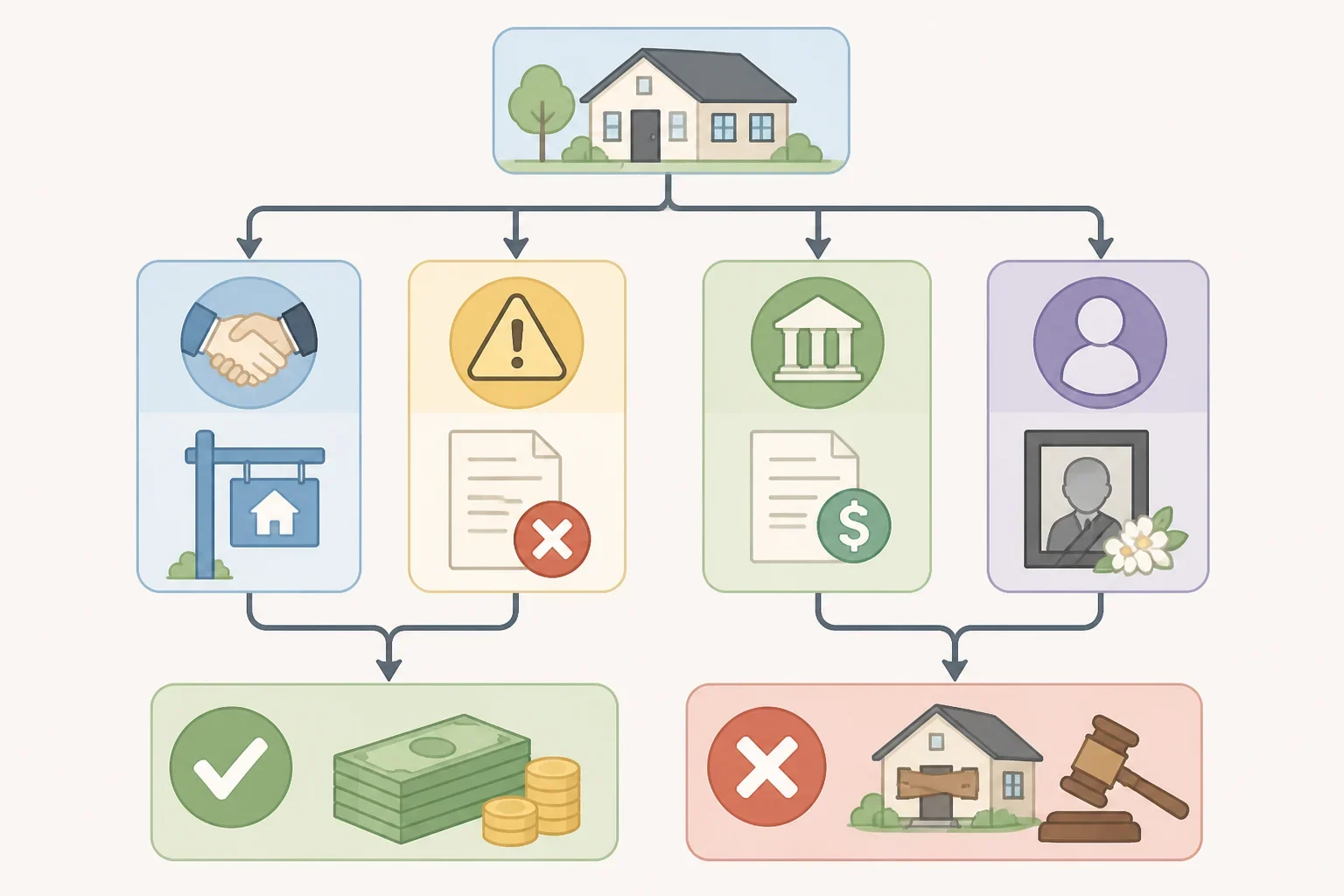
A HELOC is generally due in full when the home is sold. A home equity agreement may be triggered by a sale, default on the primary mortgage or another senior lien, unpaid property taxes or insurance, or the homeowner’s death. Most agreements require one full payoff. Early repayment may be allowed, but partial payments generally are not.
Someone who wants to stay in the home at the end of the agreement term may need other assets or enough financing to settle the contract. If the settlement cannot be paid, the homeowner could be forced to sell or face foreclosure. That possibility belongs in the long-term household plan, not only in the final pages of the contract.
Could the arrangement interfere with future plans?
A home equity agreement company secures its interest with a lien on the property. That lien may limit the homeowner’s ability to refinance the primary mortgage or take out additional debt.
HELOC access is not guaranteed forever, either. A lender may freeze or reduce the credit line if the home’s value falls significantly or the homeowner’s financial circumstances worsen. An approved limit should not automatically be treated as money that will remain available.
What the CFPB model shows about cost
The CFPB’s model offers a useful way to understand a home equity investment vs. HELOC comparison. It is not a quote, prediction, or universal product ranking.
The model begins with a $500,000 home and a $50,000 home equity agreement payment, equal to 10% of the home’s value. The company receives a 20% stake in the home’s value, or a 2x multiple of the initial payment, subject to a 20% annual return cap. The model also assumes a $300,000 existing mortgage. The CFPB comparison provides those assumptions.
For the HELOC, the model uses a $50,000 draw at a 9% interest rate with interest-only payments for 10 years. The monthly payment is $375. Over those 10 years, the borrower pays $45,000 in interest and still owes the original $50,000 principal, making roughly $95,000 necessary to fully exit the HELOC at that point. The illustration does not include HELOC fees.
The comparable home equity agreement’s modeled 10-year settlement ranges from $94,074 to $215,892 under the report’s home-price scenarios. The agreement is less expensive overall only if the home’s value falls by at least 5% from its starting value. Under the strongest appreciation scenarios, the settlement is more than twice the HELOC’s modeled total. The CFPB’s modeled figures support those comparisons.
These are not perfectly identical forms of cost. The HELOC total combines interest with the remaining principal, while the agreement figures are settlement amounts, and the model excludes HELOC fees. It also assumes the 9% HELOC rate does not change. Actual offers depend on the provider, lender, contract terms, credit profile, and local home-price movement.
Home equity agreements may also charge processing fees of 3% to 5% of the initial payment, deducted before the homeowner receives the funds. Under many contracts, the settlement amount grows at an effective rate of about 19.5% to 22% per year during the early years. That is a contract-specific cap or modeled growth rate, not necessarily an advertised annual percentage rate. The CFPB report describes those fees and limits.
The point of the model is not that every HELOC costs less. It is that “no interest” or “no monthly payment” can move the cost to the back end, where the amount owed may be harder to predict.
What disclosures and complaints can reveal

HELOC lenders must provide information about the draw and repayment periods, fees, minimum-payment calculations, and how the annual percentage rate may change. If the home securing the HELOC is the borrower’s principal dwelling, federal law generally provides three business days to cancel after the account is opened or the account-opening disclosures are received, whichever is later. The cancellation must be made in writing. CFPB disclosure guidance explains the process.
Home equity agreements use nonstandardized disclosures, which the CFPB says can make them harder to understand and compare. Marketing may emphasize fast funding, low credit requirements, little or no income documentation, and no monthly payments. The contract still needs to show the lien, valuation process, settlement formula, fees, maintenance standards, and events that trigger repayment.
A CFPB review of 38 home equity contract complaints found that 28 consumers reported issues including surprise at repayment amounts, confusion about rate caps, difficulty refinancing a first mortgage, and disputes over property valuations. The CFPB’s complaint review does not establish that every agreement has the same problems, but it highlights the sections that deserve careful reading.
What to compare before signing
The useful comparison is not the advertised cash amount alone. Put these details side by side:
- Cash actually received after fees
- Total settlement if the home’s value stays flat, falls, or rises
- HELOC payment at the current rate and after a possible rate increase
- Payment required when the HELOC draw period ends
- Every upfront, annual, processing, appraisal, and closing fee
- The agreement’s valuation method at origination and payoff
- Any rate cap, appreciation formula, or 2x-style multiplier
- Events that trigger repayment
- Whether partial payments are prohibited
- Maintenance standards that could increase the settlement
- Lien and refinancing restrictions
- What happens if the homeowner sells, defaults on a senior lien, fails to pay taxes or insurance, or dies
A HELOC estimate should show the index, margin, rate-adjustment frequency, cap and floor, draw period, repayment period, minimum payment, and any possible balloon payment. The CFPB’s HELOC booklet recommends getting three estimates so costs and features can be compared.
For a home equity agreement, request payoff illustrations under multiple home-price scenarios, not only one favorable example. Ask how the company calculates the starting and ending value, what fees come out of the initial payment, and whether the lien could affect a future refinance.
Neither product is risk-free. A HELOC offers more familiar disclosures and flexible borrowing, but it requires the ability to manage monthly payments that may rise. A home equity agreement defers the regular payment but can create a large, difficult-to-predict settlement, especially if the home appreciates.
Before signing, gather the complete documents and take the questions to a HUD-approved housing counselor and the appropriately licensed professional for the mortgage, financial, or legal issue involved. The contract deserves a closer look than the advertisement.
