
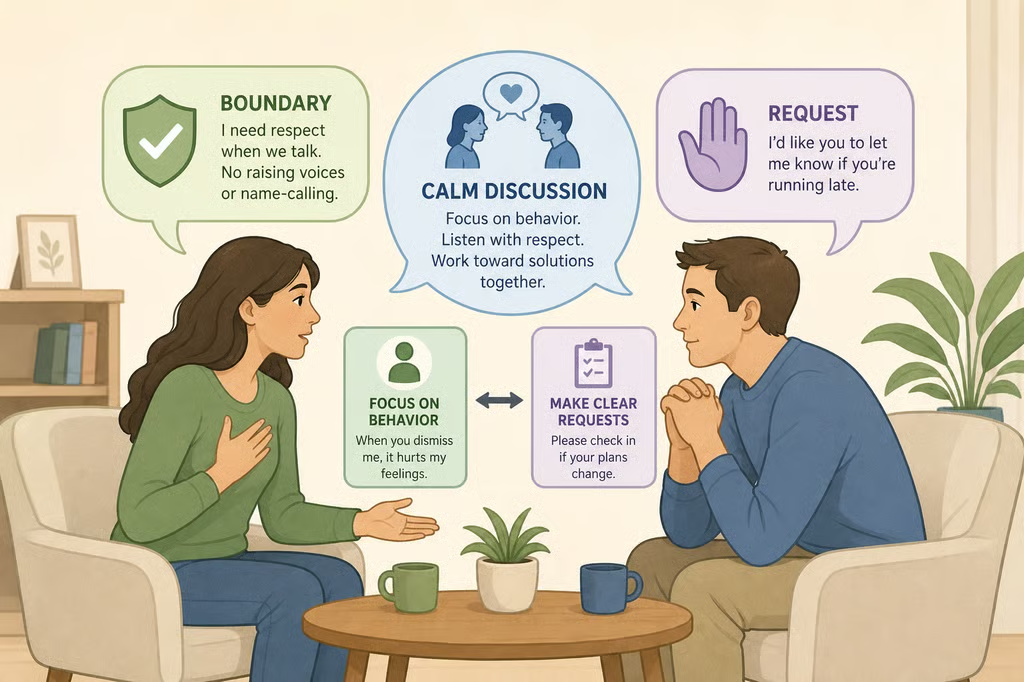
- Four-Part Reset for Couples: Boundaries vs Labels
- Know the difference between a boundary and a label
- Use the four-part reset
- Handle disagreements about memories carefully
- Set conversation rules without silencing concerns
- Watch for contempt and one-sided accountability
- Choose support based on the situation
Four-Part Reset for Couples: Boundaries vs Labels
A partner saying “I’m setting a boundary” or “that’s your trauma response” may be describing a real need. It may also be a polished way to end an argument without answering the concern underneath it.
The useful question is not whether the speaker intended to manipulate. Intent can be difficult to judge during a fight. Ask what the language is doing instead: Does it identify a behavior, explain an impact, and leave room for a response? Or does it label, shame, control, or close the conversation?
This practical approach to responding to therapy speak in a relationship keeps the focus on four things: the specific behavior, its effect, the request being made, and whether both partners can stay accountable.
Know the difference between a boundary and a label
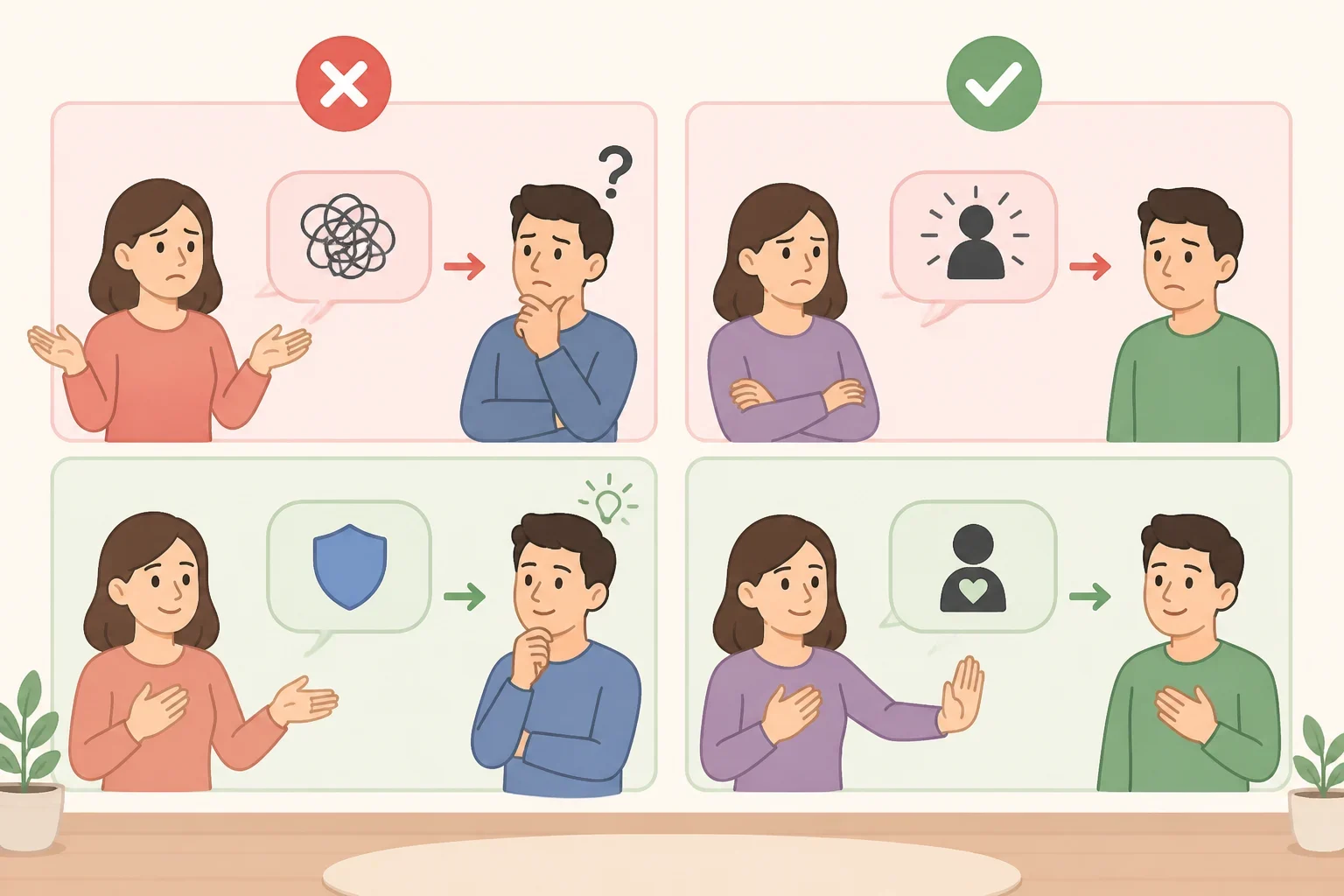
For this conversation, treat a boundary as a statement about what a person will do to protect their time, attention, body, or emotional space. It is not a verdict about the other person’s character.
- Boundary: “If voices are raised, I’m going to take a break and come back to this conversation in 30 minutes.”
- Label: “You’re toxic, so I’m done talking.”
- Description: “When the conversation shifts to my character, I stop feeling heard.”
- Request: “Please answer the question about the missed chore before we discuss how I reacted.”
The first statement gives the other person something clear to expect. The second assigns a broad identity and makes the original issue harder to address. A person can need a break and still need to return to the conversation later. “I need space” should not become a permanent exit from every difficult subject.
The same distinction helps with words such as “triggered,” “defensive,” “narcissist,” and “gaslighting.” These terms may point toward a concern, but they do not settle the concern by themselves. The American Psychological Association’s definition of gaslighting describes a form of psychological manipulation that can cause someone to question their own perceptions, memories, or sense of reality. A single disagreement about what happened does not automatically establish that pattern.
Calling someone a “narcissist” during an argument also is not the same as a qualified clinician assessing a mental-health condition. In ordinary conversation, the word is often used as a criticism or shorthand for self-centered behavior. That may still hurt, but it does not make the label precise.
A useful test is simple: Can the speaker explain what happened without relying on the term? If not, the language may be doing more work as a verdict than as a description.
Use the four-part reset
When an argument starts turning into a diagnosis, do not get pulled into proving that the label is wrong. Return to the event itself.
1. Identify the specific behavior
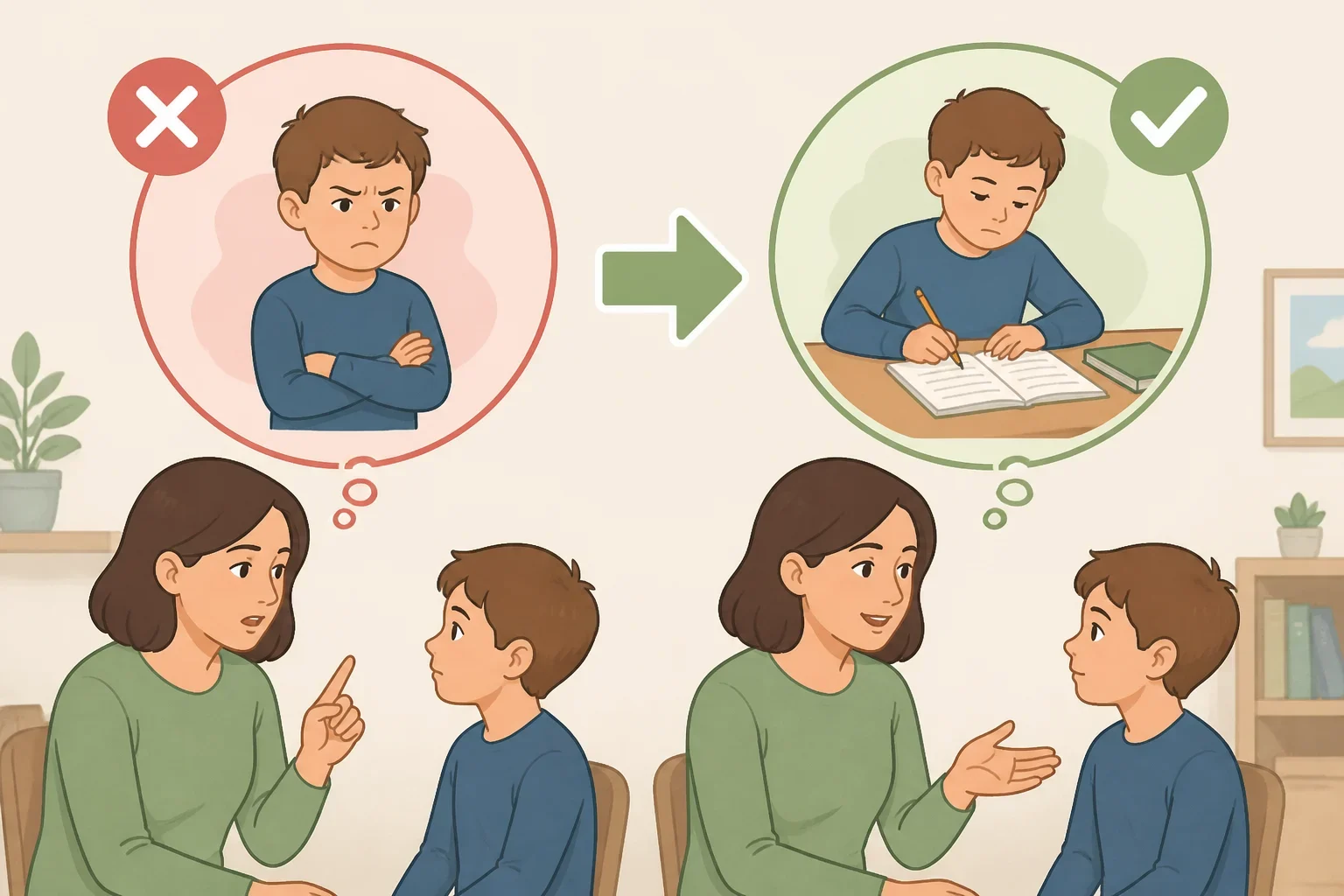
Name what happened without assigning a motive or personality trait.
Instead of:
“You’re being defensive.”
Try:
“I notice you’re answering a different question than the one I asked.”
Instead of:
“You’re gaslighting me.”
Try:
“When you say we never discussed this, I remember the conversation differently. Can we check what was agreed?”
Specific language gives both people something to examine. Broad labels invite a fight about identity, intent, or who has the authority to define the other person.
Keep the description narrow. “You ignored me for 20 minutes after I asked about dinner” gives the conversation somewhere to go. “You always make me feel invisible” may express real pain, but it bundles several arguments together and makes a practical response harder.
2. State the impact
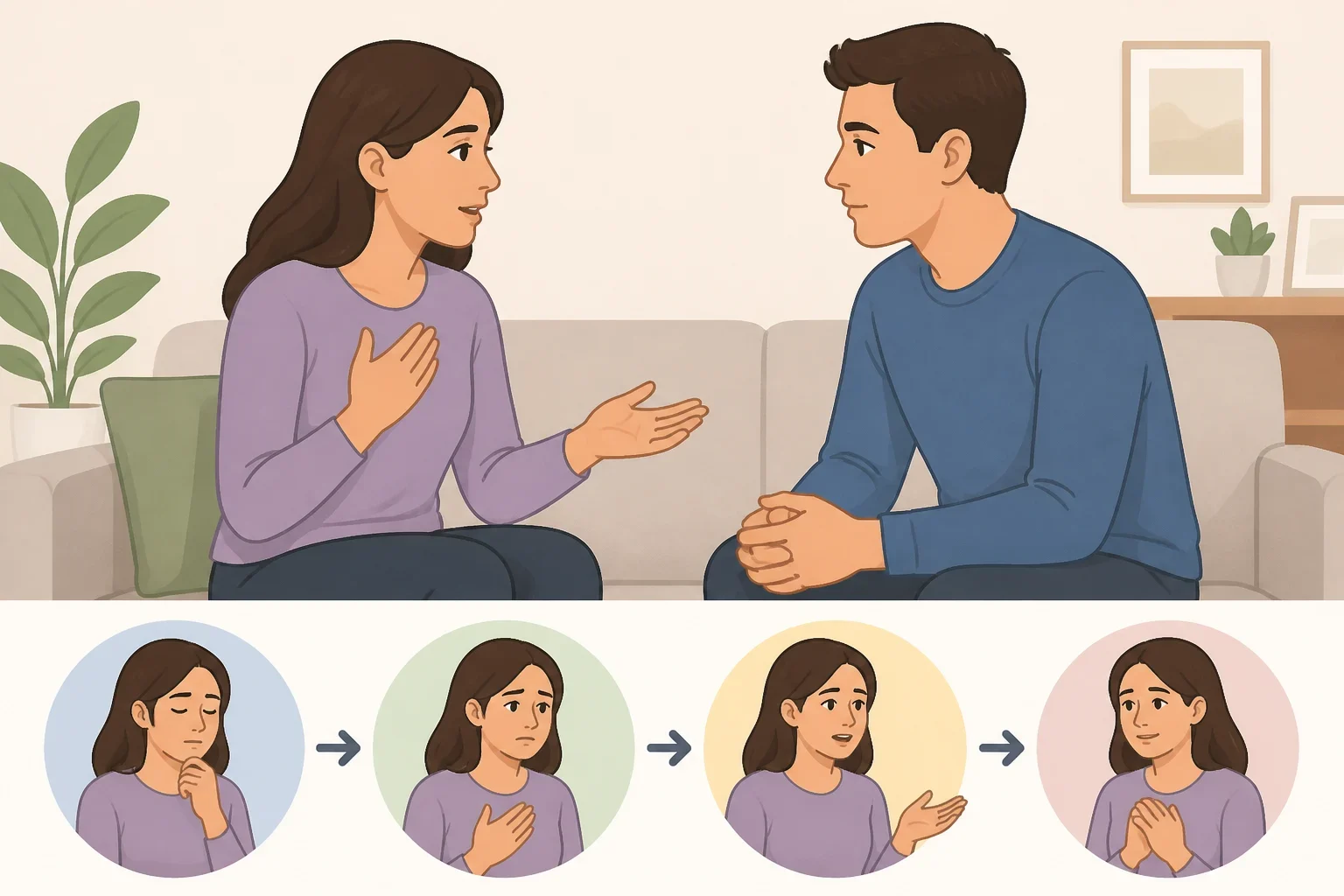
Describe what the behavior did to the conversation or to the person experiencing it.
“When the subject changes to my personality, I feel dismissed.”
“When plans change without warning, I become anxious and have trouble making the rest of the evening work.”
“When you look at your phone while I’m explaining the schedule, I feel brushed off.”
A feeling can be real without proving the explanation attached to it. Someone may feel dismissed without knowing why a partner interrupted. Someone may feel anxious without knowing whether the cause is a “trigger” in the clinical sense. Staying with the feeling leaves room to ask for help without claiming certainty about the other person’s inner life.
This also prevents the conversation from becoming a contest over whose interpretation is officially correct. The impact can be discussed even when the intention is disputed.
3. Ask for a concrete response
A request should be answerable. “You never listen” does not tell a partner what to do next. “Can you put your phone away for five minutes and help decide tomorrow’s schedule?” does.
Try:
“Please tell me whether you can handle dinner tonight. We can discuss my tone after we make a plan.”
Or:
“I’m asking whether you remember agreeing to this. We can talk about my frustration once we establish what was decided.”
A request does not guarantee agreement. It makes the disagreement easier to understand. The other person may say no, suggest a different plan, or ask for time. Those responses are still clearer than turning the request into a debate about personality.
4. Decide whether the conversation is still mutual

A workable conversation does not require perfect wording. People speak clumsily when upset. It does require some room for clarification, responsibility, or a pause that will actually end.
After the reset, ask:
- Did the partner answer the original question?
- Can each person describe their concern without relying on a label?
- Is either person willing to acknowledge their part?
- If someone needs a break, is there a clear plan to return?
- Is there a concrete change that could prevent the same argument?
The response matters more than whether the original phrase sounded therapeutic. A partner may disagree with the description and still engage with the event. Repeatedly replacing every household concern with a judgment about the other person is a different pattern.
Handle disagreements about memories carefully
Couples can remember the same conversation differently. One person may remember an agreement to visit family; the other may remember it as a possibility. One may recall asking for help with bedtime; the other may remember being told the request could wait.
Start with the smallest claim that can be checked:
“Did we agree that you would call your sister before Friday, or did we only discuss it?”
If there is a text, calendar entry, or written plan, review it without turning the review into a prosecution. If there is no record, acknowledge uncertainty:
“I remember it differently, but I can’t prove that memory. Let’s decide what the plan is now.”
A disagreement over memory can still be painful. It does not need a dramatic label to deserve attention. At the same time, repeated denial, manipulation, intimidation, or control should be assessed in context, not diagnosed from a checklist or one argument.
The more useful question is what happens over time. Does one partner repeatedly change the account to avoid responsibility, pressure the other to distrust their own perception, or use fear to control what can be discussed? If so, writing down plans may reduce ordinary confusion, but it is not a reliable fix for a deeper pattern of coercion. The concern needs support suited to the situation.
Set conversation rules without silencing concerns
Some couples may agree not to use words such as “toxic,” “narcissist,” or “gaslighting” in the middle of an argument. That can help if both people choose the rule freely and it applies equally.
The rule should be specific:
“We can pause labels during the argument. We will return to the behavior after dinner, and either person can write down the subject that needs to be discussed.”
A pause also needs a next step. That might be a time to continue, a written question, or an appointment with a licensed couples therapist. “No talking about this” is not a pause. It is an indefinite shutdown.
The rule should never prevent someone from describing fear, intimidation, controlling behavior, threats, or another serious concern. A person should not have to use clinical vocabulary to earn the right to say what happened. Plain language is enough:
- “You threatened to leave if I disagreed.”
- “You read my messages without permission.”
- “You blocked the door.”
- “I’m afraid to bring this up.”
Those statements deserve attention even if the speaker never uses a therapy term.
Some public-facing psychology resources, including Psychology Today, discuss the difference between therapeutic language that clarifies an experience and language that can shut down a conversation. The practical value here is the distinction, not the label. Return to observable behavior, impact, and request.
Watch for contempt and one-sided accountability
Not every inaccurate therapy term is contempt. Still, psychological language can become a way to position one partner as defective, unstable, or beneath discussion.
The Gottman Institute’s communication framework places contempt, including mockery and moral superiority, among especially damaging conflict patterns. That framework offers a useful lens for noticing what label-dropping is doing in a conversation.
A less workable pattern may look like this:
- Every concern becomes proof that one partner is unstable, selfish, abusive, or “triggered.”
- The label changes whenever the other person responds to it.
- One person must constantly examine their behavior while the other accepts no responsibility.
- The original subject disappears as both people defend their character.
- One partner leaves confused about basic facts or afraid to raise ordinary household concerns.
A single bad argument does not define a relationship. Repetition matters. So does whether a partner can return to the subject after the argument cools down.
Choose support based on the situation
For ordinary recurring conflict, a licensed couples therapist may help both partners replace labels with clearer descriptions and requests. This route makes sense when both people can speak freely, take responsibility, and respect a pause.
The situation changes when one partner feels unsafe or fears retaliation. In that case, joint communication work may not be the right first step. Seek confidential individual support from a qualified mental-health professional or a local domestic-violence organization that can help assess options. Resources and services vary by location, so look for an organization that serves the relevant area.
If there is immediate danger, contact emergency services or a local crisis resource. Do not announce a plan to seek help if doing so could increase the risk of retaliation. Device use, call history, and stored notes may not be private in every household, so consider safety and confidentiality before documenting incidents or contacting support.
Better wording cannot solve every relationship problem. A conversation technique can help a couple discuss chores, schedules, and forgotten commitments. It cannot make intimidation safe or turn coercive behavior into an ordinary communication mismatch.
The next time an argument turns into a diagnosis, try one plain-language reset:
“Name the specific behavior, explain its impact, and tell me what response you want. I’m willing to discuss the issue, but not argue over a label.”
If the partner returns to the concrete subject and accepts some accountability, continue the conversation or schedule a calmer time to finish it. If therapy language is repeatedly used to silence, control, or frighten, seek individual support rather than trying to fix the pattern through better wording alone.
