
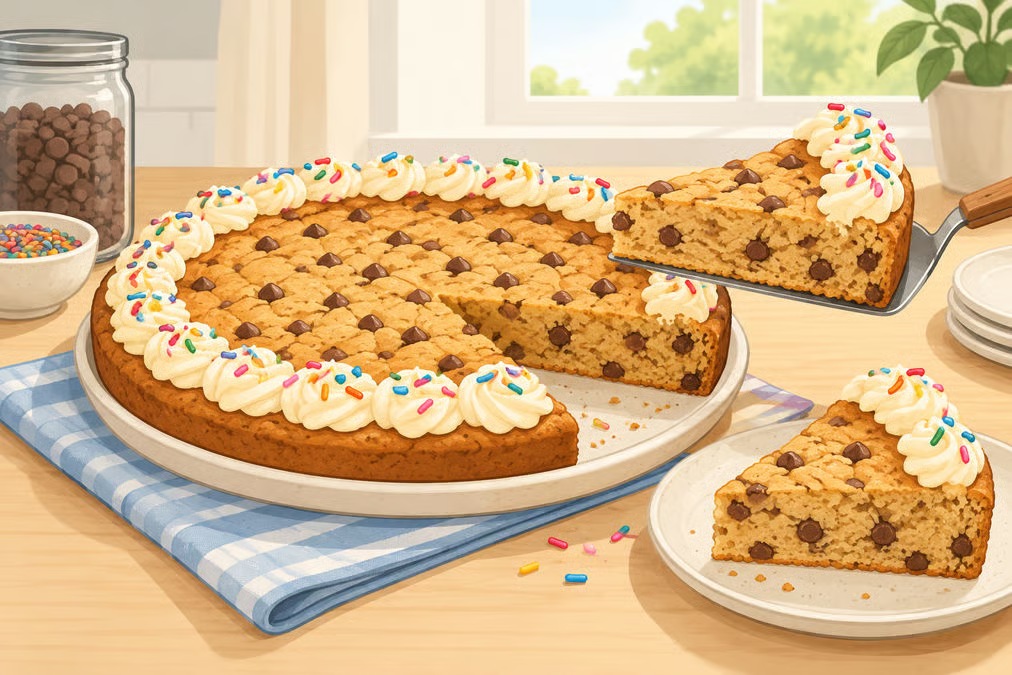
A chocolate chip cookie cake brings together two favorite desserts: the buttery, chocolate-studded goodness of a homemade cookie and the shareable size of a cake. It's a simple treat for birthdays, family gatherings, or any occasion that calls for something sweet without the work of baking a layer cake.
There are two ways to make it, depending on how much time you have and the texture you prefer. One produces a thin, chewy cookie cake using melted butter and a quick bake. The other makes a thicker, bakery-style version with creamed butter and dough that chills before baking.
Both recipes yield approximately 12 slices. The ingredients, pan sizes, and baking times differ, so choose your method before getting started.
Quick vs. thick cookie cake: Which method should you use?
| Detail | Quick cookie cake | Thick cookie cake |
|---|---|---|
| Texture | Thin and chewy | Thick, soft and chewy |
| Prep time | 10 minutes | 20 minutes |
| Chilling | None | At least 1 hour |
| Pan | 11- to 11½-inch metal round | 9-inch round or springform |
| Oven temperature | 350°F | 350°F; 325°F for clear glass |
| Baking time | 12–14 minutes | 20–25 minutes |
| Total before cooling | 22–24 minutes | At least 1 hour, 40–45 minutes |
| Yield | 12 slices | 12 slices |
Both methods require additional cooling time before frosting. Plan for at least another 30–60 minutes, depending on the cake's thickness and room temperature, and decorate only once it has cooled completely.
Method 1: Make a quick, chewy chocolate chip cookie cake
Adapted from Melissa Rose's homemade cookie cake recipe at Design Eat Repeat, this version uses melted butter and a mixing bowl instead of an electric mixer. The dough spreads into a relatively thin layer, giving the cake a soft center and lightly golden edges.
Ingredients
- ½ cup (1 stick) unsalted butter
- ½ cup packed light brown sugar
- ¼ cup granulated sugar
- 1 large egg
- 1½ teaspoons vanilla extract
- ½ teaspoon baking soda
- ¼ teaspoon baking powder
- ¼ teaspoon salt
- 1½ cups all-purpose flour
- 1 cup semisweet chocolate chips
You'll need an 11- to 11½-inch metal round pan, mixing bowl, spatula, and wire rack.
Step 1: Prepare the pan and chocolate chips
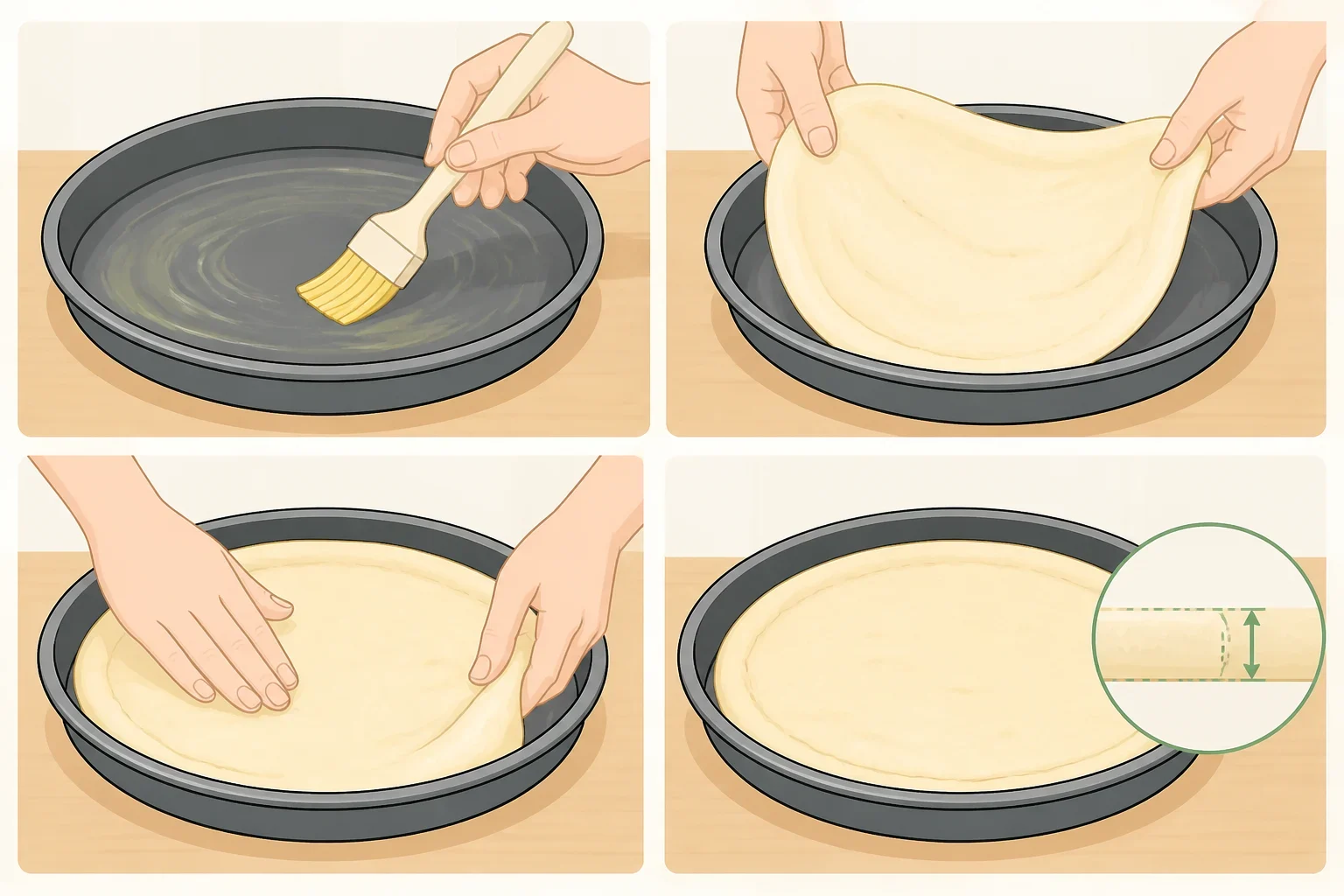
Preheat the oven to 350°F. Grease the pan with butter or nonstick cooking spray. If desired, line the bottom and sides with parchment paper for easier removal.
Chop ½ cup of the chocolate chips into smaller pieces, leaving the remaining ½ cup whole. The smaller pieces spread throughout the dough, while the whole chips provide pockets of chocolate.
Step 2: Mix the cookie dough
Melt the butter in a microwave-safe bowl in short intervals, just until liquid. Let it cool briefly if it becomes very hot.
Transfer the butter to a larger bowl. Stir in the brown and granulated sugars, followed by the egg and vanilla.
Add the baking soda, baking powder, and salt. Mix in the flour until no dry patches remain, then fold in the chopped and whole chocolate chips.
Use a spatula rather than an electric mixer. The dough should be evenly combined without excessive mixing.
Step 3: Press and bake
Transfer the dough immediately to the prepared pan. Spread it evenly to approximately ½ inch thick, making sure the center isn't noticeably thicker than the edges.
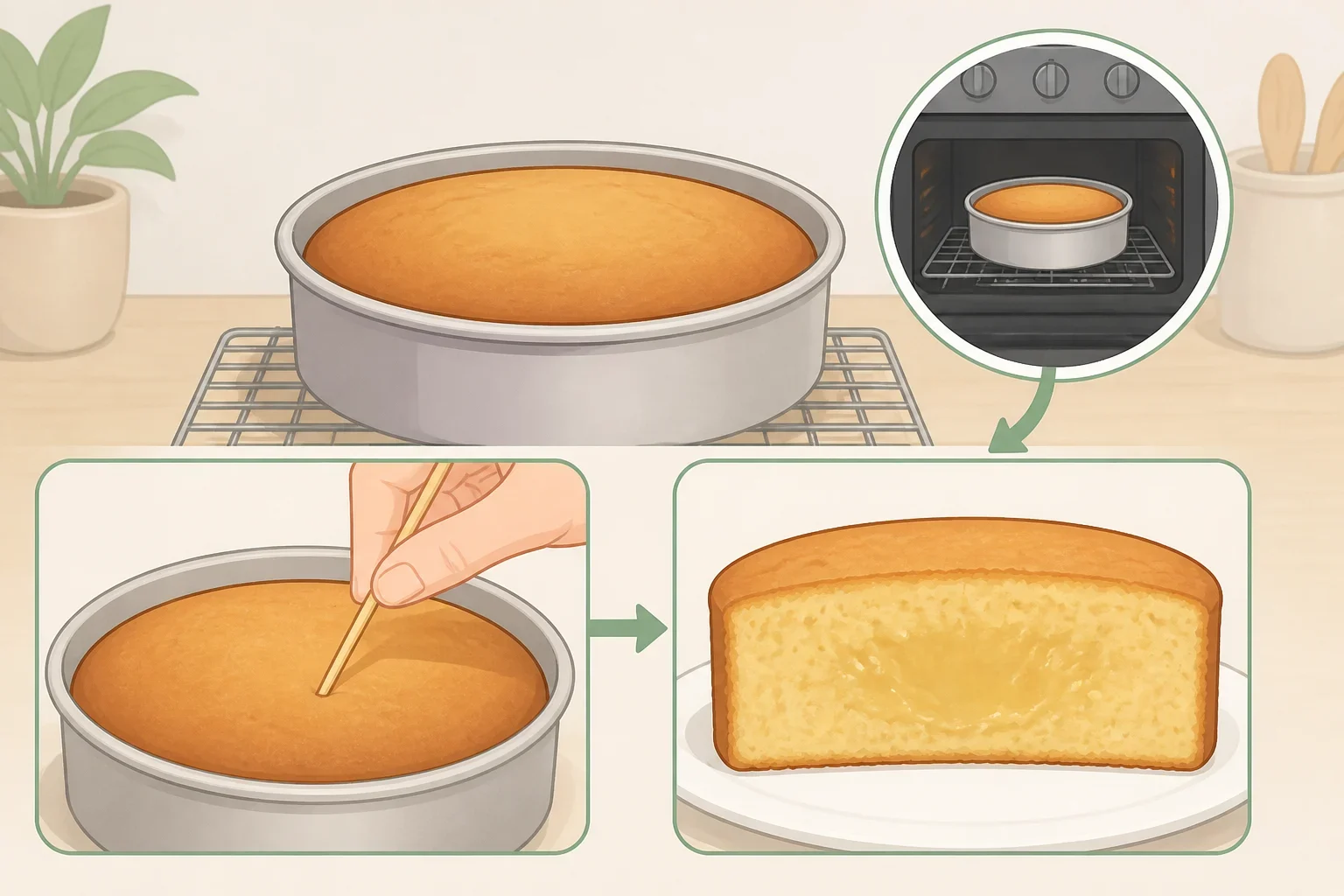
Bake for 12–14 minutes, checking at the earlier end of the range. The top should be lightly golden, and the center should look soft but baked through, without wet or liquid dough.
Avoid baking until the entire surface looks dry and deeply browned. The cake will continue to firm as it cools.
Step 4: Cool before removing
Place the pan on a wire rack and let the cake cool completely.
Run a knife carefully around the edge to loosen it. Serve directly from the pan, or transfer it to a serving plate using a flat platter large enough to support the entire cake. If using a springform-style pan, release the sides after cooling.
Method 2: Make a thick, bakery-style cookie cake
For a taller cookie cake with a substantial, chewy center, Erin Clarke's chocolate chip cookie cake recipe at Well Plated uses softened butter, an extra egg yolk, and refrigerated dough.
This method requires more preparation, but the dough can be made ahead and baked closer to serving time.
Ingredients
- 1 cup all-purpose flour
- 1 cup white whole wheat flour, whole wheat pastry flour, or additional all-purpose flour
- ¾ teaspoon baking soda
- ¼ teaspoon freshly grated nutmeg (optional)
- 10 tablespoons unsalted butter, softened
- ⅔ cup packed light brown sugar
- ¼ cup granulated sugar
- 1 teaspoon kosher salt
- 1 large egg, at room temperature
- 1 additional egg yolk, at room temperature
- 1 tablespoon whole milk
- 2 teaspoons vanilla extract
- 1¼ cups semisweet chocolate chips
You'll need an electric mixer, mixing bowls, a spatula, and a 9-inch springform pan, pie dish, or round cake pan.
Step 1: Prepare the dry ingredients
In a medium bowl, whisk together both flours, baking soda, and optional nutmeg. Set aside.
Make sure the butter is softened but not melted. It should yield slightly when pressed without looking oily.
Step 2: Cream the butter and sugars
Using an electric mixer, beat the softened butter, brown sugar, granulated sugar, and salt on medium speed for approximately three minutes, until smooth.
Add the whole egg and beat for one minute. Scrape down the bowl, add the extra yolk, and beat for another minute.
Mix in the milk and vanilla until combined.
Step 3: Finish and chill the dough
Reduce the mixer speed to low and gradually add the dry ingredients. Stop mixing once the flour is incorporated, then fold in the chocolate chips.
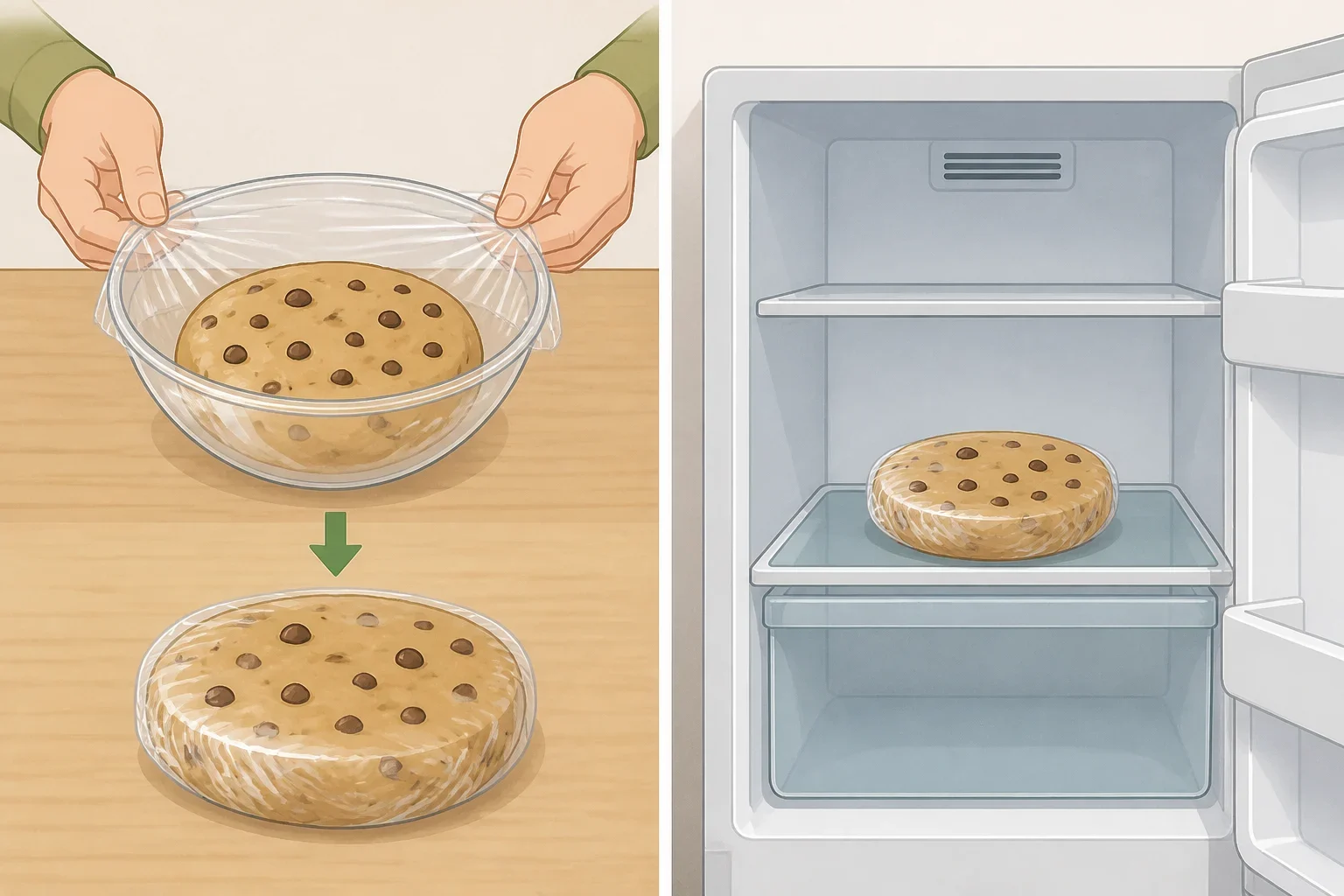
Transfer the dough onto plastic wrap, shape it into a thick disk, and wrap securely. Refrigerate for at least one hour.
For advance preparation, the dough can remain refrigerated for up to three days or frozen for up to three months. Thaw frozen dough in the refrigerator before baking.
Step 4: Press the dough into the pan
Preheat the oven to 350°F. If using a clear glass baking dish, reduce the temperature to 325°F.
Grease a 9-inch springform pan, pie dish, or round cake pan. Unwrap the chilled dough and press it into an even layer, smoothing the surface with a spatula.
Step 5: Bake until golden
Bake for 20–25 minutes, until the surface is lightly golden and a toothpick inserted into the center comes out clean.
Check after 15 minutes. If the edges are browning too quickly, loosely cover the cake with aluminum foil for the remaining baking time.
Place the pan on a wire rack and let the cake cool completely before removing or decorating it.
Decorate your cookie cake with buttercream
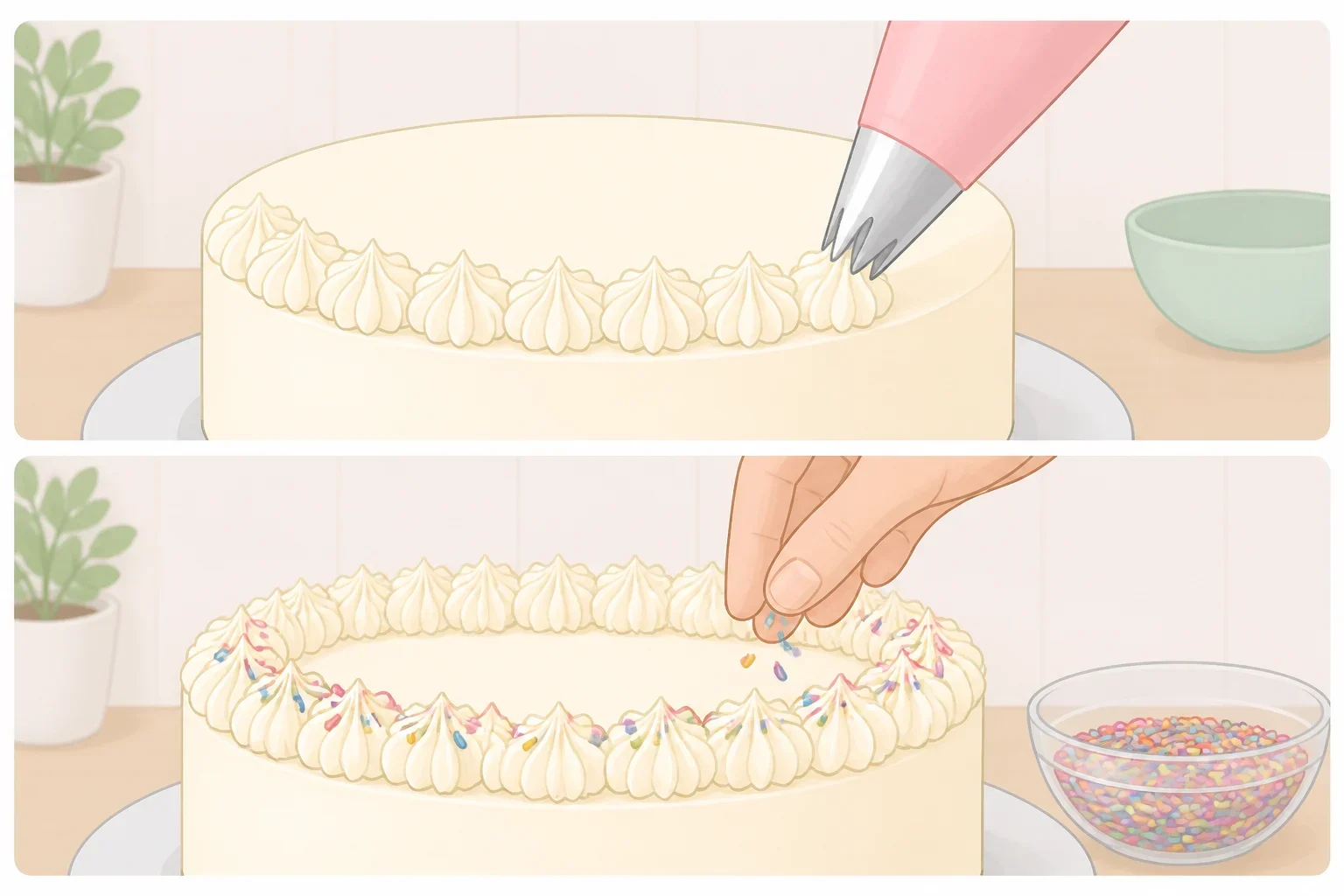
A simple buttercream border gives either cookie cake a festive finish. You can also leave it plain or serve slices with vanilla ice cream.
For vanilla buttercream, you'll need:
- ¼ cup unsalted butter, softened
- 1¼ cups powdered sugar
- ¾ teaspoon vanilla extract
- A pinch of salt
- 1–2 tablespoons milk
Beat the butter until smooth, then gradually add the powdered sugar. Mix in the vanilla and salt, followed by enough milk to create a creamy, pipeable consistency.
Transfer the frosting to a piping bag fitted with a star tip. Pipe a border around the cooled cake and add sprinkles immediately. Double the frosting recipe if you want enough for lettering or additional decorations.
How to store cookie cake and prevent baking mistakes
Keep an unfrosted cookie cake tightly covered at room temperature for up to three days. For the best texture, avoid leaving it uncovered, which can dry out the edges.
If using cream cheese frosting, whipped cream, or fresh fruit, refrigerate the decorated cake. Perishable toppings should not sit at room temperature for more than two hours, or one hour when temperatures exceed 90°F.
For a soft, chewy result, pay attention to three common problems:
- Dry or hard edges: The cake may have baked too long or spread too thinly. Check it at the earliest recommended baking time.
- Wet center: The dough may be unevenly distributed or too thick for the pan. Use the specified pan size and follow the recipe's doneness cues.
- Cake breaks during removal: It may still be warm. Allow it to cool completely before transferring.
Never taste unbaked cookie dough. The U.S. Food and Drug Administration warns that raw flour and eggs can contain harmful bacteria. Wash hands, utensils, and work surfaces after handling raw dough.
Once cooled, cut the cookie cake into wedges with a sharp knife, wiping the blade between slices for cleaner edges. Add a little frosting, a handful of sprinkles, or a scoop of ice cream, and it's ready to share.
