
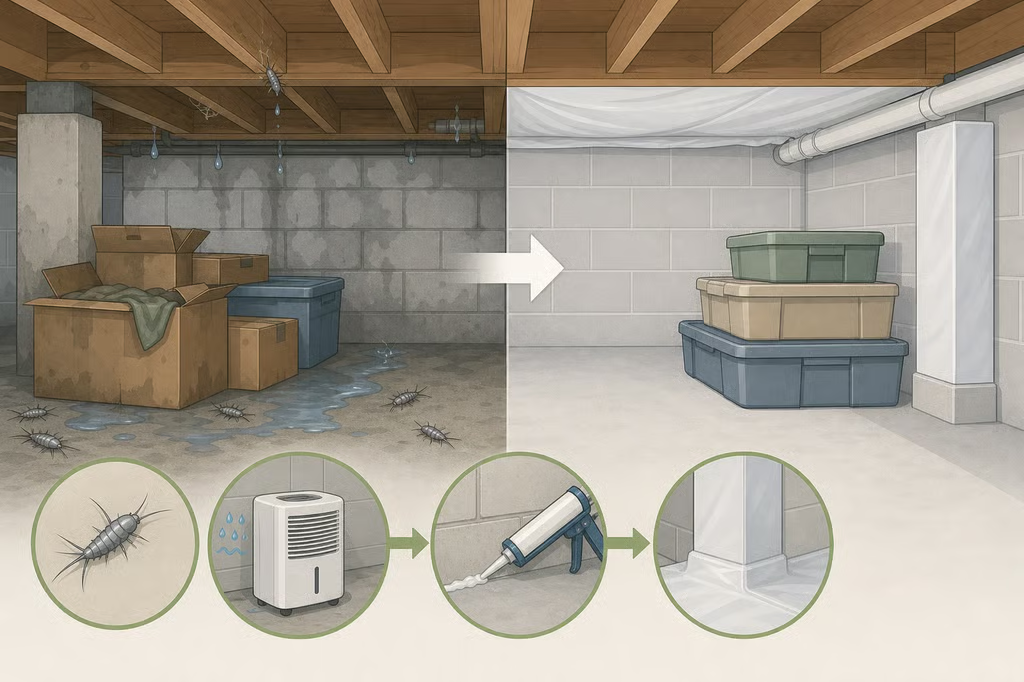
How to Prevent Silverfish in Your Home (Moisture First)
The habit that invites silverfish into a home is often not leaving crumbs on the counter. It is allowing dampness to linger in closets, basements, bathrooms, kitchens, and under sinks. Learning how to prevent silverfish in your home starts with finding those moisture sources, then removing the food, clutter, and hiding places that help the insects stay.
Silverfish prefer cool, moist, dark spaces, including basements, closets, bookcases, and storage areas. They also seek starchy materials such as books, flour, cereal, wallpaper, and glue. Use the steps below to inspect your home, reduce moisture, protect stored items, and decide when monitoring or professional treatment makes sense.
What attracts silverfish in the house?
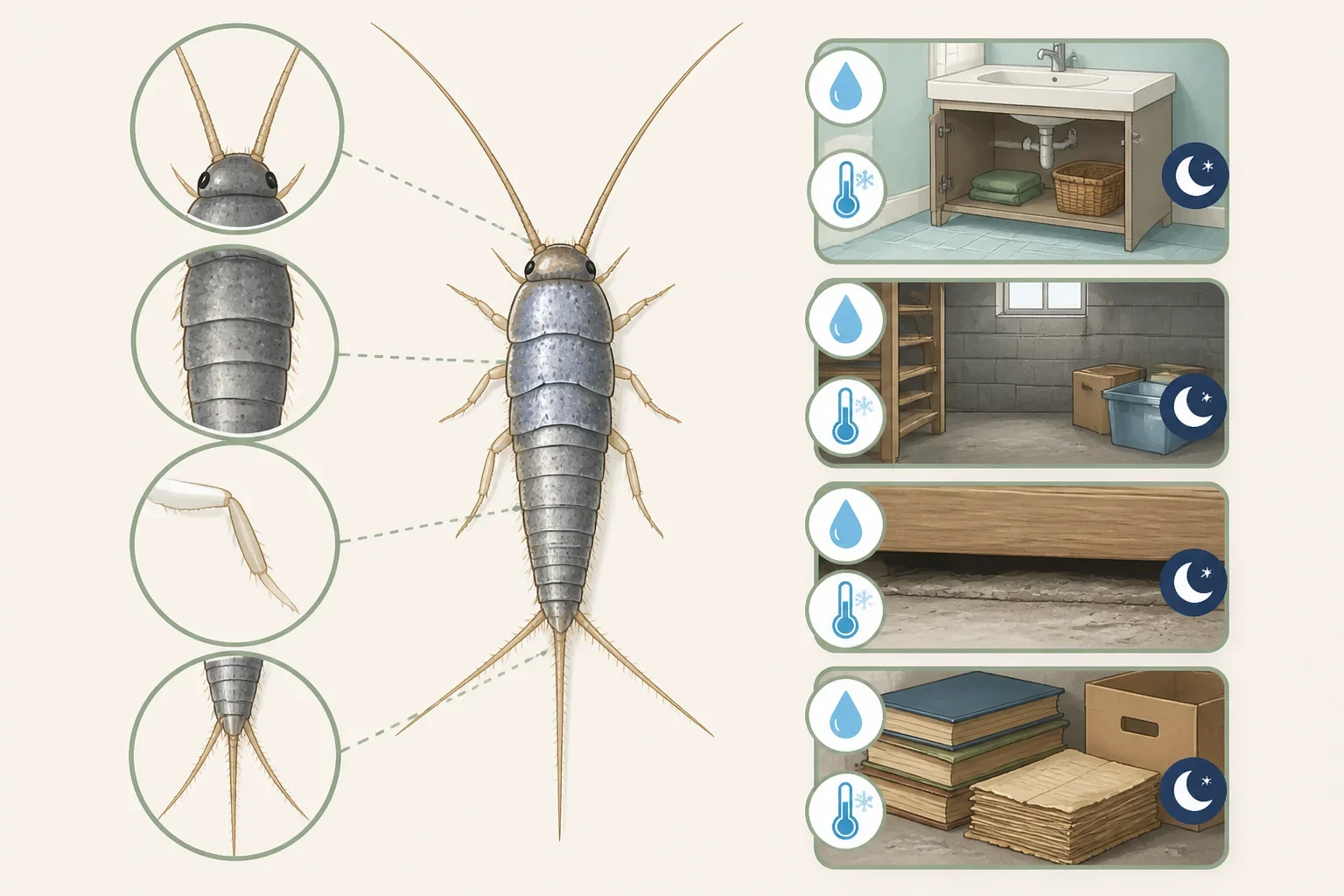
Silverfish have flattened, silver-colored bodies, long antennae, and three tail-like filaments. They move quickly when disturbed and are mostly active at night, which means an occasional sighting may not show the full extent of the problem. Penn State Extension describes their preferred spaces as cool, moist, and dark.
Their food sources can be scattered throughout an ordinary home. Silverfish eat materials containing starch, including flour, cereal, books, wallpaper, and glue. Texas A&M also identifies paper, rolled oats, and other starchy foods as food sources, while noting that the insects may feed on protein-rich items when available. Texas A&M Extension
Look for signs in places that are rarely disturbed:
- Notched edges or holes in paper
- Ragged edges or marks on book bindings
- Stains from fecal material, cast skins, or scales
- Damage to stored cotton, linen, or silk
Silverfish may damage natural fibers without actually consuming the threads. Long-stored fabrics deserve the same inspection as old books and magazines, particularly when they have been kept in a damp closet or cardboard box. UF/IFAS Extension
The conditions matter as much as the food. Texas A&M lists a preferred range of 70 to 80 degrees Fahrenheit and 75% to 95% relative humidity. That range describes favorable conditions, not a guarantee that silverfish will appear only within those limits. Eggs may hatch in about 40 days at 70°F and about 20 days at 90°F, but temperature is only one part of the picture. Humidity, food, and shelter also affect whether a space supports an infestation. Texas A&M Extension
How to prevent silverfish in your home
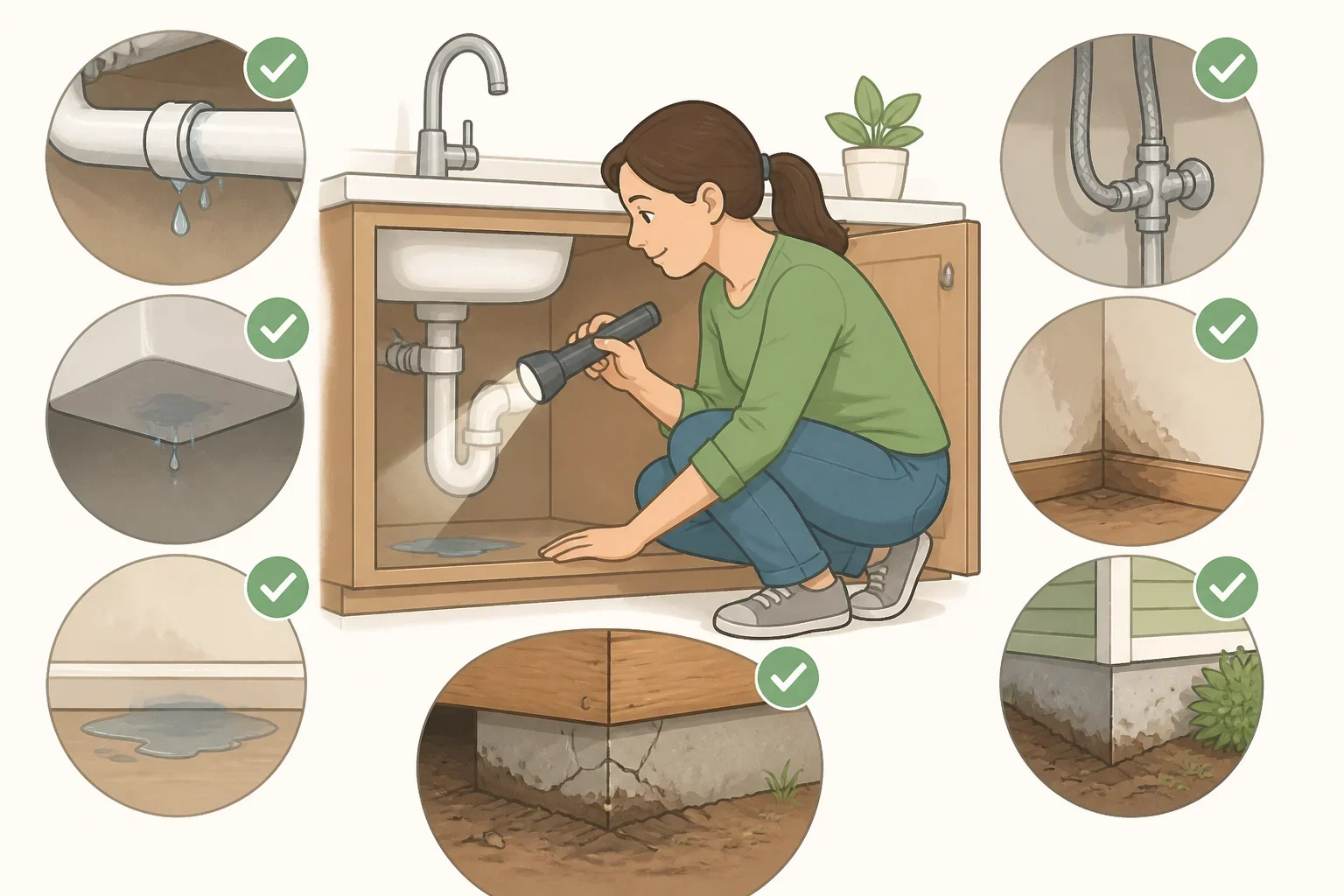
Work through these steps in order. Start with water, because storing items more carefully will not solve a problem caused by an active leak.
- Inspect moisture-prone areas. Check under the kitchen and bathroom sinks, around plumbing connections, in the basement or crawl space, and along roof lines. Look for dripping pipes, wet spots, water wicking up near the foundation, or signs of rot and insect damage. Oregon State University Extension recommends regular inspection because ignored moisture and insect damage can develop into more serious problems. Oregon State University Extension Do not climb into an unsafe crawl space or open a wall to investigate a suspected void. If you find structural rot, a roof problem, or moisture that cannot be traced easily, stop the inspection and contact a qualified contractor or pest professional.
- Repair the moisture source. Fix dripping pipes, faucets, and roofs before relying on a fan or dehumidifier. A dehumidifier removes moisture from the air; a fan improves air movement but does not serve as a substitute for repairing the leak or lowering humidity. Air conditioning, fans, and dehumidifiers can help reduce humidity in infested areas or rooms where books are stored. Use electrical equipment according to the manufacturer’s instructions, especially near water, and keep cords and equipment away from wet surfaces. Texas A&M Extension A damp crawl space may need more than a portable appliance. Oregon State points to a plastic layer on the soil floor as a vapor barrier that helps protect support structures from decomposition. If you see rot or continuing water intrusion, address the source before replacing damaged material. Oregon State University Extension
- Reduce hiding places. Clean closets regularly and remove old books, magazines, and newspapers that are no longer needed. Vacuum often, including along baseboards and in closet corners, and clean up spilled food or drink promptly. Sanitation helps, but it is not a complete treatment for an established infestation. Silverfish can remain where food is scarce if the space still offers shelter and favorable moisture.
- Store vulnerable items in sealed containers.
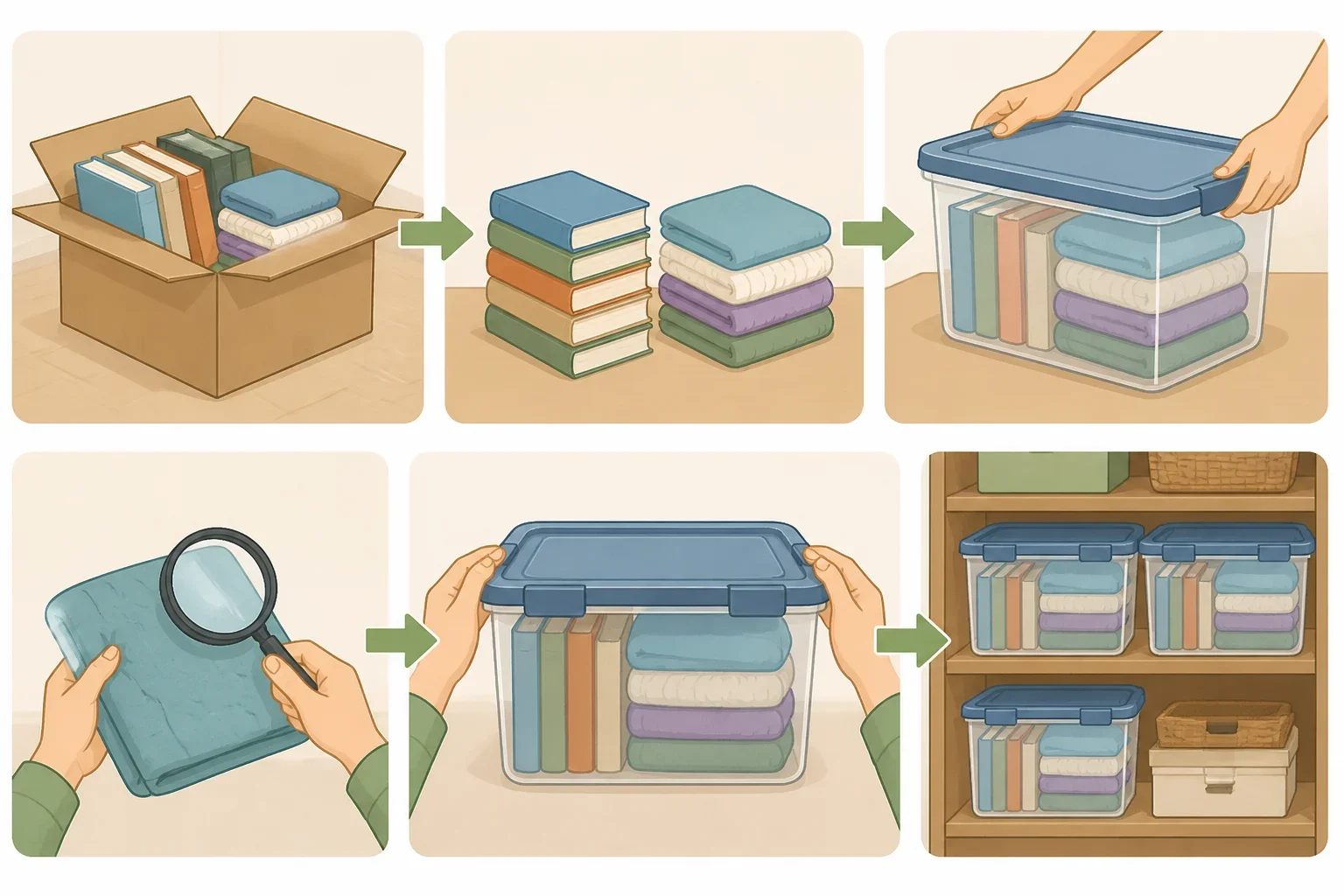
Move books and fabrics out of cardboard and into sealed plastic containers. Before sealing anything, inspect it for damage or insects. Fabrics that have been stored for a long time deserve a close look at seams, folds, and the bottom of the container.
This is also a useful rule when bringing boxes or other stored items indoors. Inspect them before they join the rest of the household storage. The supplied Texas A&M guidance supports checking items brought into the home, especially items that have been in storage. Texas A&M Extension
- Protect food sources. Keep flour, cereal, oats, and other starchy foods in tightly sealed containers. Vacuum crumbs and residue, then wipe up spills rather than leaving them for the next cleaning day. This reduces accessible food, but it does not replace moisture control.
- Seal cracks and gaps. Use sealant on exterior cracks and holes that could allow silverfish or firebrats to enter. Also check gaps around pipes and other openings. Sealing these spaces can address more than one household pest concern, though the cited Oregon State guidance specifically connects pipe gaps with mice and rats. Texas A&M Extension Do not seal over an active leak or trap dampness behind a wall. Dry the area and correct the water problem first.
- Add screens where practical. Penn State Extension recommends placing metal screens in drains where feasible, along with repairing leaks and reducing humidity in basements, kitchens, and bathrooms. Penn State Extension
These steps work together because silverfish are not seeking only one thing. They need access to food, water, and shelter. Removing one resource may reduce activity, but leaving the other two in place can allow the problem to continue.
How to keep silverfish out of your home with monitoring
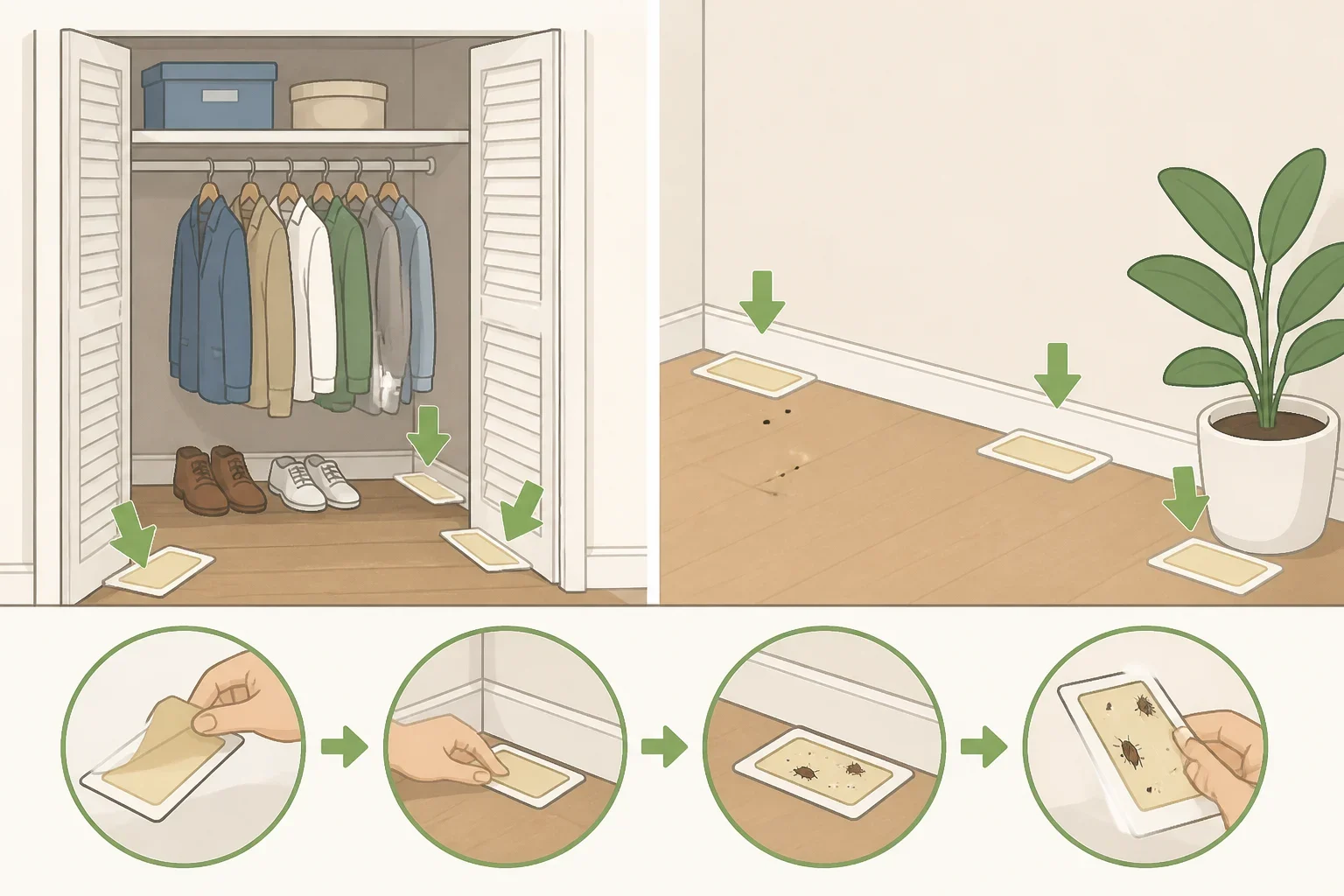
Once the obvious moisture and storage issues are addressed, use sticky traps in suspected hiding places to see whether activity continues. Place them near baseboards, in closets, or close to book storage rather than in the middle of an open room.
A trap is a monitoring tool and a limited control measure. It can show whether silverfish are still moving through an area, but it does not dry out the room, remove eggs, or treat insects hidden in wall voids. Check the traps as part of the same inspection routine, then adjust your next step based on what you find. Penn State Extension
For valuable books or papers that are already affected, seal the items in plastic bags and place them in the freezer for several days. This is a targeted option for the items themselves, not a whole-home solution. Handle older or fragile materials carefully, and do not assume freezing will correct the moisture or storage conditions that caused the problem. Texas A&M Extension
Patience matters here. UF/IFAS Extension Entomologist Dr. Faith Oi says silverfish can live for a very long time without food and water, so eliminating an outbreak may require diligence and continued monitoring rather than a single cleaning session. UF/IFAS Extension
When to use treatment or call a professional
Nonchemical control is the sensible first step when the problem is limited and accessible. The EPA recommends using nonchemical pest-control methods where possible and keeping indoor spaces clean, dry, and well ventilated. U.S. EPA
If silverfish remain after moisture repairs, decluttering, sealed storage, and monitoring, choose a product labeled to control silverfish, firebrats, or bristletails. Use it only in the indoor location named on the current label and follow the application, ventilation, quantity, and reentry directions. Product clearances can change, so do not rely on an old container or an outdated recommendation. Texas A&M Extension
Targeted treatment belongs in cracks, crevices, closets, attics, and areas around baseboards, rather than open-spraying living spaces. Products should be used only where the label permits, and treated areas and containers must remain inaccessible to children and pets as directed. Do not inhale dust products during application. The EPA also advises increasing ventilation indoors and mixing or diluting pesticides outdoors or in a well-ventilated area when the label calls for it. U.S. EPA
Pesticides are not a harmless shortcut. The EPA notes that they are inherently toxic and that exposure may cause irritation, headache, dizziness, weakness, or nausea, among other effects. Use only products approved for the general public, in the recommended amount. Applying more does not provide more protection and can create additional risk. U.S. EPA
Call a pest control professional when the population is large, persistent, or difficult to locate. Wall voids and other inaccessible spaces are poor candidates for casual do-it-yourself treatment. A professional can also help distinguish a silverfish problem from another pest issue and identify where treatment belongs. Texas A&M Extension
Your next silverfish check
Start with one damp area rather than trying to reorganize the entire house at once. Inspect under a sink, in a basement or crawl space, and inside one closet. Repair or report one leak, move vulnerable books or fabrics out of cardboard, seal one group of food items, and place a sticky trap if activity is still visible.
That routine addresses the conditions silverfish need without treating every sighting as a pesticide emergency. If the moisture source is fixed and activity continues, keep monitoring and move to a labeled, targeted treatment or professional help when the problem is persistent or out of reach.
