
How Long Do Towels Last? Signs to Replace Them
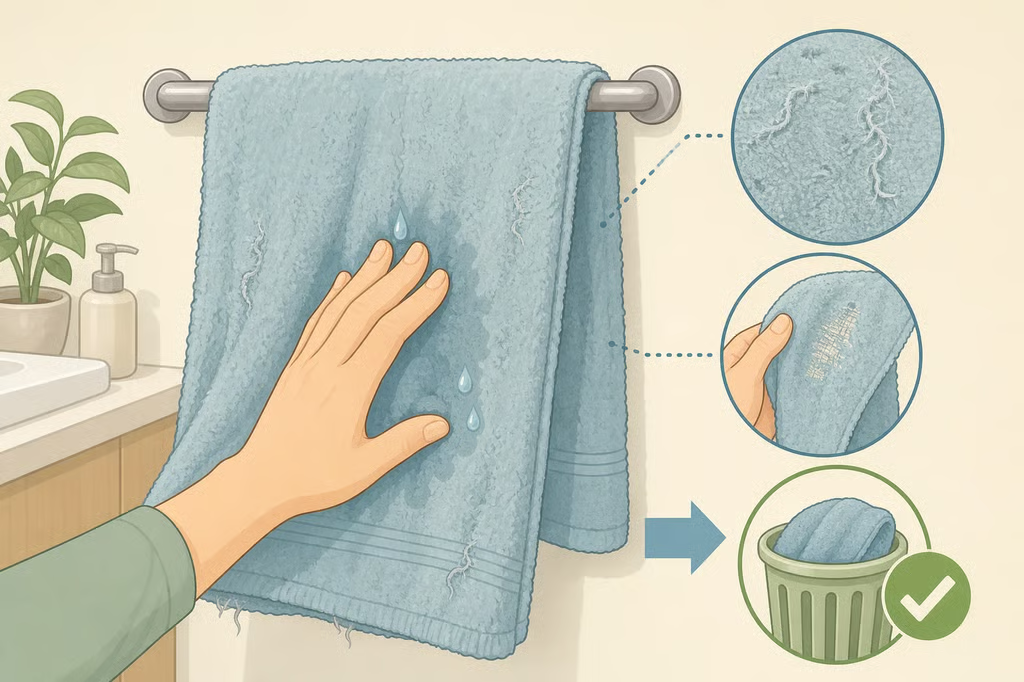
There is no expiration date printed on a bath towel, but that does not mean every towel should stay in rotation indefinitely. A towel is ready to leave personal use when it no longer absorbs well, will not dry properly between uses, develops a persistent odor, or has damage that makes it uncomfortable or impractical.
That usually means looking beyond color and appearance. A towel can still look presentable while feeling rough, moving water around instead of soaking it up, or staying damp for too long in a poorly ventilated bathroom. A faded towel with intact loops may still have plenty of useful life left.
For budgeting purposes, regularly used cotton bath towels often last about two to three years, according to the Good Housekeeping Institute. Treat that as a planning range, not a deadline. Frequency of use, fabric, household size, washing habits, drying conditions, and the towel’s current condition all affect how long it performs well.
The better question is not “How old is this towel?” It is “Is this towel still doing its job?”
How long do bath towels last?
A towel used after every shower has a much heavier workload than a guest towel brought out a few times a month. A towel used by one person in a well-ventilated bathroom may perform well beyond the two- to three-year range, while one shared by several people or left damp between uses may become unpleasant much sooner.
Laundry frequency changes the wear pattern, too. Washing a towel more often means more handling and drying cycles, but washing it less often does not solve the problem if the towel remains damp or develops an odor. Two towels purchased at the same time can age very differently.
Fabric and construction matter, although the label does not tell the whole story. Cotton, blended fibers, towel weight, loop construction, finishing, and care instructions can all affect how a towel feels and performs. “Turkish cotton” and a higher GSM, meaning grams per square meter, describe material or weight, but neither term guarantees that one towel will outlast every lighter or blended option. The Spruce offers additional towel-care and material guidance.
A thick towel may feel plush and absorb plenty of water, yet take longer to dry in a small bathroom. A thinner towel may feel less luxurious but be easier to dry fully. For a household where towels frequently remain damp, drying speed may matter more than maximum thickness.
Inspect the towel before replacing it
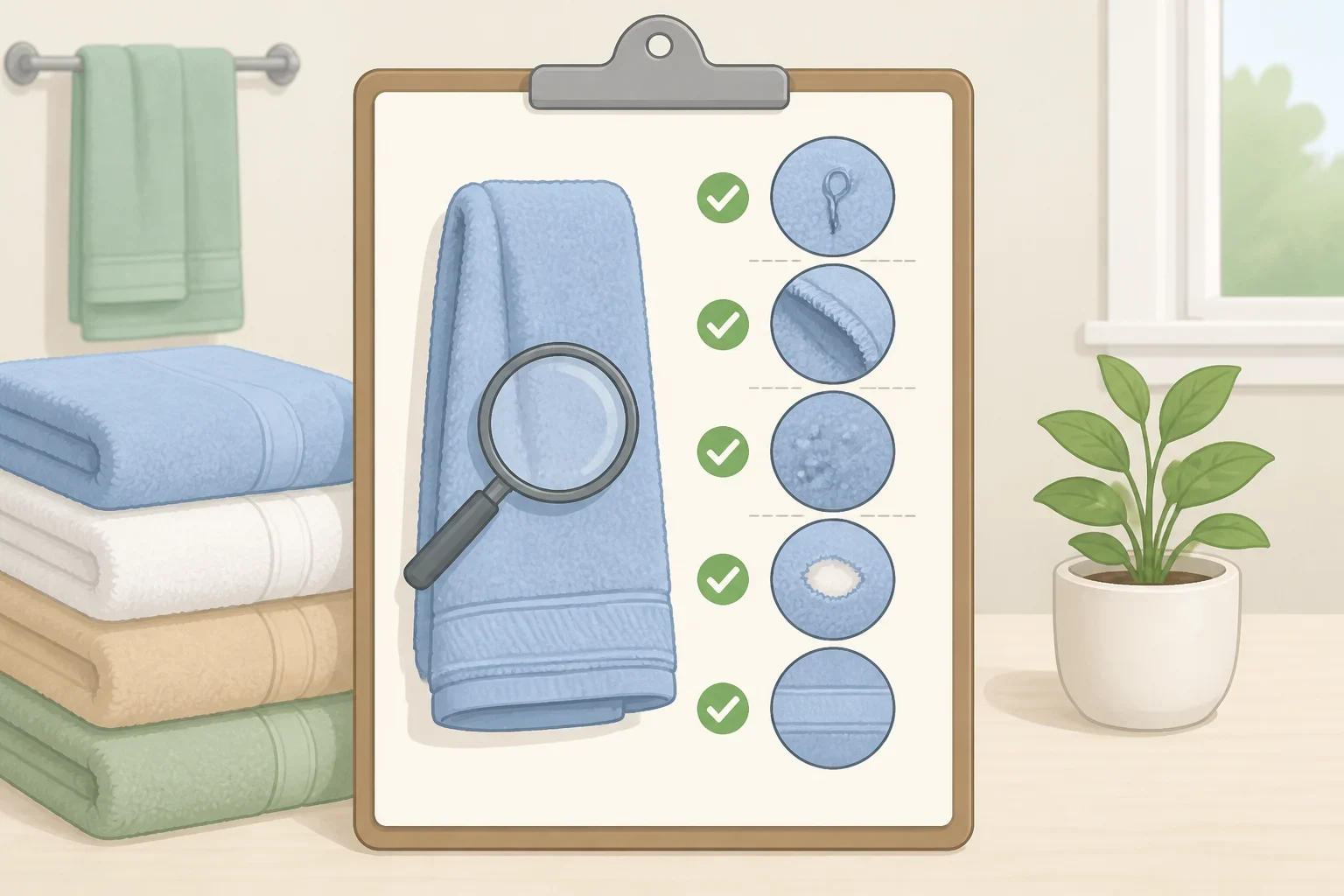
A simple inspection after washing and drying can tell more than the towel’s age. Check how it works, how it smells, and whether the fabric is still structurally sound.
Test absorbency
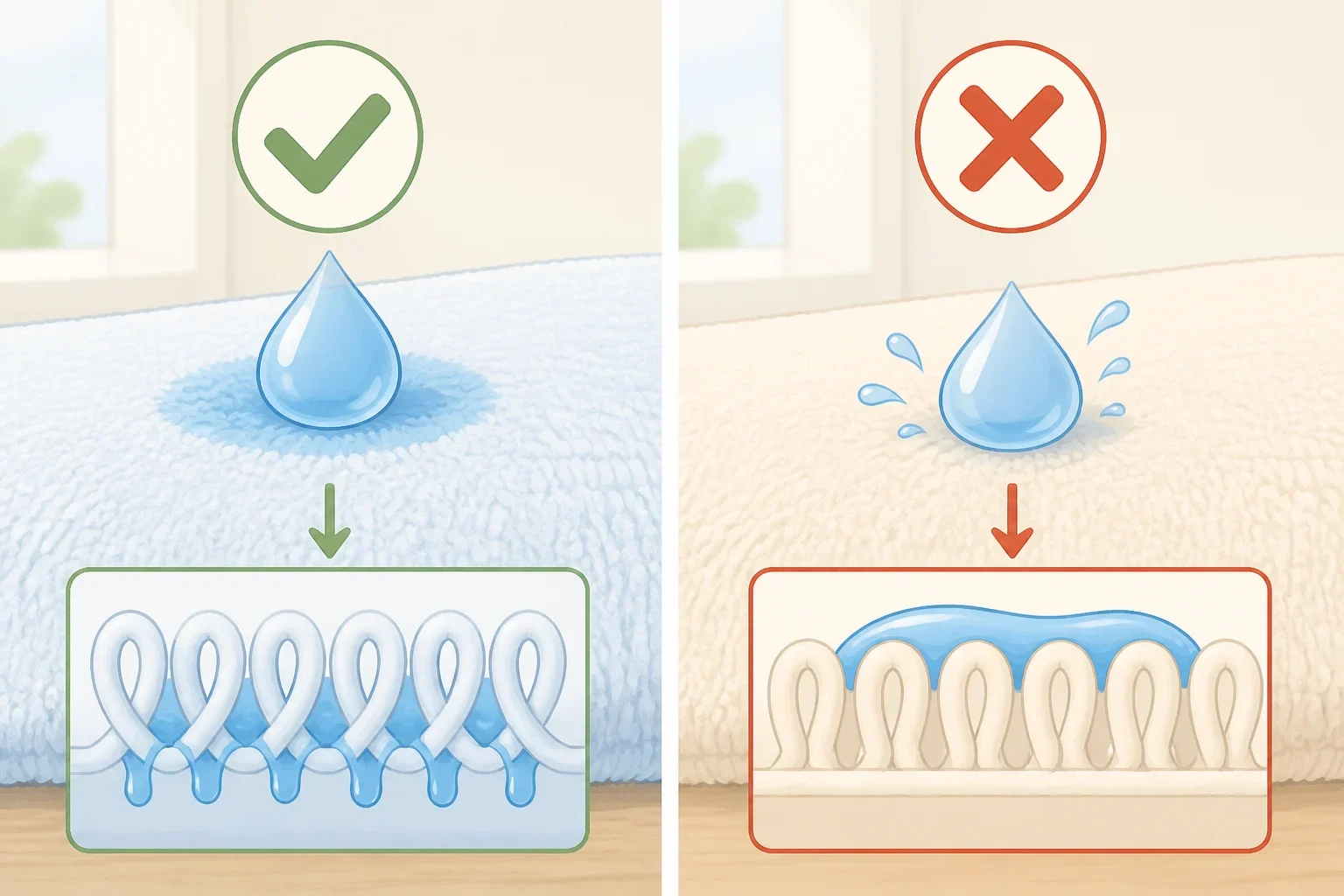
A functional towel should take up water from the skin without much rubbing. If it now pushes water around, needs repeated passes, or leaves skin feeling damp, its absorbency has declined.
Compare it with a newer towel if one is available. The comparison does not need to be scientific. It simply helps show whether the older towel has changed or whether its original texture was always less absorbent.
Reduced absorbency does not automatically mean the towel belongs in the trash. Detergent residue, fabric softener, hard-water buildup, or an unsuitable wash routine can change how the loops handle water. Try the care checks below before making a final decision.
Check the smell after complete drying
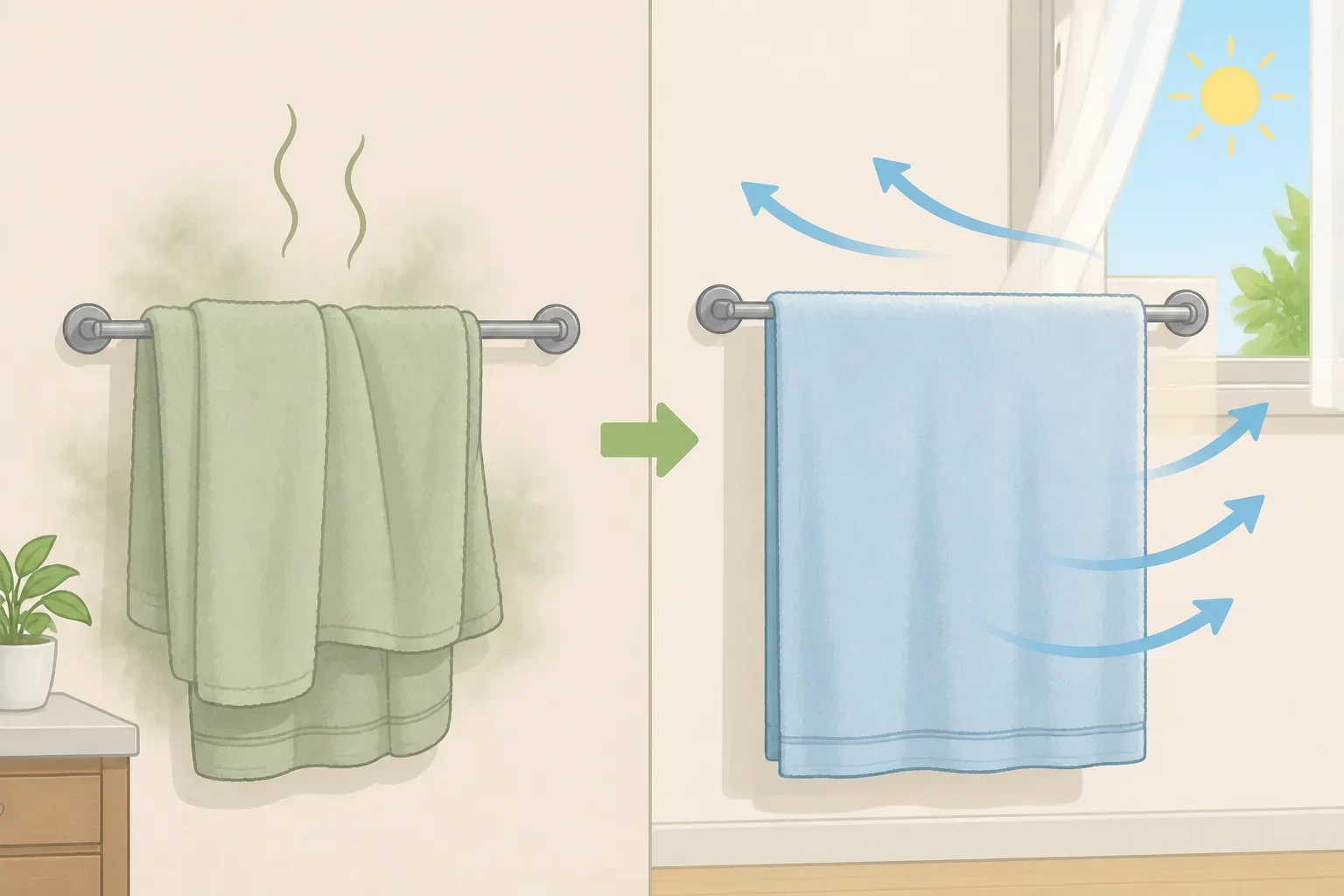
A towel that smells musty immediately after use may not have dried fully. Spread it out in a place with better airflow instead of leaving it bunched on a hook, on the floor, or in a hamper.
If the odor appears after washing, check whether the towel dried completely and whether other towels smell the same way. When several towels develop an odor, inspect the washer as well as the towels. Do not assume that one unpleasant smell proves bacteria or mildew is permanently trapped in the fabric. Odor can have several causes, including residue, incomplete drying, or a machine that needs attention.
The decision changes when the smell persists after the towel has been washed and dried according to its care instructions. The Spruce lists persistent odor among the signs to consider when evaluating an older towel, but odor is best treated as a troubleshooting signal first and a replacement signal if the problem does not improve.
An unidentified dark spot should not automatically be called mildew. Follow the care label, and avoid returning a towel with suspected mold-like growth or a persistent odor to personal use until the problem has been resolved. If the condition cannot be addressed through reasonable laundering and drying, demoting or replacing the towel is the more practical choice.
Look for physical damage
Inspect the edges, corners, and main terry surface. Fraying, thinning, holes, bald patches, and loose threads can all reduce usefulness. A few pulled loops may be manageable, but widespread damage can make the towel less absorbent and harder to keep in good condition.
Scratchiness deserves a closer look rather than an immediate diagnosis. It can be related to residue, mineral buildup, heat, drying conditions, or ordinary fiber wear. Try the care-label wash routine without fabric softener. If the towel remains uncomfortably rough and no longer dries well, replace it or move it to cleaning duty.
A faded color by itself is not a replacement reason. One serious problem, such as extensive fraying or an odor that remains after appropriate laundering, may be enough to retire a towel from personal use.
Troubleshoot before you shop
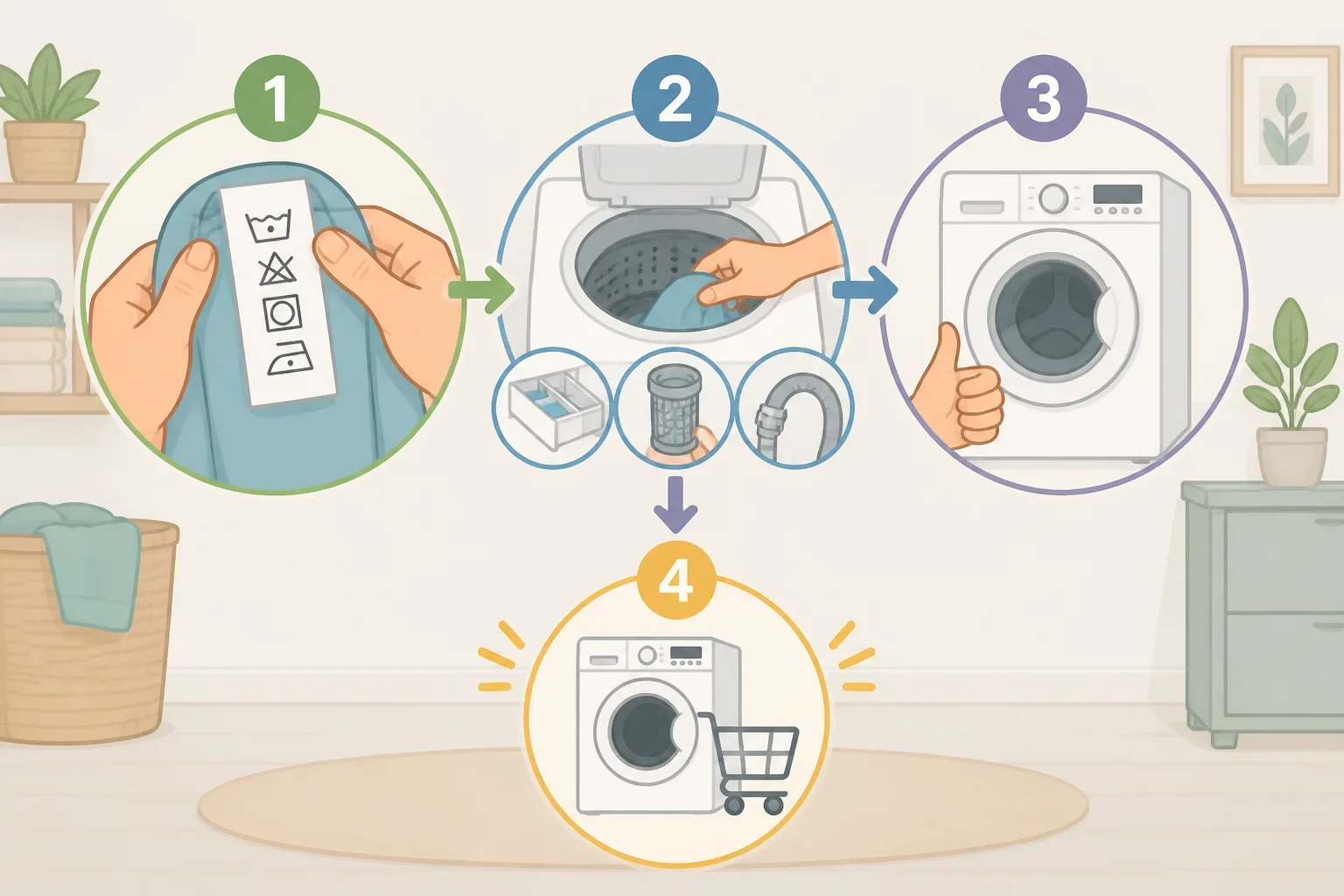
A towel with a new odor, rough texture, or reduced absorbency may need a better care routine rather than an immediate replacement. Work through the problem in order:
- Check the care label. Washing temperature, drying instructions, bleach guidance, and restrictions can vary by fabric and finish. The towel’s own care information is the best starting point.
- Stop using fabric softener if the label permits. The American Cleaning Institute includes fabric-softener guidance in its towel-care recommendations. Softener can leave a coating that makes absorbency less satisfying, so skipping it is a reasonable test when the towel feels less effective.
- Wash and dry the towel completely. Do not judge its smell or texture while it is still damp. Avoid packing the washer so tightly that the towels cannot move through the wash.
- Inspect the washer if several towels smell. One problematic towel may be aging out. Several towels with the same odor point toward a shared laundry or drying issue worth checking.
- Improve airflow between uses. Hang the towel open enough for air to move through it. A humid bathroom may require a more suitable drying location or more time before the towel is folded and stored.
- Make the final decision. If the towel works normally after troubleshooting, keep it. If the problem persists, demote it to cleaning use or replace it.
This sequence can prevent an unnecessary purchase when the real issue is residue, incomplete drying, or the washer. It also prevents a household from repeatedly trying to rescue a towel that is no longer comfortable or functional.
Hygiene depends on drying as well as washing
Towels stay close to the skin and frequently remain damp after use, so storage between washes matters. NSF International identifies damp household items as areas that deserve attention, but ordinary towel use is not automatically unsafe.
The American Cleaning Institute recommends washing bath towels after three uses. That is a general starting point, not a schedule that fits every bathroom or household. Wash sooner if a towel is visibly soiled, develops an odor, stays damp, or is shared in a way that makes the usual routine impractical.
A towel used after a shower and allowed to dry fully may be easier to manage than one that remains wet between uses. The practical check is whether the towel can dry completely and stay acceptably clean before it is used again.
Keep personal bath towels separate from cloths used for spills, floors, or pet care. A towel used for heavier household messes should not automatically return to the bathroom simply because it has gone through the washer. Give it a separate job, or replace it if it is too worn to clean effectively.
Make towels last longer
Care habits affect both comfort and replacement costs. Use the care label as the starting point, then build a routine that gives towels enough room to wash and dry properly.
- Wash towels at an interval that fits their use and drying conditions.
- Avoid fabric softener when the care guidance permits.
- Do not overfill the washer.
- Hang towels fully open between uses.
- Dry them completely before folding and storing them.
- Remove them from the dryer or drying rack when dry instead of leaving them in a warm, damp pile.
- Repair a small loose edge if the rest of the fabric is sound.
- Stop using a towel for personal drying when damage is spreading or creating loose threads.
Rotation helps, too. Keeping several towels in circulation gives washed towels time to dry and prevents one towel from carrying the entire household workload. The right number depends on how often laundry is done, how many people share the bathroom, and how quickly towels dry where they hang.
There is no need to replace every towel at once. Keep the towels that absorb and dry normally, troubleshoot the borderline ones, and retire the worst performers first.
Shop for the bathroom you actually have
Replacement shopping is easier when the towel is chosen for the household’s routine, not just the display-table feel.
Start with the intended use:
- Daily bathing: Choose a towel that feels comfortable and dries within the normal household routine.
- Guest use: Appearance, easy storage, and simple care may matter most.
- Children: Smaller, lighter towels may be easier to hang and manage.
- Cleaning: Choose these separately from personal bath towels.
Read the care label before buying. If the household normally uses a particular wash temperature or drying method, choose a towel that can tolerate that routine. A towel requiring special handling may not be a practical bargain, even if its initial price is attractive.
Consider drying speed alongside softness. Thick towels can feel plush but take longer to dry. If the bathroom has limited airflow, a slightly lighter towel may stay fresher simply because it dries more readily.
GSM can help compare weight, but it should not make the decision by itself. A dense towel is not automatically stronger, and a lower-weight towel is not automatically poor quality. Fiber, loop construction, seams, finish, laundering, and drying conditions all contribute to the result.
For a budget-conscious purchase, compare the towel’s expected use with its care demands. A moderately priced towel that dries easily and suits the household’s laundry routine may be a better choice than a heavier option that stays damp.
Keep, troubleshoot, demote, or replace
Use this decision guide after the towel is clean and fully dry:
- Keep it if it absorbs normally, dries fully, smells clean, and has no serious damage.
- Troubleshoot it if the problem is new, especially mild odor, scratchiness, or reduced absorbency.
- Demote it to cleaning use if it is intact but no longer comfortable or effective for drying skin.
- Replace it if it has persistent odor after appropriate laundering, suspected mold-like growth that cannot be resolved, extensive fraying, holes, or severely reduced absorbency.
The next time a towel comes out of the dryer, skip the visual-only inspection. Feel the fabric, test how it absorbs a little water, and notice whether it smells clean once fully dry. That quick check gives a more useful answer than age or color alone, helping keep the towels that still work and replace the ones that do not.
