
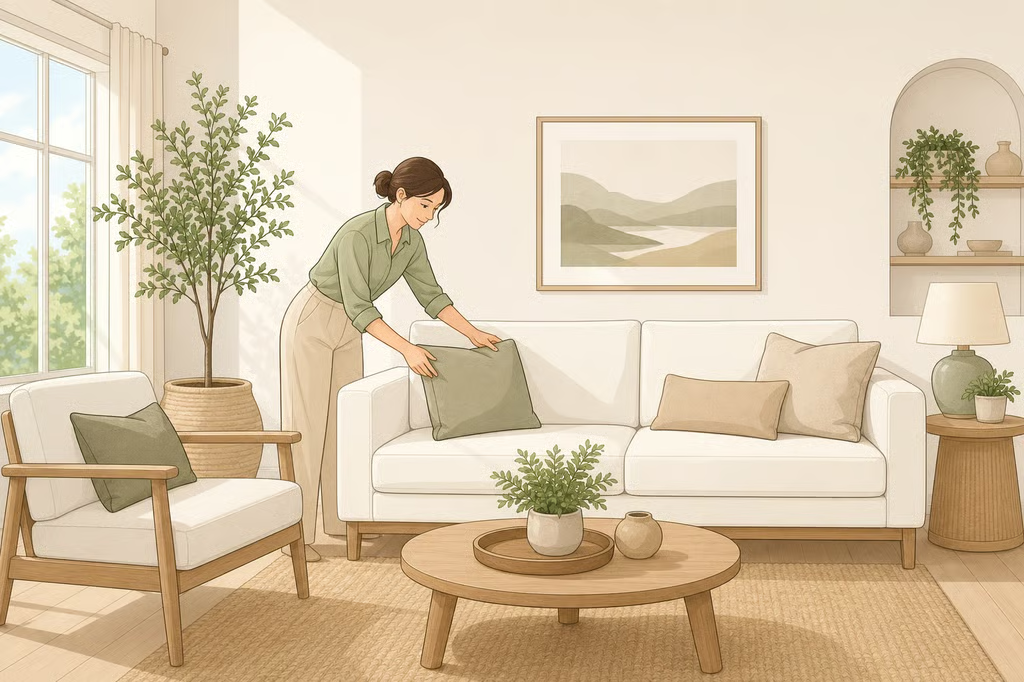
- How to Create a Quiet Luxury Home: Comfort First
- What quiet luxury interior design gets right
- How to create a quiet luxury home, starting with comfort
- Build the visual scheme with restraint
- Use daylight and layered lighting to change the room’s pace
- Make the room feel finished without overfurnishing it
- The order to follow
How to Create a Quiet Luxury Home: Comfort First
Quiet luxury is less about pricier furniture than how a room feels to live in. If you are wondering how to create a quiet luxury home, start with comfort rather than expensive finishes: workable air, useful light, manageable clutter, and materials that feel good in daily life.
People spend about 90% of their time indoors, and indoor levels of some pollutants are often several times higher than outdoor levels, according to the U.S. Environmental Protection Agency. A room can look serene while stale air, moisture, harsh lighting, or a crowded layout make it tiring to use.
A review of biophilic design in healthcare settings found associations between nature-connected environments and psychological and physiological well-being, but it did not test ordinary homes. Use daylight, plants, and natural materials as supportive design choices, not guaranteed mood treatments. The practical order is simple: handle safety and moisture first, then refine layout, light, color, texture, and storage.
What quiet luxury interior design gets right
Quiet luxury works best as a design approach, not a shopping list. The look usually depends on restraint, proportion, useful pieces, and a sense that every item has room to be seen. It should feel finished without feeling fragile or over-styled.
That means a comfortable sofa matters more than a recognizable label. A clear walkway matters more than another side table. A lamp that works for reading and winding down earns its place more convincingly than a decorative fixture that only looks good in a photograph.
The same comfort-first logic appears in research on sustainable therapeutic environments. Daylight, indoor air quality, noise, and thermal comfort are treated as important parts of a supportive setting, while biophilic design brings natural elements into built environments. The evidence is strongest in healthcare spaces, so the home application here is an editorial recommendation informed by that framework, not a clinical promise. A review of biophilic design found broad benefits in healthcare settings but also noted the need for more research on individual design elements.
After safety and moisture issues are handled, turn to the choices that can be seen and changed: layout, light, color, texture, and visual editing.
How to create a quiet luxury home, starting with comfort

Complete these steps before buying decorative pieces. They are prerequisites for a calmer room, not decorating techniques in themselves.
- Fix moisture and ventilation first. Repair leaks and keep indoor humidity between 30% and 50% by ventilating or using a dehumidifier when needed. Run kitchen and bathroom exhaust fans while cooking and showering, and open doors or windows when outdoor air quality and weather permit. The EPA’s indoor environment guidance recommends these measures to control moisture and improve ventilation. If a wall, ceiling, cabinet, or floor shows signs of water damage, do not hide it with paint or furniture. Renters should notify the landlord promptly about leaks or indoor-air concerns.
- Complete the basic safety checks. Make sure smoke and carbon monoxide alarms work, and test the home for radon. Radon exposure is the second-leading cause of lung cancer in the United States, according to the EPA guidance linked above. Before decorating, also confirm that combustion appliances vent outdoors and are inspected annually according to manufacturer instructions. Never use a cooking stove to heat the home or operate a fuel-powered generator indoors, including during a power outage. These are household safety prerequisites, not style advice, but a polished room is no substitute for them.
- Reduce unnecessary products in the air. Minimize indoor use of heavy cleaners, pesticides, perfumes, and other chemical products. When appropriate, choose mild soap and water, follow product labels, never mix cleaning chemicals, and ventilate while painting, cleaning, sanitizing, or disinfecting. A simpler product routine can also make utility areas easier to manage. Use nonchemical pest-management methods when possible and avoid pesticide sprays and foggers. Do not smoke or use e-cigarettes indoors.
- Edit the room and clean what remains. Remove items that no longer serve the space, damp-dust surfaces, and vacuum regularly. The EPA recommends decluttering, damp-dusting, and vacuuming to help reduce allergens, pests, asthma triggers, and pollutants. Quiet luxury home decor is not bare minimalism. Keep the objects that are useful, meaningful, or genuinely beautiful, then give them enough space to register. Fewer small accessories often make a room feel more intentional than a crowded collection of accents.
The order matters: source control, or reducing a pollutant at its origin, is generally more effective than trying to filter the problem afterward. Fix the leak, reduce avoidable fragranced products, or improve ventilation before treating an air purifier as the solution to every indoor-air concern.
Build the visual scheme with restraint
Once the room is safe and functional, make the visible choices in a clear sequence. Start with the largest decisions, then add texture and personality.
- Choose a compact color palette. Begin with two or three related neutrals, such as a warm off-white, soft taupe, or muted gray, and add one restrained accent. The accent might be olive, clay, dusty blue, or another softened color that already appears in the room. Keep the strongest color on smaller, replaceable pieces if the household is still deciding on the direction. A cushion, throw, lampshade, or piece of art is easier to change than a wall treatment or large upholstered item. The goal is visual continuity, not a room where every object matches perfectly. Color is an editorial design choice here, not a research-proven mood treatment. Choose shades that suit the room’s daylight and the way the household uses it. A bedroom may benefit from a quieter palette, while a kitchen or dining area can carry a deeper accent without losing its sense of calm.
- Use natural-feeling materials selectively. Combine a few tactile materials rather than buying a roomful of decorative objects. Linen or cotton can bring softness to windows and upholstery. Wool can add warmth through a rug or throw. Wood, ceramic, and stone can provide variation without requiring bold patterns. Natural materials do not need to be expensive. A wooden stool, ceramic lamp base, cotton curtains, or wool-blend throw can provide more visual weight than several small ornaments. Choose pieces for how they wear, clean, and function, not only for their finish. Building materials, furnishings, and consumer products can affect indoor air quality, so consider what enters the home as well as how it looks. The EPA’s indoor-air-quality factsheet identifies furnishings, building materials, and consumer products as potential contributors.
- Prioritize proportion over quantity. In a living room, one properly sized rug and a substantial lamp may do more than a stack of small tables and accessories. In a bedroom, a pair of balanced bedside surfaces can make the arrangement feel settled without filling every available corner. Leave breathing room around larger pieces. A clear path through the room, a visible tabletop, and a place to set down a drink are practical signs that the design is working. Quiet luxury should make ordinary routines easier, not turn the room into a display that must be protected.
- Choose durable fabrics for real households. Homes with children, pets, frequent guests, or messy hobbies need materials that can be lived with. Look for washable or easy-care covers where possible, tightly woven upholstery, and rugs that do not require constant caution. This is where budget and style meet. A beautiful, delicate fabric that cannot tolerate daily use is not a successful luxury choice for every household. Spend more selectively on the pieces that receive the most use, and choose simpler, replaceable textiles elsewhere.
Use daylight and layered lighting to change the room’s pace
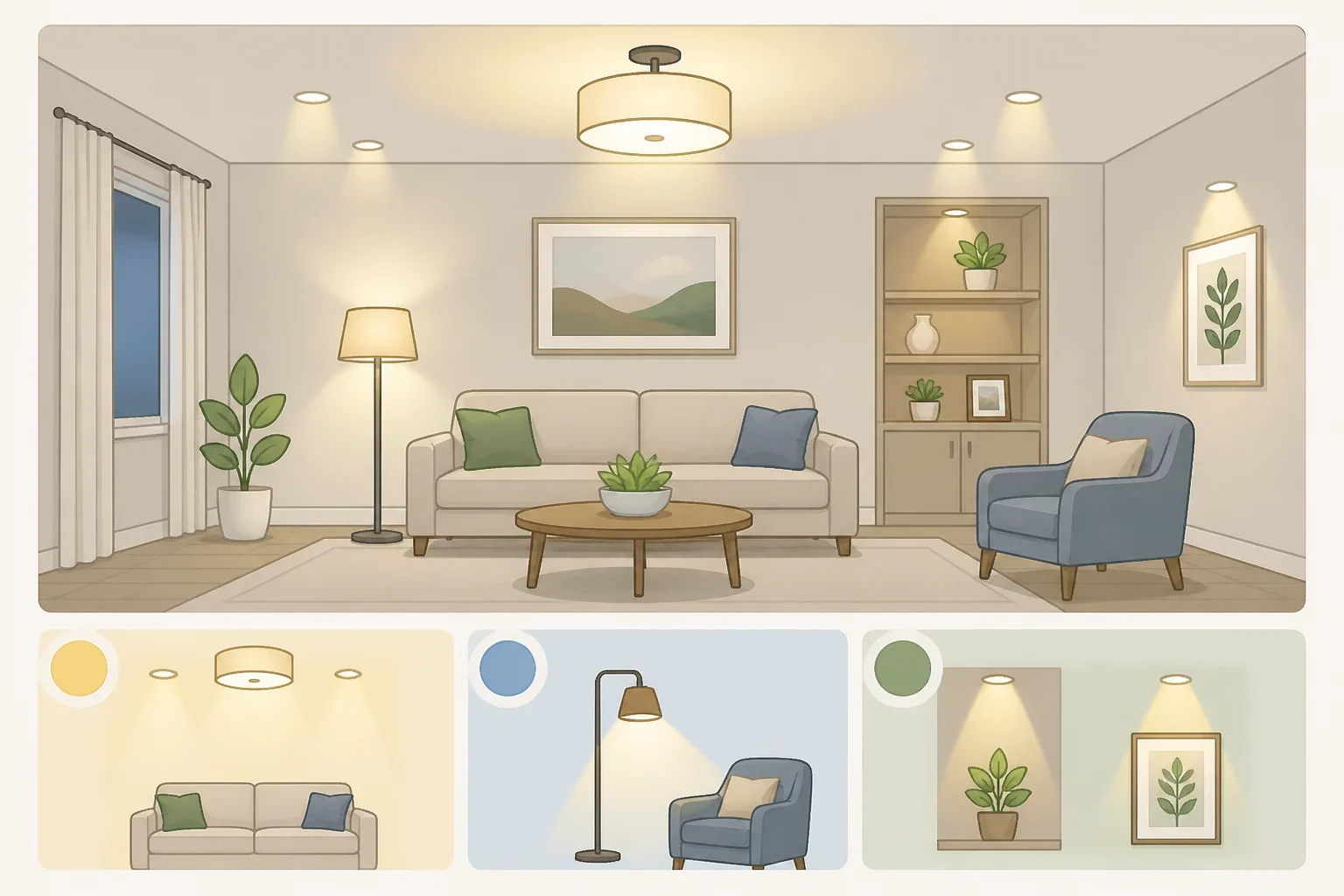
Light should be planned around the day, not added at the end.
- Arrange furniture to use available daylight. Notice which areas receive natural light and when. Move a reading chair, desk, or breakfast seat toward a useful window if the layout allows, and avoid placing oversized furniture directly in front of it. Research into light and human physiological responses has informed building recommendations related to sleep and wakefulness, according to the U.S. Department of Energy. That supports making daylight a planning priority, although it does not mean every home needs a renovation or a specific light level.
- Layer the evening light. Use a combination of ambient, task, and accent lighting rather than relying on one bright overhead fixture. A floor lamp can cover reading, a table lamp can soften a seating area, and a dimmable ceiling fixture can handle cleaning or hosting. The DOE notes that light levels intended to support health and well-being may be higher than those typically chosen for visual tasks. Control matters, because a room should be bright enough for cooking or tidying without staying equally bright during dinner or winding down.
- Use curtains and rugs for softness. Curtains can frame a window while making the room feel less exposed. A rug can define a seating area and add warmth underfoot. Upholstered furniture, cushions, and fabric shades can also make a room feel less stark. These are design recommendations, not claims that a particular textile will improve mood. Choose washable or durable options where maintenance matters, and measure before buying. A rug that is too small can make an otherwise thoughtful arrangement feel disconnected.
- Add greenery without creating another chore. Place one or two plants where the available light and care routine make sense. Keep useful windows visible rather than filling them with oversized furniture or too many pots. The healthcare research associates plants, natural light, and connections to nature with positive outcomes in those settings, but it does not rank which element matters most or establish the same result in every home. Choose greenery because it suits the room and household, not because it promises a guaranteed emotional change.
Make the room feel finished without overfurnishing it
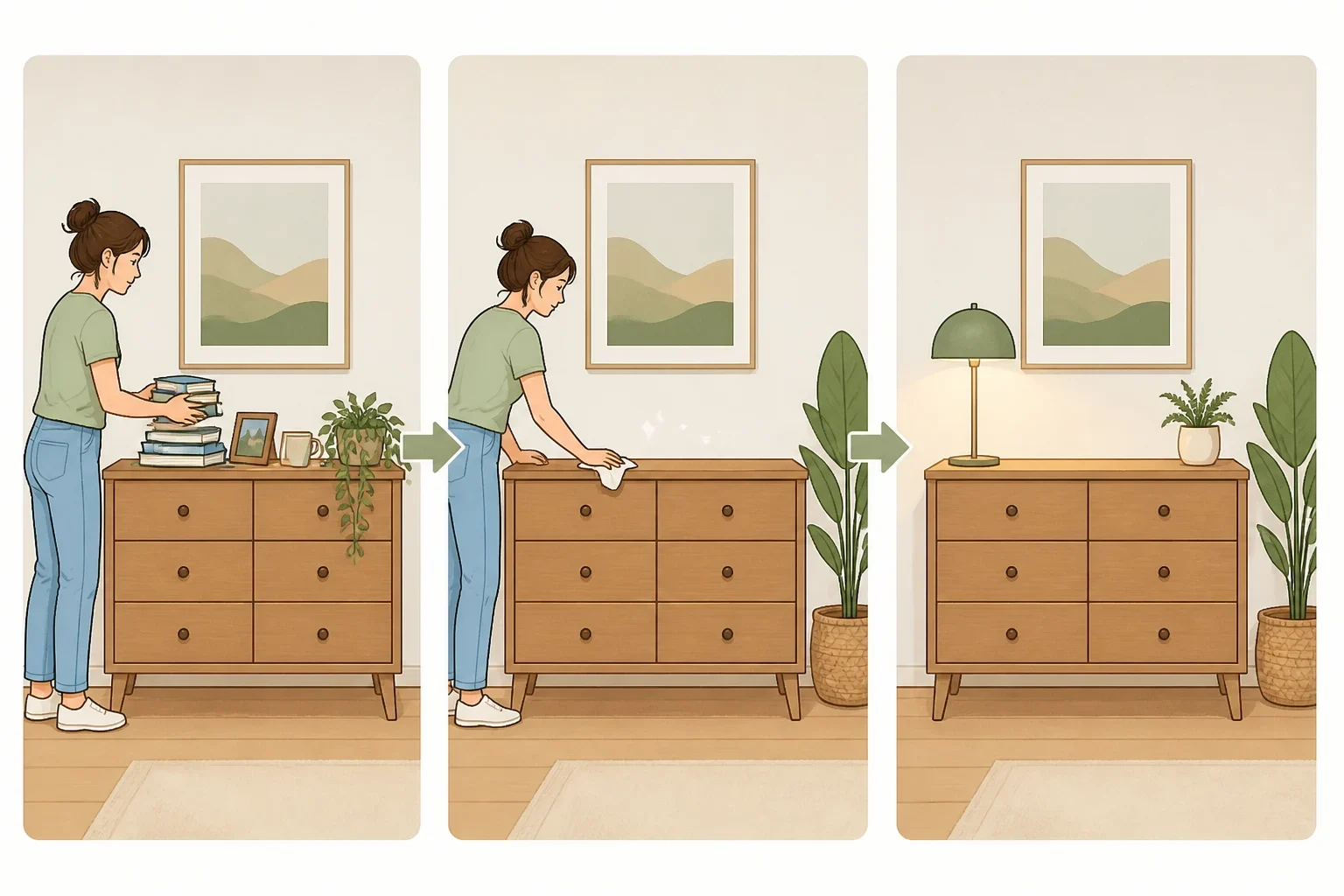
A budget-friendly refresh can happen in stages.
- Start free: clear one surface, rearrange furniture to improve circulation, open curtains during the day, and move a chair toward better light.
- Make a modest purchase: add one dimmable lamp, a washable throw, cotton curtains, or a ceramic vessel that serves a real purpose.
- Make a larger purchase carefully: choose the rug, sofa, curtains, or storage piece that solves the room’s biggest functional problem. Measure first and consider cleaning, durability, and placement.
- Choose air-quality equipment only when it addresses a real need: a high-efficiency HVAC filter or a portable air cleaner that does not intentionally emit ozone can supplement source control and ventilation, according to the EPA guidance. It should not replace fixing a leak or removing an avoidable pollution source.
Renters can make meaningful changes through layout, lighting, textiles, and removable storage. Persistent leaks, moisture, or air-quality concerns belong with the landlord rather than behind a decorative screen.
Sound deserves the same practical honesty. Rugs, curtains, and upholstered pieces may make a room feel softer, but the research covered here does not evaluate specific soundproofing products or guarantee acoustic improvement. If persistent noise is the problem, identify its source and consider a qualified contractor or acoustic specialist before spending on trial-and-error solutions.
The strongest quiet luxury choices are the ones that still make sense after the trend passes: a comfortable seat, a clear walkway, useful lighting, durable fabric, and enough empty space to keep the room easy to maintain.
The order to follow
A calm, quietly luxurious home does not require a total replacement of the furniture. First, fix the room’s biggest comfort problem, whether that is a leak, poor ventilation, harsh lighting, or an overcrowded surface. Next, adjust the layout and create a simple color and material scheme. Only then buy one piece that improves function or texture.
That sequence keeps the project realistic. It also leaves room for the home to feel personal, rather than copied from a showroom.
