
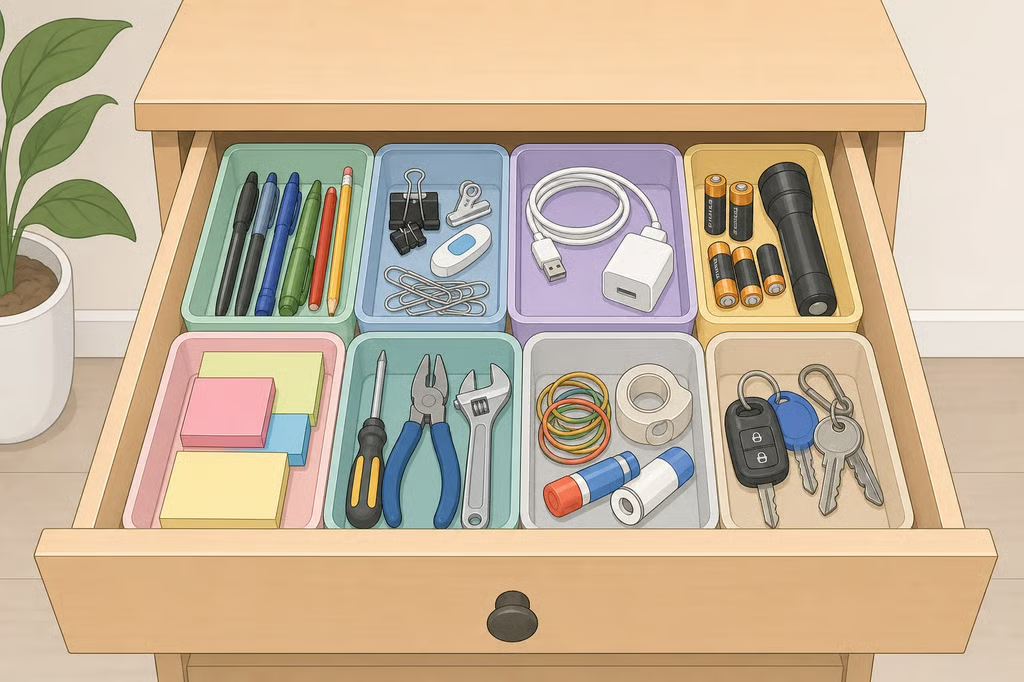
Junk Drawer Essentials: What to Keep and Organize
A useful junk drawer is not perfectly tidy. It is quick. The goal of stocking junk drawer essentials is to keep a small group of working items close at hand, contain them by category, and move anything hazardous, sensitive, bulky, or rarely used somewhere more appropriate.
Professional organizer Marie Potter says the practical test is whether you can find what you need in 15 seconds or less, as reported by House Beautiful two months ago. If opening the drawer starts a search through loose cords, dead pens, mystery keys, and old receipts, the problem is not having a junk drawer. There is simply too much in it.
Organizers increasingly describe this space as a utility drawer. Renata Cruz, a cleaning expert and professional organizer, told Good Housekeeping two days ago that “junk” should mean different items that are frequently needed and convenient to keep together, not clutter. Laura Kinsella called it a “greatest hits” drawer in Good Housekeeping five months ago.
The system below covers what earns a spot, how to contain it, and what should never go back in the drawer.
What to keep in a junk drawer
Start with items that solve recurring household interruptions. A home with a fully stocked workshop may need less hardware here, while a small apartment may rely on the drawer more often. Keep the list flexible, but make every item prove its usefulness.
Keep writing tools and a small notepad
A practical writing zone includes:
- One or two pens that write
- A pencil
- One permanent marker
- A small notepad
- Small scissors
Jo Hayes of EtiquetteExpert.org told Good Housekeeping two days ago that pen and paper remain useful for notes that are faster to scribble than type, such as a shopping reminder, a pickup time, or a message for someone else in the house.
Cruz keeps a pen, pencil, permanent marker, tiny scissors, and a few cable ties in a slim zippered pencil pouch, according to the same Good Housekeeping report. That setup prevents small items from roaming loose.
Test every pen and marker before it goes back. As Cruz put it, “A pen that doesn't write isn't a pen, it's clutter with a cap on it.” Keep the useful paper in one notepad instead of letting old notes, torn pages, receipts, and expired coupons build up around it. Trunz recommends throwing away paper that is garbage and filing anything worth keeping, according to Good Housekeeping five months ago.
Add a compact tape measure
A small tape measure is one of the most useful junk drawer items because it handles the little measurements that interrupt ordinary home tasks. Max Wilson told Good Housekeeping two days ago that it is probably the most-used item in his own drawer.
Use it to check whether a storage box or piece of furniture will fit, measure a doorway, or determine the size of a trash can. Cruz also uses hers to measure a drawer before buying organizers and to check a blank stretch of wall, according to the same report.
Keep the tape measure compact. It belongs in the drawer as a convenient measuring tool, not as an excuse to relocate the entire toolbox.
Store a dedicated flashlight
A flashlight earns its space because it leaves both hands free and does not drain the phone’s battery. Cruz told Good Housekeeping two days ago that she reaches for hers during power outages, when looking behind heavy furniture or appliances, and when lighting the back of a dark cabinet.
Test the flashlight when resetting the drawer. If it does not work, replace it or remove it. A dead flashlight has the same practical value as a dead pen.
Keep a few repair and fastening supplies
A basic repair zone might include:
- A mini screwdriver or basic multipurpose tool
- A few picture hooks
- Cable ties
- A limited number of elastic bands or clips
- One roll of regular tape
- One roll of packing tape
Wilson keeps spare keys, pens, a mini screwdriver, and picture hooks together, while Trunz recommends keeping one regular tape and one packing tape accessible and storing backstock elsewhere, according to Good Housekeeping five months ago.
Sharp items need a container with sides or a lid. Potter recommends a lidded box for thumbtacks and similar pieces so fingers do not meet loose points while searching, as reported by House Beautiful two months ago. Do not scatter hooks across a shallow tray where they can hide beneath pens.
How to organize a junk drawer without buying too much
The edit comes before the organizer. A new insert cannot solve a drawer that is holding too many broken, duplicated, or unidentified things.
1. Empty the drawer completely
Take everything out and place it on a counter or table. Look underneath the contents for crumbs, dust, rubber bands, and small hardware. Clean the drawer and any containers before putting anything back.
Laura McHolm recommends dumping out the drawer, cleaning it, and lining it with shelf paper, according to House Beautiful two months ago. Shelf paper is optional, but a clean surface makes the next reset easier.
2. Sort everything into four piles
Create these groups:
- Keep in the drawer
- Relocate elsewhere
- Recycle or dispose of safely
- Identify before deciding
Ask, “How is this currently useful?” Kinsella recommends that question in Good Housekeeping five months ago. It works better than asking whether something might be useful someday, which can give nearly every object a permanent pass.
Move bulky tools to the toolbox, craft supplies to craft storage, and current paperwork to its proper file. Remove broken cords, dried-out markers, random screws with no known purpose, outdated menus, old wrappers, and duplicate coupons. These items quietly take space away from the scissors, tape, and small tools used regularly, Kinsella says.
Mystery keys deserve a brief investigation. Try them against the locks in the home and label any keeper with masking tape and a marker. A key with no identifiable purpose after that check does not need a permanent spot.
3. Test anything that is staying
Before an item earns space, confirm that it works.
Scribble with each pen and marker. Test the scissors and flashlight. Check cords and chargers for damage, and keep only electronics that are current and used. Trunz advises removing outdated or broken electronics, according to Good Housekeeping five months ago.
Do not guess about loose batteries. Use a battery tester to determine whether they are usable, dying, or dead, a recommendation reported by Good Housekeeping two days ago. Cruz stores working batteries elsewhere with their terminals covered and puts dying ones in a separate container headed for battery recycling.
4. Measure the drawer before choosing containers
Measure the drawer’s interior length, width, and usable depth. Check that it still opens and closes with the proposed containers inside. A tray that prevents the drawer from opening is not an organizational improvement.
Purchased inserts are optional. Clean takeaway containers, small boxes, old checkbook boxes, small gift boxes, and folded cardboard can create useful dividers. Use shallow containers so items remain visible. A pouch works well for writing supplies and cable ties, a divided tray suits small hardware, and a lidded box protects fingers from sharp items.
Do not create a separate container for every object. Related items can share a zone if each one remains easy to see and remove.
5. Assign categories and leave space open
Potter’s five categories provide a workable framework:
- Writing instruments and pads
- “Keep togethers,” such as elastic bands and clips
- Electronics
- Hardware
- Mystery bits, only when their purpose is known
Label the zones if more than one person uses the drawer. Lemene recommends labeling spots to remind everyone where things live, according to House Beautiful two months ago.
Leave roughly 10% to 15% of the drawer open. Potter offered that range as breathing room in the same House Beautiful report. The drawer should close without force, and the contents should not spill into one another when it opens.
Junk drawer must-haves versus what should leave
Some objects are ordinary clutter. Others create safety or privacy problems.
Relocate ordinary clutter
Move these items out:
- Duplicate scissors, tape, and tools
- Craft supplies used mainly for children’s projects
- Bulky tools
- Broken cords and outdated chargers
- Random screws or hardware with no known purpose
- Old receipts, menus, wrappers, and coupons
- Excess rubber bands
- Manuals that can be found or downloaded elsewhere
Keep a small number of rubber bands if they are genuinely useful, then place the surplus in a jar or other container outside the utility drawer. Store backstock in a closet, workshop, or supply area. The drawer should hold what gets used regularly, not every item that might someday come in handy.
Store batteries separately and carefully
Loose batteries are a poor match for a drawer filled with keys, coins, paper clips, scissors, and other metal objects. A 9-volt battery has both poles on the same end, which means a conductive object can connect them and create a short circuit, according to a report published by Do It Yourselves two weeks ago.
Cover the terminals of an unused 9-volt battery with electrical tape. Keep spare batteries in their original packaging or with their contacts covered, away from anything that can burn, as the same report explains. A dedicated case or a closet shelf is a better home than the junk drawer.
Set aside dying batteries for the appropriate recycling route rather than returning them to the drawer. Do not mix tested batteries with batteries whose condition is unknown.
Keep sensitive documents locked up
An unlocked kitchen drawer is not a suitable home for passports, birth certificates, Social Security cards, wills, deeds, vehicle titles, or other documents that would be difficult to replace or misuse if exposed. The Do It Yourselves report from two weeks ago recommends keeping records that carry a date of birth, Social Security number, or driver’s license number in a locked location.
Routine papers need a decision, too. Shred or securely dispose of documents that are no longer needed, file records that must be retained, and avoid letting mail accumulate beside scissors and tape. The junk drawer can hold a small notepad. It should not become an informal records cabinet.
Run the 15-second test
Close the reset drawer, then test the setup with three ordinary requests: find a working pen, find the tape, and find the flashlight. Potter’s standard is that the needed item should be located within 15 seconds, according to House Beautiful two months ago.
If the search takes longer, make the categories clearer, remove duplicates, or relocate an item that does not belong in this room. Do not solve a crowded drawer by adding another layer of containers.
Reset the drawer when it starts getting difficult to use. Lemene told House Beautiful two months ago that a drawer becoming “junky” is the sign that items which do not belong have started piling up.
The next reset is simple: empty the drawer, test what remains, relocate batteries and important documents, contain sharp items, group the useful pieces, and run the 15-second test. That is enough to turn a dumping ground into a small utility station that earns its space.
