
- Crispy potato Caesar salad recipe (no croutons)
- Recipe at a glance
- Ingredients
- 1. Mix the dressing
- 2. Cut the potatoes evenly
- 3. Parboil and dry the potatoes
- 4. Rough up the surfaces
- 5. Roast until deeply browned
- 6. Prepare the greens
- 7. Dress the greens, then add the potatoes
- Plan ahead without losing the crunch
- Easy variations
Crispy potato Caesar salad recipe (no croutons)
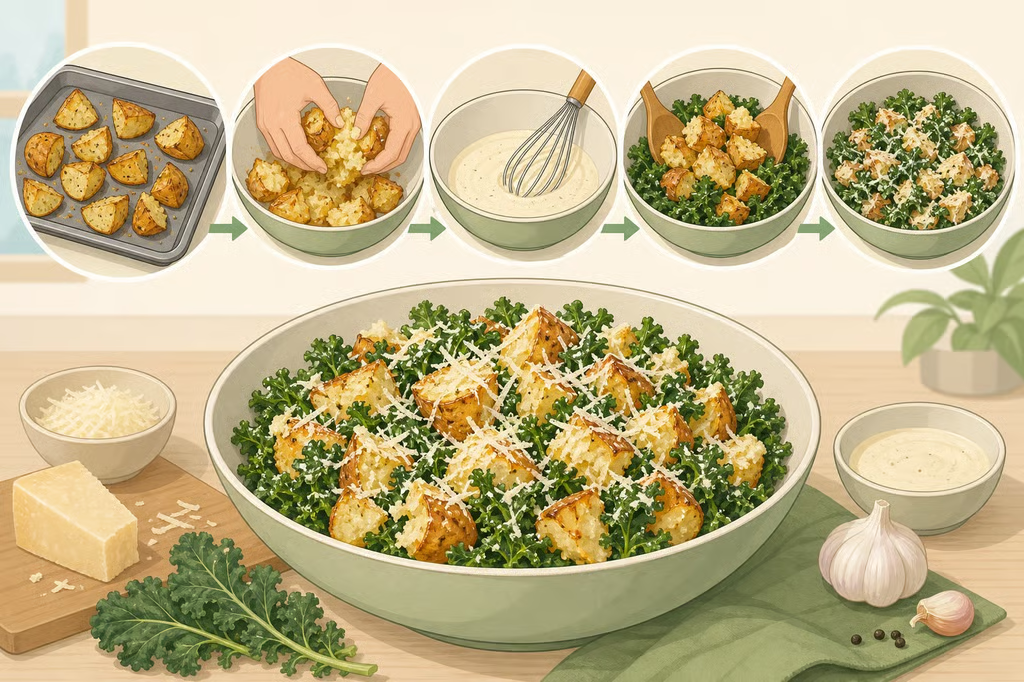
A crispy potato Caesar salad recipe turns a familiar side into a satisfying meal, even without chicken. The potatoes replace croutons, but they need more care than a quick cube-and-roast approach. Parboil them, let them dry, rough up the softened edges, and assemble the salad while the potatoes are still warm. That sequence gives you fluffy centers and browned, crackly surfaces.
This version uses 8 to 12 small Yukon Gold potatoes, two bunches of kale or an equivalent amount of romaine, and a sharp anchovy-Parmesan dressing adapted from SIP.COOK.ENJOY. The oven timing is a practical adaptation, so use the visual cues below rather than treating the clock as a guarantee.
Recipe at a glance
- Yield: Four generous servings, based on a comparable potato Caesar salad from Dave's Grill
- Potatoes: 8 to 12 small Yukon Gold potatoes
- Boil time: 10 to 15 minutes, depending on size
- Oven: 400°F
- Roasting time: Begin checking at about 25 minutes
- Best use: Serve immediately as a hearty side or a lighter main dish
The potatoes need room to brown. If they are crowded on the baking sheet, they release steam into the pan instead of developing crisp edges. Have a large pot, colander, baking sheet, large bowl, and small bowl or jar ready before starting.
Ingredients
For the potatoes
- 8 to 12 small Yukon Gold potatoes
- Water for boiling
- Salt for the cooking water, plus more to season
- 2 tablespoons olive oil
- Black pepper, optional
For the Caesar dressing
- Juice of 1 lemon
- ¼ cup grated Parmesan
- ¼ cup Dijon mustard
- 3 tablespoons olive oil
- 1 teaspoon anchovy paste
- 1 teaspoon Worcestershire sauce
- 1 tablespoon hot sauce, optional
For the salad
- 2 bunches dino kale, or romaine for a more traditional Caesar
- 1 cup shaved Parmesan
- Extra dressing and Parmesan for serving, if desired
This version is not vegetarian because it contains anchovy paste. Anchovy paste contains fish, and Worcestershire sauce may contain fish depending on the brand. Dijon mustard, hot sauce, Worcestershire sauce, and packaged Parmesan can also vary in their gluten and allergen information. Check labels before serving guests with allergies or dietary restrictions.
1. Mix the dressing
Add the lemon juice, grated Parmesan, Dijon mustard, olive oil, anchovy paste, Worcestershire sauce, and hot sauce to a small bowl or jar. Whisk or shake until the mixture looks smooth.
Taste the dressing before the potatoes are ready. It should be bright and savory enough to stand up to the potatoes without becoming so salty that it overwhelms the greens and Parmesan. If it is too thick to coat the leaves, stir in a small splash of water. Dave's Grill also uses water to loosen its Caesar dressing to a silky consistency.
Set the dressing aside. Preparing it first keeps the final assembly quick, which matters when the potatoes come out of the oven.
2. Cut the potatoes evenly
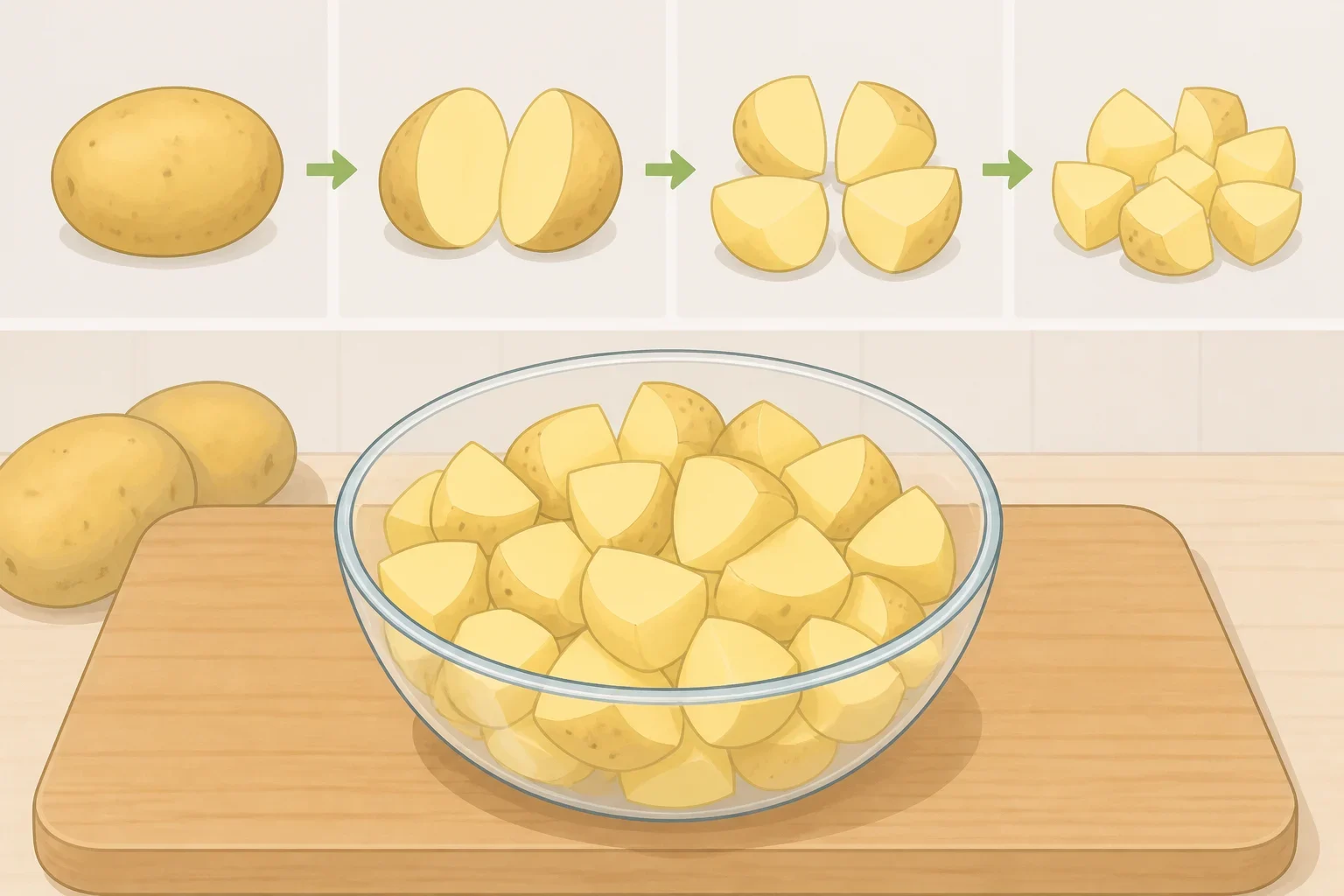
Wash the potatoes and cut them into similarly sized pieces. Halve or quarter small potatoes; cut larger ones into bite-sized chunks. The exact number will vary, so even sizing matters more than counting every piece.
Yukon Gold potatoes are the variety used in the recipe this method adapts. Keep the pieces close in size so they become tender at roughly the same time. If some pieces are much larger than others, the small ones may soften too far before the centers of the large ones are ready.
3. Parboil and dry the potatoes
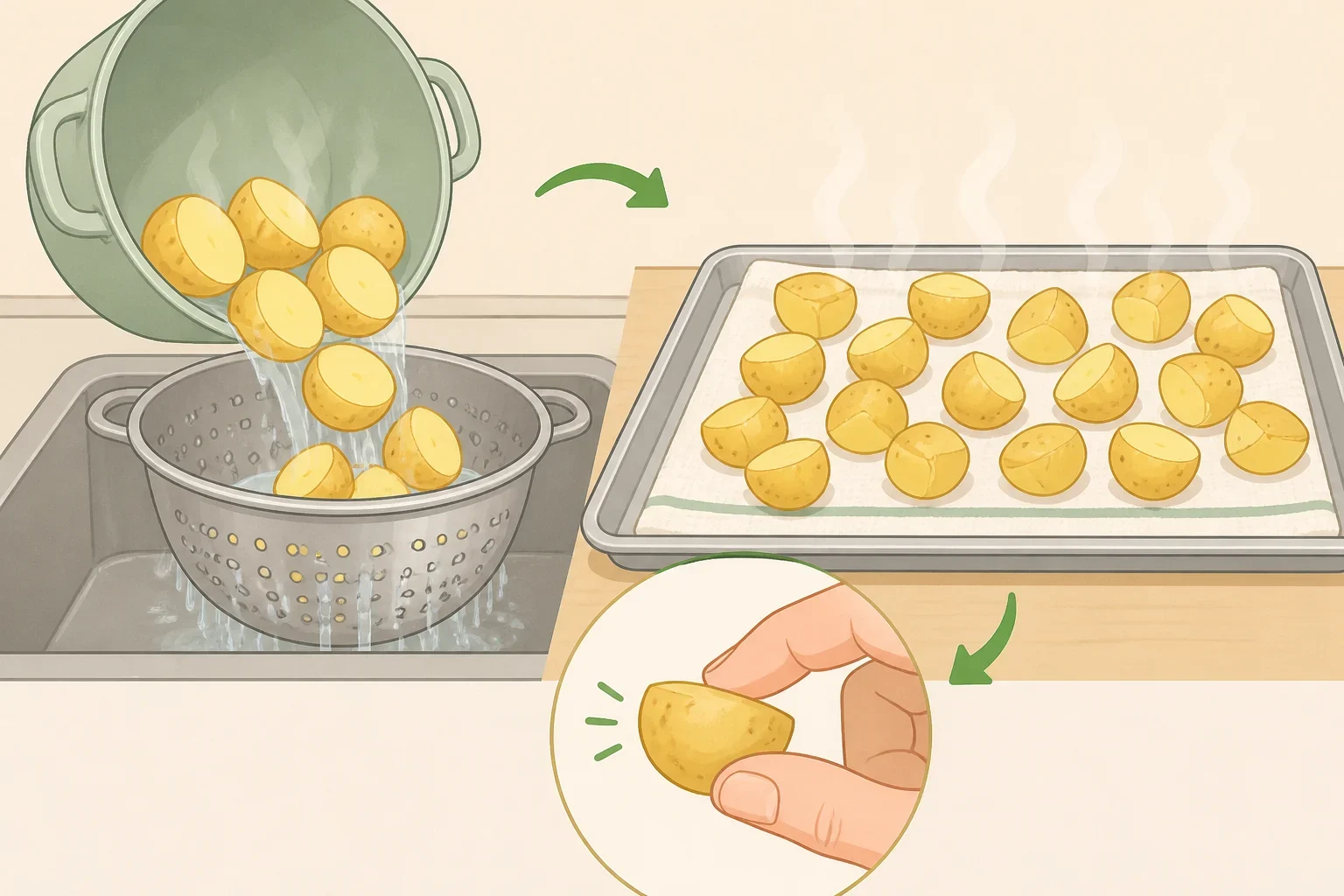
Bring a pot of salted water to a boil. Add the potatoes and cook for 10 to 15 minutes, depending on their size. A knife should enter the center fairly easily, but the pieces should still hold their shape. This boiling window comes from the oven-based potato Caesar method at SIP.COOK.ENJOY.
Drain the potatoes in a colander and let them sit until visible steam has diminished and the surfaces look matte rather than wet. Do not rush this pause. Moisture on the outside has to evaporate before the potatoes can brown properly.
The potatoes should be tender enough to rough up, not so soft that they collapse when tossed. If the edges break slightly, that is useful. Completely mashed pieces will not roast into sturdy potato “croutons.”
4. Rough up the surfaces
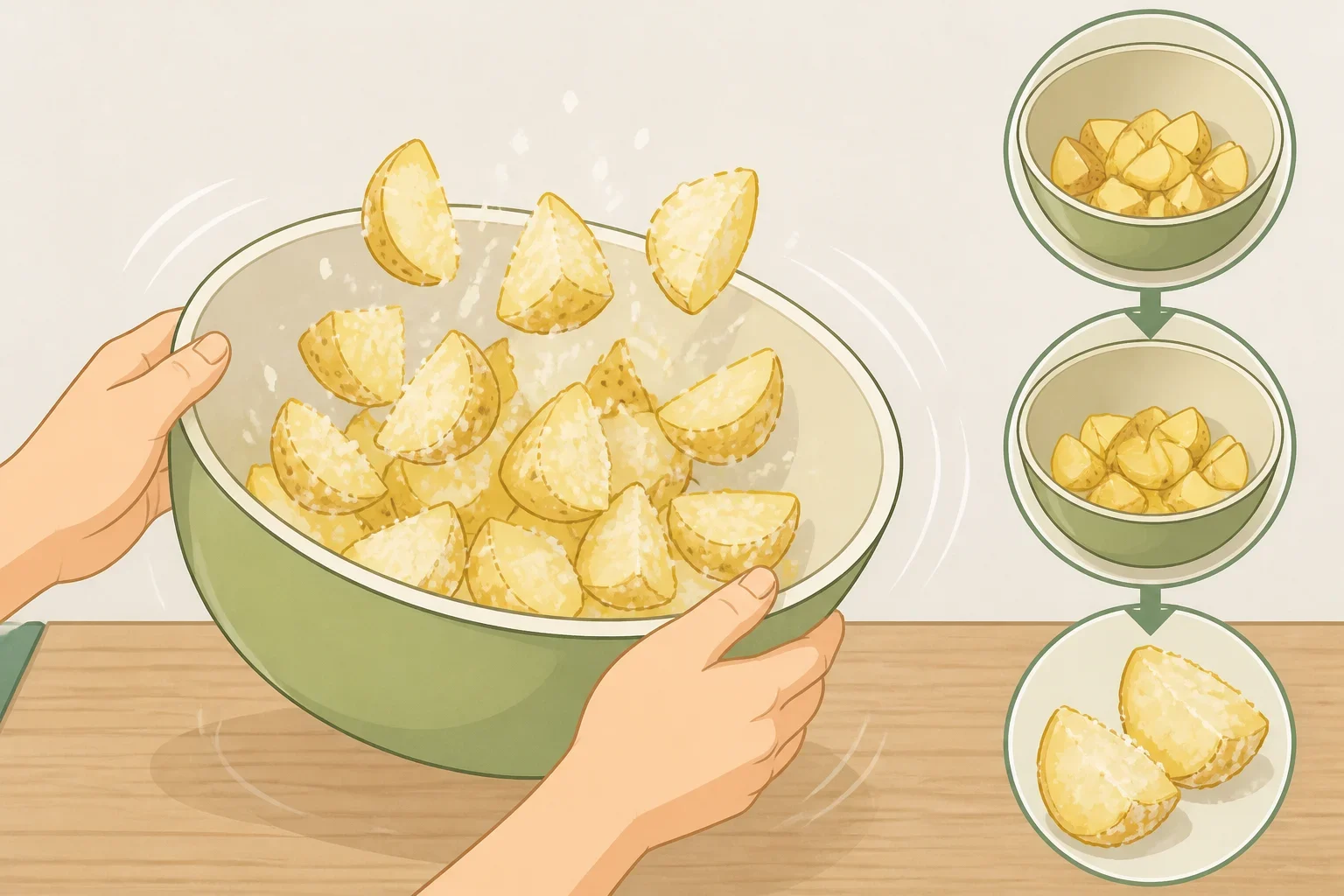
Transfer the drained potatoes to the empty pot or a large bowl. Add the olive oil, salt, and black pepper, then toss firmly. The pieces should look a little battered around the edges, with a thin starchy film beginning to cling to their surfaces.
This is the step that separates a genuinely crisp potato from a merely browned one. Rough edges create more places for the potatoes to brown, while the softened exterior helps form a craggy coating in the oven. A few loose flakes and broken corners are helpful.
Stop before the pieces turn into mash. If you can still identify every potato chunk, the texture is where it needs to be.
5. Roast until deeply browned
Heat the oven to 400°F. Spread the potatoes across a large baking sheet in one layer, leaving space between the pieces. Roast until the undersides begin to brown, then turn them once or twice during cooking.
Begin checking at about 25 minutes. The potatoes may need longer if the pieces are large or the pan is crowded. The parboiled potato method from SIP.COOK.ENJOY uses a 400°F oven and a 25-minute bake, while Dave's Grill uses 425°F and 25 to 30 minutes for raw potato chunks. Those preparations are different, so color and texture are better guides than a fixed finish time.
The potatoes are ready when the edges are deeply golden, the surfaces look dry and craggy, and the centers are tender when pierced. Pale, soft potatoes need more time. Do not assemble the salad simply because the timer has finished.
6. Prepare the greens
While the potatoes roast, wash and dry the kale or romaine thoroughly. Remove the tough kale stems and slice the leaves into bite-sized pieces. If using romaine, chop it into pieces large enough to support the potatoes.
The original recipe adaptation uses two bunches of dino kale and notes that kale holds up better with several substantial mix-ins and dressing. That is one cook’s practical observation, not a controlled comparison, but it makes kale a sensible choice for a salad that may sit briefly. Romaine gives the familiar Caesar texture and is the better fit when the salad will be dressed and served immediately.
Place the greens in a large bowl. Keep the dressing separate until the potatoes are nearly finished.
7. Dress the greens, then add the potatoes
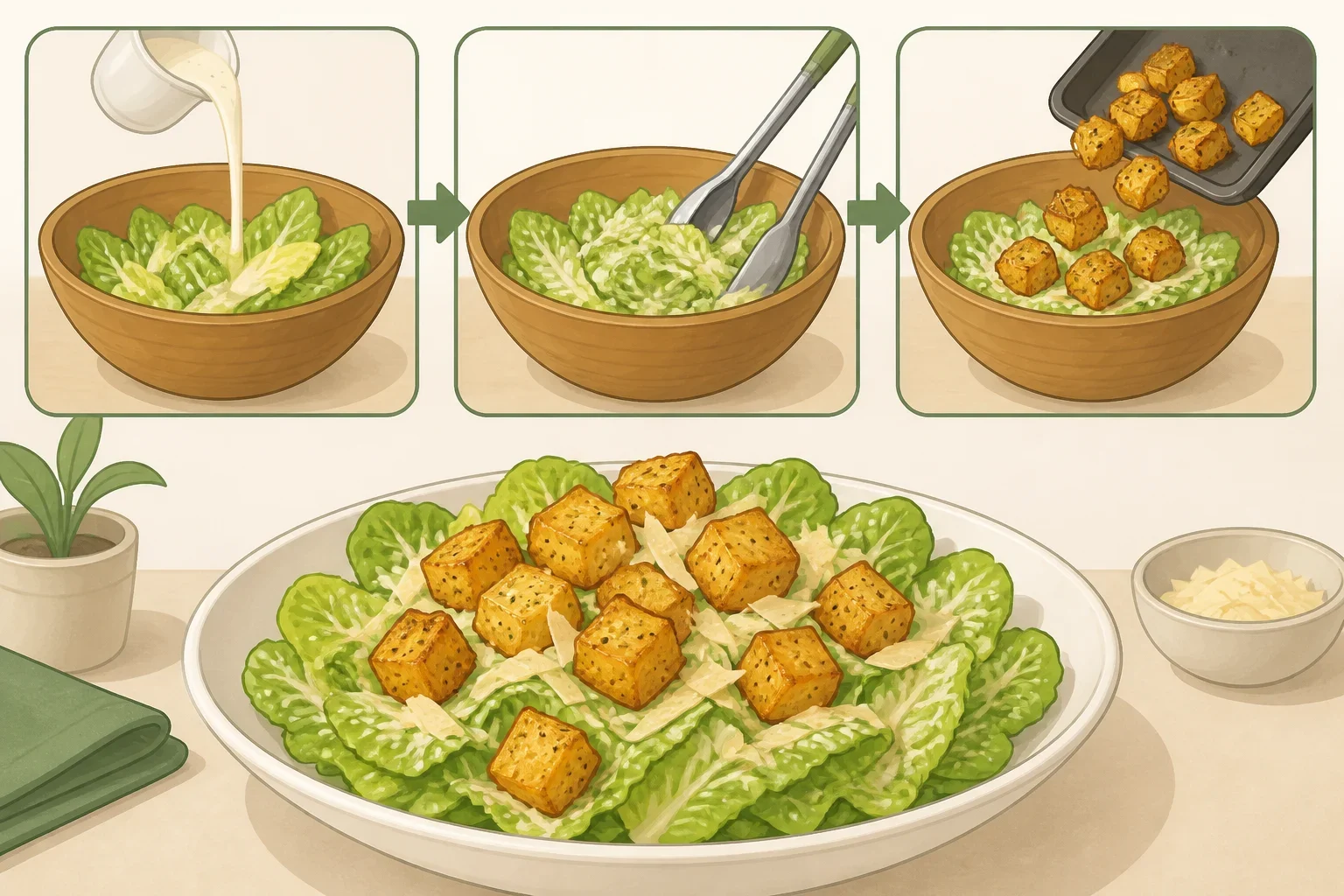
Add a little dressing to the greens and toss. Continue adding dressing until the leaves are lightly coated, stopping before they look wet or heavy. The listed amount is a starting point, not a requirement to use every drop.
Add the shaved Parmesan and toss once more, or scatter it over the greens after plating. Transfer the dressed salad to a serving platter or individual plates.
Place the hot potatoes on top at the last possible moment. The assembly order follows the approach from Dave's Grill, which dresses the greens first and adds the hot roasted potatoes just before serving. That keeps the contrast intact: cool, creamy greens under warm, crunchy potato pieces.
Do not toss the potatoes into the dressed greens early. As the potatoes cool, steam from their fluffy centers moves toward the crust and softens it. Dressing speeds up that texture change. Let diners mix the potatoes into their own portions instead.
Plan ahead without losing the crunch
Mix the dressing and wash the greens earlier in the day if needed. Store the greens dry and keep the dressing separate. The potatoes should be the last component to finish.
If dinner runs late, leave the roasted potatoes uncovered rather than sealing them in a container. Trapped condensation works against the crust. For a delayed meal, hold the potatoes in a warm oven with airflow or give them a brief air-fryer reheat, as suggested by the potato-roasting method from Serious Eats in the supplied research. Neither option completely restores the texture of potatoes served straight from the oven, so treat holding as a backup rather than part of the ideal schedule.
For leftovers, keep the potatoes and dressed greens separate whenever possible. Kale is the more forgiving choice for a salad that will be eaten later, based on the practical observation in SIP.COOK.ENJOY. Romaine is the better fit for an immediate serving.
Easy variations
The Caesar salad with crispy potatoes can be simplified, but shortcuts change the finished dish. Allrecipes uses smashed frozen potato nuggets with romaine, Parmesan, bottled Caesar dressing, and crispy chicken. That approach suits a busy weeknight when speed matters more than a from-scratch roasting method.
Chicken can be added to this version, but it is not essential. The potatoes make the salad more substantial than a crouton-only Caesar, especially when served warm over a generous bowl of greens. For a more traditional presentation, use romaine. For a salad that needs to hold up a little longer, choose kale.
The most reliable homemade Caesar salad with roasted potatoes follows a simple order: prepare the dressing and greens first, parboil the Yukon Gold potatoes, let them dry, rough up the edges, and roast until deeply browned. Plate the greens before the potatoes leave the oven, then spoon the hot pieces over the top and serve immediately. That final bit of timing is what keeps the salad crisp instead of turning it into a dressed bowl of soft potatoes.
