
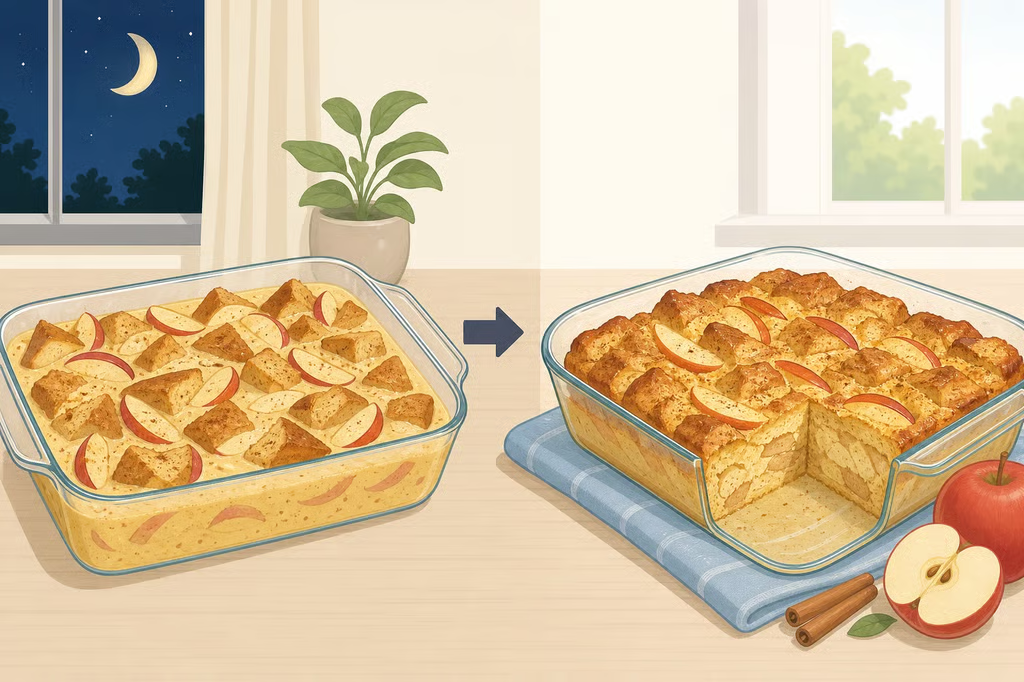
There's something especially inviting about waking up to the smell of cinnamon, baked apples, and warm bread. Baked apple cinnamon French toast brings those familiar apple-pie flavors to the breakfast table, with a golden top and a soft, custardy center. Better still, most of the preparation can happen the night before.
Unlike traditional French toast, which requires cooking individual slices, this version goes straight into the oven in one baking dish. The challenge is getting the texture right: enough custard to soften the bread without leaving the bottom wet or the center undercooked.
The key is choosing sturdy bread, balancing the liquid, and giving the casserole enough time to bake through. Here's how to prepare it for a relaxed weekend breakfast or holiday brunch.
Ingredients for apple cinnamon French toast
This recipe uses a 9-by-13-inch baking dish and makes approximately eight servings.
- Prep time: 20–25 minutes
- Soaking time: Overnight, preferably 8–12 hours
- Baking time: Approximately 45–60 minutes
- Resting time: 10 minutes
- Equipment: Baking dish, mixing bowl, whisk, knife, cutting board, foil, and optional skillet
For the French toast
- 14 ounces day-old brioche or challah, cut into 1-inch cubes
- 3 medium firm apples, such as Granny Smith or Honeycrisp
- 6 large eggs
- 2 cups whole milk
- 1/3 cup packed brown sugar
- 2 teaspoons vanilla extract
- 1 1/2 teaspoons ground cinnamon
- 1/4 teaspoon ground nutmeg
- 1/4 teaspoon salt
- Butter or cooking spray for greasing the dish
For the cinnamon topping
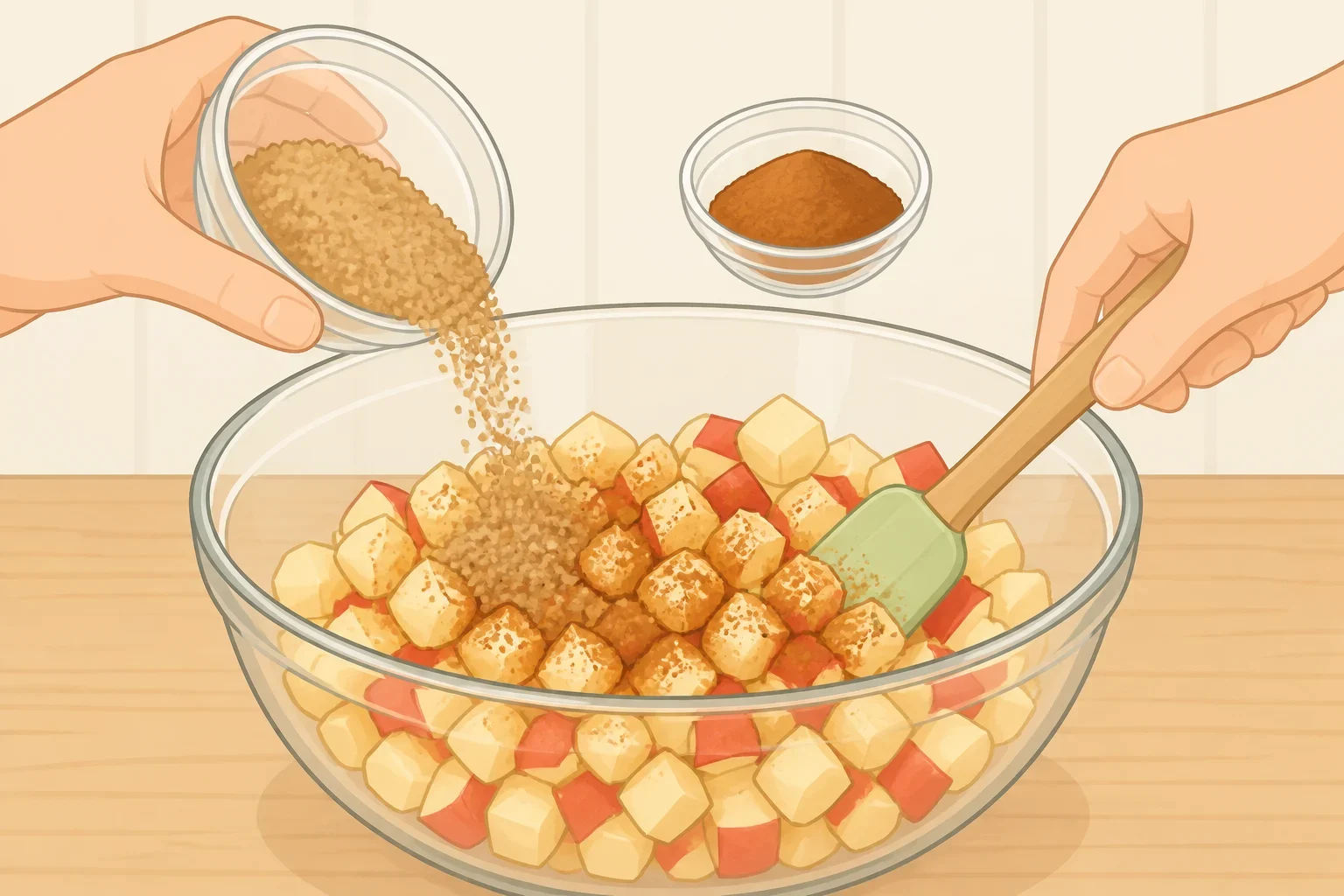
- 2 tablespoons brown sugar
- 1/2 teaspoon ground cinnamon
Maple syrup, confectioners' sugar, or whipped cream can be added when serving.
1. Choose bread that won't turn mushy
The bread makes a considerable difference to the finished texture. Day-old brioche and challah have enough structure to absorb the custard while staying tender. French bread and crusty sourdough are alternatives, although their firmer crusts produce a slightly different texture.
Avoid thin, soft sandwich bread, particularly for an overnight casserole. It can break down during soaking and leave the finished dish mushy.
Slightly stale bread works particularly well because it can take up more custard without collapsing. King Arthur Baking's apple French toast recipe also uses bread that has been allowed to dry before assembly.
If your loaf is still fresh, spread the cubes on a baking sheet and place them in a 300°F oven for approximately 10 minutes, stirring halfway through. Remove them when they feel slightly dry, before they become noticeably browned. Let the bread cool before adding the custard.
2. Prepare the cinnamon apples
Peel, core, and dice the apples into small, evenly sized pieces. Granny Smith apples offer a pleasant tartness against the sweet custard, while Honeycrisp apples bring a sweeter flavor and firm bite.
For a quicker preparation, use the diced apples raw. They'll soften in the oven, although some pieces may retain a little firmness.
If you prefer softer apples, sauté them in a small amount of butter over medium heat for about five minutes, stirring occasionally. Cook until they begin to soften and some of their moisture has evaporated, then let them cool before assembly.
There's no need to cook the apples until they're completely tender. They'll continue softening in the oven, and overcooking them beforehand can leave them mushy.
3. Assemble the casserole the night before
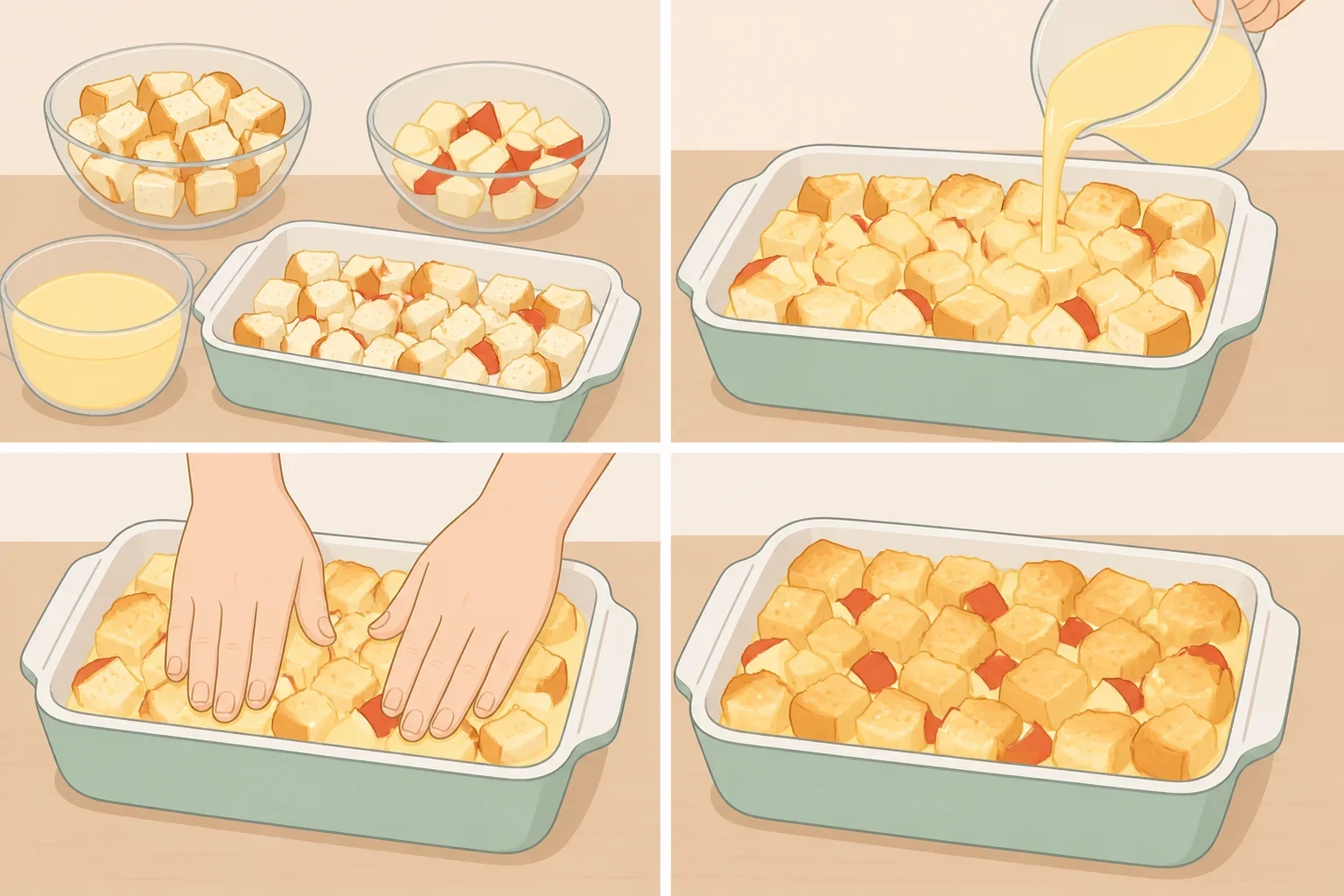
- Grease the baking dish. Lightly coat the bottom and sides of a 9-by-13-inch dish with butter or cooking spray.
- Layer the bread and apples. Spread the bread cubes evenly across the dish, scattering the diced apples between them. Keep the bread relatively loose rather than pressing it into a dense layer.
- Prepare the custard. In a large bowl, whisk the eggs, milk, brown sugar, vanilla, cinnamon, nutmeg, and salt until thoroughly combined.
- Pour and soak. Slowly pour the custard over the bread, working across the dish so the liquid reaches the corners. Press the cubes down gently with a spatula to help moisten them without crushing them.
- Cover and refrigerate. Cover tightly with foil or plastic wrap and refrigerate overnight, preferably for 8–12 hours. Keep the dish at 40°F or below during the soak.
By morning, the bread should have absorbed much of the custard. Some moisture at the bottom is normal, but the bread should not be floating in a large pool of liquid.
Can you make it the same morning? Yes, although the results may differ depending on the bread. Love and Lemons' French toast casserole allows a 30-minute soak for a same-day preparation. For this apple version, give the bread enough time to become evenly moistened, and refrigerate it if soaking for longer than two hours.
4. Bake until the center is set
4. Bake until the center is set
Preheat the oven to 350°F. Remove the casserole from the refrigerator while the oven heats, but avoid leaving it at room temperature for an extended period. If using a glass or ceramic baking dish, follow the manufacturer's instructions about temperature changes to avoid thermal shock.
Combine the brown sugar and cinnamon for the topping, then sprinkle the mixture evenly over the bread.
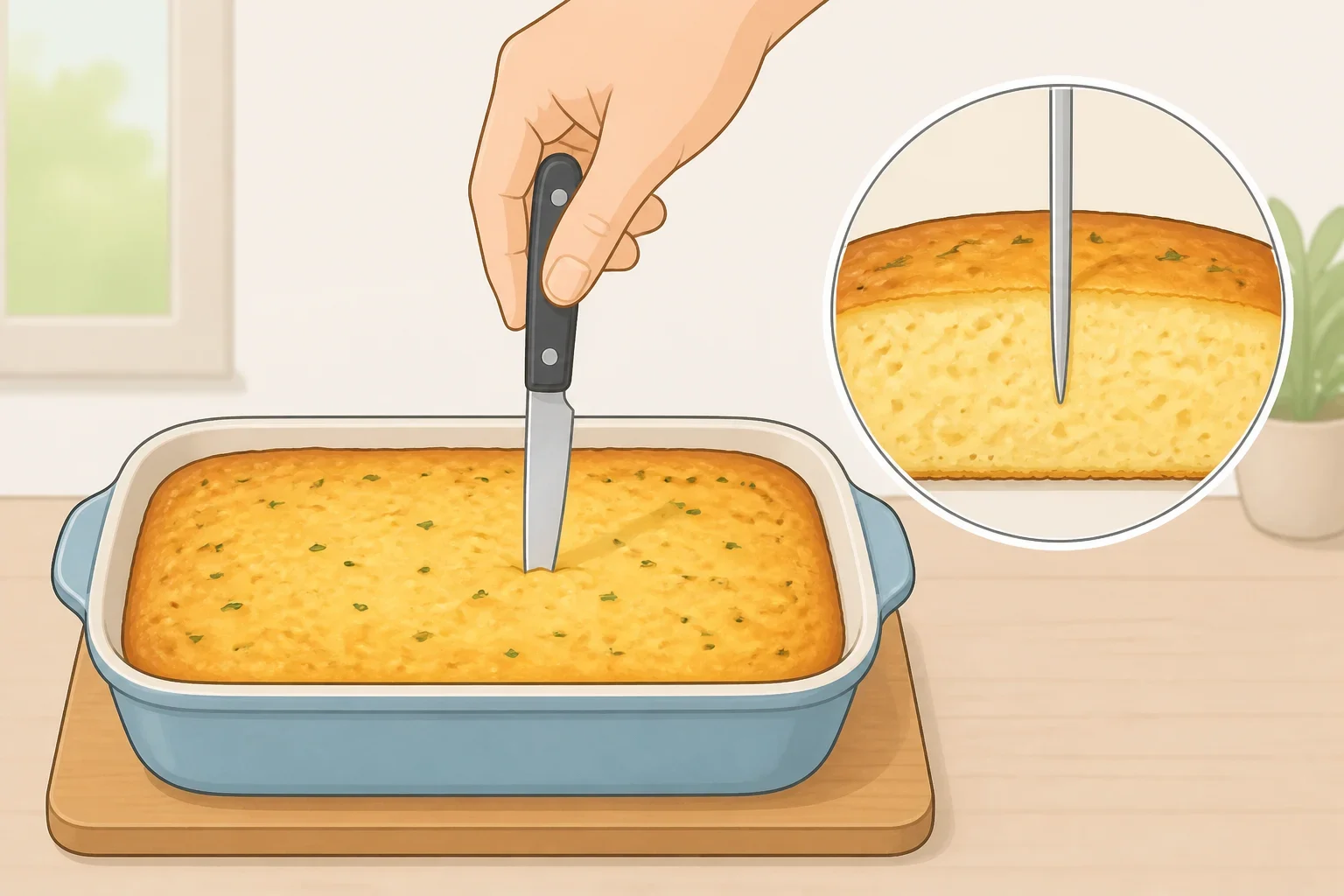
Bake for approximately 45–60 minutes, checking toward the earlier end of the range. If the surface browns too quickly, loosely cover it with foil and continue baking. A deeper casserole or one that starts particularly cold may need additional time.
The finished French toast should have a golden surface and a center that looks set rather than liquid. For a reliable safety check, insert a food thermometer into the middle, avoiding direct contact with the pan. The casserole should reach 165°F (74°C), the safe minimum internal temperature for casseroles listed by FoodSafety.gov.
Let the casserole rest for about 10 minutes before slicing. This gives the custard time to settle and helps the portions hold together without sacrificing their soft interior.
5. How to prevent soggy or dry French toast
A custardy center should be moist and tender, not runny. If the casserole doesn't turn out as expected, the problem usually comes down to the bread, the amount of custard, or the baking time.
If the bottom is soggy: Fresh bread may have absorbed too much liquid and lost its structure, or the casserole may be underbaked. Use slightly stale bread, measure the ingredients carefully, and check the center before removing it from the oven. If the middle is still liquid, continue baking.
If the top browns too quickly: Loosely cover the dish with foil. This limits further browning while allowing the center to finish cooking.
If the French toast is dry: It may have spent too long in the oven or contained too little custard for the amount of bread. Begin checking earlier next time, and measure the bread by weight rather than estimating by the number of slices.
If the apples remain firm: Cut them into smaller pieces or sauté them briefly before assembling the next batch. Apple variety and the size of the pieces both affect how quickly they soften.
One mistake worth avoiding is adding extra milk simply because the bread looks dry before soaking. The custard needs time to penetrate the cubes, and additional liquid can collect at the bottom rather than improve the texture.
How to store and reheat leftovers
Let the casserole cool briefly after serving, then transfer leftovers to airtight containers and refrigerate them within two hours of baking.
According to FoodSafety.gov's cold food storage guidelines, baked egg casseroles keep for three to four days in the refrigerator and maintain their best frozen quality for approximately two to three months.
For reheating, place individual portions in a covered oven-safe dish and warm them at 325°F until the center reaches 165°F. The microwave is quicker, although it tends to soften the browned topping.
To freeze leftovers, divide the cooled casserole into individual portions and seal them in freezer-safe containers. Thaw overnight in the refrigerator before reheating.
For a weekend brunch, serve the warm French toast with maple syrup, fresh fruit, or a spoonful of whipped cream. Pair it with scrambled eggs or another savory breakfast dish to balance the sweetness.
The best part of making it ahead is having breakfast nearly ready before the morning begins. Once the custard has soaked into the bread and the casserole has baked through, all that's left is to bring the warm dish to the table and let everyone help themselves.
