
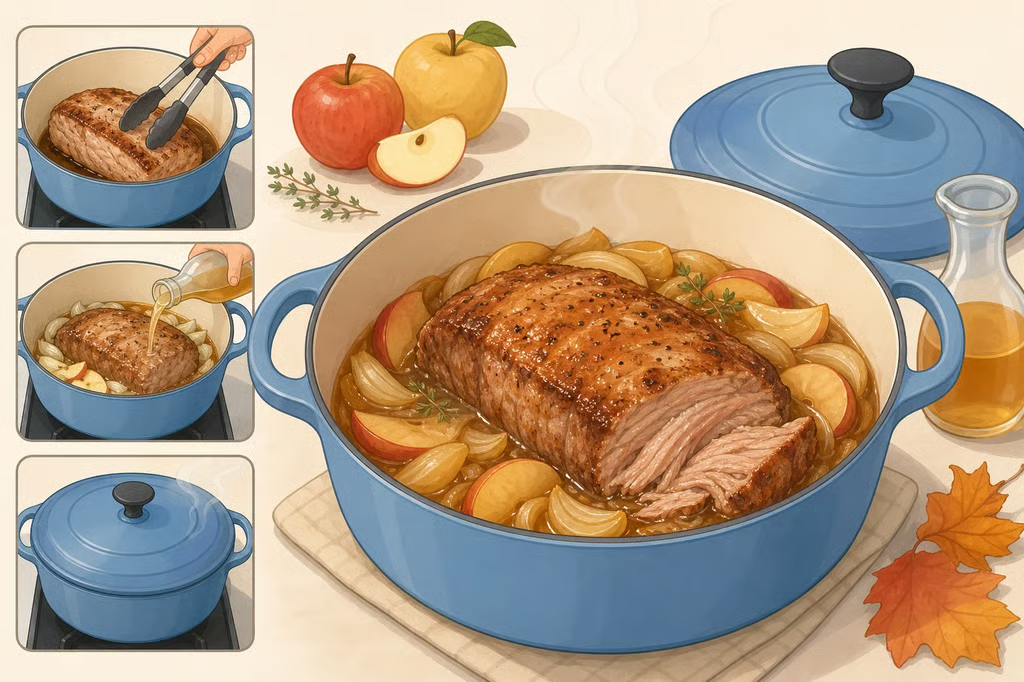
Few fall dinners justify a long afternoon in the oven as easily as apple cider-braised pork shoulder. The pork spends hours cooking gently with cider, herbs, garlic, apples, and onion, but most of that time requires little attention. What comes out of the pot is tender enough to pull apart with a fork, with a savory cider jus ready for spooning over mashed potatoes, rice, or thick slices of bread.
Set aside about 4½ hours from preparation through resting for a 4- to 5-pound pork shoulder. It isn't a rushed weeknight dinner, but it works especially well for a weekend meal, a casual gathering, or any fall dinner when you'd rather let the oven handle most of the cooking.
Pork shoulder, also sold as Boston butt or pork butt, has the fat and connective tissue needed for a long braise. Apple cider supplies the seasonal flavor, while chicken stock, Dijon mustard, garlic, rosemary, and thyme keep the finished sauce savory rather than overly sweet.
Why pork shoulder gets so tender
Braising begins by browning the pork over fairly high heat, then switches to a long, covered cook with liquid at a lower temperature. That slow, moist heat gradually softens the connective tissue in the shoulder while the cider and aromatics flavor the meat and sauce.
The National Pork Board lists braising and slow cooking among the common ways to prepare pork shoulder. Lean cuts such as pork loin or tenderloin aren't direct substitutes here because they don't respond to a multi-hour braise the same way.
Use fresh apple cider rather than apple cider vinegar, which is much more acidic and cannot be substituted one-for-one. Unsweetened apple juice can work if cider isn't available, although the finished sauce will have a milder apple flavor.
A 7-quart Dutch oven or another large, oven-safe pot with a tight-fitting lid gives the pork enough room to braise with the liquid, aromatics, apples, and onion.
This version is adapted from NorthEast Nosh's apple cider-braised pork shoulder recipe, with revised timing, additional cooking cues, and updated food-safety guidance.
Ingredients
- 4 to 5 pounds pork shoulder or Boston butt
- 2 tablespoons neutral oil
- Kosher salt and freshly cracked black pepper
- 2 cups fresh apple cider
- 2 cups chicken stock or broth
- 2 tablespoons Dijon mustard
- 1 tablespoon dehydrated minced onion
- 1 head garlic, top sliced off
- 3 rosemary sprigs
- 4 thyme sprigs
- 1 red onion, cut into thick slices
- 2 firm apples, such as Honeycrisp or Pink Lady, peeled and cut into wedges
How to make apple cider-braised pork shoulder
1. Prepare the pork
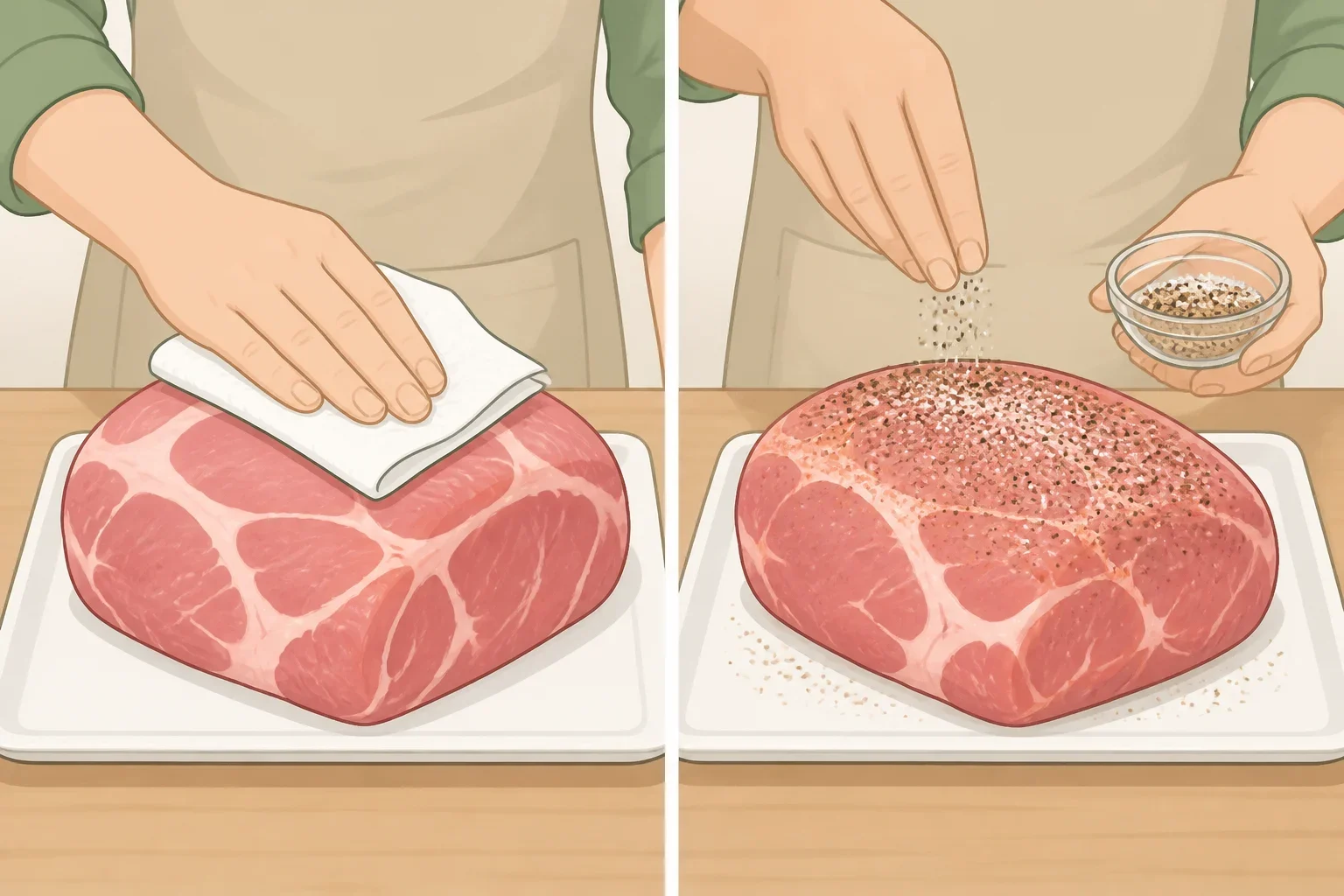
Heat the oven to 325°F. Pat the pork dry with paper towels, then season it generously on all sides with kosher salt and pepper.
If you're using a boneless roast, divide it into four large pieces so more of the surface can brown. Leave a bone-in shoulder whole unless its shape prevents it from fitting comfortably in the Dutch oven.
2. Brown the pork
Heat the neutral oil in the Dutch oven over medium-high heat. Once the oil is hot, add the pork in a single layer.
Cook each side for about 4 to 5 minutes, waiting for a deep golden-brown crust before turning. Work in batches if necessary so the pieces aren't crowded. Leave the browned bits in the bottom of the pot; they'll loosen once the braising liquid goes in.
3. Add the cider braising liquid
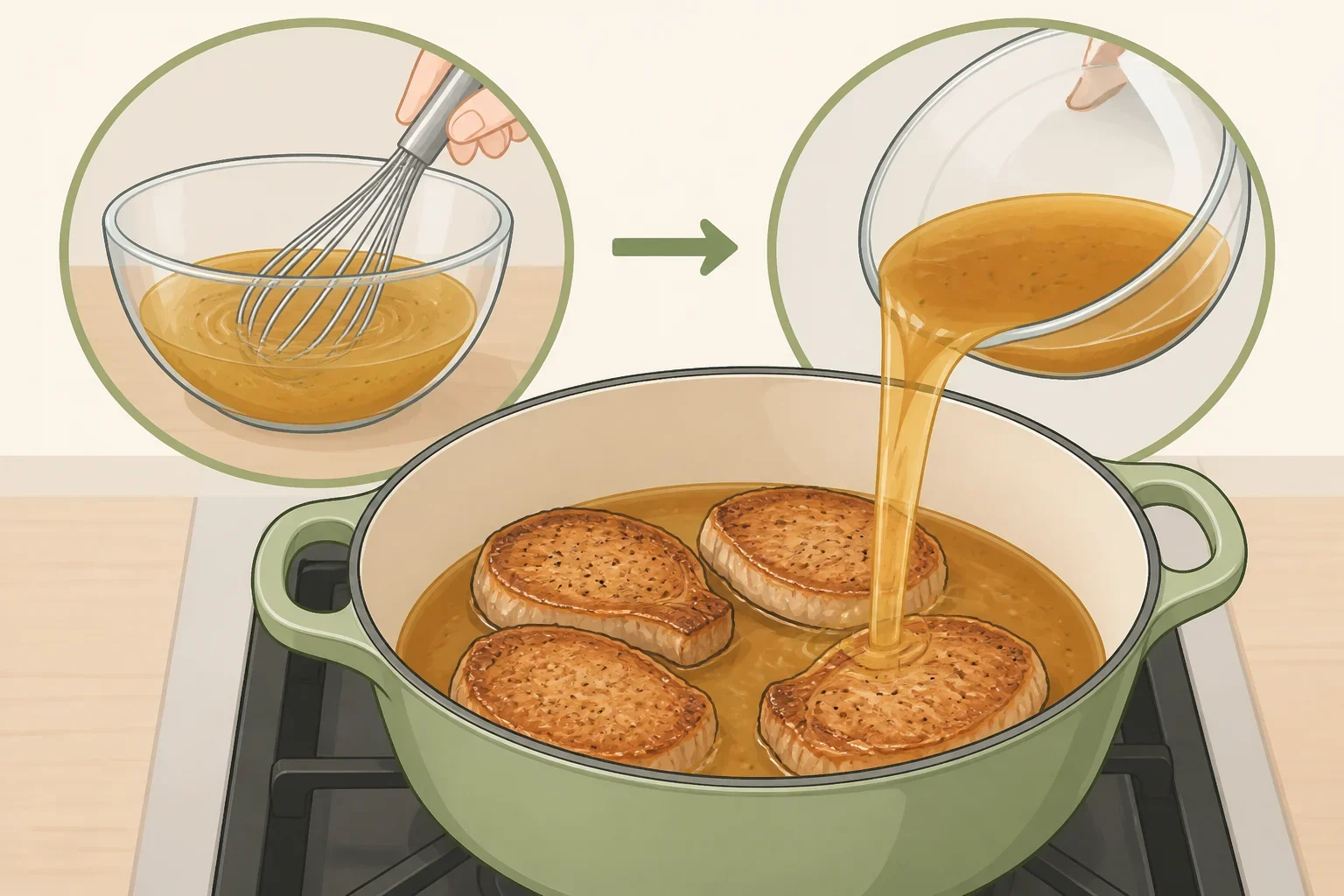
Whisk together the apple cider, chicken stock, Dijon mustard, and dehydrated minced onion.
Pour the mixture around the pork, then add the garlic, rosemary, and thyme. You can tie the herbs together with kitchen twine first if you want to remove them easily before serving.
The liquid should come partway up the pork rather than completely submerging it. Cover the Dutch oven before transferring it to the oven. If the liquid reduces enough during cooking that the bottom of the pot risks drying out, add a small splash of stock or water.
4. Braise until the pork begins to give
Cook the covered pork at 325°F for about 3 hours, turning it halfway through. Begin checking boneless pieces after roughly 2½ hours because they may soften sooner than a whole bone-in shoulder.
Insert a fork into the thickest portion and twist gently. If the meat still feels firm or resists pulling apart, cover the pot again and continue cooking in 20- to 30-minute increments.
The temperature required for safety is much lower than the temperature at which shoulder becomes easily shreddable. The USDA minimum for whole cuts of pork is 145°F, followed by at least a three-minute rest. This recipe intentionally cooks the shoulder beyond that point to develop its soft, pull-apart texture, so fork tenderness is the more useful cue for determining when the braise is ready.
5. Add the apples and onion
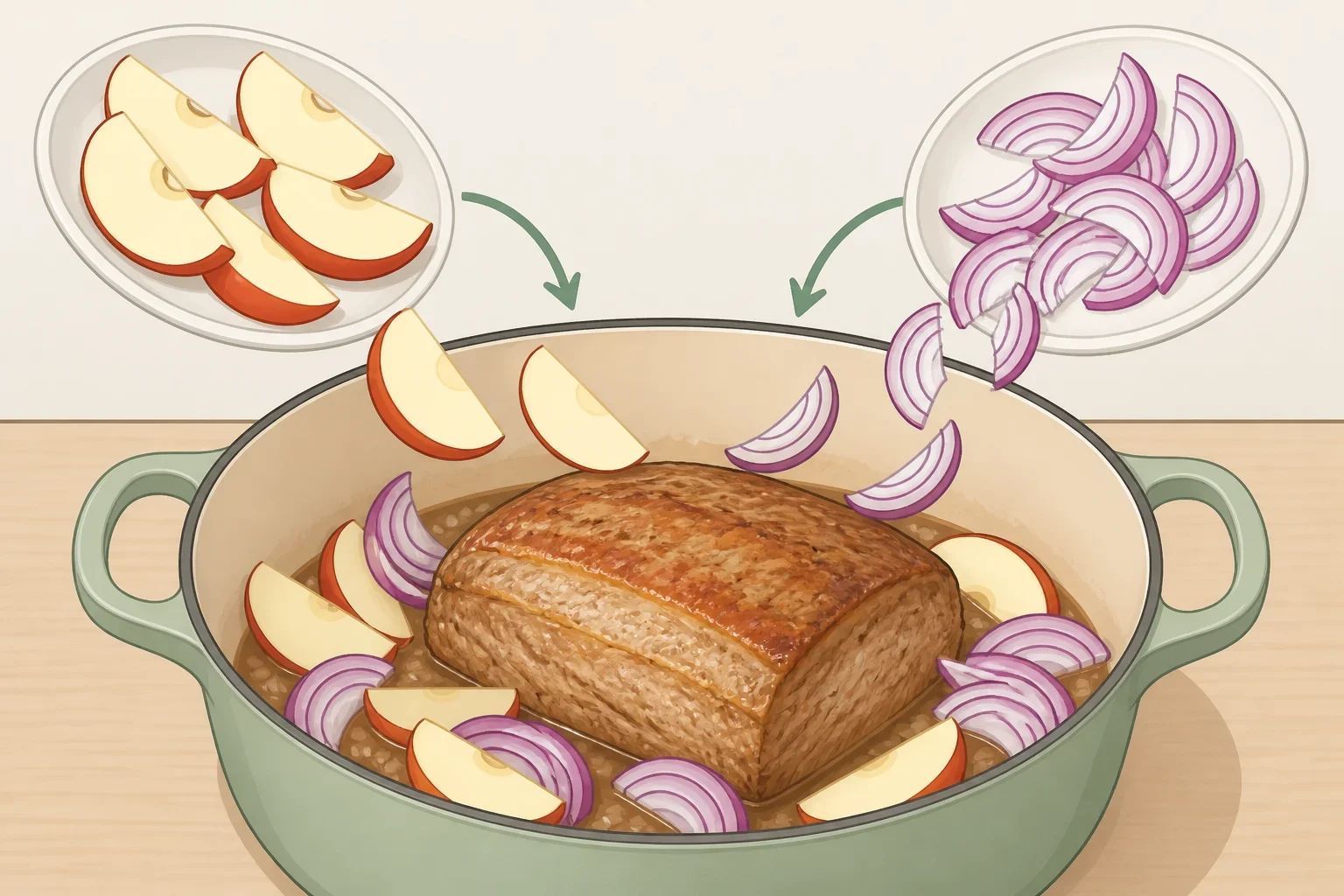
Once the pork is nearly fork-tender, tuck the apple wedges and red onion slices around the meat.
Cover the pot and cook for another 30 to 45 minutes. The pork should pull apart easily, while the apples and onions should be tender but still recognizable rather than dissolved into the sauce.
Adding them near the end gives them enough time to absorb some of the cider jus without subjecting them to the entire multi-hour braise.
6. Rest, shred, and finish the jus
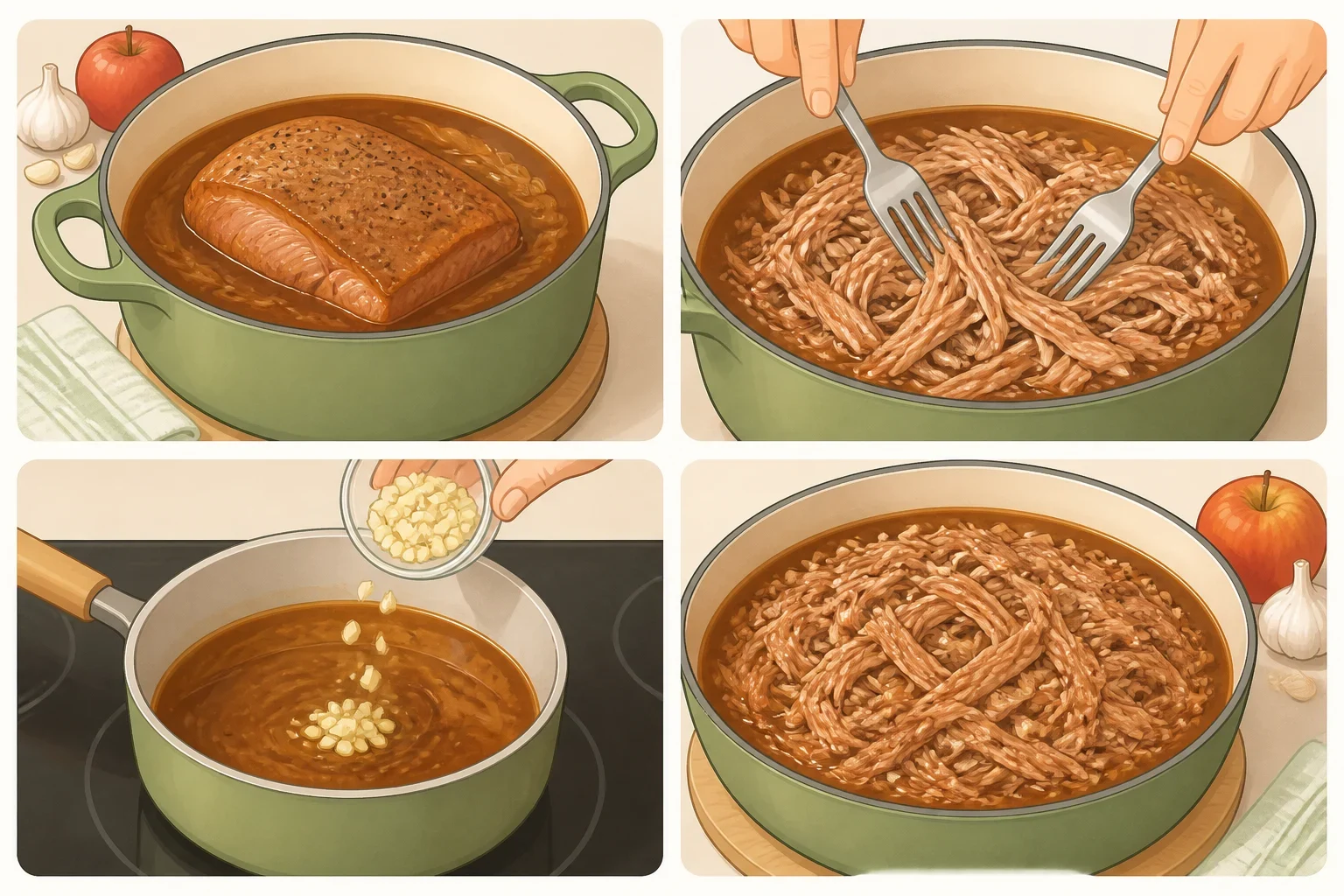
Remove the Dutch oven from the oven and let the pork rest in the braising liquid for at least 30 minutes.
Transfer the meat to a cutting board or serving dish and pull it into large pieces with two forks. Squeeze the softened garlic cloves from their skins into the broth or over the pork, skim away excess surface fat if needed, and taste the jus before adjusting the salt and pepper.
If the pork is tender but the liquid tastes too thin, transfer the meat, apples, and onions to a serving dish and simmer the jus separately until it becomes more concentrated. Don't continue cooking tender pork simply to thicken the sauce.
If the meat still resists shredding, return it to the covered pot and give it more time.
Serve it with plenty of cider jus
Spoon the shredded pork onto mashed potatoes, cheesy grits, rice, or another side that can catch the cider jus. Add the softened apples and onions and finish each serving with more sauce from the pot. Crusty bread works just as well for a less formal dinner.
For leftovers, cool the pork promptly and store it with some of its braising liquid so the meat stays moist. According to USDA leftover-safety guidance, perishable food should be refrigerated within two hours, divided into shallow containers for faster cooling, and used within three to four days. Reheated leftovers should reach 165°F throughout.
For longer storage, freeze portions of pork with some of the jus in airtight freezer-safe containers. Thaw them in the refrigerator before reheating.
The long braise is what makes this dinner feel substantial without making it complicated. Once the pork is browned and the pot goes into the oven, cider, herbs, garlic, apples, and time do most of the work — leaving a fall dinner that's generous enough for company but relaxed enough for a Sunday at home.
