
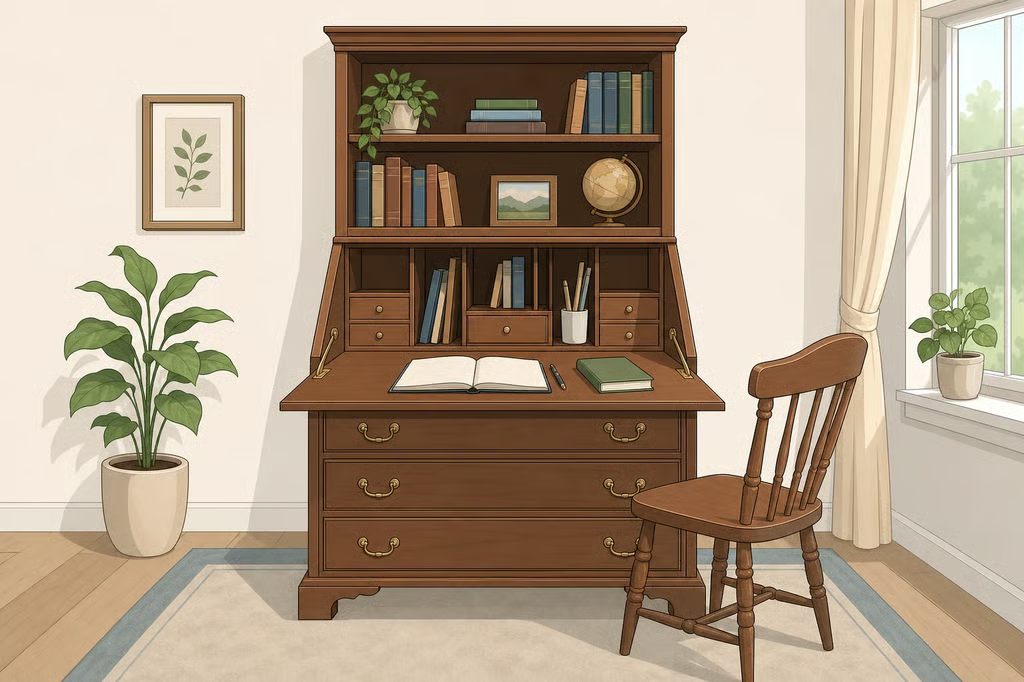
A vintage secretary desk can turn an overlooked corner into a useful workspace while adding the warmth and character of older furniture. With a fold-down writing surface, drawers, and sometimes an upper bookcase, it offers a way to keep paperwork, books, and everyday essentials organized without filling a room with separate furniture.
But a beautiful desk isn't necessarily a practical one. Before bringing home a secondhand find or inherited piece, check its dimensions, construction, and storage capacity. Damaged hinges, awkward chair clearance, or costly repairs can quickly outweigh its charm.
- What makes a secretary desk different?
- Can it replace a desk, bookcase, and storage cabinet?
- Measure the desk before buying
- Inspect hinges, drawers, and structural damage
- Check old finishes for lead and damage
- Secure tall secretary desks against tipping
- Make the storage work for your home
- When a vintage secretary desk isn't worth buying
What makes a secretary desk different?
A secretary desk typically has a hinged writing surface that opens to reveal a workspace, often with drawers or small compartments for papers and supplies. Some include an upper bookcase with glass or solid doors, while others are standalone desks with storage below.
These larger combinations are often called secretary bookcases. The Metropolitan Museum of Art's collection includes an American secretary and bookcase dating to 1795–1810, with a writing compartment, drawers, and book storage.
The terms vintage and antique aren't interchangeable. Antique furniture is generally understood to be at least 100 years old, while vintage describes older pieces without a universally fixed age threshold. Newer reproductions can resemble historic designs, so appearance alone doesn't establish age or value.
Styles also differ. Slant-front desks have angled panels that fold down, while some cabinet-style designs feature nearly vertical fronts. Others have pull-out writing surfaces or concealed compartments.
When shopping, open the desk and examine its usable surface, drawers, shelves, and hardware. A piece can look attractive while offering little practical room for a laptop or household paperwork.
Can it replace a desk, bookcase, and storage cabinet?
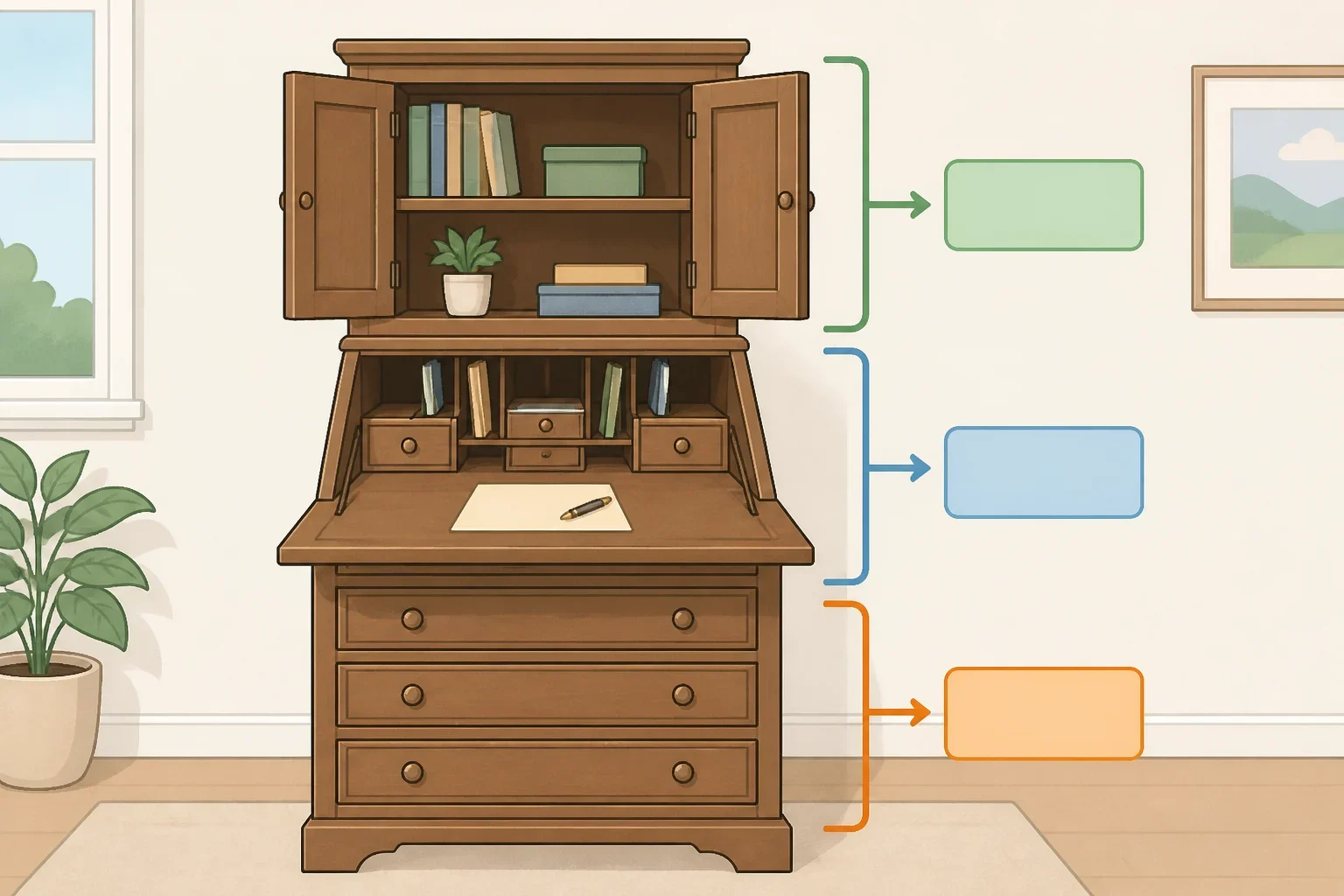
A secretary desk can handle several household functions, but each section has limitations.
The writing surface may be suitable for paying bills, sorting mail, or occasional laptop use. It may be too shallow for a large monitor, keyboard, and mouse. Measure the available workspace and compare it with your equipment.
Check that the writing panel stays level when open. Hinges, support arms, and brackets should operate smoothly without drooping or shifting. If the surface needs a makeshift prop, it requires repair before use.
Chair clearance is equally important. Your knees should fit beneath the writing surface, and the chair shouldn't collide with drawers or cabinet edges. A desk that blocks the room whenever it's open may become inconvenient.
Upper shelves can hold books or decorative objects, but their capacity depends on their condition and supports. Look for sagging, cracks, loose shelf pins, and improvised brackets. Keep heavier belongings lower, and don't assume an older cabinet can support a television or tightly packed rows of heavy books.
Drawers are useful for stationery, documents, linens, or smaller household essentials, provided their dimensions suit what you intend to store.
Measure the desk before buying
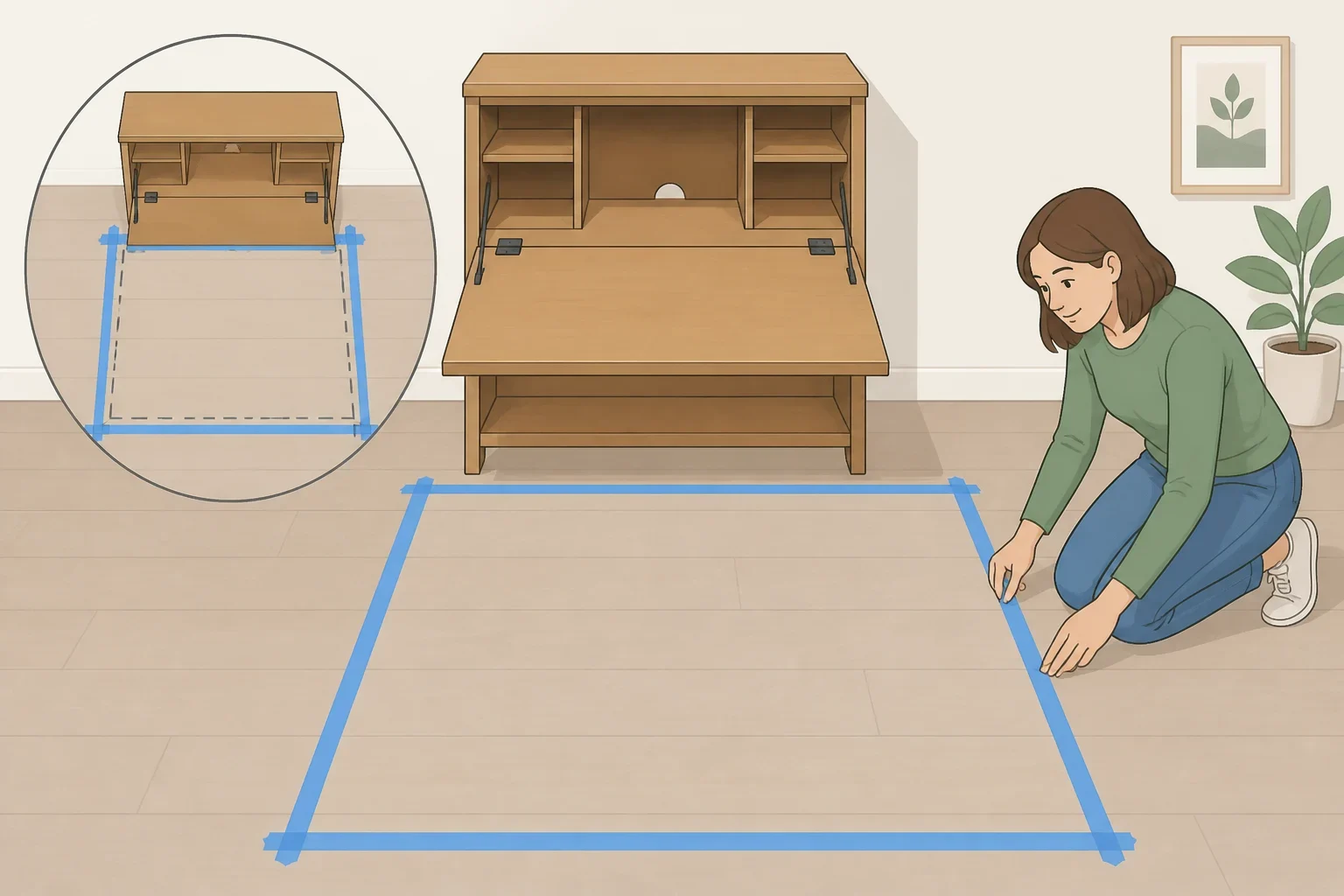
A secretary desk may look compact when closed but require considerable space once its writing panel, drawers, and doors are open.
Before shopping, measure:
- Wall width and available ceiling height
- Depth with the writing surface closed and fully open
- Space needed for a chair and for pulling it back
- Clearance for doors, drawers, outlets, and nearby furniture
- Doorways, hallways, and stairways along the delivery route
- Dimensions of the equipment or belongings the desk must hold
Use painter's tape to mark the desk's open footprint on the floor. A cardboard mock-up can help you test the writing surface and chair position, particularly in a guest room or dining area.
Place your laptop, keyboard, or notebook on the mock-up to see whether everything fits securely. If you'll close the desk after each use, check whether cords and supplies can be stored without getting caught.
Also consider the writing height. A surface that looks comfortable while standing may be awkward when seated. For extended computer work, adequate legroom and a comfortable screen position matter more than appearance.
Inspect hinges, drawers, and structural damage
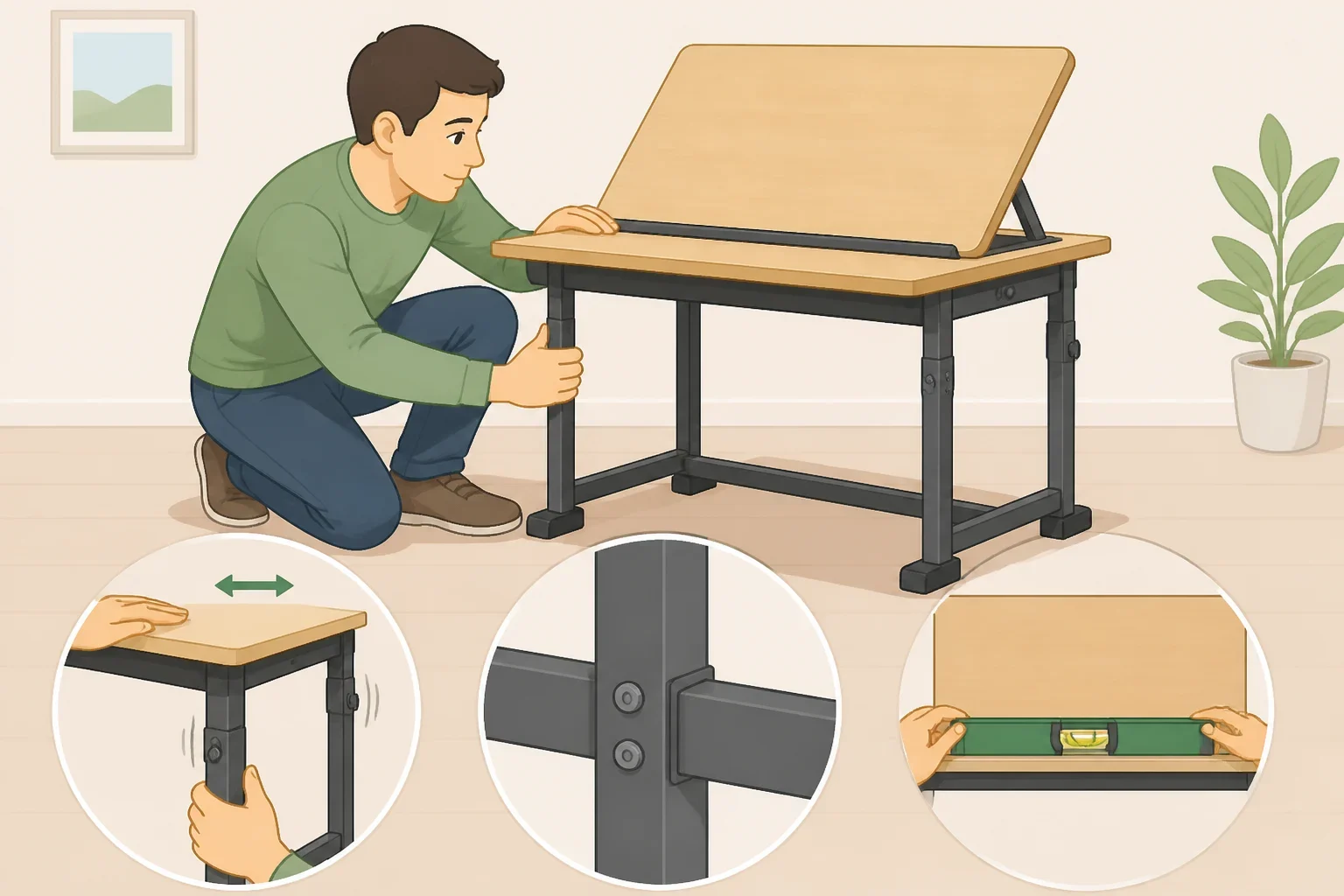
A polished finish can conceal loose joints, damaged supports, or expensive repairs.
Start with the frame. Gently check for rocking or movement, then examine the legs, feet, joints, and back panel. Cracked structural parts or a cabinet that twists out of square deserve more caution than surface scratches.
Test every moving part:
- Open and close each drawer, checking for sticking or uneven movement.
- Lower the writing panel slowly and inspect its supports.
- Look for loose hinges, warped panels, or cracked edges.
- Confirm that the writing surface stays level and securely supported.
- Check locks, handles, shelf pins, and brackets for missing parts.
- Inspect the interior, underside, and back for water damage, insect activity, or musty odors.
A missing decorative knob is usually less concerning than a damaged support holding up the writing panel. Replacement hardware for unusual designs may also be difficult to find.
Ask the seller about previous repairs, refinishing, and modifications. If the desk is advertised as an antique, request any available information about its maker or history rather than relying on appearance alone.
Check old finishes for lead and damage
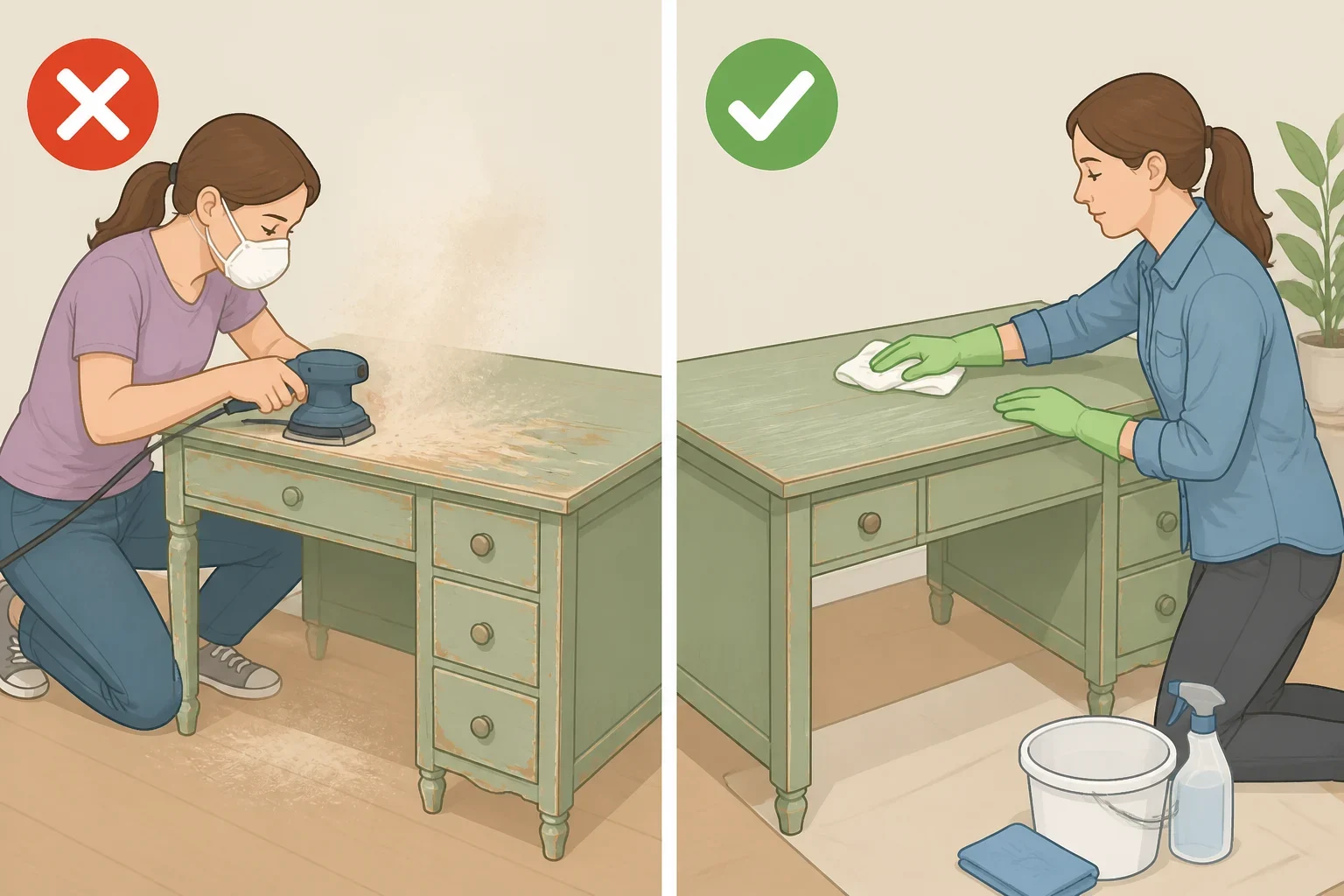
Older painted furniture may contain lead-based paint, especially if it was painted before 1978. The U.S. Consumer Product Safety Commission regulates lead in paint and surface coatings on certain furniture, including bookcases and other movable household pieces.
Inspect painted surfaces for peeling, chipping, or deterioration. Avoid sanding, scraping, or stripping a suspected lead-containing finish, as disturbing it can release hazardous dust. If restoration is necessary, arrange appropriate testing and consult a qualified professional about safe handling.
For furniture with an original finish, gentle cleaning and minor repairs may be preferable to refinishing. Aggressive sanding or stripping can remove historic finishes and affect a piece's appearance or value.
For routine care, dust with a soft cloth and avoid soaking wooden surfaces. Use cleaning products appropriate for the existing finish, particularly on delicate veneer or decorative inlays.
Secure tall secretary desks against tipping
Tall secretary desks and bookcases can pose a tip-over hazard, especially around young children. The CPSC's Anchor It! furniture safety campaign recommends securing top-heavy furniture to help prevent injuries.
Keep heavier belongings on lower shelves and avoid placing toys or tempting objects where children might climb to reach them. Never allow children to climb on the cabinet or use the open writing panel as a step.
Determine how the furniture can be anchored safely before using it. Older construction may require specialized hardware or professional installation. Use equipment appropriate for the cabinet and wall rather than improvised attachments. If the desk cannot be secured safely, choose another piece.
Make the storage work for your home
Decide what each compartment will hold before bringing the desk home.
For a compact home office, reserve the writing surface for a laptop and notebook. Keep pens and chargers in one drawer, household documents in another, and lighter books or decorative objects on upper shelves.
Other practical uses include:
- Guest room: A writing station that closes when visitors arrive.
- Dining room: Drawers for cloth napkins and placemats, with suitable shelves for lightweight serving pieces.
- Living room: Enclosed storage for paperwork, books, and small accessories.
- Entryway: A place for mail and keys, provided it doesn't obstruct the walkway.
Leave enough space to close the writing panel without catching cords or other objects. Electronics need appropriate ventilation, while damp or leak-prone items should stay out of older wooden cabinets.
When a vintage secretary desk isn't worth buying
Pass on a desk if its open writing surface blocks a doorway, leaves insufficient chair clearance, or interferes with the room's main walking path.
A conventional desk may be more practical if you need multiple monitors, a full-size keyboard, a printer, or equipment that won't fit securely on the writing surface.
Before agreeing to the price, consider delivery, moving assistance, replacement hardware, repairs, and any necessary anchoring. A bargain can become expensive when structural work or professional restoration is required.
For an antique with sentimental or historical value, consult a furniture restorer before making permanent changes.
Ultimately, the right secretary desk should fit comfortably, support its intended use, and provide storage you'll actually need. When those practical details line up, it can bring both function and character to your home without becoming another piece of furniture you have to work around.
