
- How Much Money Should I Keep in My Checking
- Checking money and emergency savings do different jobs
- Why a thin checking balance can become expensive
- How to calculate your ideal checking account balance
- A biweekly paycheck example
- When should you increase the checking account buffer?
- Check your bank’s rules before relying on the number
- The practical decision rule
How Much Money Should I Keep in My Checking
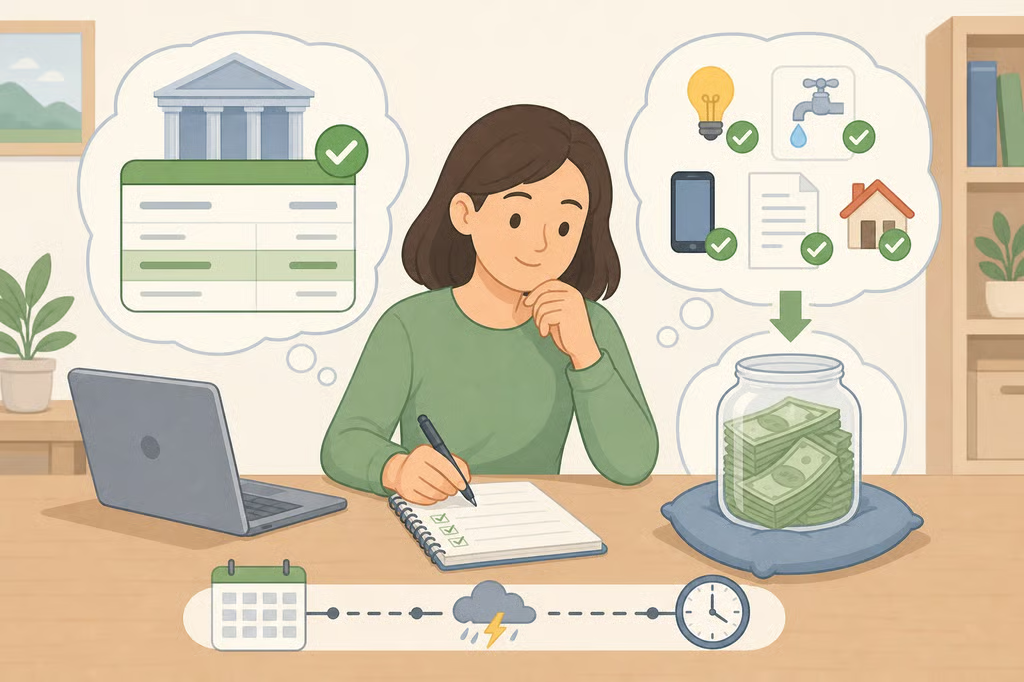
There is no universal dollar amount that belongs in every checking account. A practical target is the amount needed for upcoming obligations, pending charges, and a personal cushion for timing surprises, while longer-term emergency savings stays separate.
That cushion is your checking account buffer. It protects against the gap between when money leaves your account and when your next reliable deposit arrives. The right amount depends on your pay schedule, household bills, spending habits, and how much uncertainty your budget can absorb.
The need for that margin is more than theoretical. Roughly 26.5% of consumers lived in a household charged an overdraft or nonsufficient-funds fee during the prior year, the CFPB found. A buffer cannot prevent every fee, but it can make ordinary timing mistakes less expensive.
Checking money and emergency savings do different jobs
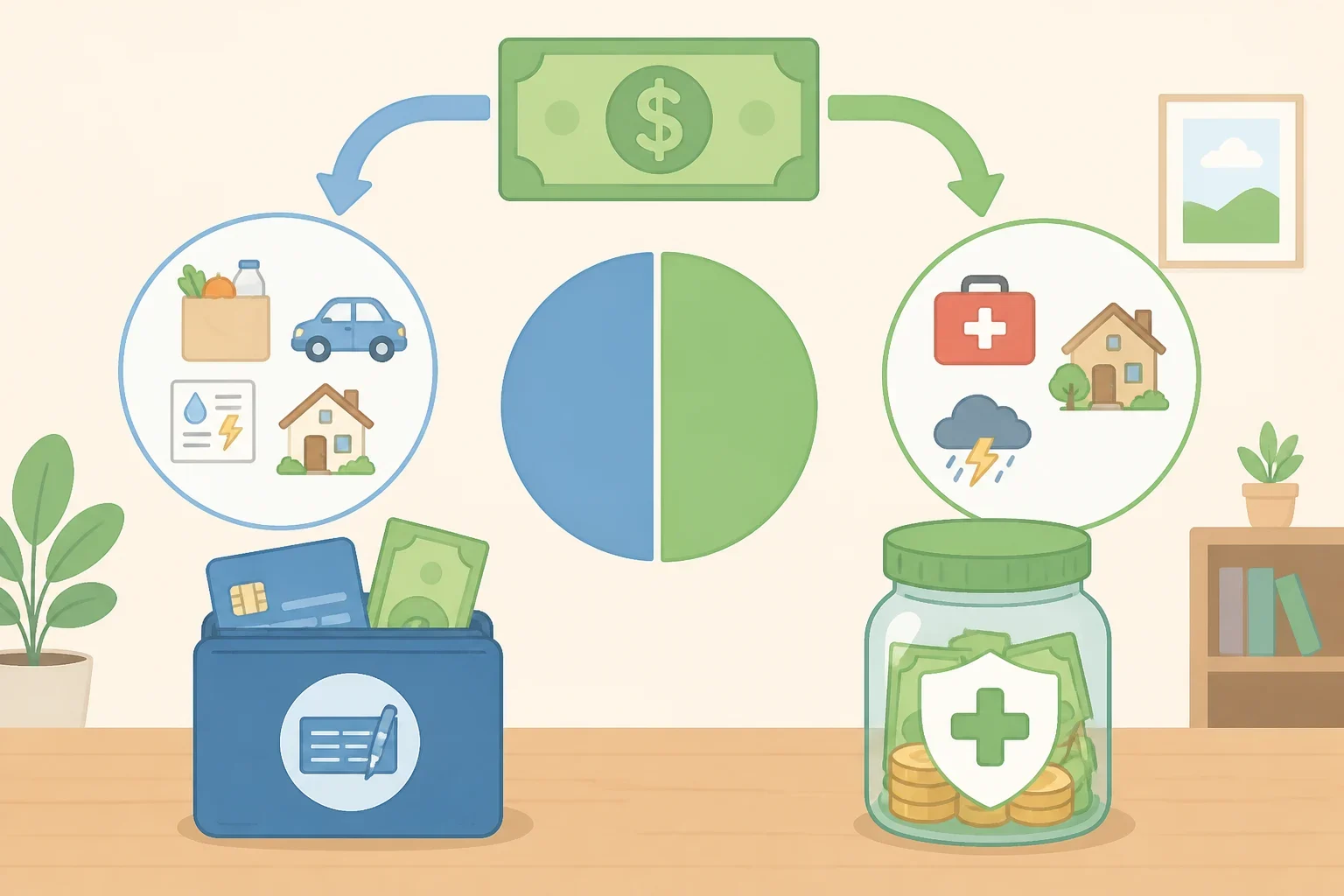
Think of checking as the household’s short-distance money. It handles rent, groceries, utility bills, subscriptions, and other expenses that are about to be paid. Emergency savings is the longer-distance reserve for a job loss, major repair, medical expense, or other serious financial shock.
FINRA recommends aiming for an emergency fund equal to three to six months of expenses, kept somewhere that allows immediate access without investment risk, according to its financial hardship guidance. That recommendation applies to your overall emergency reserve, not to the amount that needs to sit in checking.
The distinction matters because leaving a full emergency fund in checking may mean that some of the money earns less than it could in a savings account, depending on the account. At the same time, moving every dollar out of checking can leave too little available for bills that have not posted yet.
CFPB research found differences in credit and debt profiles, the ability to meet financial obligations, savings, and overall financial well-being across households with different levels of emergency savings. The findings show an association, not proof that a particular savings balance causes better outcomes. Still, they support keeping a separate reserve for genuine emergencies rather than treating checking as the only place for household cash.
Why a thin checking balance can become expensive
A low balance is not automatically a sign of poor budgeting. A card transaction can be delayed, a subscription can renew on an inconvenient day, or a bill can post before an expected deposit. Shared household finances add another layer, especially when one partner assumes the other has already covered a charge.
The financial consequences can be serious for households already operating with little room. In one CFPB report, the agency defined a frequent overdraft or NSF fee group as consumers who had both types of fees or at least four fees of one type. This group had lower average credit scores and was more likely to have subprime credit, no available credit on a card, and delinquent debt than consumers with no overdraft or NSF fees. Those findings describe an association with financial vulnerability, not a guaranteed cause-and-effect cycle.
A separate CFPB analysis used a narrower definition for its fee statistics. Consumers who paid more than 10 overdraft fees in a year paid an average of $380 in overdraft fees during that year. That figure does not apply to everyone who overdrafts, or to everyone in the four-or-more-fees group.
The same analysis found that 90% of consumers with more than 10 combined overdraft and NSF fees in a year typically had, at the median, no more than a few hundred dollars in their accounts at the end of a given day. Again, this is a finding about the more-than-10-combined-fees group, not the broader frequent-fee category.
The CFPB also reported that some consumers overdraft often and intentionally use overdraft credit, while another sizable group overdrafts infrequently and says the most recent incident was a surprise. That distinction came from CFPB interviews and does not mean every account holder faces the same risk. It does show why a checking buffer can be useful even for someone who tracks spending carefully.
How to calculate your ideal checking account balance
Start with a formula you can use every time your household finances change:
Checking balance target = known expenses due before the next reliable deposit + pending or recurring charges + personal timing buffer
The “next reliable deposit” is the next paycheck or other income you can reasonably count on. Do not include uncertain income, an expected reimbursement, or a transfer that has not been scheduled.
1. List what must be paid before that deposit
Include more than the bills with a due date in the next few days. Review:
- Rent or mortgage
- Utilities and minimum debt payments
- Groceries and regular transportation spending
- Insurance, tuition, or other large payments on a different schedule
- Checks that have been written but have not cleared
- Expenses shared with a partner that may be charged from the same account
If rent is due shortly after one partner’s paycheck but before the other partner is paid, that rent belongs in the calculation. The account needs to cover the money when it leaves, not when the household feels it is “part of” the next pay period.
2. Look for charges that are easy to miss
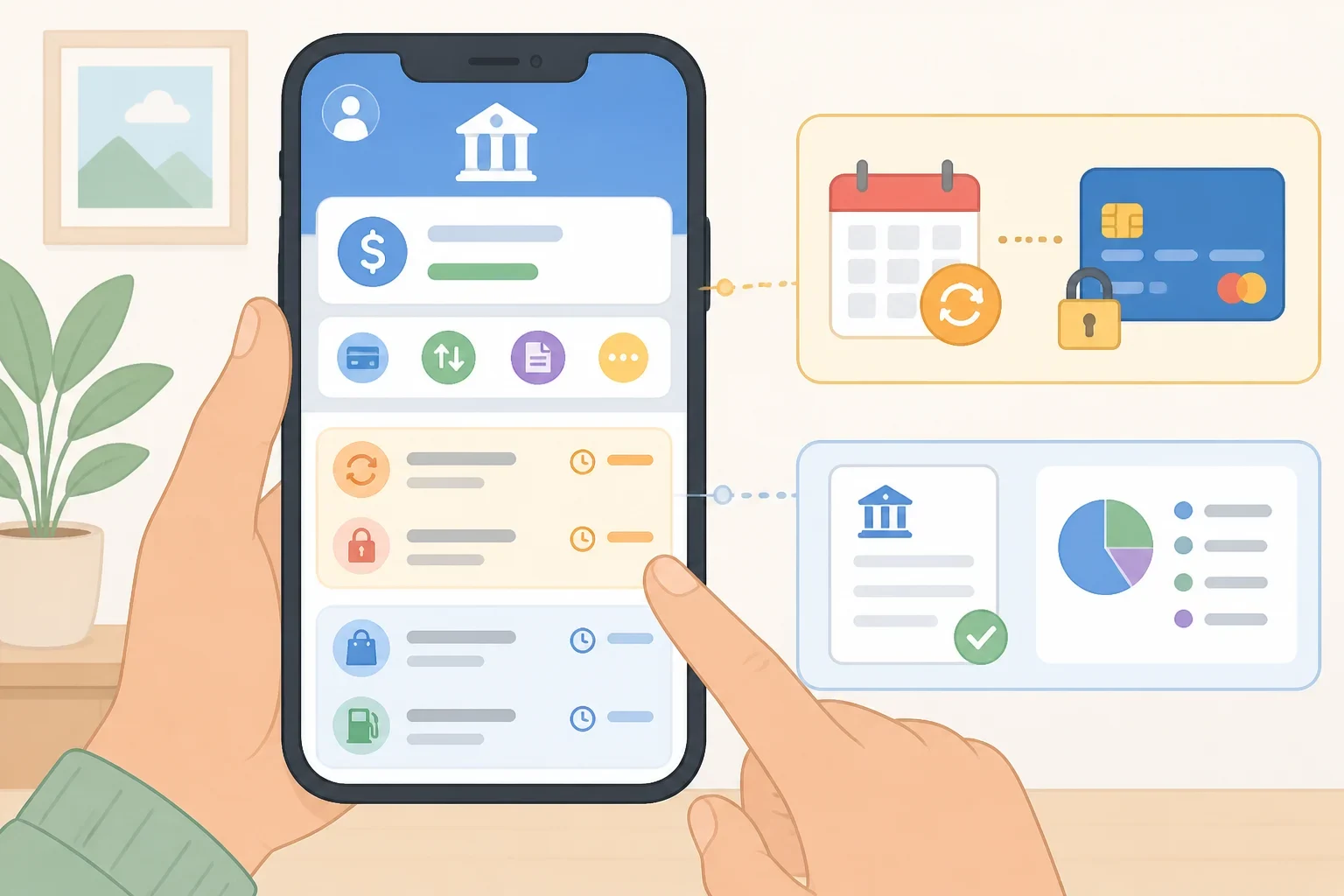
Review the last two or three bank statements and compare them with the account’s pending-transaction screen. Look for subscription renewals, annual premiums, recurring transfers, debit-card holds, and autopayments that do not happen on the same date each month.
Annual or irregular bills deserve their own line. A yearly insurance premium or school expense may not be due before the next paycheck, but it can still be a near-term obligation. Keep that money available before treating it as extra checking cash.
Debit-card holds can also make the available amount look different from the balance shown in the account history. The FDIC has raised concerns about transactions authorized when an account appeared positive but later settled as negative, a situation known as authorize-positive, settle-negative, or APSN. The agency has also discussed the difference between available-balance and ledger-balance methods used when assessing overdraft fees.
That does not mean every bank handles transactions the same way. It does mean a balance that looks safe at checkout may not tell the whole story.
3. Choose a timing buffer that fits the household
The personal timing buffer is the amount left after known obligations and charges are covered. There is no research-backed dollar figure that works for every household, so use your own history as a guide.
A smaller buffer may be workable when income and bills are predictable, transactions clear quickly, and the account rarely comes close to zero. A larger one makes more sense when pay varies, several people use the account, overdrafts have happened before, or dependents and irregular expenses make the month harder to predict.
Income changes also matter. FINRA notes that job loss can bring costs such as continued health coverage under COBRA, which generally allows employer coverage to continue for 18 to 36 months. The coverage period itself does not determine a checking balance, but a household facing a job transition may need to plan for premiums and other immediate costs before income is restored.
A biweekly paycheck example
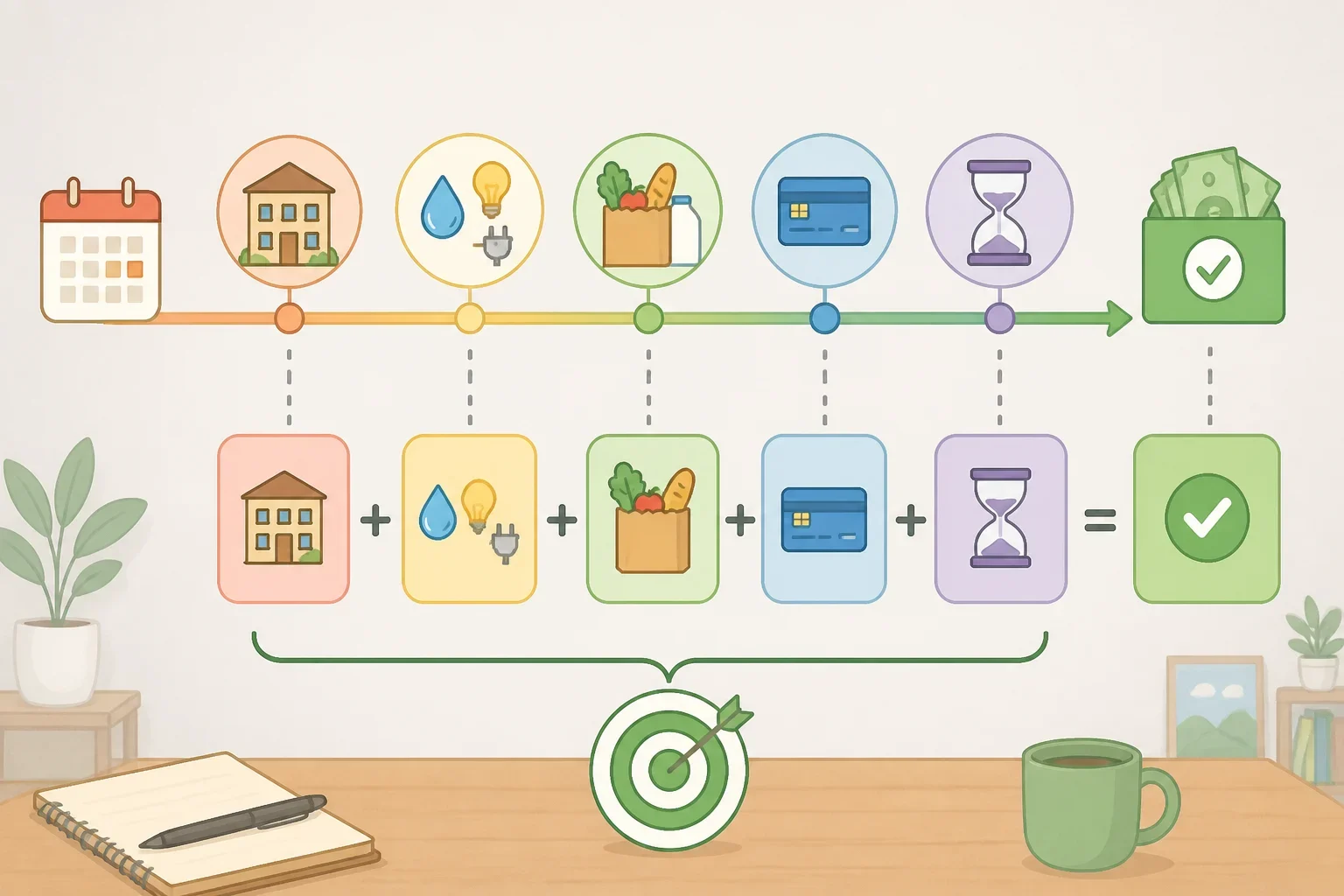
Suppose a household is paid every two weeks and expects the next reliable deposit to arrive in 10 days. Before that deposit, the checking account needs to cover:
- $1,200 for rent due in eight days
- $140 for utilities and minimum debt payments
- $180 for groceries and transportation
- $75 in pending card transactions
- $25 for a subscription renewal
The known amount is $1,620. If the household chooses a $300 timing buffer based on its past transaction timing and income stability, the target checking balance is $1,920.
That does not mean $1,920 is the ideal balance forever. After the rent clears, the target changes. If the next deposit is delayed, a larger annual bill is approaching, or another household member has upcoming charges, the calculation needs to be updated.
For a weekly paycheck, the same formula may be checked more frequently because fewer days of spending are covered by each deposit. A biweekly paycheck generally requires looking across the entire gap between deposits, including bills that fall just before payday. With irregular income, use the next dependable deposit rather than an optimistic estimate, and consider a thicker buffer if the timing of deposits has caused problems before.
When should you increase the checking account buffer?
Raise the target temporarily or permanently when the household’s timing risk changes. Common triggers include:
- A move that changes the rent or mortgage payment date
- A pay change, new job, commission-based income, or reduced work hours
- A new child or other dependent
- A new recurring bill or a higher insurance premium
- A partner beginning to use the account for shared expenses
- A previous overdraft or returned payment
- A large bill that arrives annually or irregularly
Recheck the number after the next one or two pay cycles rather than guessing once and forgetting it. Compare the target with what actually posted, including transactions that were pending when the calculation was made. A buffer that is consistently untouched may be larger than necessary, while a buffer that disappears before payday may need to grow.
Before moving cash out of checking, reserve money for irregular bills and near-term goals. Then verify the savings account’s current FDIC or NCUA coverage rather than assuming every account has the same protection.
Check your bank’s rules before relying on the number
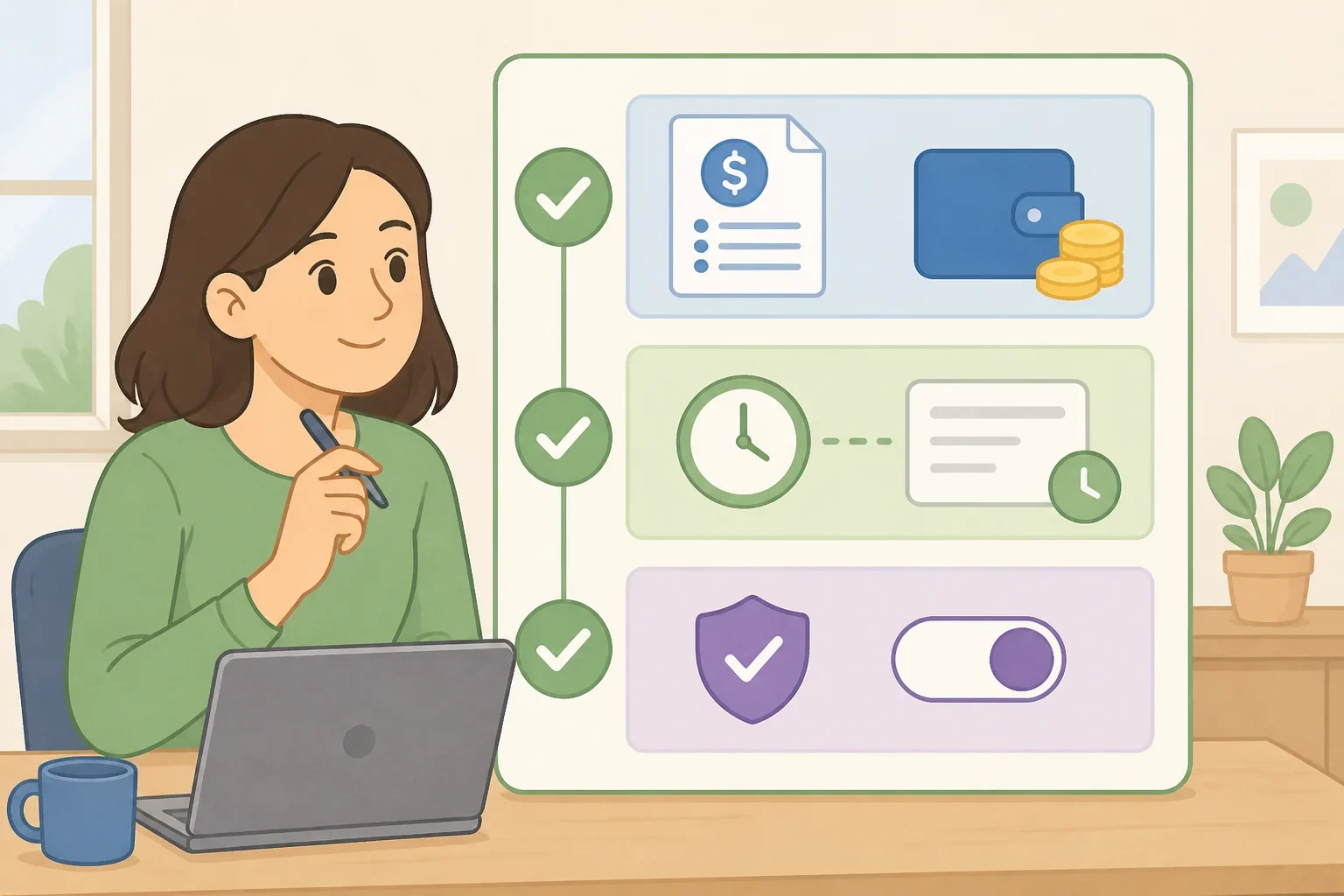
Your balance target works best when paired with a clear understanding of the account’s policies. Check the current fee schedule and account agreement for:
- A monthly maintenance fee or minimum-balance requirement
- Low-balance alerts by text or app
- How pending transactions and debit-card holds affect available funds
- The order in which transactions are posted
- Overdraft and NSF fees
- Whether linked savings, transfers, or other protection is available
- How checks, recurring debit transactions, ACH payments, ATM withdrawals, and one-time debit-card purchases are treated
Overdraft opt-in settings need special care. Opting out of overdraft coverage generally affects ATM withdrawals and one-time debit-card transactions. It does not necessarily prevent fees or declined payments connected to checks, recurring debit transactions, or ACH payments. Review the bank’s specific overdraft, NSF, and transaction-posting policies instead of assuming one setting controls every payment type.
Some financial institutions have reduced or eliminated overdraft and NSF fees, but the CFPB reports that implementation has been uneven and may not benefit every customer. That research is from interviews and focus groups, not a representative statistical sample, so the practical step is simple: check the terms that apply to the account today.
The practical decision rule
Review the next one or two pay cycles together, especially if a partner also uses the account. Add the expenses due before the next dependable deposit, pending and recurring charges, and any large obligation that falls between deposits. Add a timing buffer based on your income stability, past overdrafts, household size, and transaction patterns.
Keep the three-to-six-month emergency fund as a separate goal, not as the default checking balance. Once near-term bills and irregular obligations are covered, cash above the checking target can be directed toward savings or another appropriate goal after the account’s coverage and terms are verified.
The ideal checking account balance is the one that lets ordinary payments clear without turning every payday into a guessing game. Recalculate after a pay change, move, new dependent, or recurring-bill increase, and review the bank’s fee and overdraft settings at the same time.
