

Gen Z pet ownership costs: data on vet affordability gaps
Before bringing home a dog or cat, the useful question is not simply whether the monthly food bill fits. A household also needs room for routine care, annual expenses, and a veterinary problem that arrives at the worst possible time. That is the practical challenge behind Gen Z pet ownership costs.
The available research does not provide a comparable U.S. breakdown by generation. Most of the evidence describes pet owners as a whole, while one Great Britain survey offers a limited age-specific comparison. What the broader data does show is a serious affordability problem: 52% of U.S. pet owners said they had skipped or declined needed veterinary care, and 71% of those who did cited cost as a factor, according to Gallup last year.
That concern can coexist with deep attachment. Two years ago, the AVMA reported that 88.8% of dog owners and 84.7% of cat owners viewed their pets as family members. The financial question is not whether young owners care enough to spend. It is whether their budget has room for the less visible costs of keeping that family member healthy.
What the available data says about Gen Z pet spending
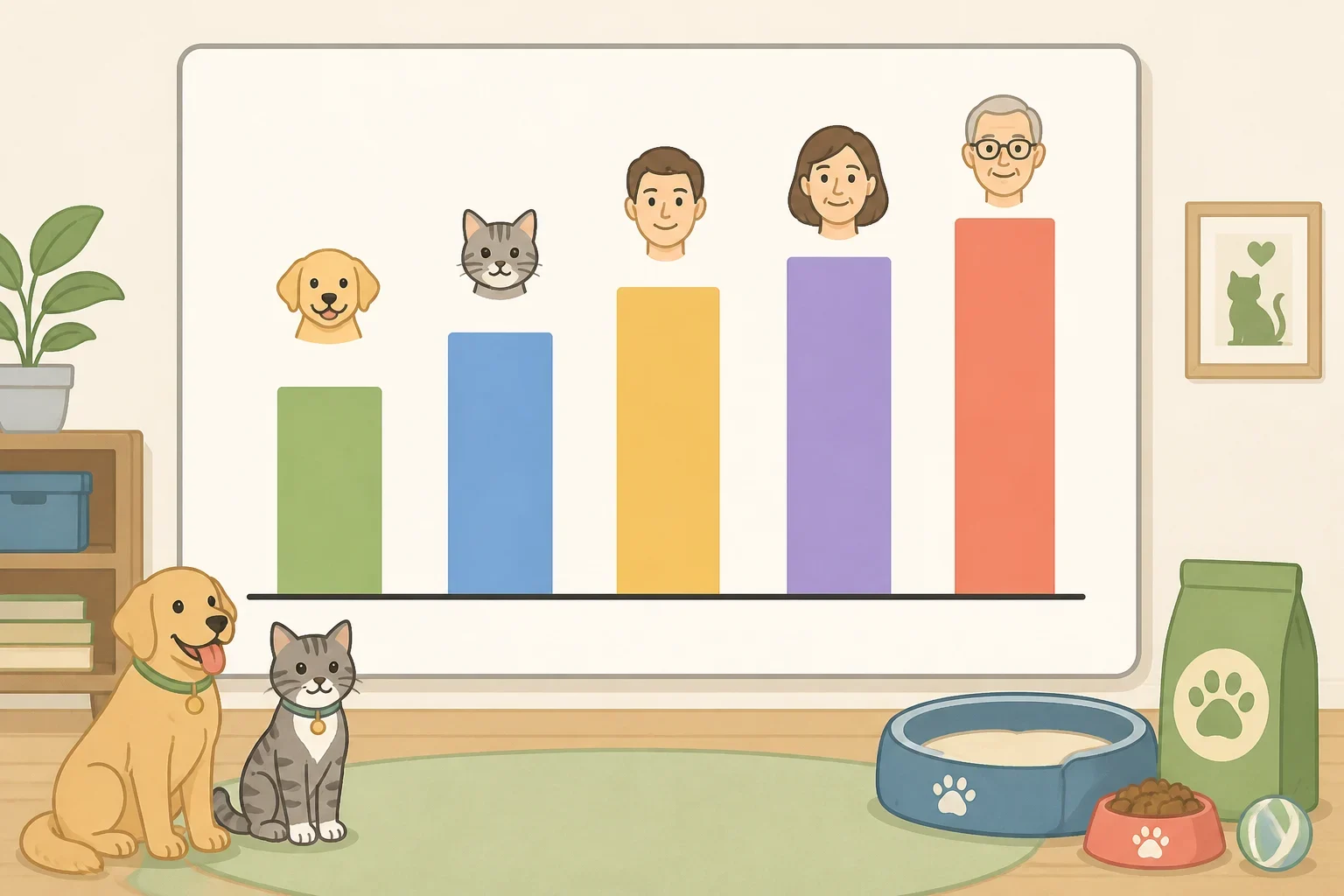
A U.S. Gen Z average is not established by the sources reviewed here. A Great Britain survey is useful as a comparison, but it should not be treated as a forecast for American households.
Nearly two years ago, Go.Compare/Sago found that pet owners ages 18 to 24 spent an average of £145 per month, compared with £112 across the surveyed population. The survey included 1,213 pet owners from a larger online sample of 2,037 GB adults. Its youngest category overlaps with Gen Z, but it did not measure every Gen Z adult, and it was conducted in Great Britain rather than the United States.
The difference is meaningful within that survey. It does not prove that U.S. Gen Z owners spend more than older Americans. Currency, housing, veterinary systems, household income, pet mix, and survey populations all differ. The narrower conclusion is the useful one: younger owners in that sample were not spending less simply because they were younger.
For a U.S. household, national benchmarks are a better starting point. Two years ago, the AVMA reported that pet-owning households spent an average of $1,516 on pet-related expenses in 2024, excluding adoption or purchase costs, compared with $1,515 in 2023. That is a household average, not a recommended amount for one pet.
It also combines different kinds of spending. Food, medication, toys, and veterinary care all fall inside the total, so a renter with one indoor cat and a household with two dogs may have very different budgets while both are represented by the same national figure.
The number should be treated as a reference point, not a promise. A household building a pet budget needs to price the specific animal, the local cost of care, and the amount of cash available when an ordinary appointment becomes an urgent one.
Why pet budgets are under pressure

The rising cost of pet ownership is not showing up in one clean line. The available figures point to a mix of higher-priced purchasing, changing expectations around care, and more households absorbing pet-related expenses.
Last year, APPA reported that 41% of dog owners and 38% of cat owners purchased premium food in 2024. Those shares rose by 5 and 9 percentage points, respectively, from 2023, while basic-food purchases fell by 7 percentage points for both groups. The report also found that 16% of dog owners and 19% of cat owners purchased mixers or toppers, increases from 2018 of 129% and 138%, respectively.
Those figures describe purchasing behavior, not a verdict on what pets need. Some animals may have dietary requirements, while other premium purchases are discretionary. APPA is a membership organization serving the pet industry, so its report is useful for tracking consumer trends but should not be treated as independent proof that premium products are the main cause of household financial strain.
The pattern does show why a monthly estimate can drift upward. A basic food budget may gradually include premium food, toppers, supplements, extra treats, or other products that feel like part of responsible care. Those choices may be meaningful, but they are not all equally difficult to reduce when money gets tight.
Veterinary care creates a different kind of pressure. The AVMA found two years ago that average veterinary spending per pet-owning household fell 4% from 2023 to 2024, even though average total pet spending was nearly unchanged. The average veterinary visit also fell from $190 to $147, but that measure included all costs for all pets seen during a visit, including visits involving more than one pet.
The report does not establish why spending fell. Owners may have had different care needs, visited less often, or paid less per visit. A lower average bill does not automatically mean veterinary care became easier to afford. It may also reflect fewer visits, different cases, or care that was postponed or declined.
The number of households involved is changing, too. APPA reported last year that 49 million U.S. households owned a cat in 2024, up from 40 million in 2023. More households are absorbing pet expenses, even as families make different choices about food, preventive care, services, and extras. A single national average cannot show where that pressure lands.
The veterinary affordability gap
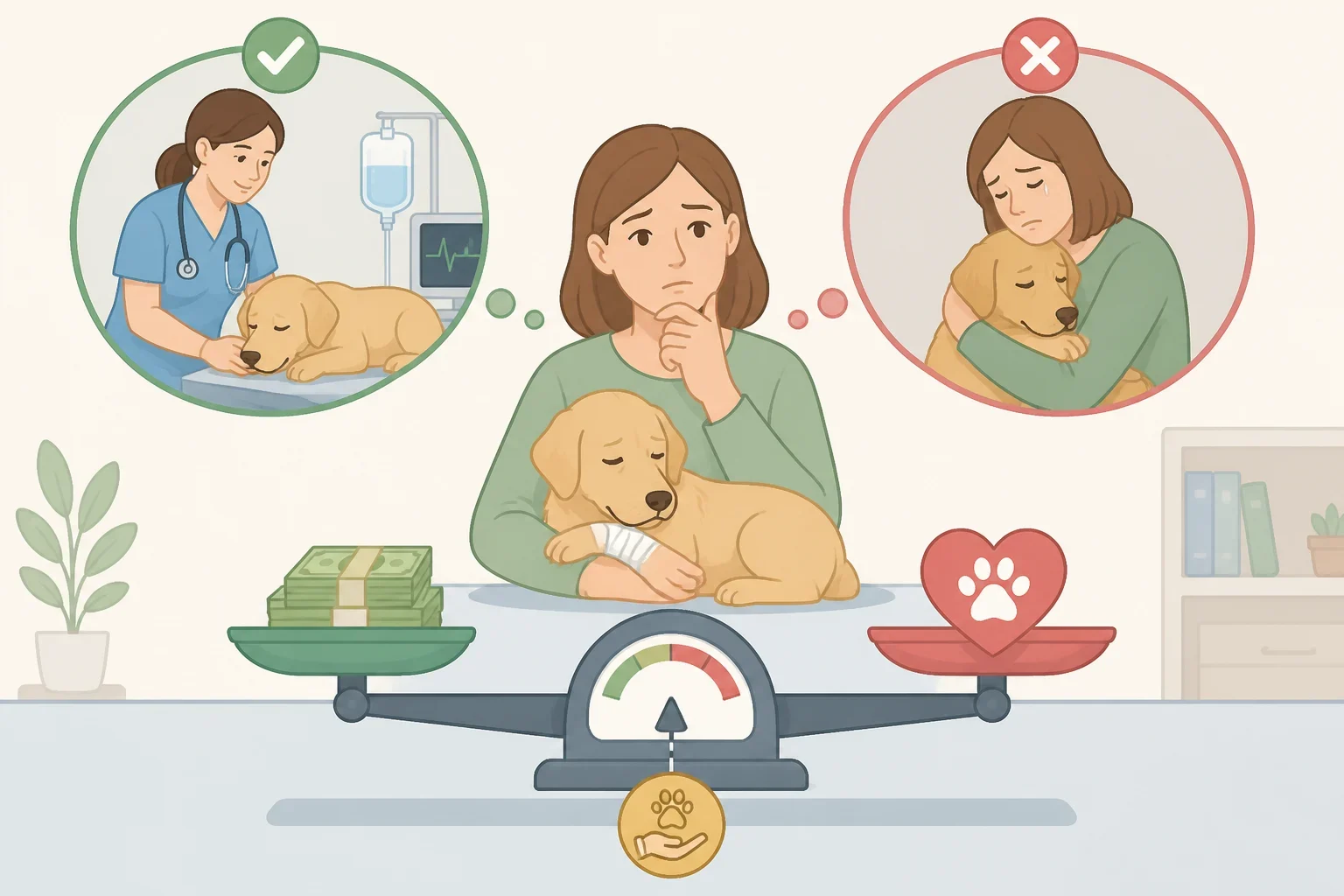
Routine expenses arrive gradually. A serious veterinary problem can demand a decision before a household has time to rebuild savings or compare options.
The PetSmart Charities-Gallup study found that 66% of U.S. pet owners said they could pay $1,000 or less if their pet needed lifesaving treatment, according to Gallup last year. That finding measures self-reported ability to pay, not the size of owners’ savings accounts or the typical cost of an emergency. It still shows the gap between loving a pet and having immediate access to enough money for intensive care.
The care being declined is not limited to optional extras. The study found that 22% of all pet owners had declined diagnostic procedures and 18% had declined preventive care such as vaccinations. Another 16% had declined elective surgery, 11% had forgone recommended medication, and 7% had refused lifesaving surgery, the study found. These figures refer to all owners in the survey, not only those who cited cost.
Financing could change what some households can manage. Sixty-four percent of owners said an interest-free plan spread over one year would at least double what they could afford for lifesaving care, yet only 23% said a veterinarian had ever offered them a payment plan for any treatment, Gallup reported last year. Among owners who turned down care because of cost, 73% said they were not offered a more affordable option.
That does not mean every clinic can offer the same terms, or that every treatment can safely wait. Treatment choices and timing have to be discussed with the veterinarian. It does suggest that owners should ask about estimates, deposits, payment plans, and medically appropriate alternatives before a crisis. Learning the clinic’s policies in advance is much easier than discovering them in an emergency room.
The reported consequences are painful. Three in 10 pet owners said a friend’s or family member’s pet had died in the past five years because treatment was unaffordable, the study found. That is a reported experience involving someone else, not a mortality rate, but it captures the stakes more clearly than an annual spending average.
A practical framework for budgeting for pet expenses
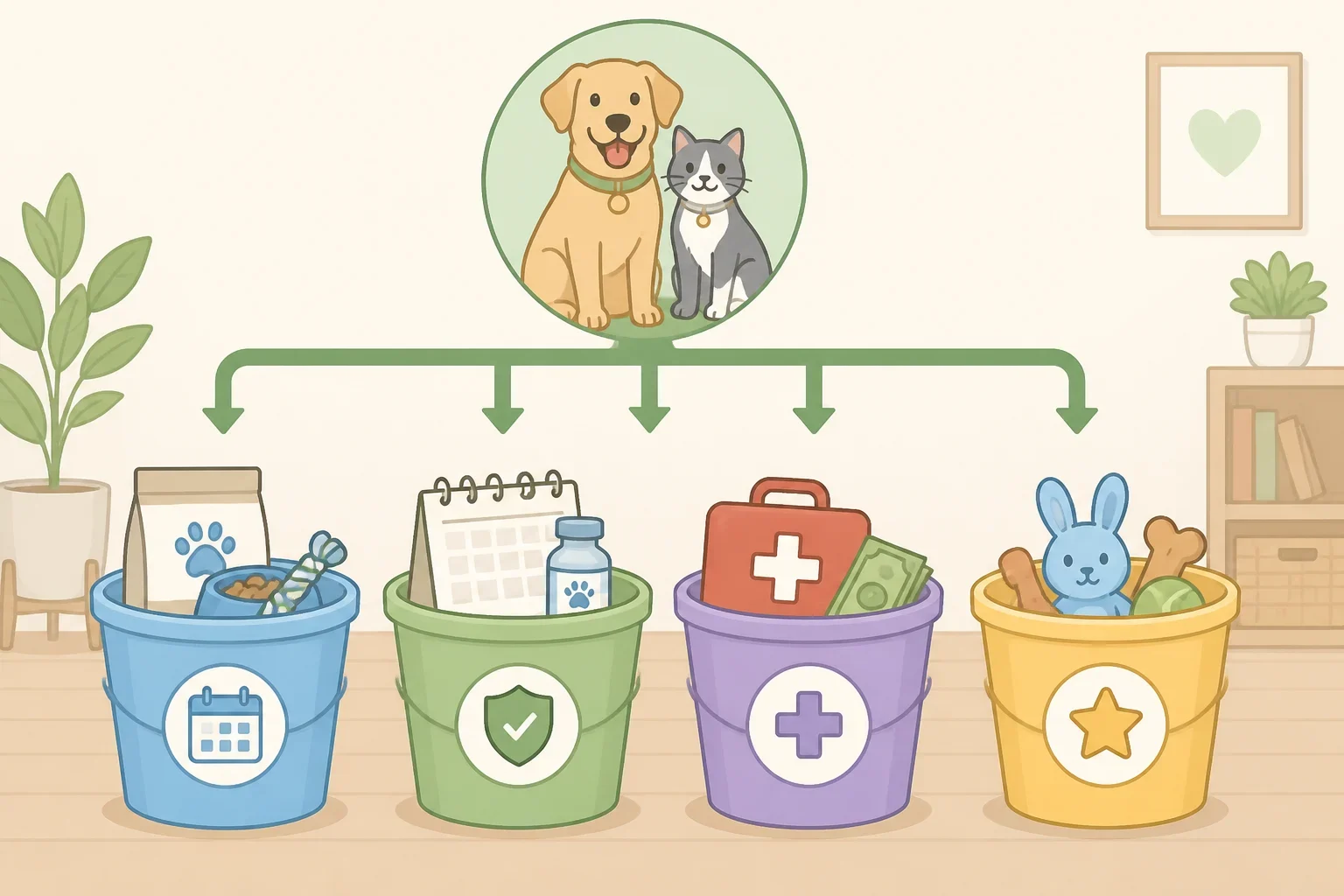
The simplest way to see how Gen Z affords pets, or how any household can afford them, is to separate expenses by predictability. A single monthly estimate can look manageable while leaving out annual care and emergency exposure.
Use four categories:
- Monthly essentials: Add the actual cost of food, litter, medication, routine supplies, regular grooming, and licensing where required.
- Annual and occasional care: List vaccines, preventive treatments, dental care, boarding, grooming appointments, replacement equipment, and seasonal needs. Add the expected yearly total and divide it by 12.
- Emergency reserve: Choose a target based on the cash the household could access quickly for diagnostics, hospitalization, surgery, or after-hours care. The target should reflect the specific pet, household income, existing savings, and available support, not the AVMA’s $1,516 household average.
- Discretionary spending: Track premium food, toppers, extra treats, toys, accessories, pet-friendly travel, and celebrations separately. These purchases may be meaningful, but they are usually more adjustable than medication or urgent treatment.
A compact calculation looks like this:
Monthly essentials + annual costs divided by 12 + emergency-fund contribution = monthly pet budget.
The emergency-fund contribution can start small. What matters is that it is a separate line rather than whatever happens to remain after treats, toys, and other household spending.
Owners are already using some of these strategies. Go.Compare/Sago found nearly two years ago that younger pet owners spent more than the surveyed average, but that study does not show how U.S. owners build their budgets. The U.S. evidence does offer a practical direction: Gallup found that many owners have limited emergency capacity, while payment plans are not routinely offered.
Insurance can be one part of the plan, but it is not a guarantee of savings. Before enrolling, compare the level of cover and check whether dental care is included, a point raised by Go.Compare nearly two years ago. The policy should be reviewed alongside an emergency reserve, not treated as a replacement for accessible cash.
The same caution applies to payment plans. Ask the veterinary office what options exist before care is urgent, and ask whether a plan requires a deposit or excludes certain services. Keep some cash available for expenses an insurer or financing arrangement may not cover.
The decision to make before bringing home a pet
Do not use age, renting, or homeownership status as a substitute for pricing the specific animal’s needs. Before adoption, calculate monthly essentials, divide annual costs by 12, set an emergency-reserve goal based on accessible cash, and price insurance separately.
Ask the prospective veterinary clinic how estimates, urgent referrals, payment plans, and treatment discussions work. If the budget only covers food and supplies, the household is not yet pricing the full commitment.
The Great Britain data suggests that younger pet owners may spend heavily, but it cannot establish a U.S. generational average. The U.S. evidence is clearer about the risk: ordinary care shares a budget with veterinary needs that many households cannot pay for immediately. Planning for both is the most practical way to make pet ownership sustainable.
