
How to Make a Grocery List to Save Money Using Receipts
A grocery list cannot guarantee a lower total, but it can make extra purchases easier to spot before they reach the cart. To learn how to make a grocery list to save money, start with the receipt already in your bag: look for habitual purchases, check what is still at home, and plan the next trip around specific meals and quantities.
The most practical starting point is not a blank list or a strict spending target. It is your actual shopping history. A recent budget guide from N.C. Cooperative Extension recommends using a receipt to see both how much money is being spent and what it is buying. That makes the next list more personal and useful than a generic grocery template.
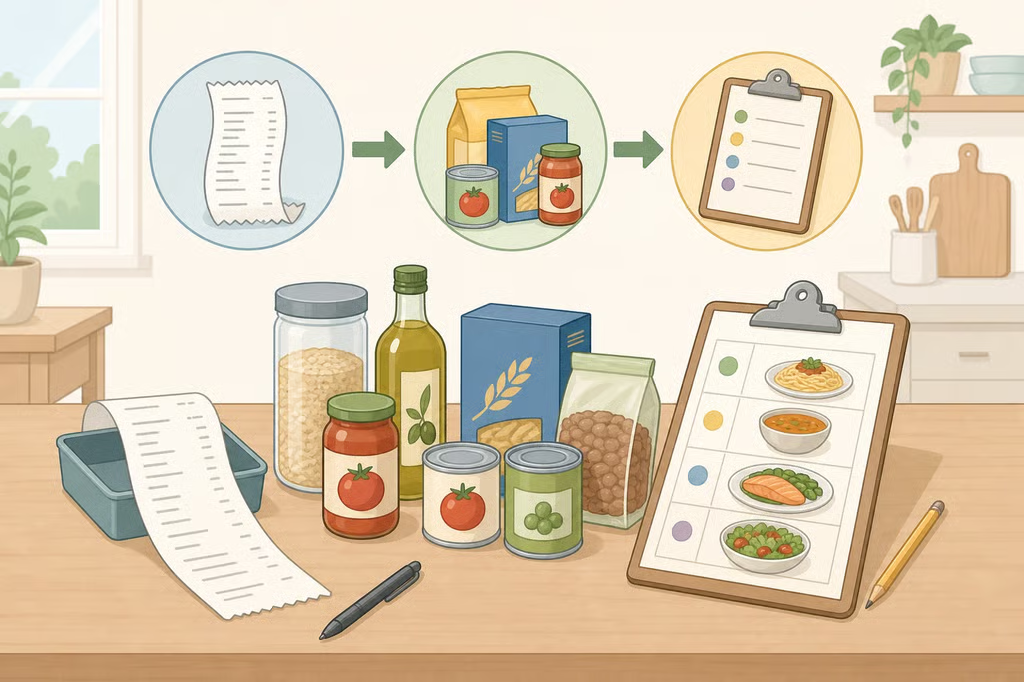
This method works best as a repeatable routine:
- Read the most recent receipt.
- Check the pantry, refrigerator, and freezer.
- Plan meals that fit the coming days.
- Write specific items and quantities.
- Choose substitutions before shopping.
- Shop with one clear boundary for extras.
- Compare the new receipt with the list.
What to gather before writing the list
Set aside a few minutes for:
- The most recent paper receipt or app purchase history
- A quick inventory of the pantry, refrigerator, and freezer
- A rough idea of the coming meals
- The household’s dietary needs and food preferences
- The week’s schedule, including nights when cooking may not happen
- A budget range, if the household uses one
- An agreement about household staples and optional extras
If grocery shopping is shared, talk through meals, necessary supplies, and unplanned purchases before anyone enters the store. The goal is not to make everyone follow the same food routine. It is to prevent a last-minute disagreement over what counts as a needed item.
How to plan a grocery list on a budget
1. Audit the most recent receipt
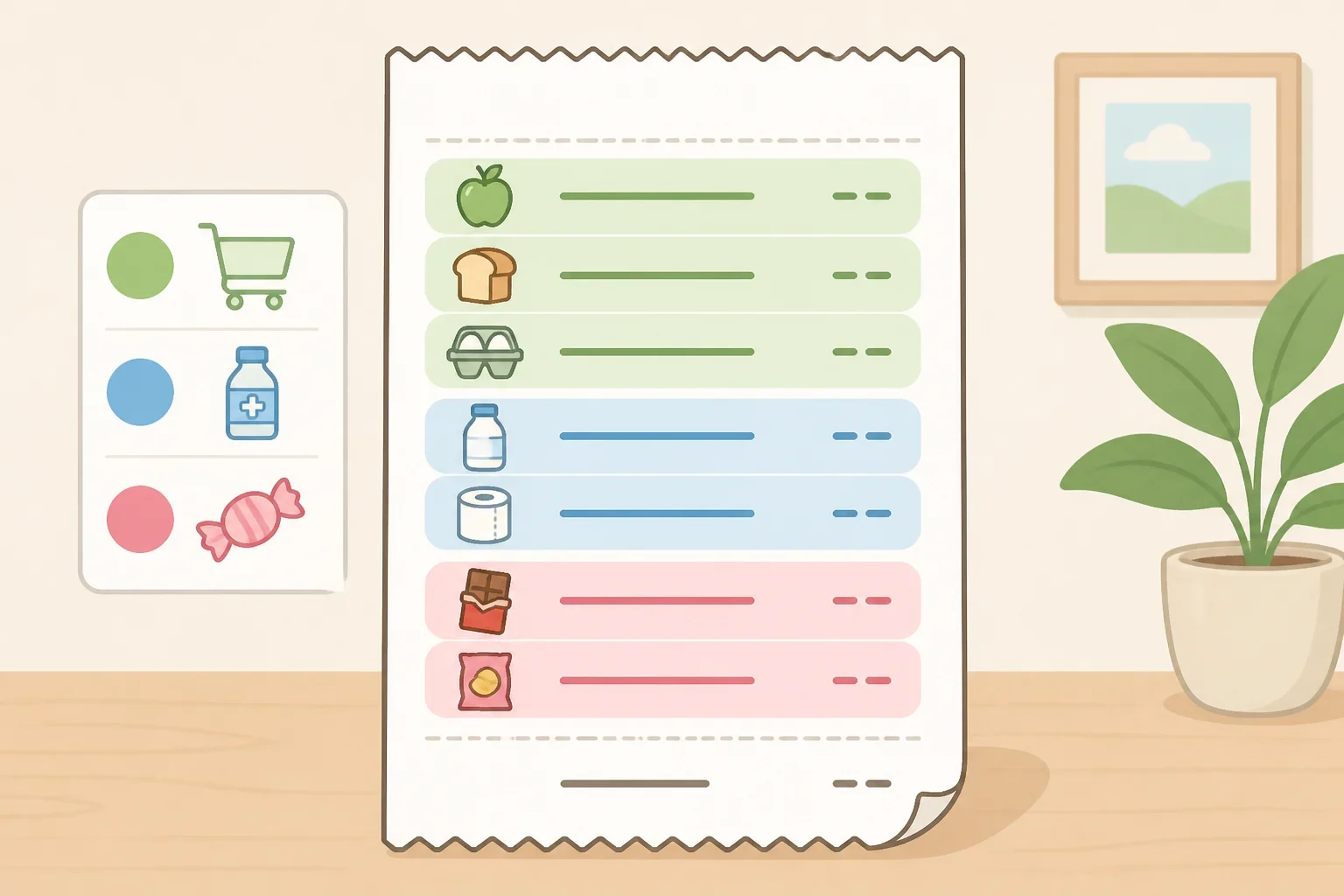
Read the receipt before writing anything new. The first pass is not about judging the total. It is about seeing where the money went and deciding whether a pattern deserves a change.
The N.C. Cooperative Extension guidance, published five months ago, suggests looking for processed foods that tend to be higher in price. That does not mean every processed food needs to disappear. Dietary restrictions, cultural staples, convenience, work schedules, and personal preferences all matter. The receipt is information, not a test of household virtue.
Mark each purchase in one of three ways:
- Planned: bought for a specific meal or household need
- Useful but unplanned: needed, but not written down ahead of time
- Impulse or habitual: added because it was appealing, familiar, or easy to grab
A sample audit might look like this:
- Chicken thighs, rice, and vegetables: planned dinner ingredients
- Dish soap: useful household replenishment
- Soda: recurring extra
- Packaged snack: impulse purchase
- Duplicate jar of sauce: bought even though one was already in the pantry
Focus on repeated extras instead of trying to correct every small purchase at once. If soda appears on several receipts and adds up to $20 a month, the next list could include water or another intended alternative. The extension service uses that kind of soda-to-water goal as an example of a specific change a household may choose to make.
Name the change before shopping. “Buy less soda” leaves room for a decision in the aisle. “Sparkling water, one case” gives the next trip a clear direction.
2. Check the kitchen before choosing meals
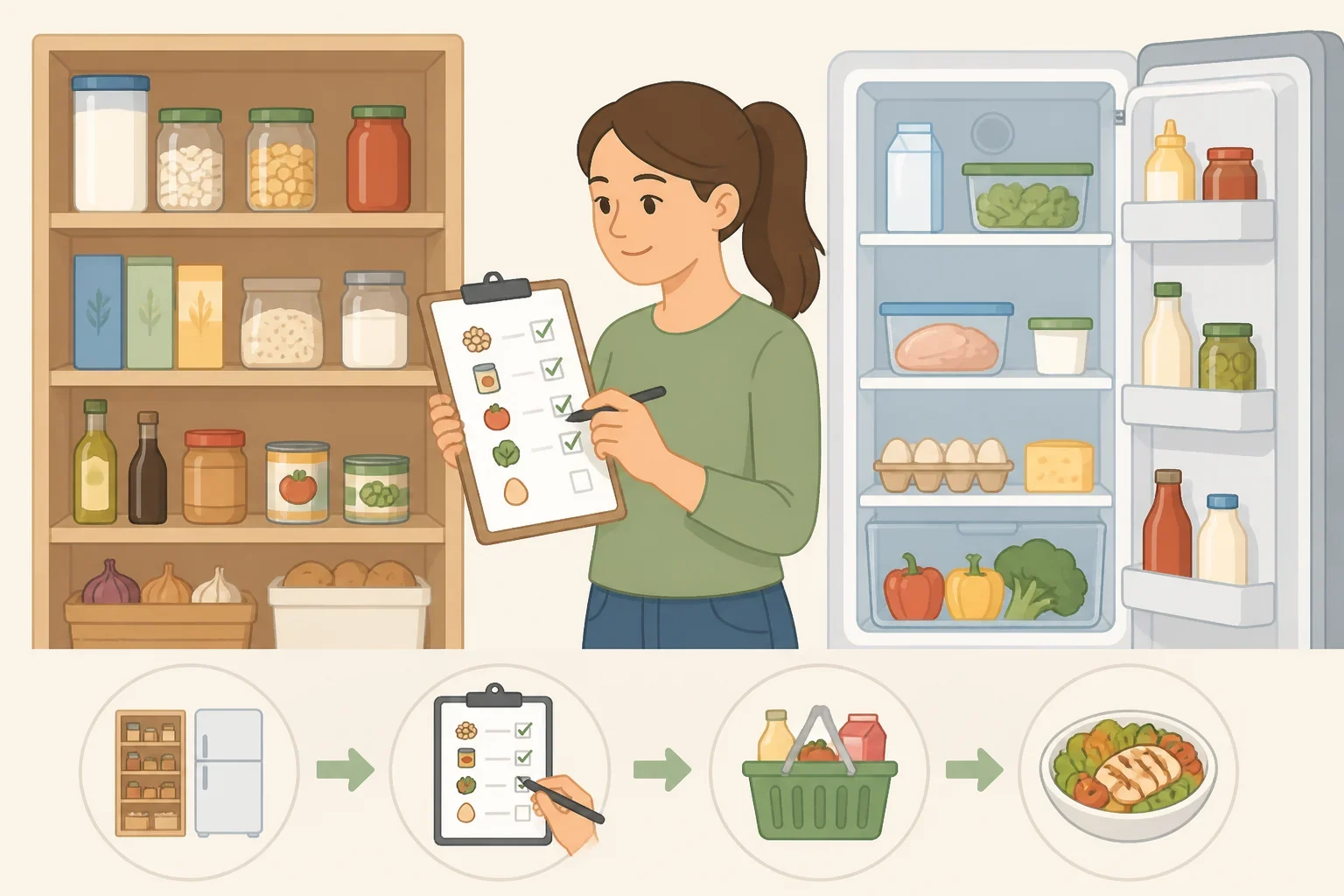
Inventory the pantry, refrigerator, and freezer before adding anything to the list. Check opened packages, condiments, frozen ingredients, produce that needs to be used, and household supplies.
Bankrate’s grocery-planning guidance recommends deciding on meals in advance and checking which ingredients are already at home. That simple check helps keep a second jar of sauce or another bag of rice from landing in the cart when one is already available.
Write down anything that needs to be used soon. Then plan meals around those ingredients where it makes sense.
A flexible plan might include:
- Three dinners
- Two lunches
- Breakfast staples
- One leftover or low-effort meal
- Household replenishments, such as dish soap or laundry supplies
Those categories are only a starting point. An irregular schedule may call for fewer planned meals and more ingredients that can move between dishes. A household with changing work shifts might plan one cooked meal, two quick meals, breakfast items, and enough food for leftovers.
Plan the food that is actually likely to be eaten. An ambitious meal plan can create its own problems when the week becomes busy. Food may go unused, cooking may be skipped, or another unplanned store trip may become necessary.
3. Turn the meal plan into a specific list
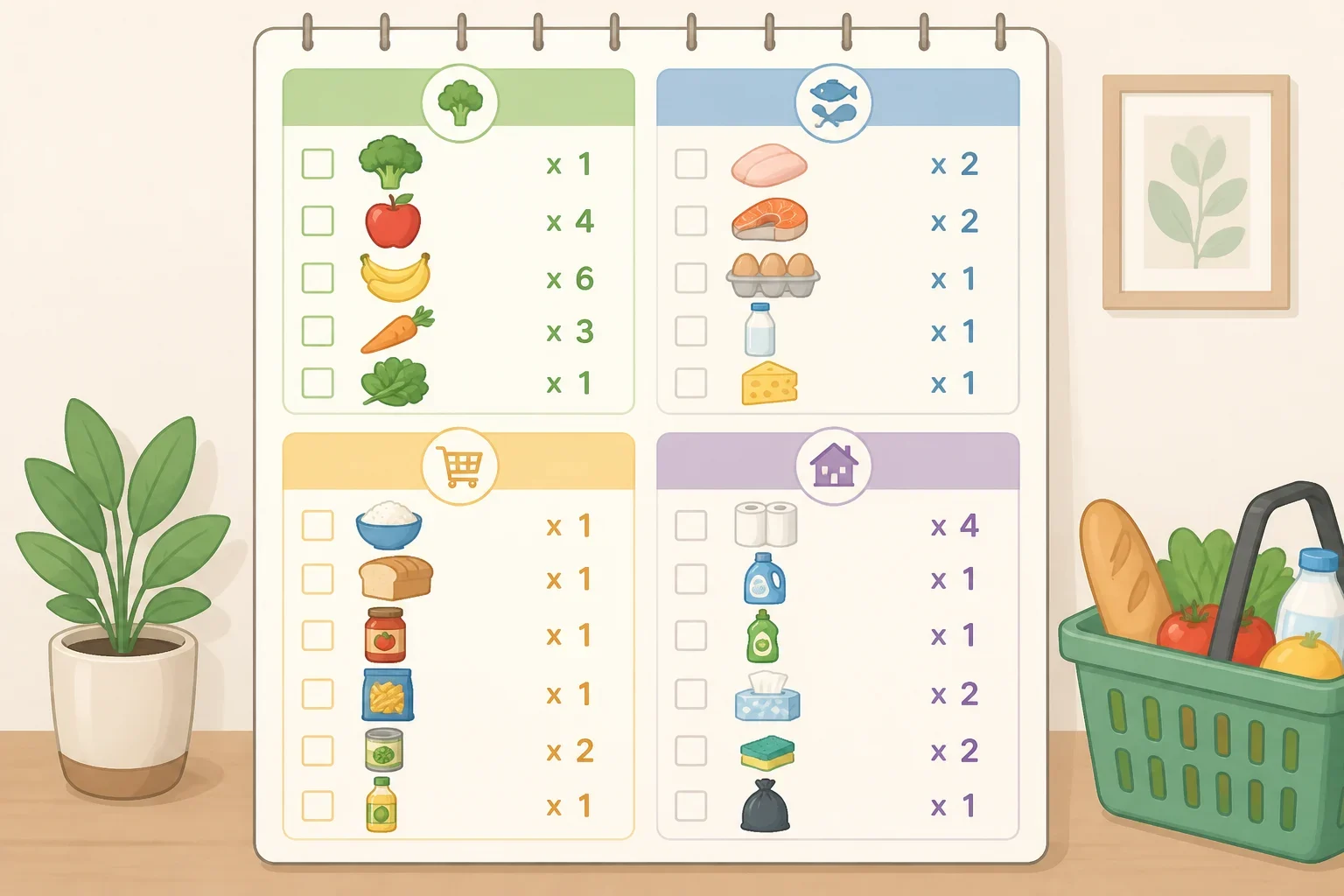
A useful list answers three questions: What is needed? How much is needed? Where does it belong?
Organize the list by the sections used in the preferred store, or use broad categories such as produce, protein and dairy, pantry, frozen, and household. Add quantities wherever possible.
Produce
- Broccoli, two crowns
- Bananas, one bunch
- Salad greens, one container
Protein and dairy
- Chicken thighs, two pounds
- Eggs, one dozen
- Plain yogurt, one container
Pantry
- Rice, one bag
- Canned tomatoes, two cans
- Sparkling water, one case
Household
- Dish soap, one bottle
“Chicken” is less useful than “chicken thighs, two pounds.” “Snacks” is less useful than the specific item and amount the household intends to buy.
Quantities also create a stopping point. If the plan requires two pounds of chicken, a larger package may work when the extra can be used, frozen, or safely stored. If it will sit unused, the smaller amount is the better fit for the plan.
Keep household supplies on the same document so they are not forgotten, but separate them from food. A missing bottle of cooking oil, roll of toilet paper, or cleaning product should be handled before leaving home, not remembered halfway through checkout.
4. Write substitutions before shopping
Use the receipt audit to replace a recurring extra with a planned alternative. If soda was an unplanned purchase, the list might say “sparkling water, one case” or “tea, one box,” depending on what the household will actually use.
Also decide what to do if a listed ingredient is unavailable. A substitution should:
- Replace an item already on the list
- Work in the planned meal
- Fit the household’s dietary needs
- Avoid creating a need for several additional ingredients
- Offer a reasonable amount for the price
This keeps the list flexible without turning every sale into a reason to buy something new. A sale-priced ingredient can make sense when it replaces a listed item or supports a meal already in the plan. It is less helpful when it introduces a new recipe, requires several extra purchases, or appeals only because the price looks lower.
For a household with an unpredictable schedule, list ingredients that have more than one planned use. Rice, eggs, vegetables, yogurt, or another staple may work across several meals, but include them because they fit the week, not because flexibility sounds efficient on paper.
5. Compare unit prices when the options are similar
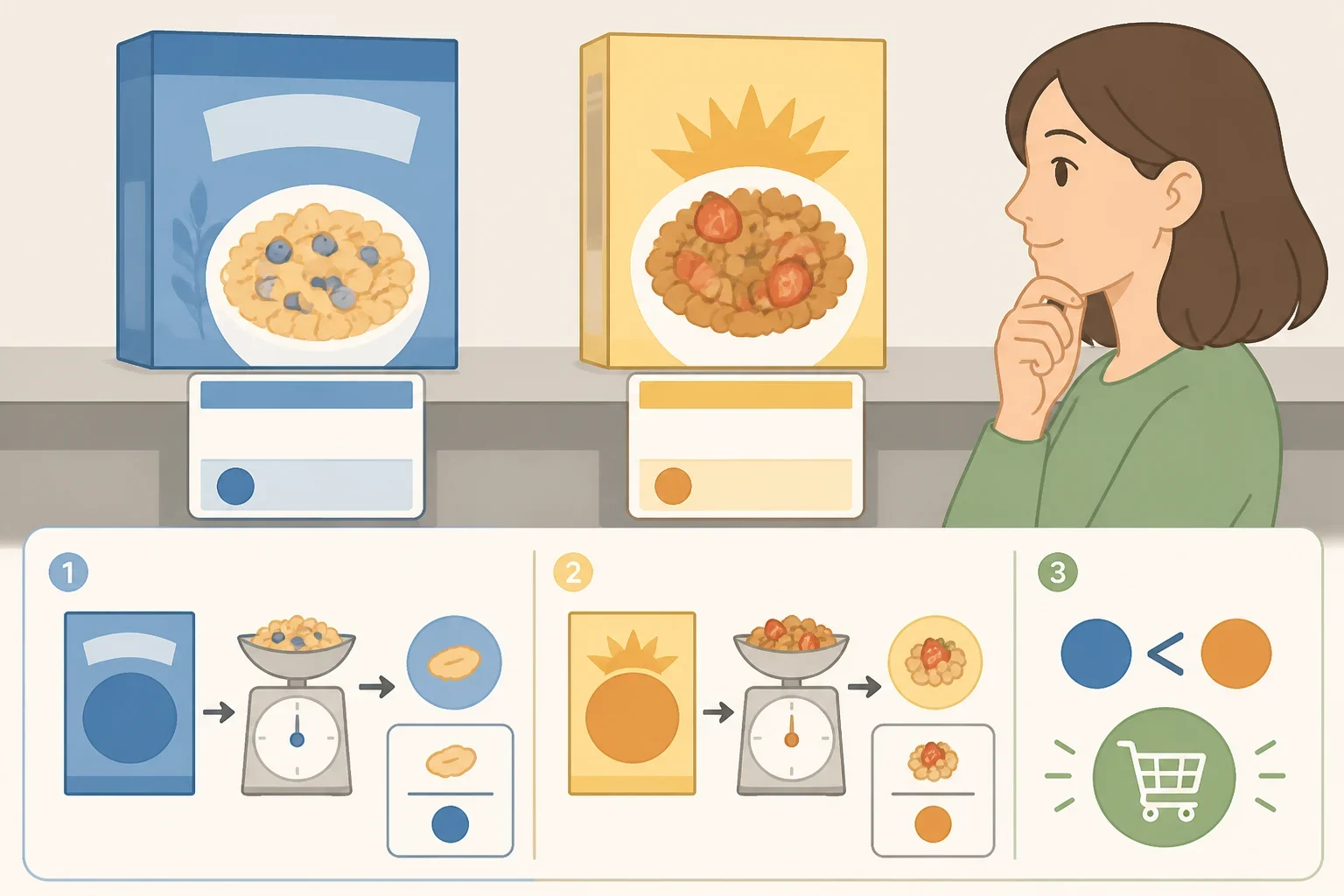
When two packages seem similar, check the unit price on the shelf tag or online listing. The lower sticker price is not automatically the lower cost for the amount being purchased.
For example, compare the price per ounce:
- $4 ÷ 16 ounces = $0.25 per ounce
- $5 ÷ 24 ounces = about $0.21 per ounce
The larger package has the lower unit price in that example, but it is only the better purchase if the household can use it. A lower unit price does not help if the food spoils, sits untouched, or conflicts with dietary needs.
Keep the comparison within the same product type. A family-size package and a single serving may serve different purposes, and a store brand and a name brand may not be identical. The useful question is not simply which package costs less. It is which option supplies what the meal requires without creating waste.
6. Shop the list with one clear boundary
Use the list as the default. Bankrate advises sticking with planned items because extra snacks and pre-packaged foods can add up and push a grocery budget off course.
A practical household boundary is to allow an addition only when it:
- Replaces a listed item
- Solves a genuine shortage at home
- Costs less per unit and will be used
- Fits a planned meal or household need
Everything else can go on a future list. That does not mean the item can never be bought. It means the decision happens at home, away from the most tempting part of the store.
Shared shopping also benefits from a rule decided in advance. Partners or housemates can agree that either person may add a needed replacement, that optional items come from a set extras allowance, or that additions need to be discussed. The exact arrangement can vary. What matters is taking the negotiation out of checkout.
A list also does not automatically make the food choices healthier. A field experiment summarized by Journal of Food Products Marketing found no significant difference in the healthiness of purchases made by shoppers using a list and those made without one. If healthier choices matter to the household, write those choices into the list instead of expecting the list to make them happen.
7. Set a realistic expectation for the total
An itemized list is a planning tool, not a promise that every receipt will be lower. Prices, package sizes, dietary needs, household routines, and necessary replacements all affect the final amount.
A useful budget list makes purchases visible before they happen. It can show whether a household is repeatedly buying the same extra, forgetting a staple, overestimating how many meals can be cooked, or choosing package sizes that do not match actual use.
That information is more useful than forcing every trip to fit an arbitrary number. Keep a spending range if one helps, but let the receipt and the list show what needs adjusting next.
Check the receipt after the trip
After checkout, compare the new receipt with the list. Record:
- Items bought that were not planned
- Ingredients missing from the list
- Food left unused from the previous trip
- Substitutions that worked well enough to repeat
Do not treat every difference as a failure. A missing ingredient may show that the meal plan was too ambitious. An unused item may point to a quantity that was too large. A substitution that worked can become part of the next budget grocery list.
For the following trip, repeat the sequence: audit the receipt, check the kitchen, plan around the actual schedule, write quantities by section, compare unit prices, and choose substitutions before shopping. After a few rounds, the grocery shopping list for a tight budget becomes less of a hopeful reminder and more of a record-based household system.
