
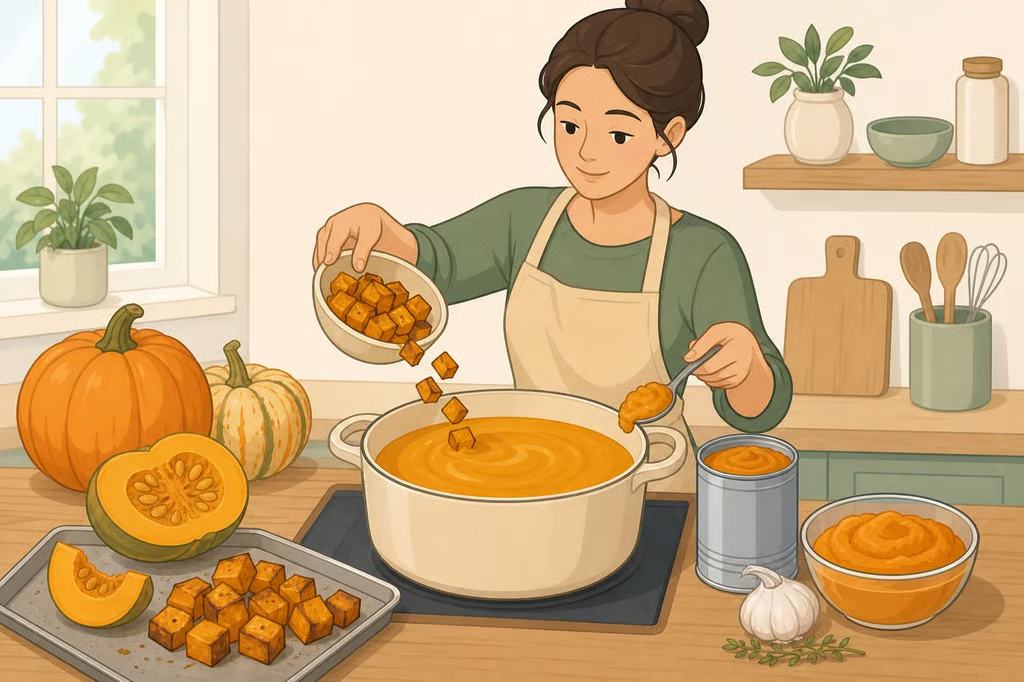
How to Make Pumpkin Soup: Fresh or Canned Steps
This pumpkin soup recipe makes a smooth, savory pot for four to six people, depending on whether you serve it as a starter or the main dish. Canned 100% pumpkin is the faster, more predictable choice for a weeknight. Fresh sugar or pie pumpkin takes extra preparation, but roasting makes the process more hands-on and gives you control over the final texture.
Check the can before opening it. Canned pumpkin puree and canned pumpkin pie filling are different products. Pie filling includes added sweetening and seasoning, so using it in savory soup can make the pot too sweet and heavily spiced. Choose a can labeled “100% pumpkin,” as described in Libby's pumpkin FAQ.
The recipe below covers both starting points, with clear measurements, cooking steps, fixes for common texture problems, and practical leftover instructions.
Choose canned or fresh pumpkin first
You need 3 cups of pumpkin puree for the soup. Buy two standard 15-ounce cans, then measure out 3 cups for the recipe. The cans contain more than that amount, so expect to have some puree left over.
For a fresh version, buy enough small sugar or pie pumpkins to produce 3 cups of cooked puree. The usable amount varies, so the exact number depends on the size of the pumpkins and how much flesh remains after seeding and roasting.
An uncut pumpkin can stay in a cool, dry place until you are ready to cook it. Once cut or roasted, handle the flesh as a perishable food and refrigerate or freeze it promptly.
Gather the ingredients
- 3 cups pumpkin puree, canned or homemade
- 1 tablespoon butter or olive oil
- 1 medium onion, finely chopped
- 2 to 3 garlic cloves, minced
- 3 cups vegetable broth or chicken stock, plus more for thinning
- 1/2 cup heavy cream, half-and-half, or unsweetened full-fat coconut milk
- 1 teaspoon kosher salt to start, or 1/2 teaspoon fine salt
- 1/2 teaspoon black pepper
- 1/2 teaspoon ground cinnamon
- 1/4 teaspoon ground nutmeg
- 1 to 2 teaspoons lemon juice or mild vinegar, optional
Use vegetable broth for a vegetarian soup. Chicken stock gives the soup a deeper savory taste, but it is not vegetarian. Choose either cream, half-and-half, or coconut milk rather than combining them. Coconut milk gives the finished soup a noticeable coconut flavor, so use it when that suits the meal.
Gather the equipment
You will need:
- A sturdy knife and stable cutting board
- A rimmed baking sheet, if using fresh pumpkin
- A large pot
- An immersion blender or countertop blender
- A measuring cup
- Shallow storage containers for leftovers
Roast fresh pumpkin before making the soup
Skip this section if using canned puree. Open the cans, measure 3 cups, and continue with the cooking steps.
- Heat the oven to 400°F. Set the rimmed baking sheet nearby.
- Stabilize the pumpkin. Place it on a sturdy, nonslip surface. Keep your free hand away from the knife as you cut. If the pumpkin rolls, trim a very thin slice from one side to create a flat spot.
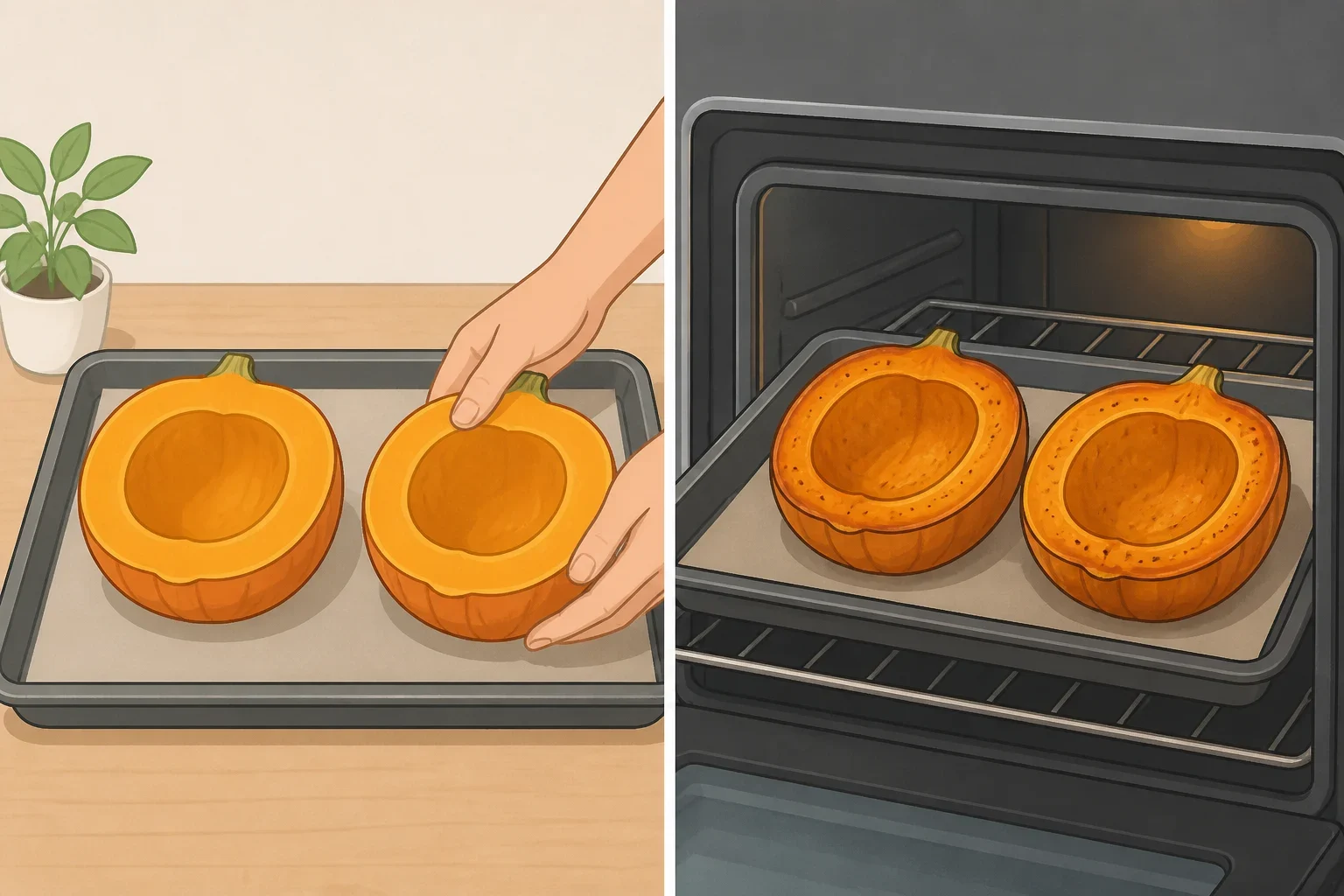
- Halve and seed the pumpkin. Scoop out the seeds and loose, stringy interior. The halves do not need to be perfectly clean, but removing the loose fibers makes the puree easier to process.
- Roast the halves cut-side down. Place them on the baking sheet and roast for about 45 to 60 minutes, until a fork slides easily into the thickest part. Larger pieces may need more time.
- Cool the pumpkin. Let it rest until it is cool enough to handle safely. Scoop the flesh away from the skin.
- Puree and measure. Blend the flesh with an immersion blender, food processor, or countertop blender. Measure 3 cups for the soup. If the puree seems unusually watery, let it drain briefly in a fine-mesh sieve before measuring.
Freeze or refrigerate any extra puree promptly. Do not leave it on the counter while you prepare the rest of the meal.
Cook the pumpkin soup
1. Soften the onion and garlic
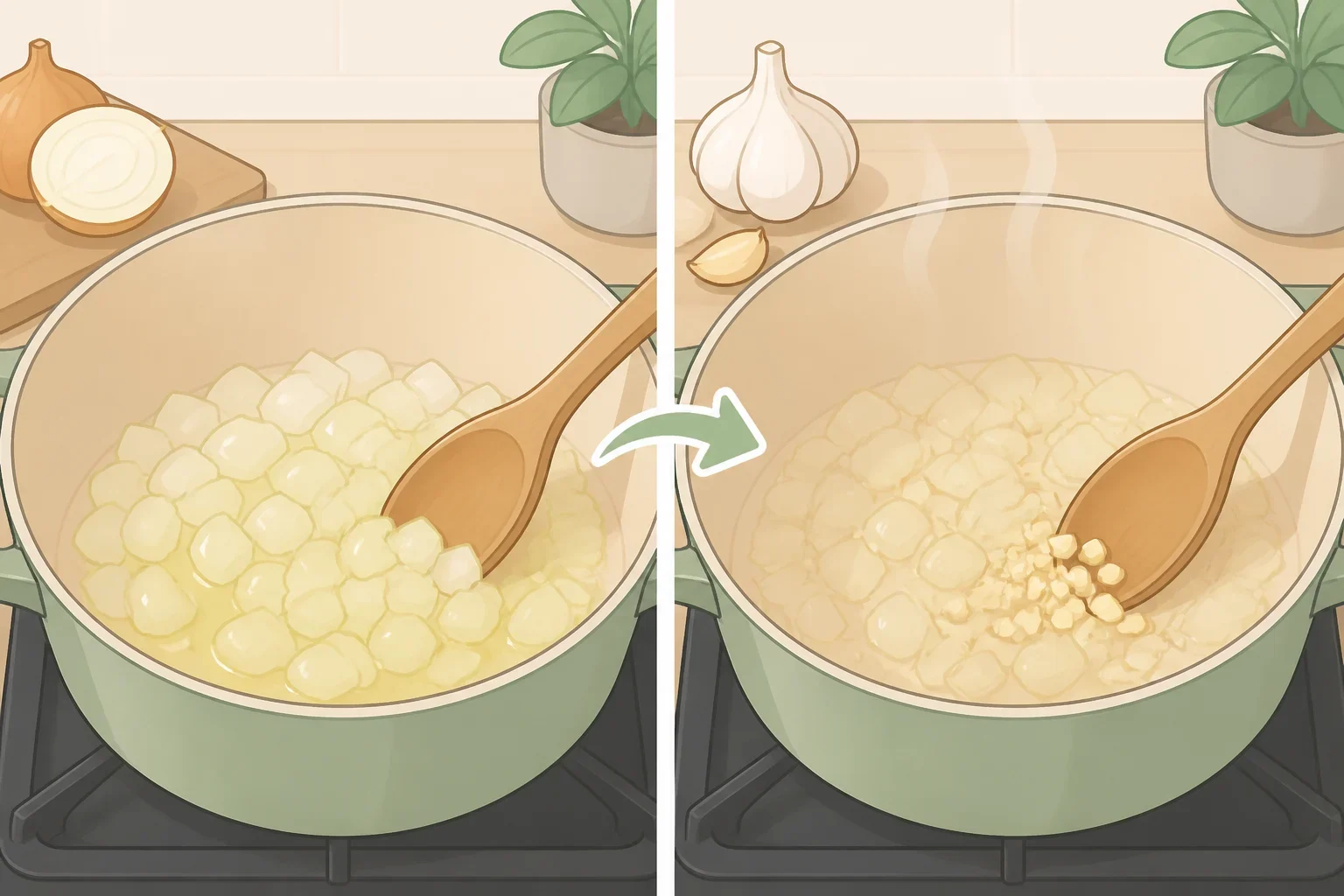
Melt the butter or warm the oil in a large pot over medium heat. Add the onion and cook for 4 to 5 minutes, stirring occasionally, until it is soft and translucent rather than browned.
Add the garlic and cook for about 30 seconds, just until fragrant. Lower the heat if it begins to darken. Burnt garlic can make the entire soup taste bitter.
2. Add the pumpkin and broth
Add the pumpkin puree and 3 cups of broth. Whisk until the puree loosens and the mixture looks mostly smooth. Scrape the bottom of the pot so the softened onion and garlic are incorporated.
Bring the soup to a gentle simmer. Leave the pot partly uncovered if it looks thin and you want some liquid to evaporate. If the consistency already looks right, cover it more fully so it does not reduce too far.
3. Simmer the mixture
Simmer for 15 to 20 minutes, stirring every few minutes. The soup should be hot throughout, with the onion and garlic no longer tasting separate from the pumpkin and broth.
Taste before adding the dairy or coconut milk. If the soup seems flat, add a little salt now. The base is easier to correct before the finishing liquid goes in.
4. Blend carefully
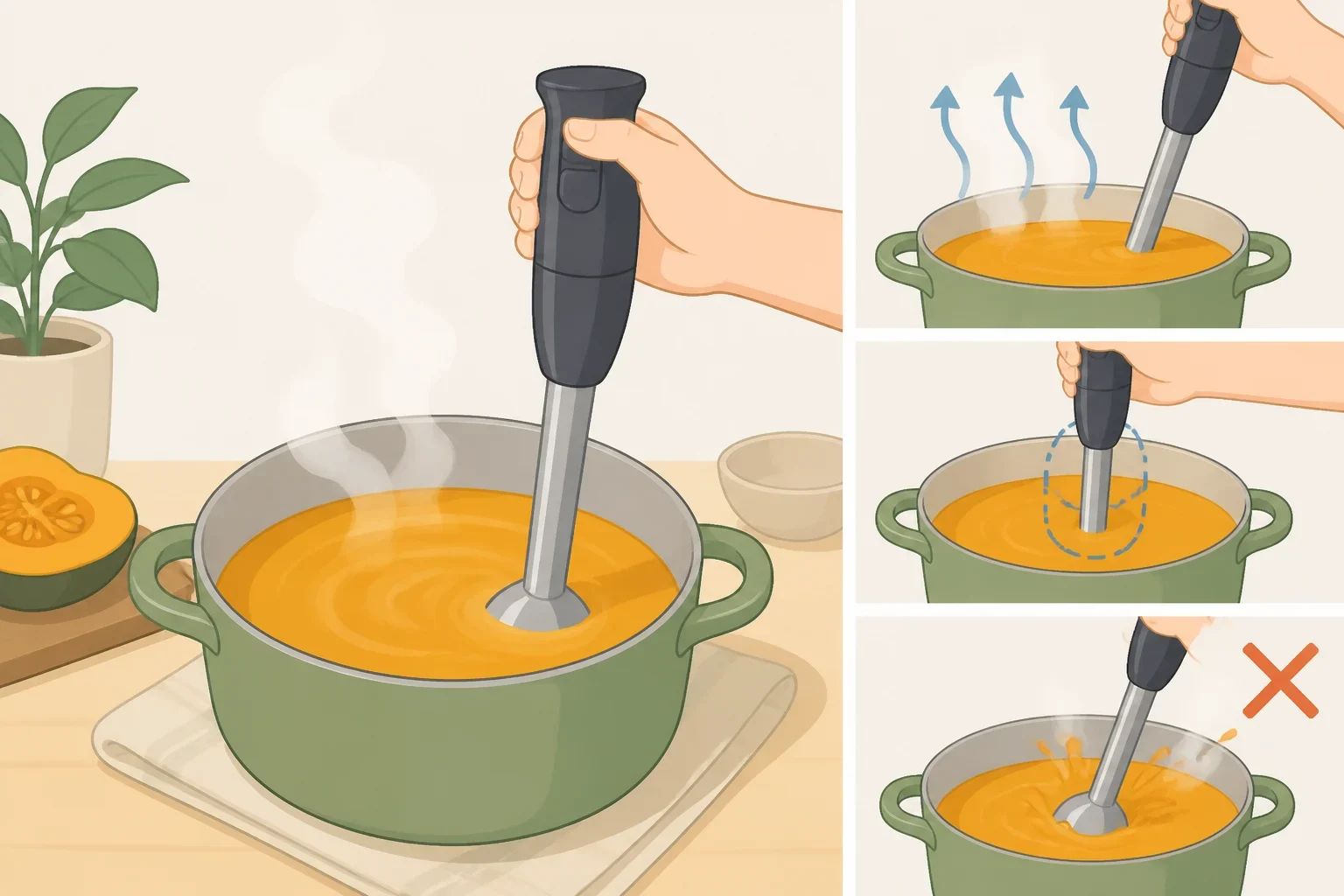
An immersion blender is the simplest option. Turn off the heat, keep the blender head fully submerged, and blend until the soup looks smooth.
For a countertop blender, follow the instructions for your specific model. Work in small batches, avoid filling the jar, and provide a way for steam to escape according to the blender’s design. Hot soup can build pressure under a sealed lid. Start at low speed, increase it gradually, and hold the lid securely with a folded kitchen towel if the manufacturer’s directions permit that method.
Never seal a jar of steaming soup completely. Return the blended soup to the pot if you worked in batches.
5. Add one finishing liquid
Lower the heat or take the pot off the burner. Stir in 1/2 cup of heavy cream, half-and-half, or unsweetened full-fat coconut milk.
Warm the soup gently until heated through, but do not let it boil after adding the dairy or coconut milk. Boiling can cause the mixture to separate. If the soup becomes thicker than you want, add broth a quarter cup at a time.
6. Season gradually
Start with 1 teaspoon kosher salt or 1/2 teaspoon fine salt, 1/2 teaspoon black pepper, 1/2 teaspoon cinnamon, and 1/4 teaspoon nutmeg. Stir, wait briefly, and taste.
Add more salt if the soup tastes dull. Add another small pinch of cinnamon or nutmeg if it needs warmth, but avoid adding a large amount at once. Fresh and canned pumpkin can vary in natural sweetness, so gradual seasoning gives you more control.
If the soup tastes too rich or sweet, add 1 teaspoon of lemon juice or mild vinegar. Stir and taste before adding more. The goal is a brighter flavor, not a sour soup.
Fix texture and flavor problems
Make one adjustment at a time and taste after each change.
- Too thick: Add broth first, a quarter cup at a time, until the soup moves easily from the spoon. Add more finishing liquid only if the soup also needs extra richness.
- Too thin: Simmer it uncovered for a few minutes, stirring often. You can also blend in more pumpkin puree if you have some available.
- Bland: Add salt gradually. If the seasoning seems correct but the soup still tastes heavy, add a small amount of lemon juice or vinegar.
- Too sweet: Add a pinch of salt, then a little vinegar or lemon juice. More cinnamon or nutmeg will not reliably balance excessive sweetness.
- Too strongly spiced: Add more pumpkin and broth if available, or add a little more cream, half-and-half, or coconut milk. Taste again and adjust the salt after diluting the soup.
- Grainy: Blend longer if the pumpkin is fibrous. If the texture remains rough, pass the soup through a fine-mesh sieve. This can remove fibers, though it may not completely restore soup that has separated from overheating.
- Separated after reheating: Stir gently over low heat. The soup may smooth out, but a cream-based soup that has fully separated may not return to its original texture.
Store and reheat leftovers safely
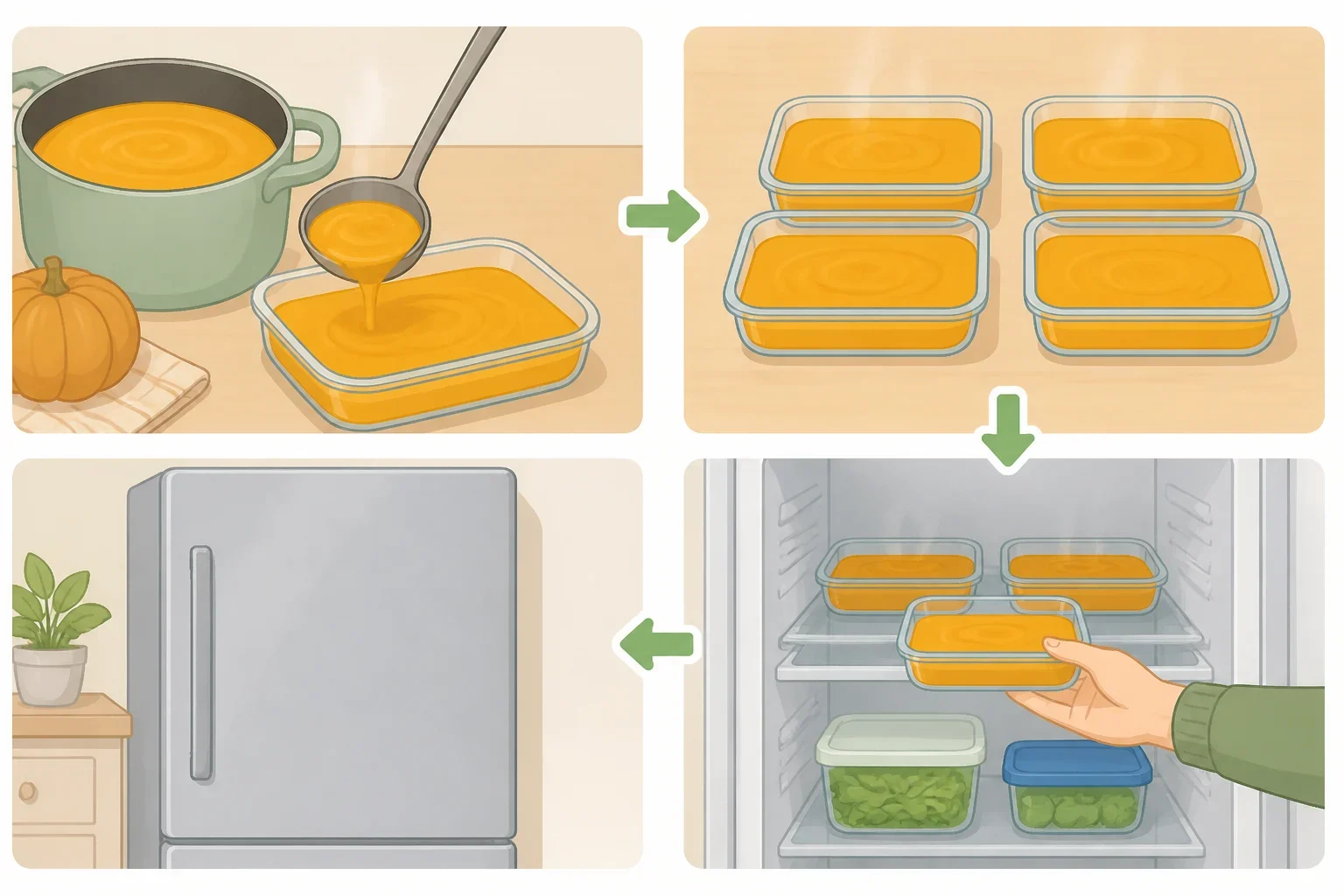
Divide leftover soup into shallow containers rather than placing a deep, full pot in the refrigerator. Smaller portions cool more efficiently and are easier to reheat one at a time. Refrigerate the soup promptly instead of leaving it at room temperature.
If you will not finish the soup within a few days, move it to airtight freezer containers or freezer bags, leaving room for expansion. Thaw frozen soup in the refrigerator when possible. It can also be reheated from frozen in a saucepan, but it will take longer and needs frequent stirring so the edges do not overheat while the center remains frozen.
Reheat the soup over medium-low heat, stirring often. Avoid boiling, especially when the soup contains cream or half-and-half. The texture may change slightly after freezing and reheating.
Freeze extra roasted pumpkin puree rather than attempting to can it at home. The National Center for Home Food Preservation does not recommend home-canning pumpkin puree because its density can prevent heat from reaching the center evenly.
Before serving, check the thickness one last time. Add reserved broth if the soup has tightened in the refrigerator, then warm it gently and taste for salt. Portion anything that will not be eaten soon into freezer containers while it is still fresh.
