

Fed rate hike 2026 what it means for your money
The Federal Reserve raised its benchmark interest rate by 25 basis points on Wednesday, lifting the federal funds target range to 3.75% to 4.00%. It was the Fed’s first rate increase since 2023, a move that affects the borrowing environment for households even though it does not automatically raise every loan rate by the same amount, CBS News reported Wednesday.
The immediate mortgage picture was already expensive. The average 30-year fixed mortgage rate stood at 7.43% in mid-September, up a full percentage point from a few months earlier, according to CBS News. A quarter-point Fed rate increase does not mean a mortgage quote will jump by a quarter point, but people carrying variable-rate debt should review their account terms and upcoming statements.
For households, the useful distinction is between the Fed’s short-term policy rate and the rates set by lenders, banks, and financial markets. The two are connected, but they do not move in perfect lockstep.
How the Fed rate hike affects mortgage rates
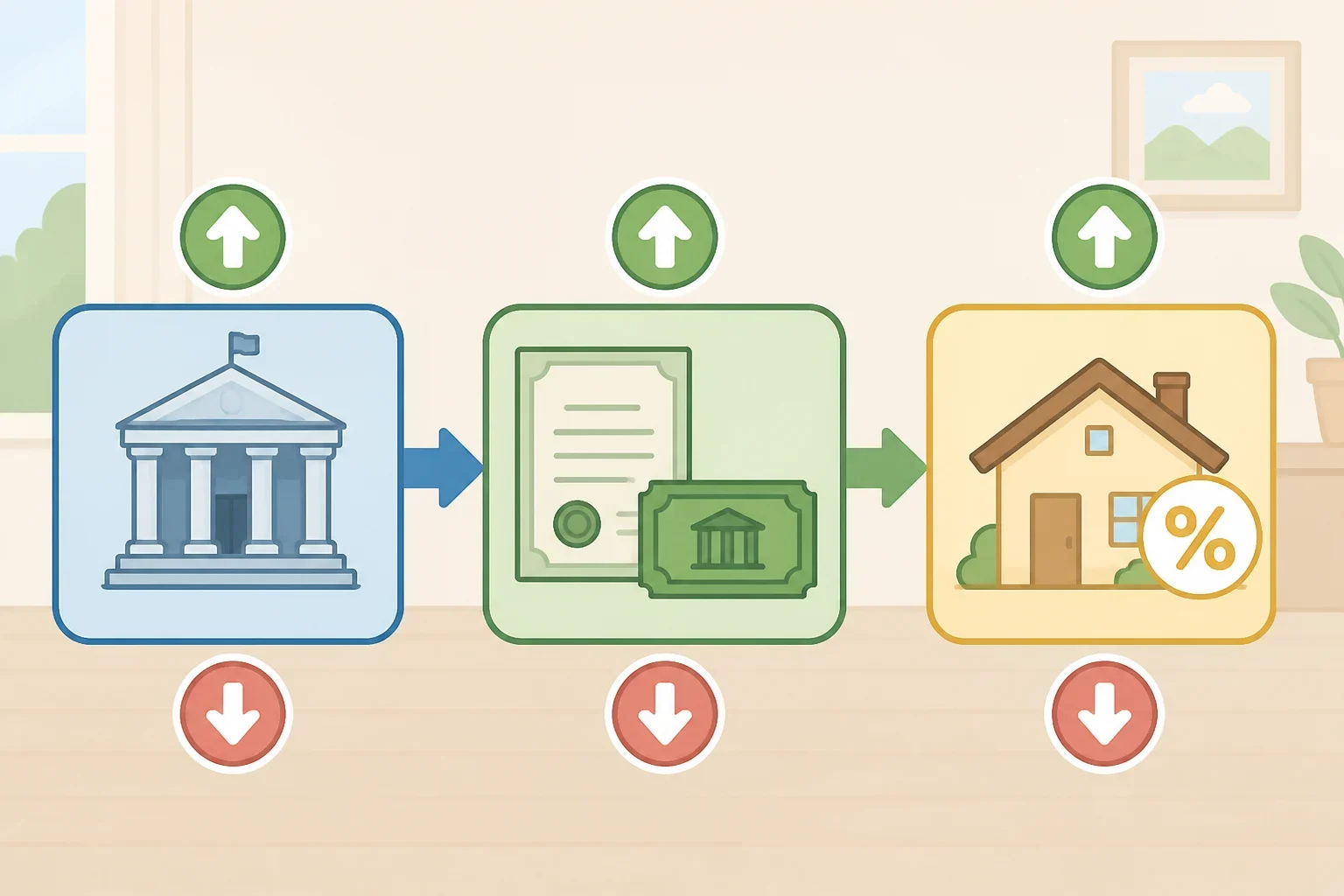
Fixed mortgage rates tend to follow the 10-year Treasury yield more closely than the federal funds rate. That means Wednesday’s decision could put some upward pressure on mortgage rates, but borrowers may not see a sharp or immediate increase in a 30-year fixed quote, CBS News explained.
Markets had largely expected the quarter-point increase before the announcement. As a result, investors had time to account for much of the move, which may reduce the chance of a sudden mortgage-rate jump caused by the announcement alone. That does not guarantee that rates will hold steady. It means the next move will depend partly on how investors interpret the Fed’s message and the economic data that follows.
If investors conclude that this is the beginning of another series of rate increases, they may demand higher yields on longer-term bonds. That could push mortgage rates higher. If the Fed signals that it plans to wait and see how this increase affects inflation and the broader economy, the pressure on mortgage rates could be more limited. Improving inflation data could eventually reduce expectations for additional hikes, giving longer-term Treasury yields and mortgage rates room to decline, according to CBS News.
That outlook remains conditional. Christopher Waller’s remarks before the September meeting were an assessment of the economy before this decision, not a statement explaining what the full Federal Open Market Committee decided. He described policy as dependent on incoming data, saying that weaker inflation progress could support a rate increase while continued improvement could support holding the target steady, according to his September remarks.
The figures he cited help explain why markets are watching inflation closely. PCE prices were up 3.7% over the prior 12 months, while core PCE inflation, excluding food and energy, was 3.3%. Three-month core inflation through July was 3.05%, down from 4.76% in February but still above the FOMC’s 2% goal, Waller’s remarks showed. Those numbers point to improvement, but not a settled path for interest rates.
What home buyers should check before locking a rate
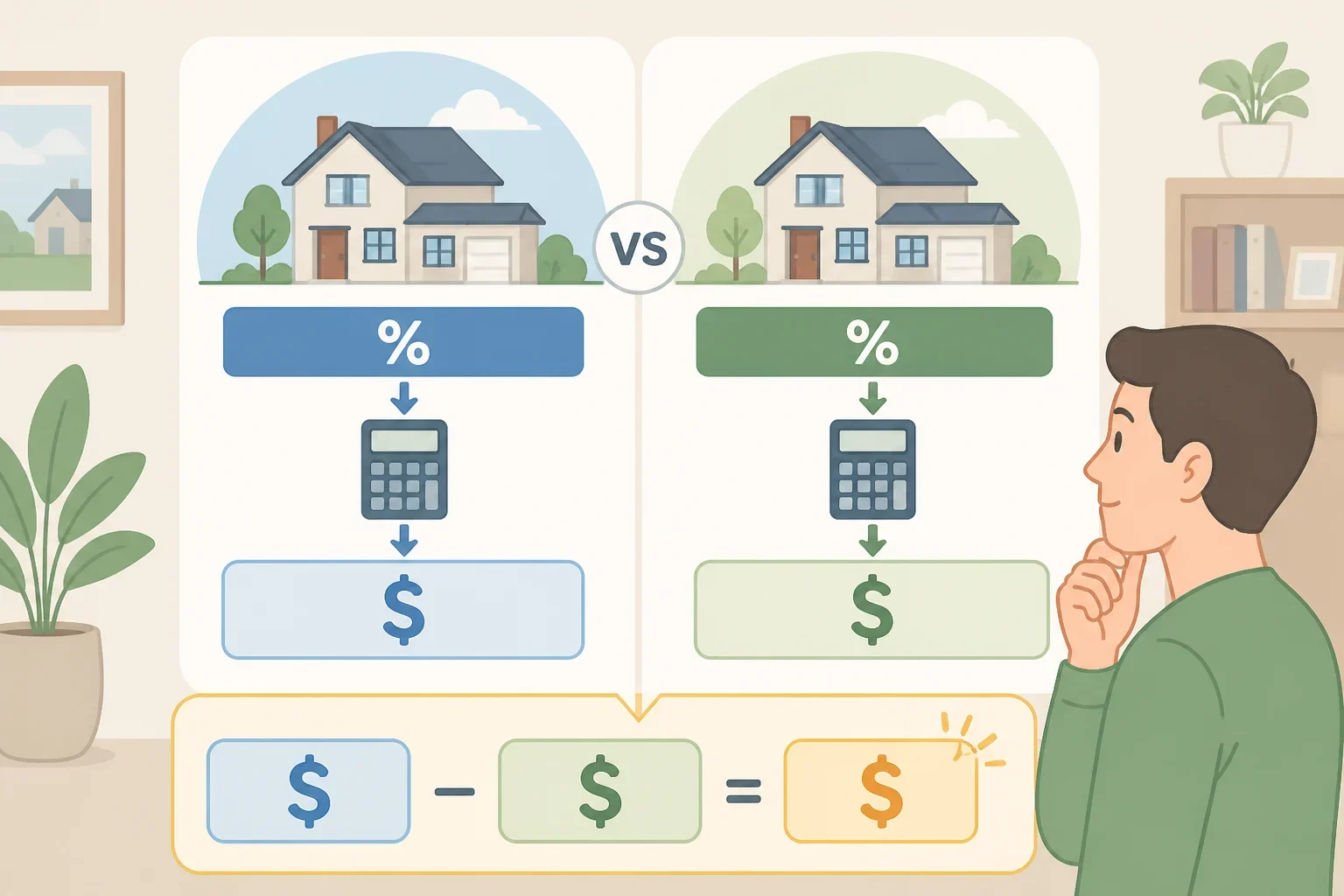
A buyer deciding whether to move forward should separate the Fed headline from the actual loan offer. Mortgage rates and fees can vary considerably between lenders, and even a small rate difference can change the monthly principal-and-interest payment, CBS News reported.
Consider a $350,000, 30-year fixed loan as an illustration. At 7.43%, the monthly principal-and-interest payment is about $2,431. At 7.68%, it is about $2,491. That is roughly $60 more per month and about $21,400 more in interest over the life of the loan, based on standard amortization. The illustration excludes property taxes, homeowners insurance, mortgage insurance, points, and other closing costs.
The exact payment is only one part of the comparison. A lower advertised rate may come with higher points or fees, while a slightly higher rate may have a different upfront cost. Buyers should compare the full loan estimate, not just the large number in an online rate advertisement.
Borrowers who are close to closing may also discuss a rate lock with a lender. The lock’s cost, length, extension terms, and any option to adjust the rate later are specific to the lender and loan. A lock can protect a buyer from a rise during the closing period, but it also needs to match the expected closing timeline. The lender should explain the terms in writing before the borrower makes a decision.
The buyer’s financial profile remains relevant regardless of what the average market rate does. Improving credit, reducing outstanding debt, and making a larger down payment when feasible can help a borrower qualify for better loan terms, CBS News reported. Those changes may take time, so they are worth considering before making an offer rather than after a rate quote arrives.
What the hike means for credit cards and HELOCs
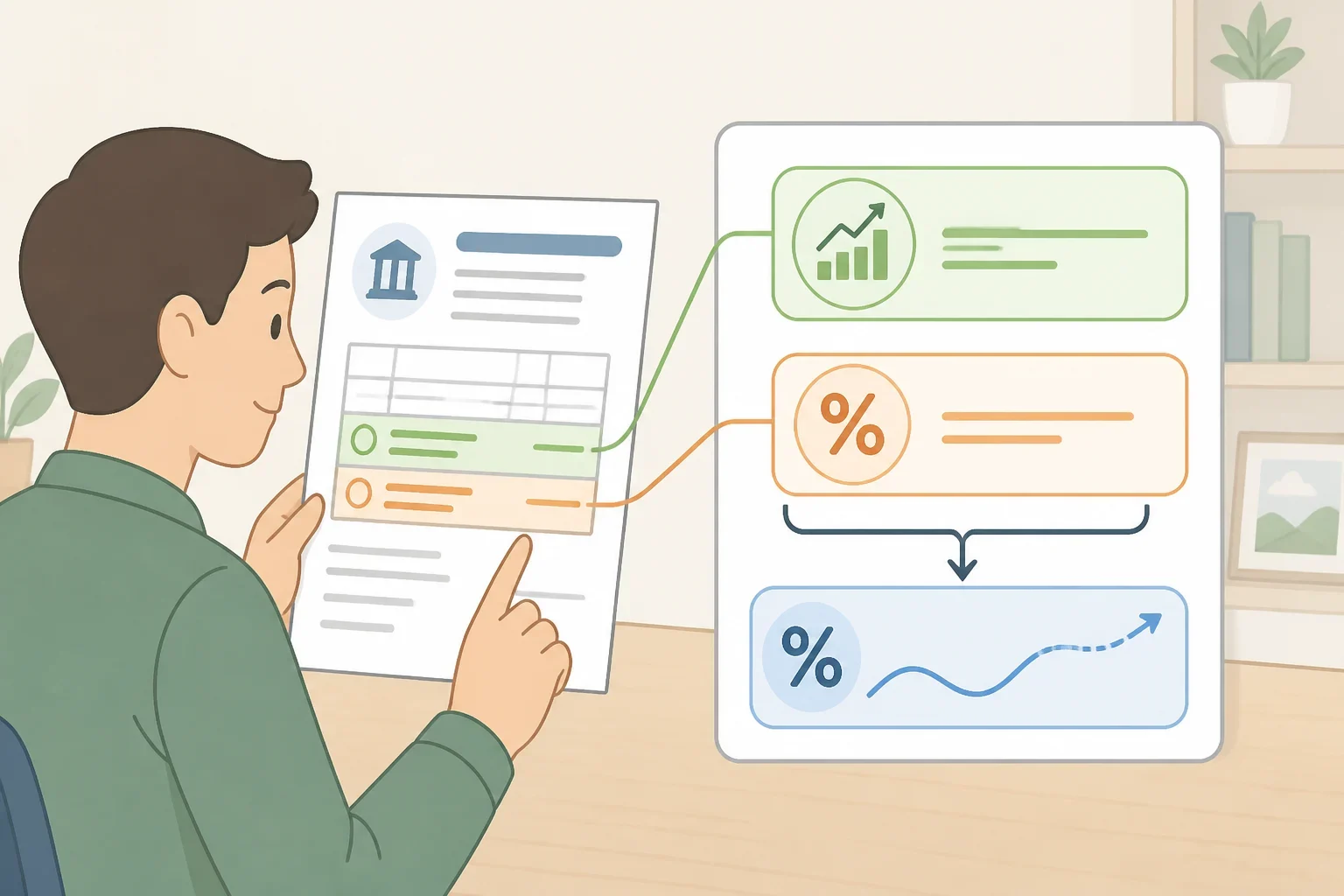
The federal funds rate influences broader borrowing conditions. The Federal Reserve describes how changes in its target range can affect the opportunity for households and businesses to borrow, which in turn influences economic activity, the Fed’s explainer says.
That broad relationship does not provide a universal formula for an individual credit card or home equity line of credit. The rate on a variable account depends on the account agreement and the lender’s terms. Some borrowers may see a change reflected through their account’s pricing, while others may not see an immediate adjustment.
The practical review is straightforward:
- Look at whether the account has a fixed or variable annual percentage rate.
- Read the agreement for the benchmark, margin, and adjustment language.
- Check recent statements for the current rate and finance charge.
- Look for the date or event tied to any future adjustment.
- Contact the lender if the statement or agreement is unclear.
Avoid assuming that a 25 basis point Fed increase will translate into exactly 25 basis points on a particular balance. The account documents control the calculation. For a household already carrying a balance, even a modest rate change can matter because interest continues to accrue while the balance remains outstanding.
Before moving a balance or taking out a new loan, compare the complete terms. A lower introductory rate may not last, and fees or qualification requirements can change the overall cost. If the debt is large or the agreement is difficult to interpret, a qualified financial professional or the lender’s customer-service team can help explain the available choices.
What savers should watch

The Fed’s policy rate also influences deposit conditions, but it does not set the rate on every savings account or certificate of deposit. Banks and credit unions set their own offers, and an account may not change immediately after a Fed decision.
For savers, the clearest next step is to check the current rate and terms on each account rather than assuming that Wednesday’s increase produced an automatic adjustment. Review the annual percentage yield, minimum-balance rules, withdrawal limits, and any maturity or renewal terms before moving money. The Fed’s broad explanation supports the connection between monetary policy and borrowing conditions, but it does not promise a particular yield for a savings product.
People building an emergency fund may also want to keep access and account protections in view, rather than choosing an account based on the rate alone. The best option depends on how quickly the money may be needed and on the account’s specific terms.
Wednesday’s increase adds uncertainty to a housing market already facing elevated borrowing costs. It does not, by itself, determine where mortgage rates, credit-card rates, HELOC pricing, or savings yields will go next.
A buyer near closing should compare lenders and ask for the full rate-lock terms. A household with variable-rate debt should locate the account’s pricing language and check the next statement. Savers should review current account offers directly. The next inflation readings and the Fed’s policy signals will help investors assess whether this was a single adjustment or the start of a longer run of increases.
