
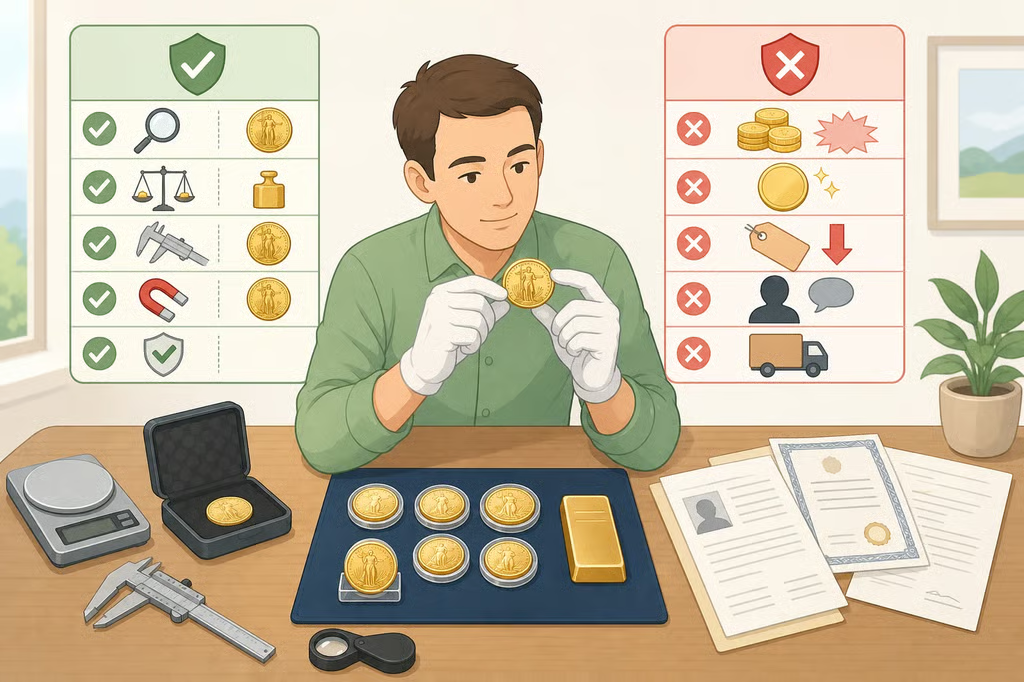
How to Buy Gold Safely: Physical, Scams, IRA Rules
The safest way to learn how to buy gold is to slow the purchase down. Identify what you are buying, calculate the full cost before paying, compare sellers, and treat any retirement-account purchase as a tax question before it becomes a transaction. This guide focuses on physical gold, including bullion, bullion coins, and collectible coins. Gold-related securities such as exchange-traded funds and mining stocks follow different brokerage rules and are not covered here.
The caution is practical, not theoretical. Earlier this year, the FTC reported more than $7.9 billion in reported investment-scam losses during 2025, with a median individual loss above $10,000. Before buying bullion, bullion coins, collectible coins, or gold, the FTC also directs buyers to read the CFTC’s precious-metals fraud alert and learn what questions to ask (FTC).
1. Decide what you are buying
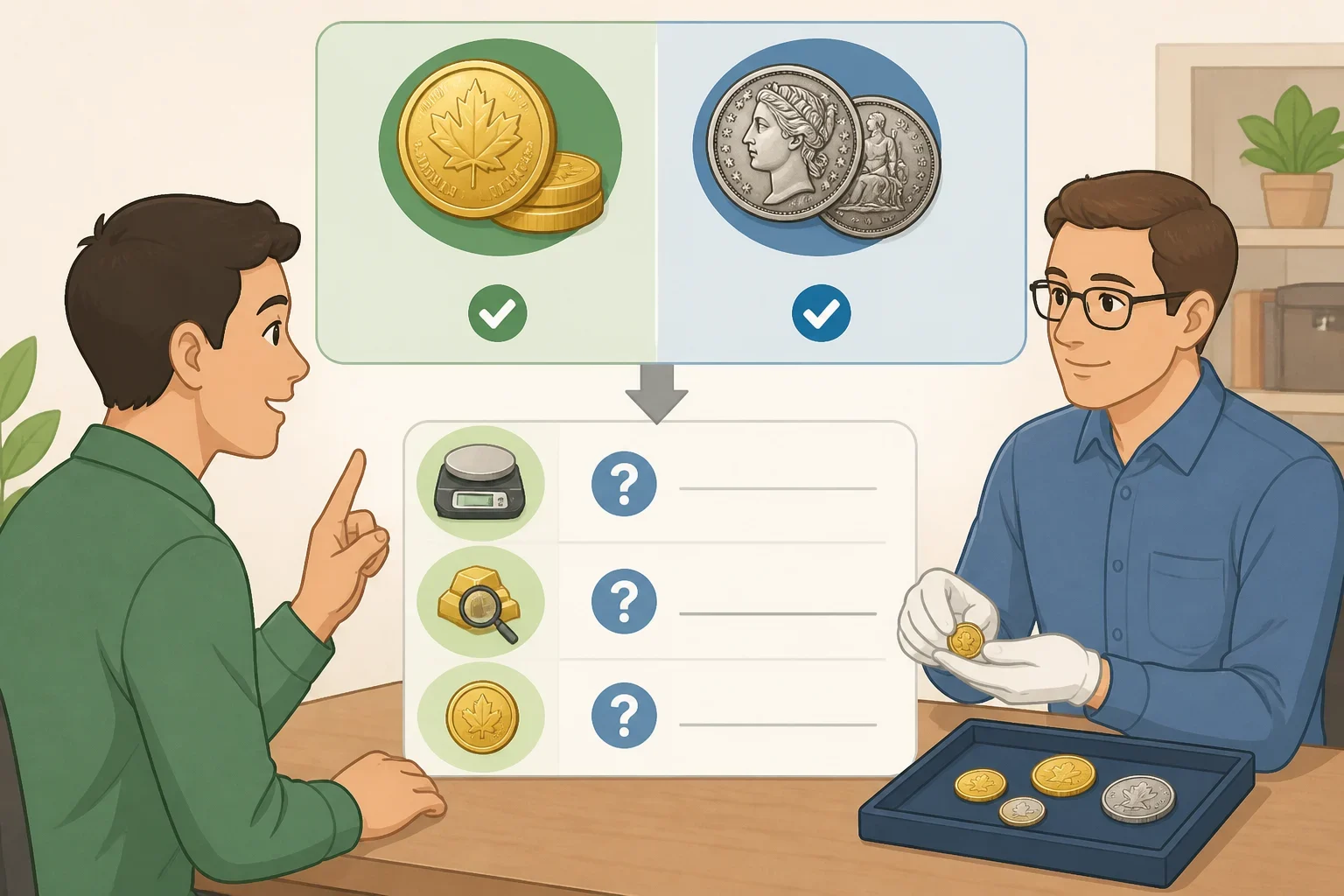
Start with the product, not the sales pitch. Ask the seller to identify the item clearly and provide its weight, fineness, form, and whether it is being sold as bullion or as a collectible or numismatic coin.
That distinction affects the questions you need to ask. With bullion, the price discussion generally centers on the metal’s market value and the amount added by the seller. With a collectible coin, ask what the quoted price is based on, such as rarity, condition, or demand. These are not interchangeable descriptions, so do not accept a vague promise that a coin is “special” or certain to appreciate.
The purpose of the purchase matters, too. Are you planning to hold the metal for the long term, keep it as part of a broader savings plan, or resell it relatively soon? A purchase intended for resale needs a clear answer about how the seller or another buyer would value it later. A purchase intended for long-term holding still needs a budget, storage plan, and an honest acknowledgment that investments involve risk, as the FTC noted earlier this year.
If finances are shared, agree on the purpose and spending limit before placing an order. Solo buyers need the same check, even if there is no partner to consult: decide how much money can be committed without disrupting regular household expenses or emergency savings.
Plan for possession before the purchase arrives. Ask where the metal will be kept, who can access it, whether insurance applies, and what records will be needed for a future sale. The right answer depends on the buyer’s circumstances and the specific arrangement, so treat storage, access, and insurance as items to verify rather than assumptions built into the sale.
2. Compare the full price, not just the gold quote

How to buy gold without overpaying
Ask for an itemized quote. At minimum, request separate figures for:
- The product’s weight and fineness
- The current market or spot-price reference used by the seller
- The premium added to the metal’s market value
- Shipping
- Insurance during transit
- Storage, if the seller is offering storage
- Any other fee charged before delivery
“Premium” should not be treated as one universal fee. Ask the seller to explain exactly what it covers in this transaction. It may be connected to the product, the seller’s pricing, or the way the item is being marketed. The important point is that the buyer should see the amount and understand the basis for it.
Then compare the same product with more than one seller. A useful comparison keeps the details consistent: the same weight, fineness, product type, delivery method, and payment terms. A lower advertised price may not be the lower all-in cost if shipping, insurance, storage, or other charges appear later.
The FTC’s advice from two years ago is simple and useful here: do not invest until the offer and its terms are fully understood (FTC). Ask for the quote and contract in writing. Keep a copy of the product description, invoice, payment confirmation, delivery terms, and any statement about returns or resale.
Do not let a deadline replace due diligence. A seller may describe an offer as limited, special, or available only today. That does not prove the offer is fraudulent, but pressure makes it harder to compare prices and read the terms. The FTC’s investment-scam guidance identifies pressure to act quickly, limited availability, and deals that expire soon as warning signs. A purchase worth making should still be understandable after the buyer takes time to review it.
3. Choose a buying path you can investigate
Potential ways to compare physical gold include established dealers, local coin shops, mints, and online sellers. No specific seller is endorsed here, and a polished website or familiar-sounding name does not answer the practical questions about product, pricing, delivery, or resale.
Use the same process for every seller:
- Ask for the written, itemized quote.
- Confirm the exact product, weight, and fineness.
- Ask how shipping and transit insurance are handled.
- Ask whether the seller accepts returns and what conditions or fees apply.
- Ask how a future buyback quote would be calculated.
- Save the seller’s answers with the invoice and order records.
A buyback promise deserves careful reading. Ask whether the seller offers to buy the item back, whether the price is tied to a stated market reference, and whether any conditions apply. Do not assume that the price paid today will be the price offered later. The spread between buying and selling is one of the reasons a buyer should calculate both sides of the transaction before committing.
For online sellers, verify that the product page, invoice, and final checkout screen describe the same item. For a local shop, leave with a receipt that identifies the product rather than relying on a verbal description. For any seller, ask who is responsible if a package is delayed, damaged, or not delivered, and obtain the answer in writing before payment.
4. Screen the seller and the pitch
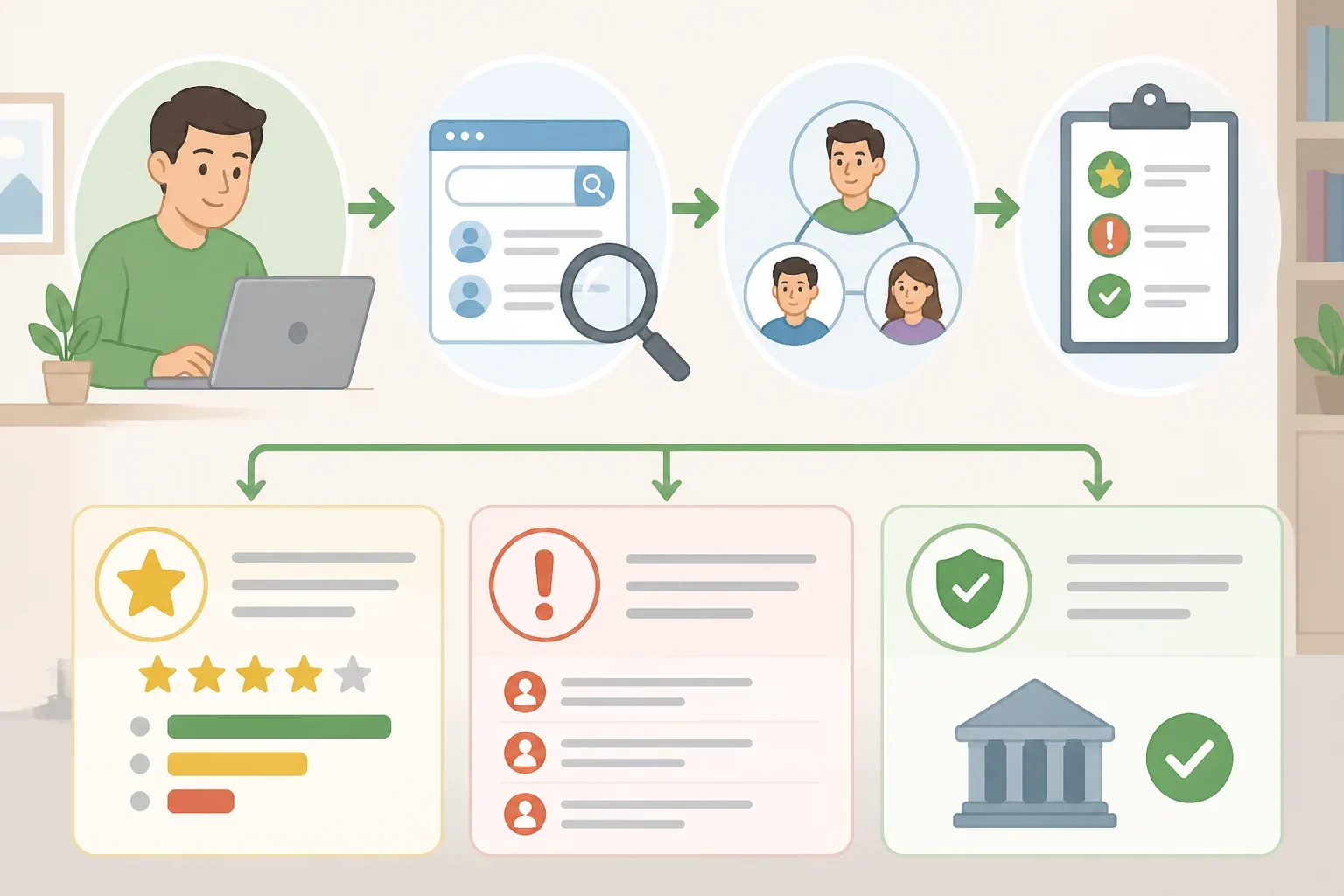
How to avoid gold investment scams
Begin with the seller’s reputation. Earlier this year, the FTC advised searching the company’s name, along with the names of its officials and promoters when those people are part of the pitch, using terms such as “review,” “scam,” and “complaint.” Look beyond the first page of results. Reviews can help identify questions, but they are not proof that the seller is fairly priced, properly stocked, or reliable in delivery.
Check registrations when the seller or promoter is offering an investment recommendation. The FTC points buyers toward Investor.gov for people recommending or selling investments and the CFTC database for precious-metals or coin investments. These searches are screening steps, not a guarantee. A listing does not establish the product’s value, the fairness of the price, the seller’s inventory, or successful delivery.
Pay attention to how the offer reaches you. The FTC warned two years ago that investment scams can begin through social media, online dating apps, or an unexpected text, email, or call. An unsolicited offer is a reason to stop and conduct independent research, not a reason to send payment quickly.
Promises deserve the same scrutiny. There are no guaranteed investment returns, and risk should not be dismissed as a formality, according to FTC guidance from two years ago. Be especially careful when a promoter claims a proven system, little or no risk, or a large return if you act immediately.
If the seller will not provide basic product and pricing details, cannot explain the terms, or objects to reasonable research, do not proceed until the questions are answered. If the offer appears fraudulent, report it at ReportFraud.ftc.gov.
5. Check retirement rules before funding a gold IRA
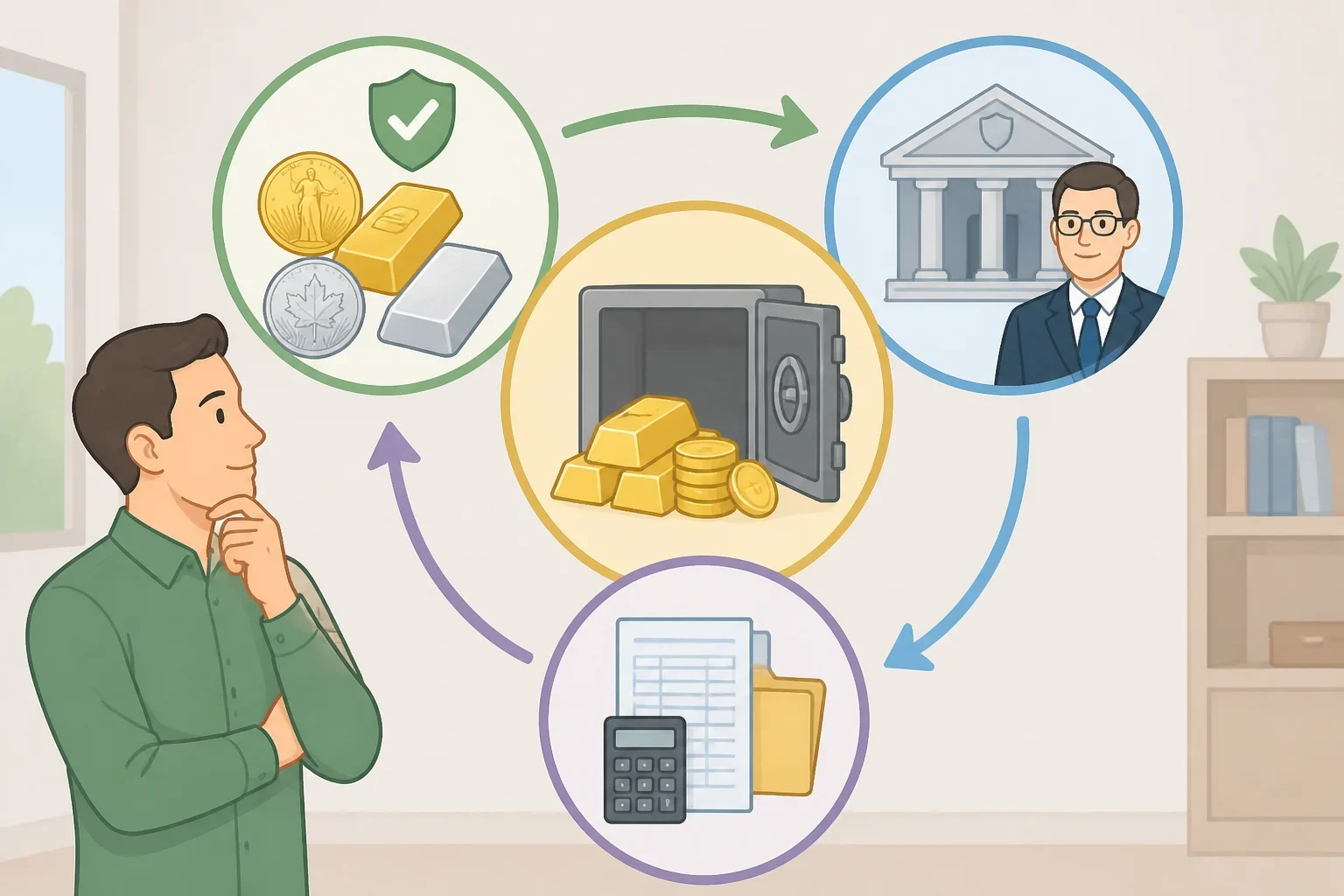
“Gold IRA” is marketing shorthand, not a separate category that makes every gold purchase acceptable for retirement funds. The key questions are whether the individually directed retirement account is acquiring a permitted metal or coin and whether the transaction follows the applicable custody and tax rules.
Under IRC Section 408(m), the IRS explains that when an individually directed account under a qualified plan acquires a collectible, the participant is treated as receiving an immediate distribution equal to the collectible’s cost. The restrictions also apply to IRAs.
The IRS generally includes metals and coins among collectibles, with limited exceptions. Those exceptions include certain gold, silver, or platinum coins described in 31 USC Section 5112; any coin issued under the laws of a state; and gold, silver, platinum, or palladium bullion that meets the required fineness standard when a bank or approved nonbank trustee keeps physical possession.
That last condition is not a blanket approval for every gold product. The specific coin or bullion, its fineness, the trustee, and the way the transaction is structured all need to be confirmed. Physical possession by an approved trustee is part of the exception, not a substitute for checking whether the metal qualifies in the first place.
If an account acquires a collectible, the amount of the deemed distribution is generally reported on Form 1099-R. The distribution is generally taxed as ordinary income, and the IRS says the 10% additional tax on early withdrawals may apply when the participant is under age 59½. A prohibited transaction under IRC Section 4975(c) may also be possible. The IRS gives a narrower example: using plan-owned property for the personal use of a disqualified person could create that issue.
That is why claims about keeping IRA-owned gold at home should not be accepted at face value. Before funding the purchase, ask the account custodian to confirm the arrangement in writing and have a qualified tax professional review the specific coin or bullion, custodian, and transaction. A general sales explanation is not a substitute for individualized tax advice.
Use this pre-purchase worksheet
Fill in the details before sending money:
- Product: bullion, bullion coin, or collectible coin
- Weight and fineness: ____________________
- Spot-price reference: ____________________
- Premium: ____________________
- Shipping and transit insurance: ____________________
- Storage charge, if any: ____________________
- Return terms: ____________________
- Buyback terms and price reference: ____________________
- Seller and contact information: ____________________
- Research completed: company, officials, promoters, reviews, complaints, and applicable registration searches
- Retirement account: custodian, specific product, trustee, physical-possession arrangement, and tax-professional review
If the quote changes before payment, complete the worksheet again. If the seller will not answer a basic question, pause instead of filling in the blank with an assumption.
Buying gold safely is mostly a matter of process. Compare the product and the full cost, investigate the seller without relying on reviews alone, keep the paperwork, and separate ordinary physical ownership from retirement-account rules. For IRA purchases, confirm the specific metal, custodian, custody arrangement, and tax treatment before acting. When a pitch depends on urgency, guaranteed returns, or secrecy, step away and report suspected fraud through the FTC.
