
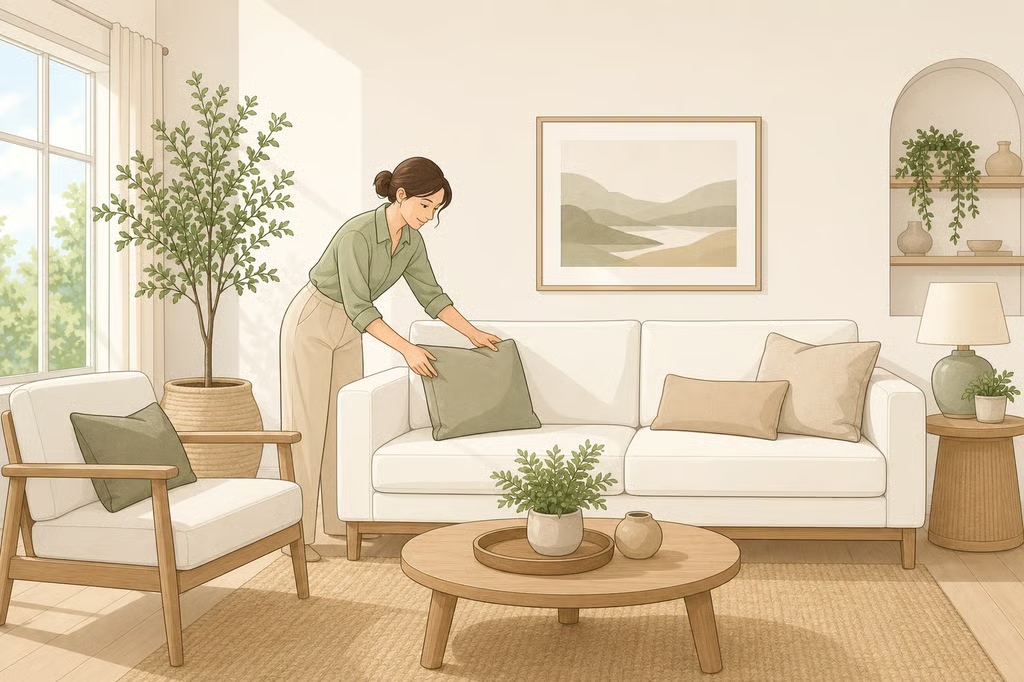
Quiet luxury has long been associated with restrained colors, natural materials, and rooms that look polished without showing off. But a home can check every aesthetic box and still fall short if the sofa is uncomfortable, the lighting is harsh, or everyone has to tiptoe around delicate furniture.
A more livable version of quiet luxury starts with how a room feels to use. Supportive furniture, useful lighting, clear walkways, manageable clutter, and materials that can handle everyday life matter more than recognizable labels or expensive finishes.
The look is becoming less rigid, too. Current design coverage has begun shifting away from highly polished beige interiors toward spaces with more personality, craftsmanship, patina, and collected pieces. Homes & Gardens has described this evolution as “found luxury”: keeping quiet luxury's appreciation for quality while making room for history, character, and objects gathered over time.
That makes comfort a useful place to begin. Fix what makes a room difficult to live in first, then refine its layout, lighting, color, texture, storage, and furnishings.
What quiet luxury looks like now
Quiet luxury works best as a design approach rather than a shopping list. Good proportions, durable materials, craftsmanship, and furnishings chosen for function as well as appearance can make a room feel considered without making it look untouchable.
A comfortable sofa matters more than a recognizable label. A clear walkway matters more than another side table. A lamp that works for reading and winding down earns its place more convincingly than a decorative fixture that only looks good in a photograph.
The same thinking can make the style more attainable. Marble counters, designer furniture, and custom cabinetry are not prerequisites. A well-proportioned secondhand table, sturdy curtains, a useful reading lamp, and an uncluttered layout can have more impact than a room full of costly accessories.
Personality belongs in the mix as well. A vintage chair, inherited table, handmade bowl, family photograph, or piece collected while traveling can add character without overwhelming a room. Clear away accidental clutter, but leave room for the objects that make the home recognizable as yours.
Start with a healthy, comfortable room

Before choosing paint colors or ordering a new rug, deal with problems that make the space uncomfortable to use. A polished room cannot compensate for an unresolved leak, persistent dampness, or poor ventilation.
The U.S. Environmental Protection Agency recommends controlling moisture and keeping indoor humidity below 60%, ideally between 30% and 50%, as part of its guidance for improving indoor air quality. Kitchen and bathroom exhaust fans can help remove moisture while cooking or showering, and windows can provide additional ventilation when weather and outdoor air quality allow.
Keep smoke and carbon monoxide alarms working, and address problems with fuel-burning appliances rather than decorating around them. Renters should report recurring leaks, water damage, and other building-related concerns to the property owner or manager.
Once the room's basic comfort problems are handled, decorating choices have a better foundation.
Build the look with color and texture
A quiet-luxury palette does not have to stop at beige. Warm whites, taupes, browns, muted greens, clay tones, dusty blues, and deeper accents can all work when colors repeat naturally throughout the room.
If you're unsure about a stronger color, test it on pieces that are easier to change. Cushions, throws, lampshades, and artwork involve less commitment than a large sofa or wall treatment. The goal is continuity, not perfect matching.
Texture keeps a restrained palette from feeling flat. Linen or cotton can soften windows and upholstery, while wool blends, wood, ceramic, leather, and stone add variation without requiring busy patterns.
Choose those materials for real life, not just their finish. Consider how easily a fabric cleans, how a surface will age, and whether a material suits children, pets, frequent guests, or whatever else daily life brings.
Proportion is just as important. One properly sized rug and a substantial lamp can make a living room feel more settled than several undersized tables and accessories. In a bedroom, bedside tables or shelves that suit the scale of the bed can provide balance without filling every corner.
Leave room to move. Clear paths, accessible surfaces, and somewhere convenient to put down a drink are small signs that the design is working. Quiet luxury should make everyday routines easier, not turn a room into a display that has to be protected.
Choose furniture for real life
Comfort should be one of the first tests for anything used every day. A beautiful sofa has limited value if nobody wants to spend an evening on it, and dining chairs should remain comfortable through more than a quick meal.
Homes with children, pets, frequent visitors, or messy hobbies also benefit from forgiving materials. Look for washable or easy-care covers where practical, durable upholstery, and rugs that do not require everyone to behave as though they are in a showroom.
This is also where a comfort-first approach can protect the decorating budget. Spend more where construction, comfort, and durability justify it — perhaps on a sofa, mattress, dining chairs, rug, or lighting used every day — and spend less on easily replaced accessories or short-lived trends. An expensive fabric that makes everyone nervous about sitting down is not much of a luxury.
There is no need to furnish the entire room at once. Start with the piece that solves its biggest problem. A more comfortable sofa, larger rug, useful storage cabinet, or better lamp may improve everything already around it.
Use layered lighting throughout the day
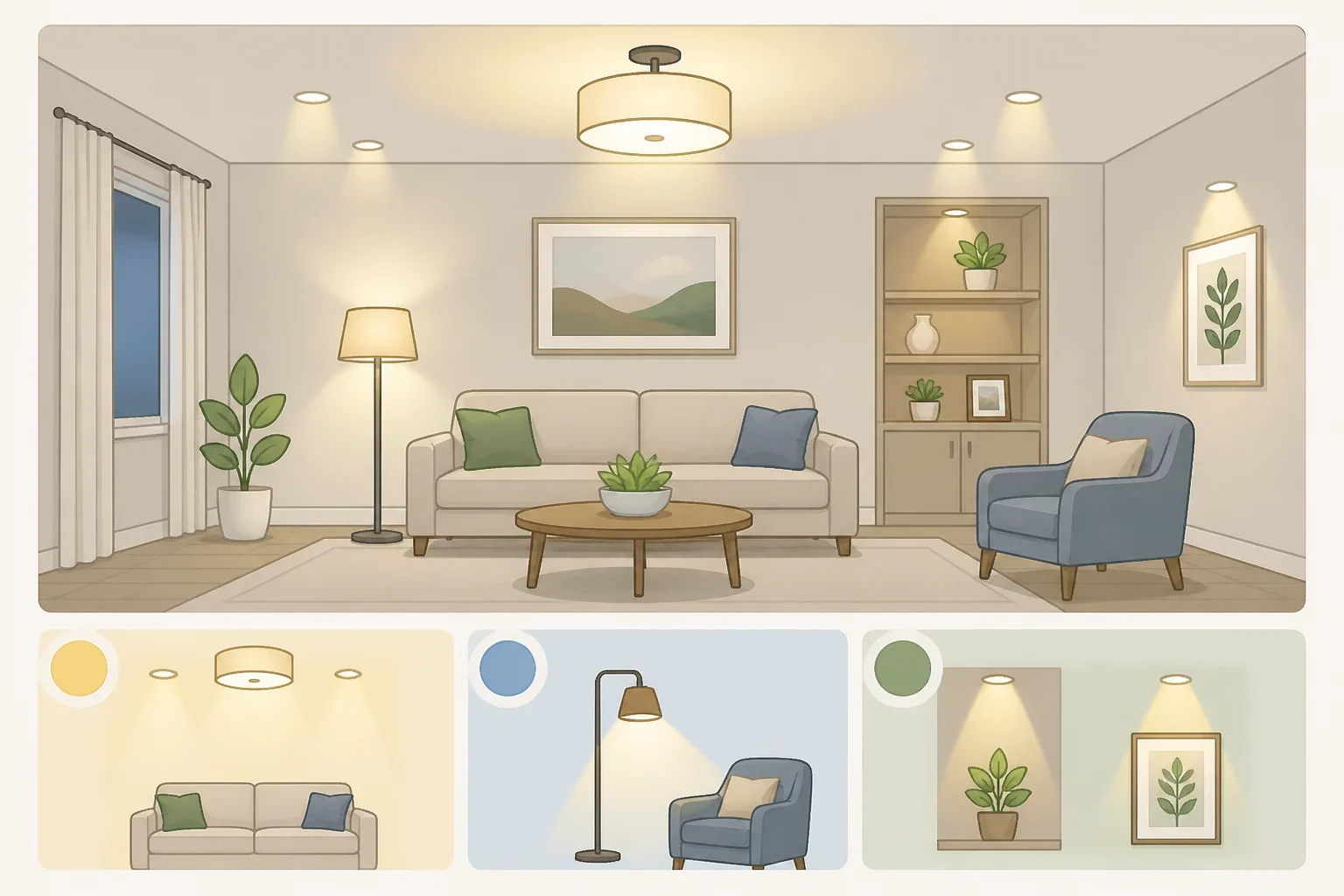
Lighting works best when it reflects what people actually do in the room. Notice where daylight falls and when it is useful, then arrange furniture accordingly when the layout allows.
Research into the body's physiological response to light has informed recommendations related to sleep and wakefulness, according to the U.S. Department of Energy. At home, the practical takeaway is simpler: make good use of available daylight rather than blocking a useful window without reason.
After sunset, avoid asking one bright ceiling fixture to do every job. A floor lamp can provide focused light for reading, a table lamp can make a seating area feel warmer, and a dimmable overhead fixture can provide brighter illumination for cleaning or hosting.
Curtains, rugs, upholstery, and fabric shades can also soften rooms dominated by hard surfaces. Choose versions that suit the household's maintenance needs, and measure carefully before buying; an undersized rug can make an otherwise thoughtful seating arrangement feel disconnected.
Add personality without adding clutter
A calm room does not need to be anonymous. Instead of filling every surface, choose fewer objects that have a reason to be there.
Display artwork you actually like rather than something selected only because it matches the sofa. Keep books nearby if you read them. Use a bowl, tray, basket, or cabinet where it solves an everyday storage problem instead of adding decorative storage for its own sake.
Vintage and secondhand pieces can also prevent a room from looking overly coordinated while making gradual decorating more affordable. An older lamp or side table beside newer upholstered furniture often gives a room the layered quality that matching sets cannot.
Plants can introduce natural color and texture, but they should suit the available light and the amount of care you realistically want to provide. There is little luxury in creating another household chore simply for the sake of a look.
Refresh the room in the right order
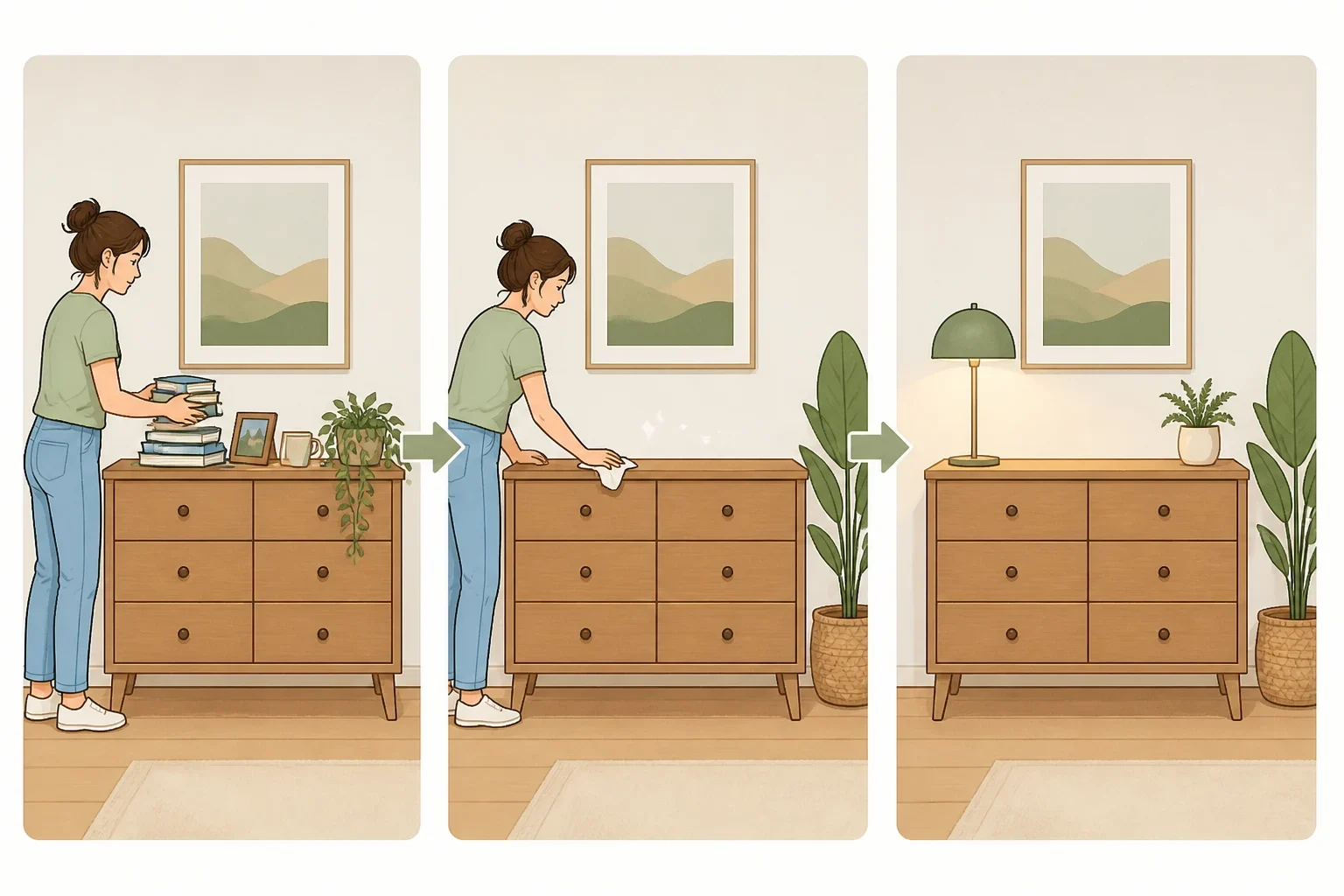
You do not need to replace everything to move a room toward quiet luxury. Work from the biggest functional problem outward.
- Start free: Clear an overcrowded surface, improve the path through the room, open the curtains, or move a chair toward better light.
- Make a modest upgrade: Add a dimmable lamp, washable throw, curtains, or useful storage that improves everyday comfort.
- Make a larger purchase carefully: Choose the sofa, rug, storage piece, or other item that fixes the room's biggest weakness. Measure first and consider durability, cleaning, and placement.
- Let the room evolve: Leave space for useful, beautiful, or meaningful pieces worth keeping when you eventually find them.
Renters can follow much of the same approach with furniture placement, lighting, textiles, artwork, and removable storage without making permanent changes.
The strongest quiet-luxury choices are the ones that will still make sense after the trend passes: a comfortable seat, a clear walkway, useful lighting, durable fabric, and enough open space to keep the room easy to live in.
Fix the biggest comfort problem first, then refine the layout and settle on colors and materials that work together. From there, add pieces slowly enough that the home can develop some history of its own. The result may be less showroom-perfect, but it is far more likely to feel luxurious where it counts: in everyday life.
