
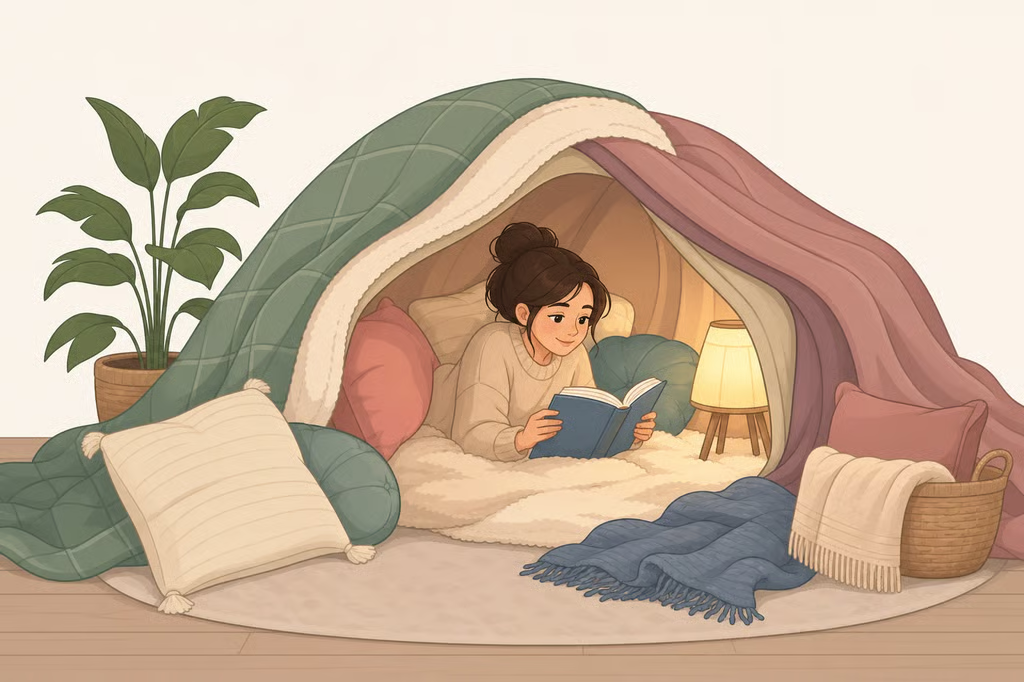
What Is Burrowcore Aesthetic? Cozy Home Guide
Burrowcore is an interior design approach for making a room feel like a sheltered retreat. It uses deep colors, pools of warm light, layered textiles, natural materials, and personal objects to create the feeling of a storybook animal den rather than a perfectly arranged showroom. As Good Housekeeping describes the trend, it is arriving with the colder season, when a room designed for curling up can feel especially appealing.
That does not mean repainting every wall, buying a matching furniture set, or turning the living room into a dark cave. A cozy burrowcore home can begin with one existing chair, a lamp, a throw, and something meaningful on a nearby shelf. The useful question is not how to copy a trend exactly, but how to make one part of home feel more comfortable without making it expensive, impractical, or difficult to live in.
What is the burrowcore aesthetic?
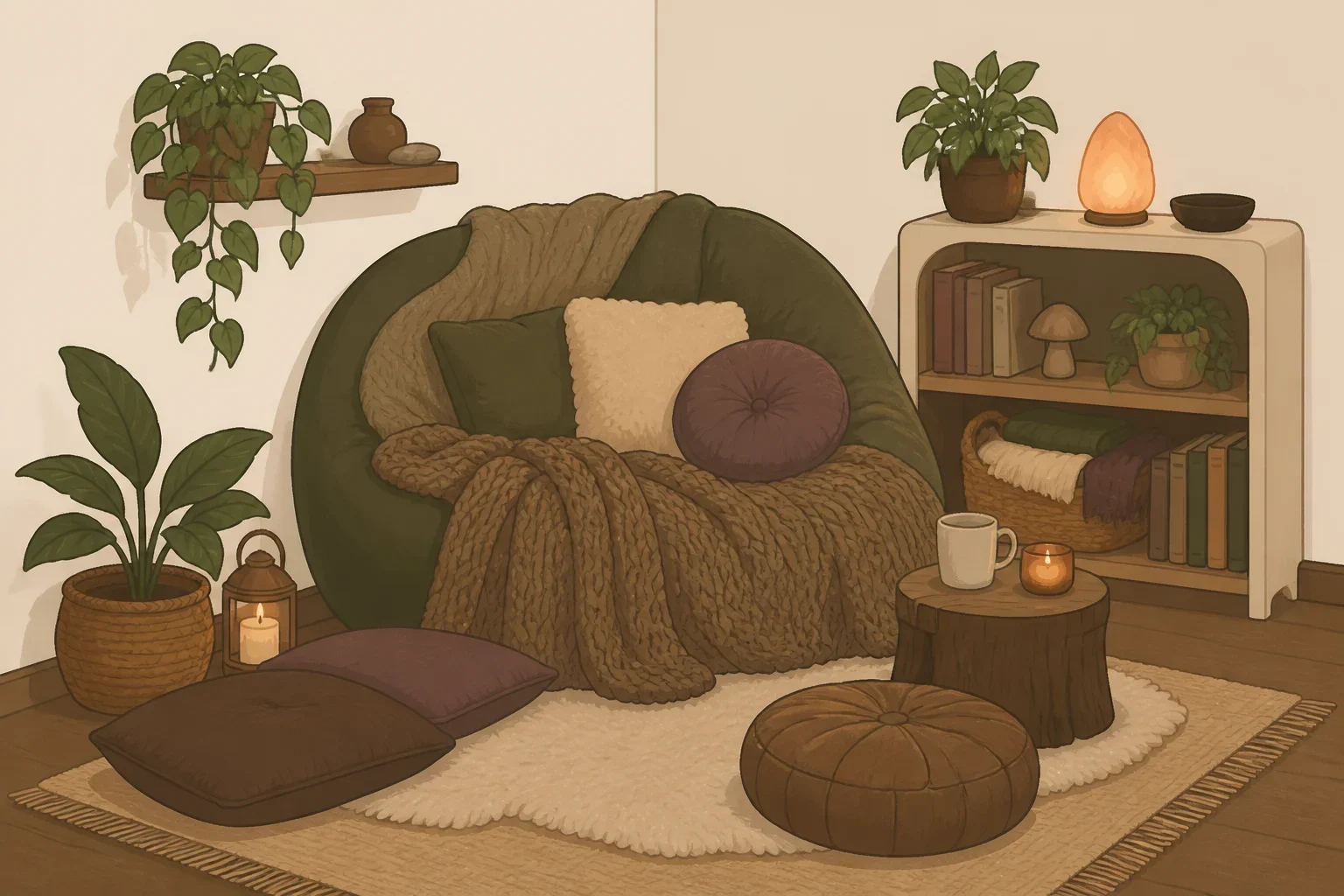
Burrowcore centers on refuge. Seattle-based interior designer Shweta Pathak describes it as creating spaces that feel enveloping, intimate, and deeply comforting through color, texture, pattern, and layered materials. The look borrows from the image of a burrow: protected, imperfect, tucked away, and full of the objects that make the space feel inhabited.
The style also has a storybook quality. House & Garden frames burrowcore as living as if inside a storybook hideaway, with inspiration drawn from the burrow-like homes of illustrated animals. The article points to Karina Schaapman’s handbuilt mouse-world dioramas as an example of the gathered-over-time feeling behind the look.
That “gathered over time” quality is central. Burrowcore interior design is not one paint color or a shopping list of approved products. It is a mood built from several choices working together:
- A deeper, earthy color palette
- Lighting that creates small areas of glow instead of one bright wash
- Soft layers such as curtains, throws, cushions, and bedding
- Wood, stone, linen, wool, pottery, plants, or dried branches
- Handmade, inherited, vintage, or otherwise personal objects
- One comfortable place designed for sitting, reading, resting, or simply staying awhile
The colder-season framing is part of the trend’s appeal, but the result does not have to be temporary. A reading corner, bedroom, or family-room chair can stay useful long after winter decorations are packed away.
Burrowcore vs. cottagecore: what’s the difference?
Burrowcore and cottagecore overlap in their interest in natural materials, handmade details, and a home that feels removed from polished modern minimalism. The distinction is one of emphasis, not a strict rulebook.
House & Garden describes burrowcore as a turn away from the controlled or sometimes contrived qualities associated with cottagecore, Scandinavian style, and other rustic aesthetics. That is a description of the trend’s current positioning, not a universal definition of cottagecore. Cottagecore can be interpreted in plenty of ways, including some that already feel relaxed and personal.
Burrowcore puts more weight on irregularity and comfort. A handmade trinket, a ceramic piece with a slightly uneven rim, an organic shape, or a chair that does not match the rest of the room can fit naturally. The goal is less “every detail belongs to one visual scheme” and more “these are the things that make this corner feel like home.”
The approach can also reduce decorating pressure. House & Garden argues that burrowcore offers some of the feeling associated with cottagecore without the same demand for time, money, and upkeep. Pieces can come from secondhand shops, family homes, or rooms elsewhere in the house. If one object feels a little out of place, it does not automatically need to be removed.
A nearby trend, cosy-maxxing, overlaps with burrowcore through warm tones, blankets, cushions, varied lighting, and spaces designed for unwinding. House Beautiful reports that cosy-maxxing originated on TikTok and focuses broadly on creating a restorative place to switch off. Burrowcore is more specific in its den-like, tucked-away feeling.
How to create a burrowcore home, starting with the mood
Before buying anything, decide what the room should help household members do. A burrowcore bedroom may be designed for winding down. A living-room corner may support reading, conversation, or a quiet cup of tea. A family room may need to feel cozy while still leaving space for toys, homework, and clear movement.
That decision will keep the look from becoming a pile of attractive objects with no useful purpose.
Choose color carefully
Burrowcore palettes tend toward mossy greens, mushroom browns, warm creams, muted ochres, soft rusts, and deep neutrals. Cavendish Lane Design describes the aim as grounded rather than overly bright or trend-driven. Good Housekeeping also recommends deeper color on walls and ceilings to make a room feel more intimate and cocoon-like.
Dark color can be particularly effective in a large, bright room or a space that already has architectural details worth emphasizing. In a small or naturally dim room, however, covering every surface in a deep shade may make the space feel heavier than intended. Start with one wall, a darker textile, or a concentrated corner before committing to a full room.
Renters can create much of the same mood without altering the walls. Try a dark throw, curtains, a rug, artwork, or a cluster of objects in earthy tones. If considering any temporary wall treatment, check the lease and the wall-surface instructions first. A decorating idea is not a bargain if it leaves repair costs behind.
Build light in layers
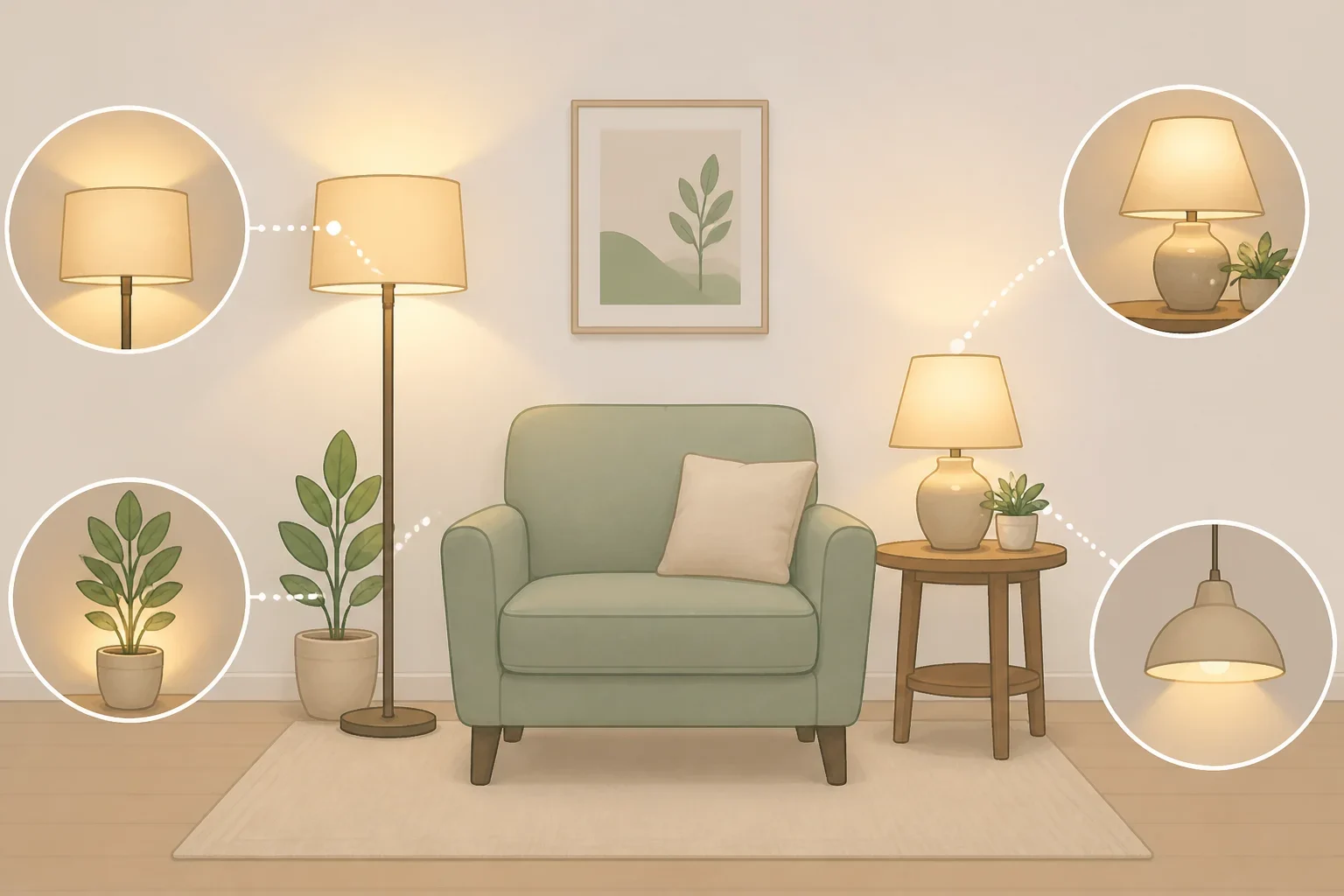
Lighting does much of the visual work. Instead of relying on one ceiling fixture, place light at different heights: on a side table, beside a chair, near a bed, or on a shelf. The effect should be a few warm pools of light rather than a room flooded evenly from above.
Vanessa Larsson of Planner 5D compares the feeling to a fire that lights a small circle while leaving the surrounding space in shadow. Good Housekeeping reports that she recommends lamps and candles in different sizes and positions, with some corners left darker to preserve the den-like atmosphere.
That recommendation needs a household adjustment. A room can have cozy low light and still need a brighter option for reading fine print, finding dropped items, cleaning, or moving safely through the space. Keep the main switch or another stronger lamp available instead of treating overhead lighting as forbidden. The best burrowcore room can change with the task.
Candles may contribute to the atmosphere, but they should not sit beside loose curtains, piled blankets, or anything that can be knocked over. In homes with young children, pets, or abundant fabric, flameless or rechargeable lamps are a sensible way to create a similar glow without adding an open flame to the room.
Add softness, but keep it usable
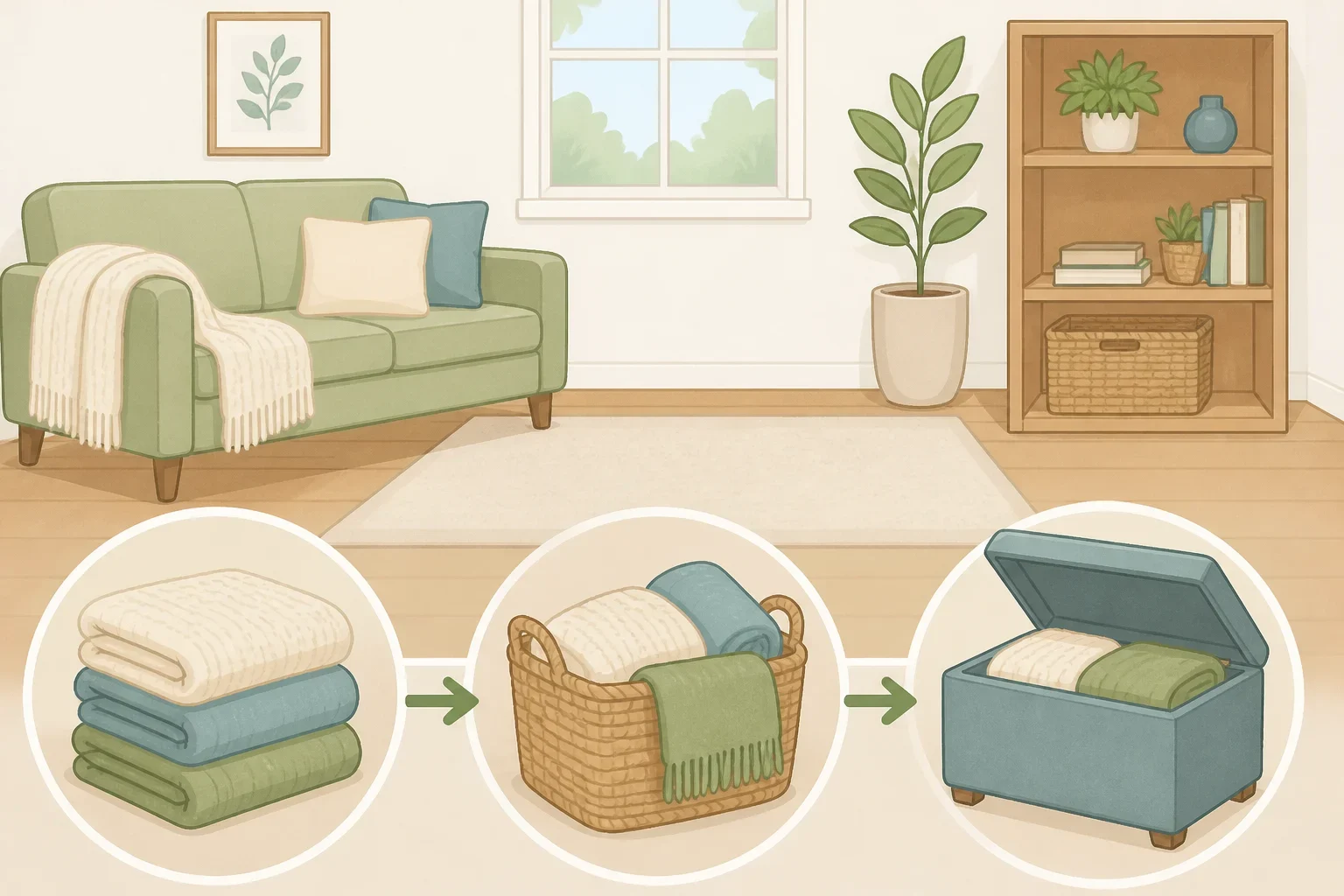
Heavy curtains, throws, cushions, and layered bedding help create the visual fullness associated with the style. Cotton and wool are among the natural fabrics recommended in coverage of the related cosy-maxxing trend, while Cavendish Lane Design includes linen and other organic materials in its burrowcore palette.
A practical room still needs a place for those layers when they are not in use. Use a basket, bench, open shelf, or storage ottoman for extra blankets. Keep at least one seat clear enough to sit in without moving a stack of pillows first. If a textile cannot be washed or cleaned according to its care instructions, think twice before placing it in a high-use family area.
Layering should add comfort, not create a daily obstacle course. Leave walking paths open, especially around stairs, doorways, and the route between a sofa and the kitchen. A room may look collected while still having clear surfaces for a mug, book, remote, or lamp.
Choose objects with a story
Burrowcore home decor works best when the objects feel selected rather than purchased all at once. Wood, stone, pottery, dried branches, plants, artwork, and inherited pieces can bring in the earthy, personal quality the style calls for. A mismatched set may be more effective than a perfectly coordinated one if it reflects how the household actually lives.
This is also where a limited budget can work in the style’s favor. Look at what is already in storage, in another room, or waiting for a different use. Borrow a lamp from the guest room, move a small table beside a chair, frame an unused print, or display a favorite bowl on a shelf. If shopping secondhand, measure the available space before buying and check upholstered items carefully before bringing them home.
The aim is not clutter. A collection still needs editing. Keep the pieces that add comfort, memory, texture, or usefulness, then leave enough visual space for the room to breathe.
Try burrowcore in one corner first
The easiest way to test a cozy burrowcore aesthetic is to choose one underused corner rather than redecorating an entire room. Cavendish Lane Design suggests starting with a chair and building a small reading “burrow” around it.
Begin with what is already available:
- Place an existing chair where it receives enough practical light.
- Add a small side table or another stable surface.
- Bring in one warm lamp.
- Add a washable throw and a textured pillow.
- Put books or magazines in a basket nearby.
- Hang or place one meaningful piece of art.
- Add a small rug only if it does not interfere with the walking path.
That is enough to judge whether the corner feels inviting. Spend a few evenings using it before buying paint, curtains, or new furniture. The chair may turn out to be too far from an outlet, the lamp may not provide enough light for reading, or the basket may become a place where everyone drops unrelated items. Those are useful discoveries, not decorating failures.
In a small home, the corner may need to serve more than one purpose. A low floor cushion can work for reading but should be easy to move when the area becomes a play space. A basket can hold books one day and extra blankets the next. A bedroom nook may need to stay clear for laundry, exercise, or getting dressed. Burrowcore should make ordinary routines easier to settle into, not compete with them.
Check safety, cleaning, and everyday function
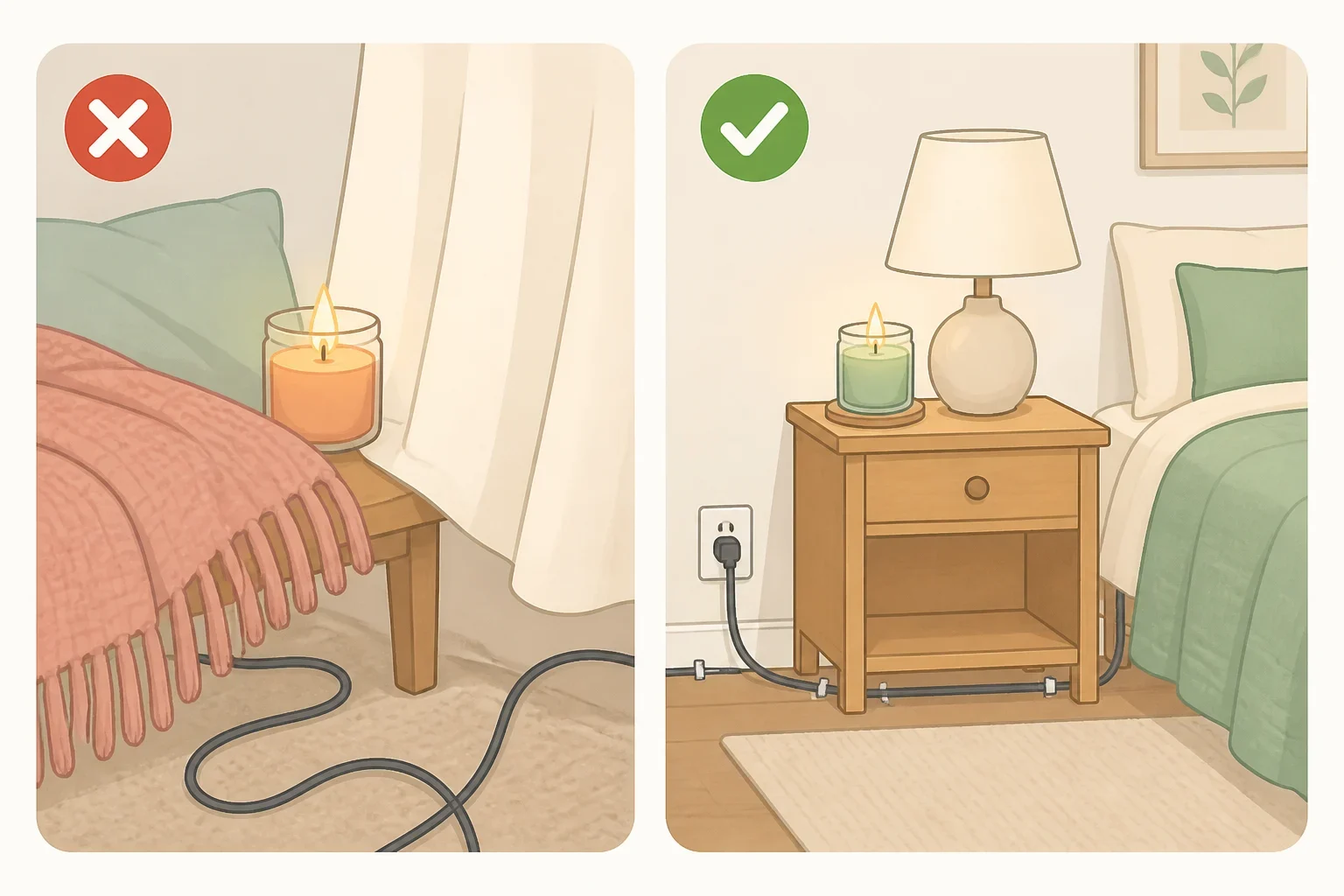
The collected look has limits. Loose textiles need a realistic washing or shaking-out routine. Dried branches and decorative objects should not block windows, vents, outlets, or paths. Lamps need stable surfaces and cords that do not cross places where people walk.
Open flame deserves particular attention. Keep candles away from curtains, bedding, throws, paper, and high-traffic edges, and extinguish them before leaving the room or going to sleep. If a room includes pets, children, or a lot of soft furnishings, use lamps or flameless lights for the everyday version of the look.
Dark corners can make a space feel sheltered, but every household member should still be able to find switches, see steps, and move around furniture comfortably. If a room becomes hard to navigate, add light or remove an object. Atmosphere is not more important than access.
The same principle applies to furniture. A burrowcore space can be intimate without trapping people inside it. Keep chairs, tables, and rugs arranged so the room remains easy to enter, use, and reset.
Burrowcore is best understood as permission to make a room feel lived in. Deep color, warm light, soft layers, and collected objects create the mood, but the most successful version leaves room for real life, including laundry, children, pets, guests, and a lamp bright enough to find the book.
Choose one corner this week. Start with an existing seat, add one useful light, one comfortable layer, and one object with personal meaning. Live with that small change before investing in anything larger.
