
Fall Gardening Mistakes to Avoid for Perennials: Pre-Freeze Checklist
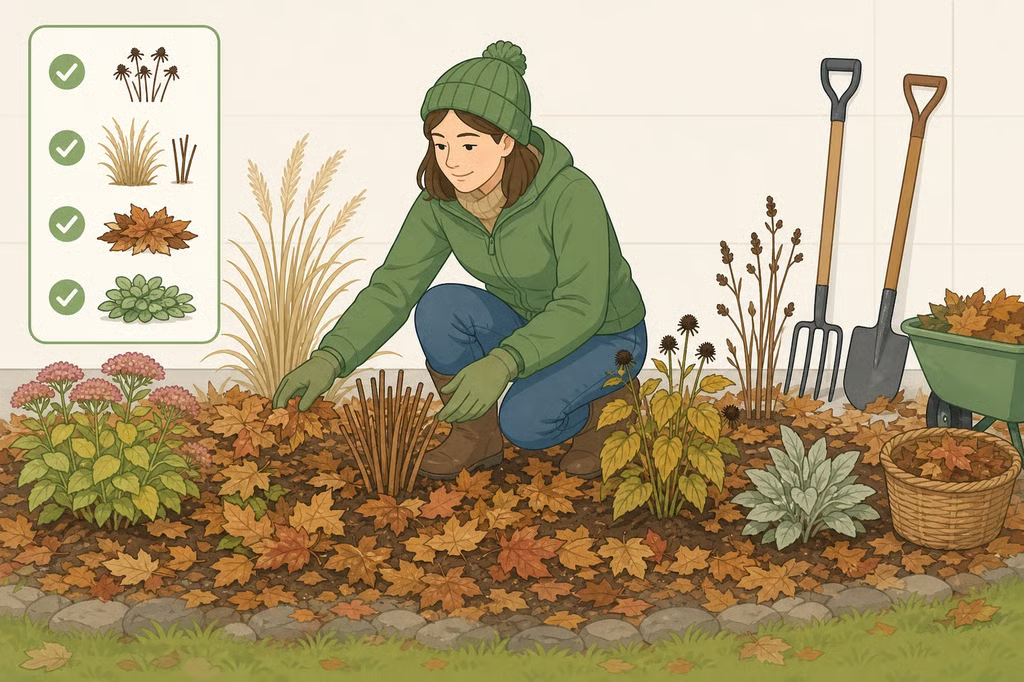
The fall chores that feel most responsible, such as raking every leaf and cutting every stem to the ground, can create problems for a perennial bed. The biggest fall gardening mistakes to avoid for perennials usually come from doing too much too soon. The practical approach is simpler: do not automatically cut every perennial or remove every leaf, protect roots, check for disease, and make plant-specific exceptions.
Leaves can insulate roots from low and fluctuating temperatures, then break down and add organic matter to the soil, according to Illinois Extension. That does not mean every leaf should stay exactly where it falls. It means the garden bed, lawn, plant variety, climate, drainage, and disease history should guide the cleanup.
These mistakes generally increase stress rather than guarantee that a plant will die. A bed-by-bed check before the ground freezes is enough for most homeowners.
How to prepare perennials for winter
1. Cutting every perennial to the ground too early
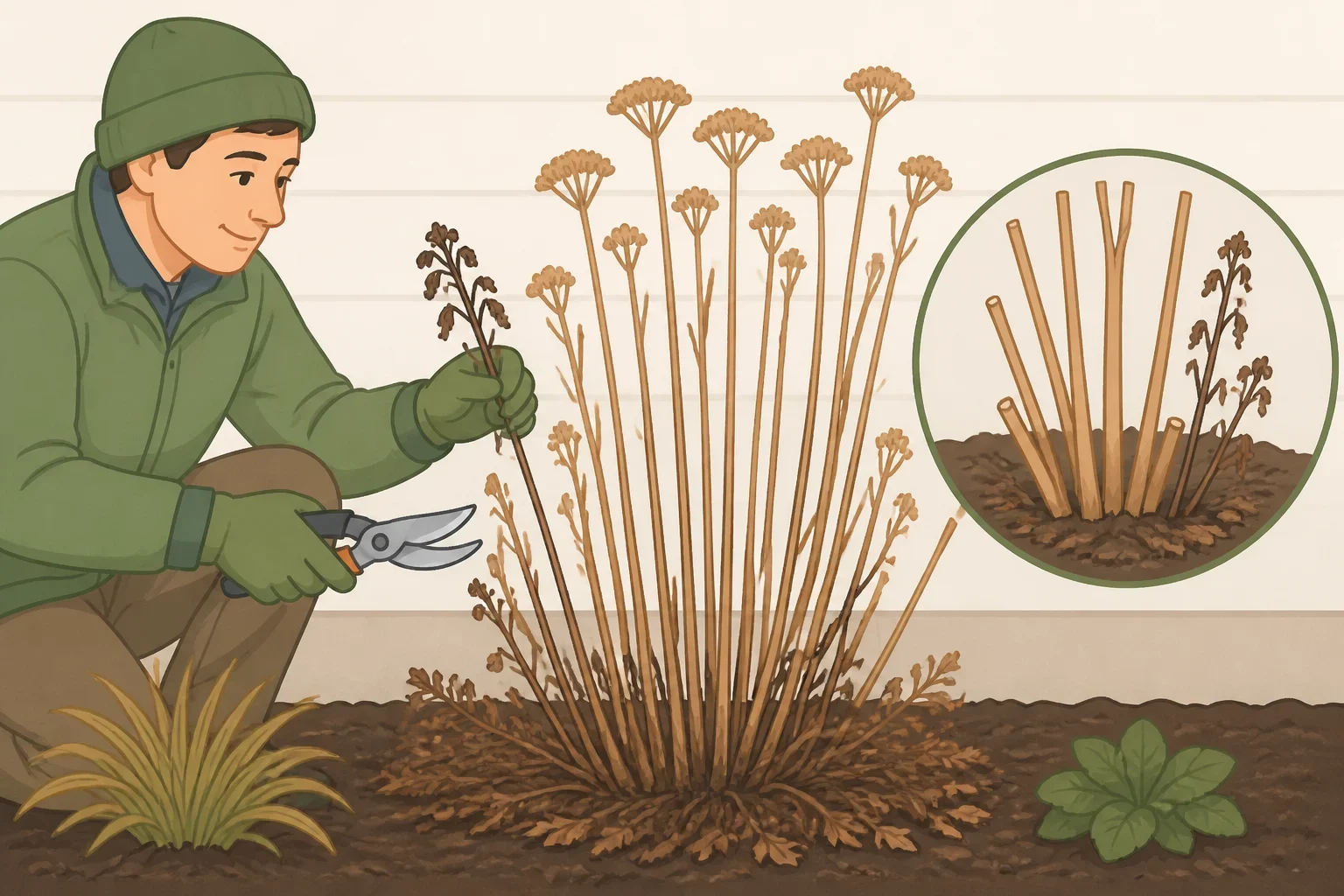
A brown perennial can look finished, but its roots may still be doing important work. Starting in late summer, plants maximize photosynthesis and move carbohydrates into their roots for winter survival and spring growth. Cutting away the canopy while that process is still underway may remove foliage before the plant has stored as much food as it can, according to Illinois Extension.
Standing stems also provide winter shelter. Many native bees live inside hollow or pithy perennial stems, and other insects overwinter in standing plant material, as Illinois Extension explains.
Do this instead: Leave most healthy stems and flower stalks standing through winter. If a plant has become floppy or is blocking a walkway, cut it back only partway rather than assuming every stem belongs at ground level. Guidance from Penn State Extension also suggests that stems can be cut to about half to two-thirds of their original height, leaving openings where insects can shelter.
Peonies, irises, and lilies are specific exceptions in the cited guidance. Those plants should be cut back to 3 to 5 inches, with foliage removed, according to Penn State Extension. For any other perennial, check the plant’s care instructions before reaching for the pruners.
2. Removing all leaves from garden beds
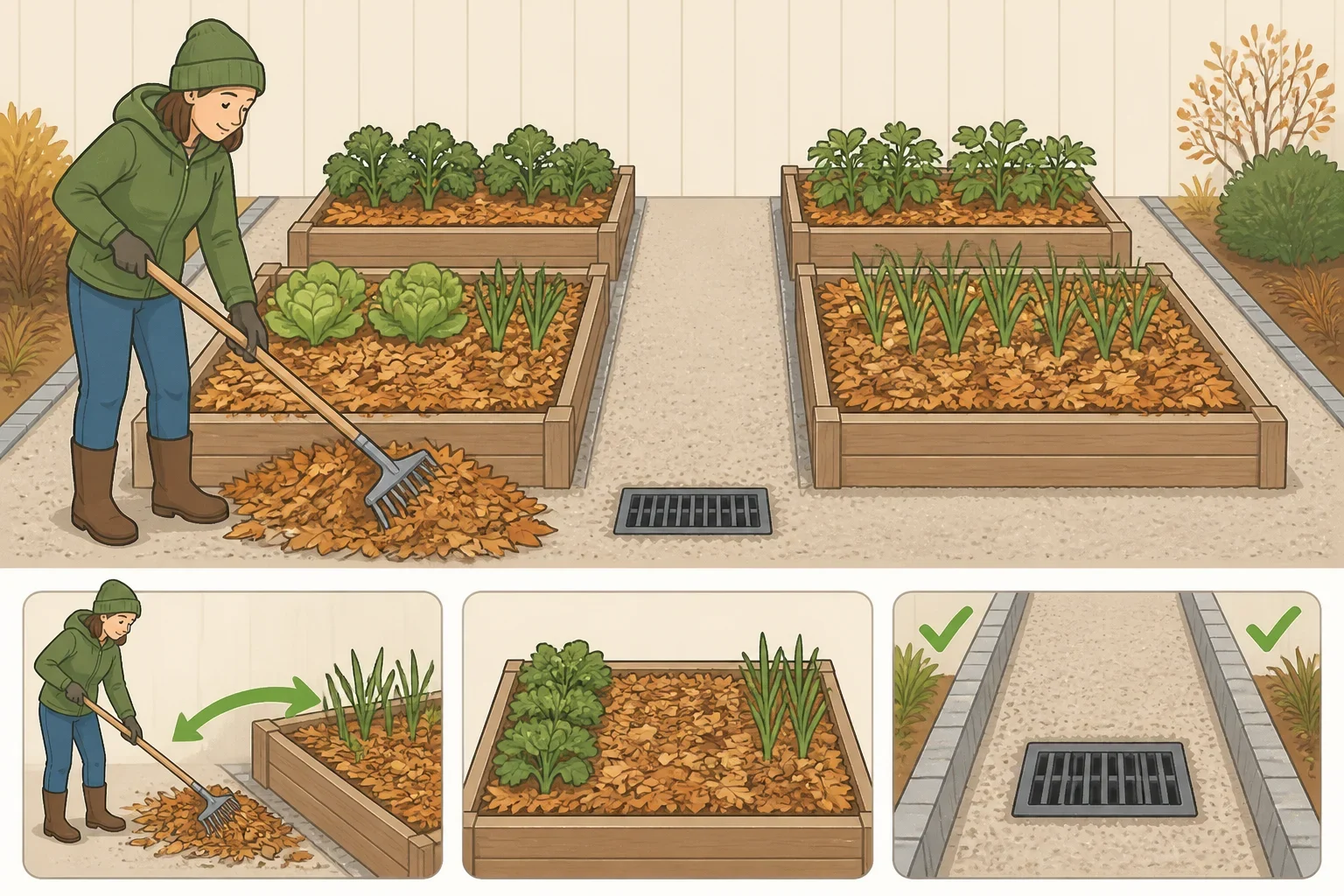
A completely leaf-free bed may look orderly, but it removes a useful layer of insulation and habitat. Many native insects spend winter beneath leaves or in the soil below them. Fallen leaves can also shelter animals that overwinter in the ground, including toads and wood frogs, according to Penn State Extension.
The effect on insects is not merely theoretical. A University of Maryland study cited by Penn State Extension found 45% fewer moths and butterflies and 67% fewer spiders in leafless garden plots. Those figures describe that study’s comparison, not a guarantee about every yard, but they show why a total fall cleanup can have consequences beyond appearance.
Do this instead: Move leaves off paths, steps, drains, and lawn areas, then rake them into garden beds or an out-of-the-way leaf pile. Leaves can provide insulation and habitat when they remain in a suitable place and do not form a dense, wet mat over a plant. Allowing leaves to collect under shrubs is another option supported by Penn State Extension.
The goal is not to make the whole property look untouched. Keep high-traffic areas clear while leaving useful cover where it can protect the bed.
3. Shredding or bagging leaves by default
Shredding every leaf may feel like a tidy compromise, especially when whole leaves blow around the yard. But the Penn State guidance recommends shredding only as a last resort because it reports a drastic decline in moth and butterfly numbers when leaves are shredded.
Bagging leaves and sending them away also removes organic material that could remain on the property. As leaves decay, they can enrich the soil, absorb water, and help keep moisture available to plants.
Do this instead: Keep whole leaves in garden beds or create a leaf pile in a quiet corner where they can decompose. On lawn turf, remove the leaves or use a mulching mower so they do not smother the grass, according to Penn State Extension. This is one of the more useful fall garden cleanup mistakes to avoid: treating every part of the yard as if it needs the same cleanup method.
4. Skipping the final moisture check
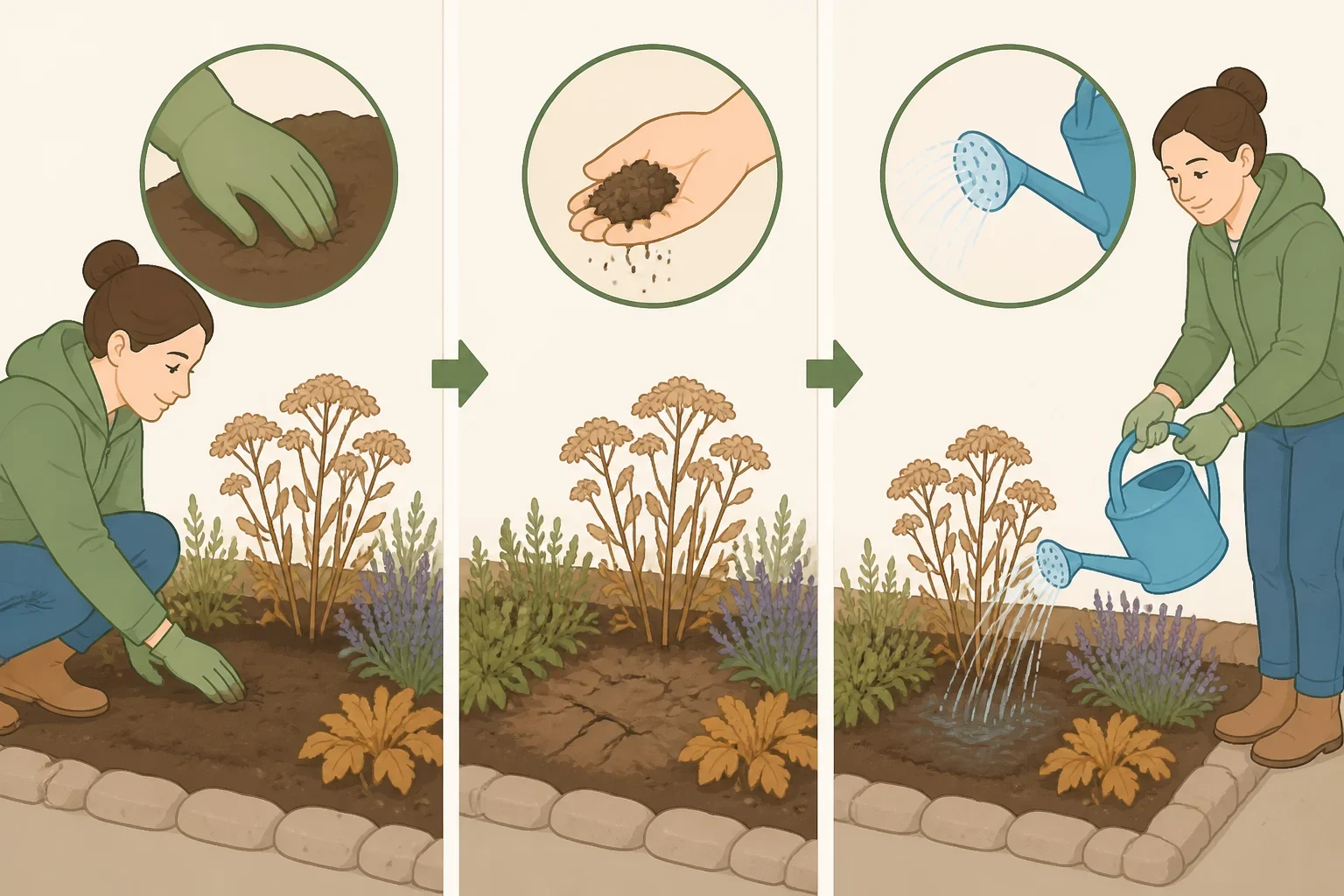
A perennial bed should not enter winter dry if local conditions have been dry. The University of Minnesota says trees, shrubs, and perennials should be well watered going into winter. It also notes that moist soil stays warmer than dry soil and is less stressful for plant roots.
That does not make “deeply water everything” a universal instruction. Illinois Extension specifically recommends deep watering for evergreens before the first freeze when rainfall has been light. Watering needs depend on rainfall, soil, plant type, drainage, and regional climate.
Do this instead: Check the bed before the ground freezes. Pay attention to recent rainfall and whether the soil around the root zone appears dry. If the bed needs water, water it while conditions remain suitable, rather than waiting until the soil is frozen.
In Colorado, for example, dry conditions can be especially challenging from November, when irrigation systems are turned off, through February, before regular snow typically arrives. Colorado State University Extension recommends watering only when temperatures are above freezing during the early part of the day. That regional guidance should not be applied automatically to every climate, but it is a useful reminder that the last watering check is local, not calendar-based.
5. Leaving newly planted or exposed roots unprotected
New plantings need time to settle before the ground freezes. The University of Minnesota says newly planted plants should be in the ground 4 to 6 weeks before the ground freezes. That is a planning guideline tied to the local freeze date, not a universal fall deadline.
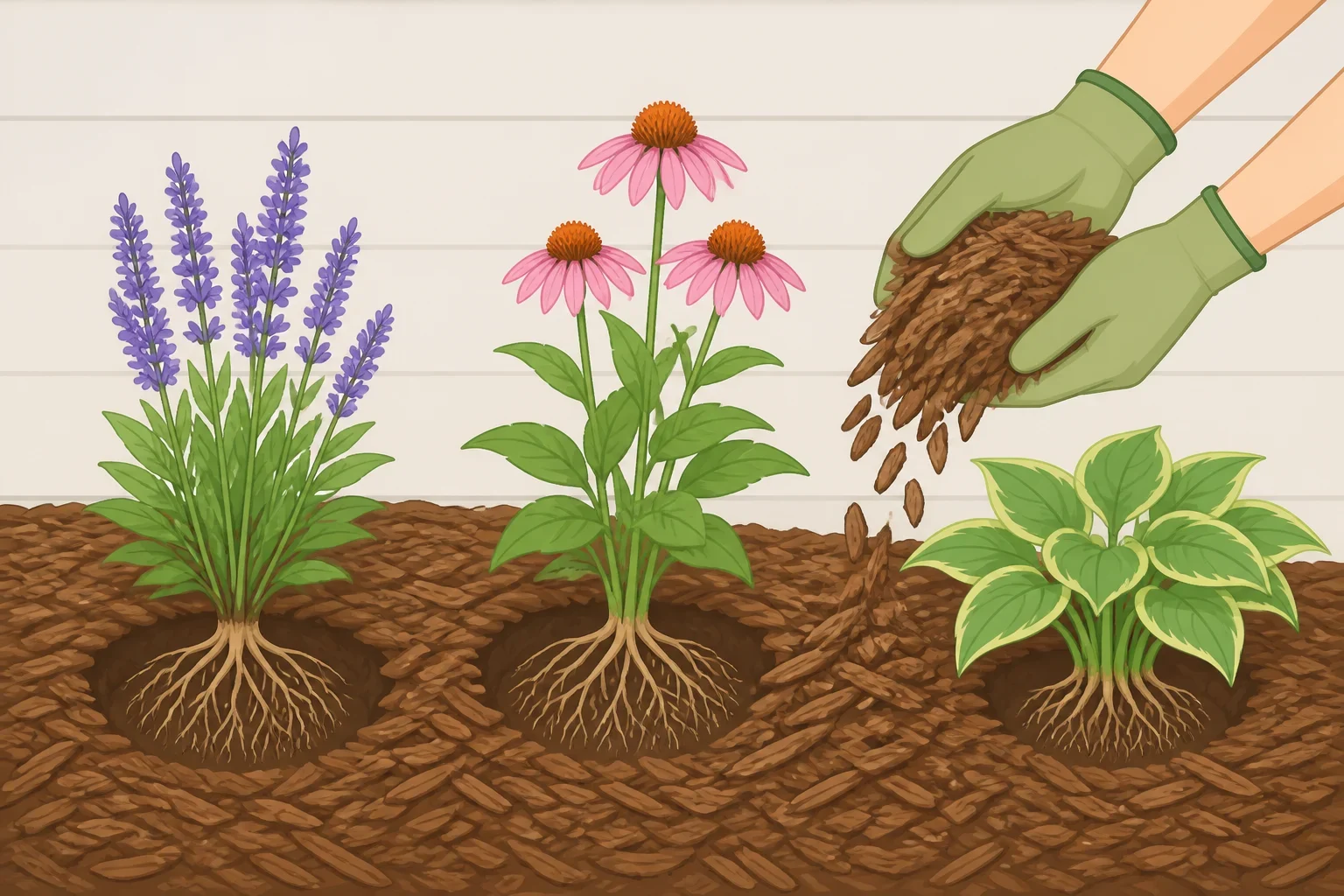
Bare soil and exposed roots also lose the buffering effect that mulch and leaf cover can provide. Mulch helps moderate soil temperatures and conserve moisture during the transition from fall to winter and again from winter to spring.
Do this instead: Check newly planted perennials and any spots where soil has washed or shifted away from roots. Cover exposed soil with a suitable mulch, such as shredded bark, wood chips, or leaves, as appropriate for the bed. Spread it over the root area and bare soil without using it as a reason to bury the plant itself.
The University of Minnesota’s winter checklist specifically recommends a few inches of wood mulch over plant roots and bare soil. That measurement supports the checklist’s mulch recommendation, not a one-size-fits-all depth for every perennial bed. Local conditions and plant requirements still matter.
6. Using rock or plastic barriers as the default mulch system
Mulch material affects more than the appearance of a bed. Organic mulches such as shredded bark and wood chips break down over time and add nutrients to the soil. Rock can last longer, but rocks can become very hot in summer and cause heat stress in sensitive plants. Large stones may also create compaction issues around plants with shallow roots, according to the University of Minnesota.
Plastic barriers create a different problem. Landscape plastic can block unwanted plant growth, but it does not let water pass through, which can contribute to dry or wet soil conditions. The University of Minnesota says plastic barriers are better suited to paths and other areas that are not supporting plants.
Do this instead: Choose mulch based on the plants, soil, drainage, and purpose of the bed. Use organic material over roots and bare soil when moisture retention and temperature moderation are the main goals. Do not assume a weed barrier is necessary for a healthy perennial bed. Landscape fabric is generally permeable, but barriers can still interfere with insects that need to burrow into soil to complete their life cycle or overwinter.
7. Dividing or planting without checking timing and local conditions
Fall is not automatically the right season for every planting or division job. Some perennials benefit from being divided in fall, while others should wait until spring. The plant’s bloom time is one useful starting point.
Spring- and summer-blooming perennials such as creeping phlox and coreopsis are usually divided in fall. Plants that flower in mid- to late summer or fall, including daylily and yarrow, should generally be divided in spring before new growth begins, according to Colorado State University Extension. Division may be needed after three to five growing seasons when a perennial becomes overcrowded and begins to bloom poorly.
Do this instead: First ask whether division is needed at all. If the plant is overcrowded or flowering poorly, check its bloom time and your local freeze date before digging. Fall divisions and new plantings need enough time to establish before frozen ground arrives, while spring division may be safer for later-blooming plants.
Planting conditions matter, too. Colorado State University notes that perennials should not be planted too deeply because roots can suffocate without enough available oxygen. A plant’s climate, drainage, and site conditions can change the recommendation, so use local extension guidance when the timing is uncertain.
When fall cleanup is the right call
Leaving most healthy stems and leaves in place does not mean ignoring disease. Known disease or pest problems are a clear reason to clean more thoroughly. Colorado State University Extension identifies powdery mildew and other known disease problems as exceptions to reduced fall cleanup, while Penn State Extension advises removing diseased plants completely and bagging them for disposal.
Remove diseased foliage rather than leaving it in the bed with healthy plant material. A minor cosmetic blemish is not automatically the same as a confirmed disease, so avoid treating every imperfect leaf as an emergency. Look for a known problem and follow plant-specific guidance.
Lawn care is another reasonable exception. Whole leaves can smother turf, so remove them from the lawn or mulch them with a mower. Then relocate suitable leaves to garden beds or quiet corners where they can provide cover without creating a problem for grass.
A simple pre-freeze garden check
Walk the garden bed by bed before the first hard freeze. Use this list:
- Inspect healthy perennials and leave most stems standing.
- Cut back only plants with specific fall instructions, such as peonies, irises, and lilies.
- Remove and bag plants with known disease.
- Move leaves off lawn turf, paths, and other areas where they can cause problems.
- Leave suitable leaves in garden beds or leaf piles rather than shredding or bagging them by default.
- Check newly planted areas and exposed roots.
- Water if the bed is dry and local conditions allow.
- Add suitable mulch over roots and bare soil, keeping plant-specific needs and drainage in mind.
- Confirm the timing before dividing or planting a perennial.
That approach protects perennials over winter without turning the garden into a blank slate. A little restraint, followed by a careful check for moisture, disease, exposed roots, and plant-specific instructions, is usually more useful than a full-scale cleanup.
