
- Should you cut back perennials in the fall?
- 1. Check the plant before cutting anything
- 2. Leave healthy stems and seed heads standing
- 3. Remove or cut back specific problem material
- 4. Move tender plants indoors
- 5. Water before the ground freezes
- 6. Add mulch after the season cools
- When to cut back perennials in fall and when to wait
Should you cut back perennials in the fall?
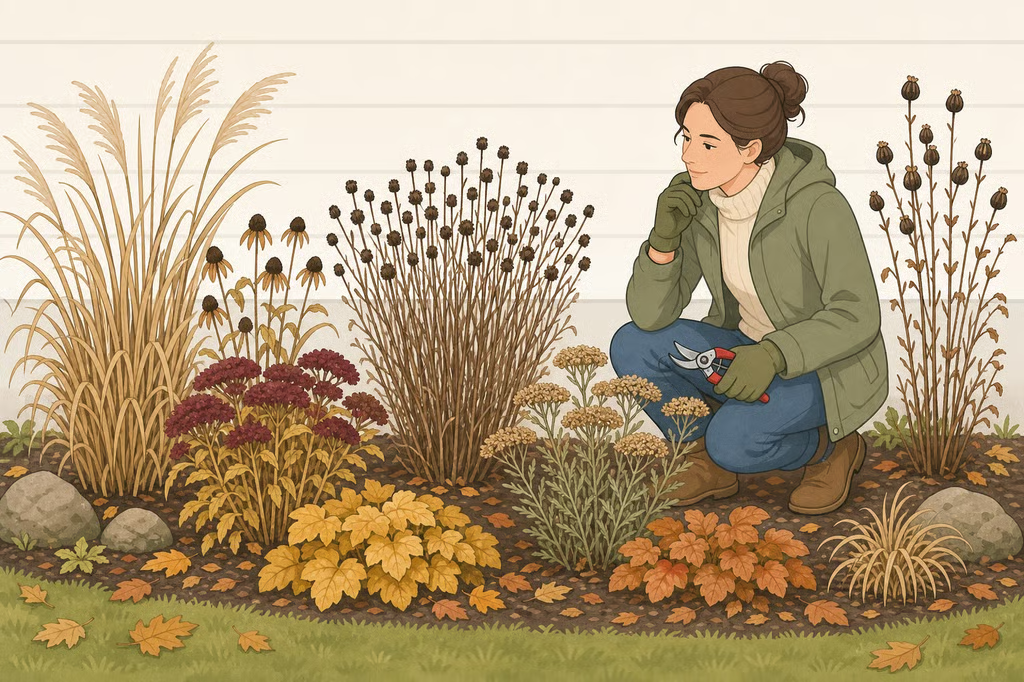
Should you cut back perennials in the fall? For many healthy, hardy plants, the practical answer is no. Leave perennials standing over winter unless the foliage is diseased, infested, badly damaged, or attached to a tender plant that needs to come indoors.
That does not mean ignoring the garden until spring. A better fall perennial cleanup starts with identifying what each plant needs. Leave healthy stems and seed heads in place, remove problem material, water plants before the ground freezes, add appropriate mulch, and use local frost dates to decide when larger tasks make sense. The guidance below reflects cold-winter Midwest conditions, so timing can shift in warmer or colder regions.
1. Check the plant before cutting anything
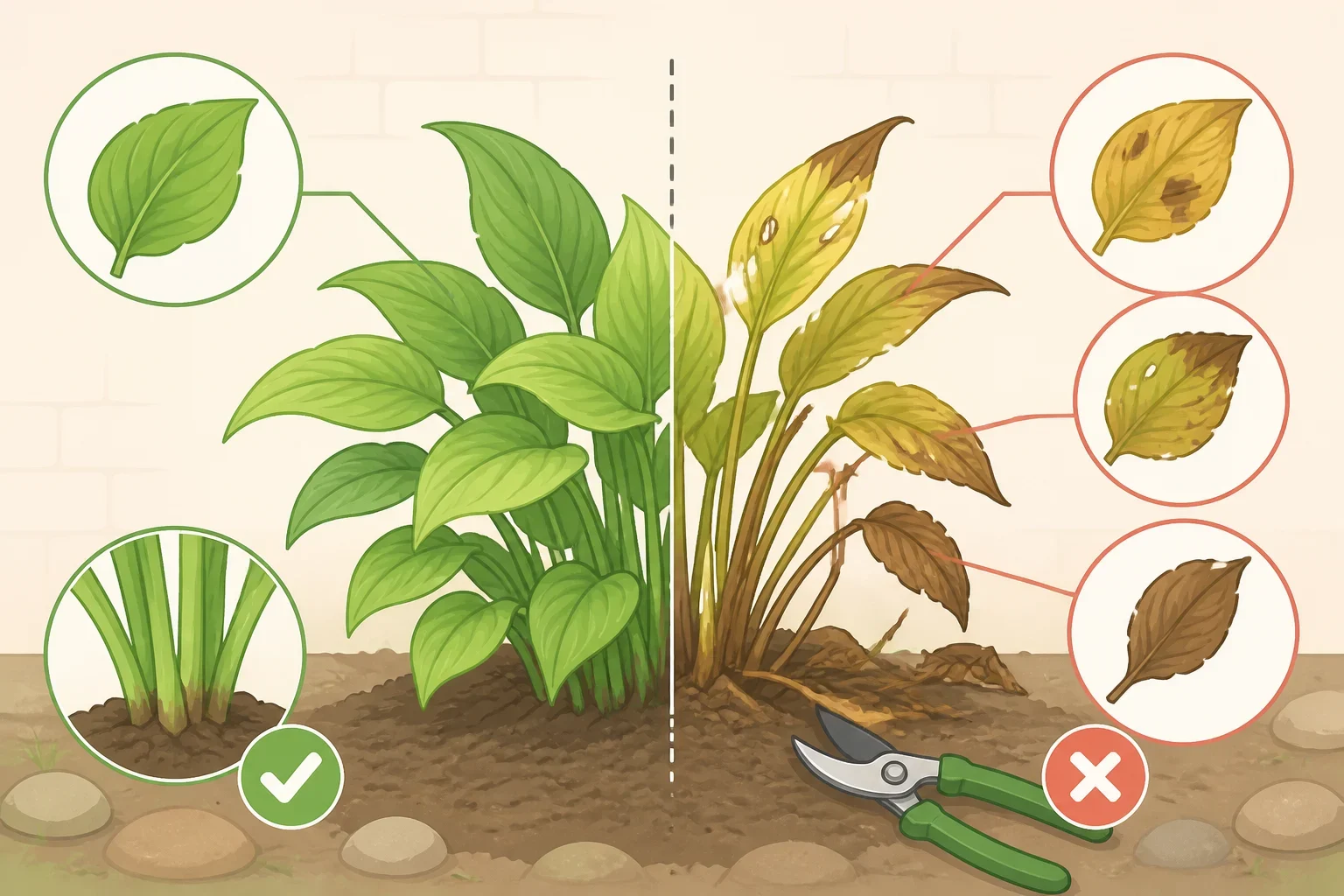
Start with the plant itself, not the calendar. Ask three questions:
- Is the plant healthy?
- Is it hardy in the garden, or does it need winter protection?
- Is there a specific reason to remove the foliage now?
If a perennial is healthy and hardy, leave most of its stems and foliage standing. Illinois Extension explains that plants begin moving stored energy into their roots in late summer as they prepare for winter. Cutting away the canopy during that process may remove foliage the plant is still using, while the amount of stored food in the roots affects winter survival and spring growth. Illinois Extension
“Stored energy” is the useful way to think about carbohydrates here. The plant is putting away reserves before dormancy, and those reserves help support growth when the season begins again. That does not mean every fall cutback will kill a perennial, but it is a good reason not to cut healthy plants to the soil line simply because the garden looks untidy.
Ornamental grasses are a clear example of why a blanket rule can be unhelpful. Their standing foliage can protect the growing point at the soil line from extreme cold. Leaving the grass uncut into spring does not harm its overall health, according to Illinois Extension. New green blades can eventually cover the old foliage.
2. Leave healthy stems and seed heads standing
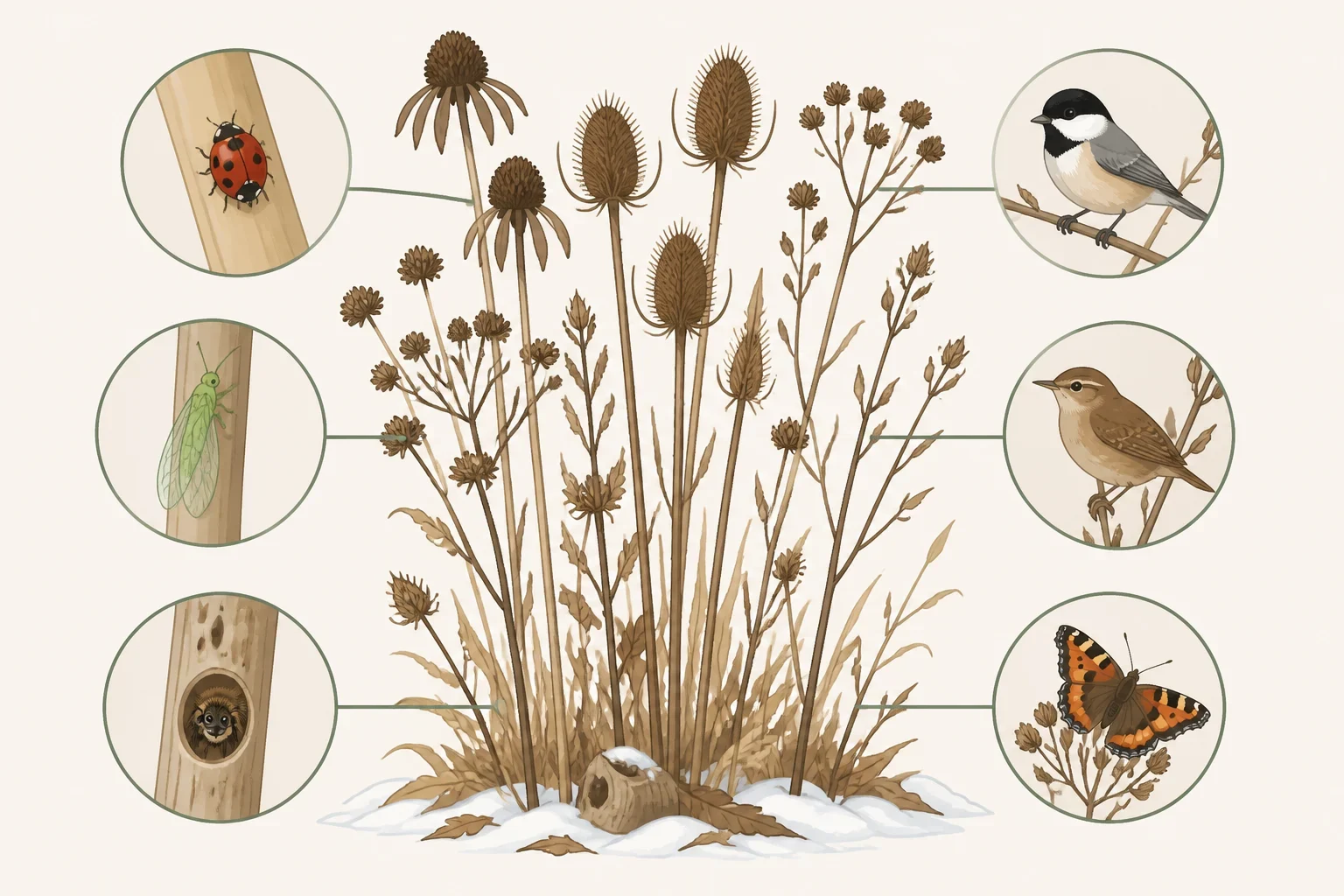
Standing plants serve more than one purpose after flowering ends. Hollow and pithy perennial stems can provide winter shelter for native bees, while other insects overwinter in standing plant material. Cutting everything down at once removes that habitat before the insects have completed their winter cycle, as Illinois Extension explains.
Seed heads also have a job. Leaving perennials and shrubs intact keeps seeds and berries available to overwintering birds. The stems add structure to a winter garden, too, so a bed does not have to be perfectly green to remain useful or attractive.
Late flowers matter before the garden goes dormant. Bees, butterflies, and other beneficial insects need nectar and pollen in fall as they prepare to migrate or overwinter, according to UMN Extension. Fall-blooming plants such as asters and goldenrod can extend late-season nectar availability, although bloom timing depends on the plant and region.
That makes the timing of cleanup important. If a perennial is still flowering, leave it alone long enough to finish supporting pollinators. In Minnesota guidance, gardeners are encouraged to assess whether anything is blooming through Halloween, but that date is not a universal deadline. Use the local season as the guide rather than copying a calendar date from another climate.
3. Remove or cut back specific problem material
The question is not whether fall cleanup is good or bad. It is whether the material in front of you is healthy and useful. Remove only what has a clear reason to go.
Remove or cut back:
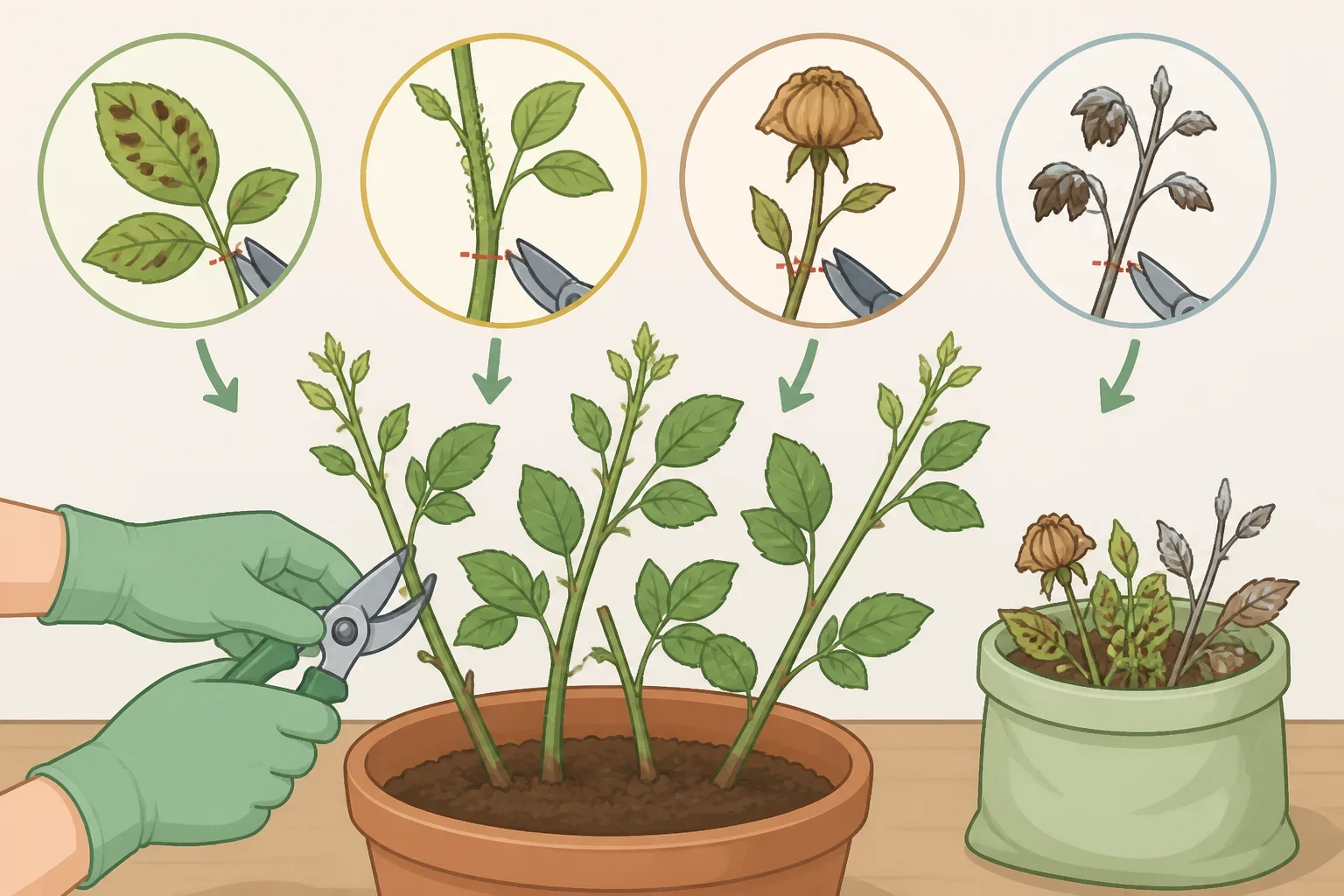
- Diseased plants or foliage. Pull out diseased material before winter and destroy it rather than adding it to the compost pile. The same applies to plants with insect infestations when removal is recommended, since leaving them in place can allow problems to spread through the garden. Illinois Extension
- Frost-damaged hosta leaves. Once frost has damaged hosta foliage, remove the leaves. They can harbor slug eggs that overwinter and create trouble later, according to Illinois Extension. Wait for frost damage rather than cutting healthy hosta leaves early.
- Asters after flowering. UMN Extension recommends cutting asters back after they finish flowering. This is a plant-specific instruction, not a reason to cut every fall perennial to the ground. UMN Extension
When removing diseased or infested material, keep it separate from healthy stems and leaves. The goal is targeted cleanup, not a wholesale clearing of the bed. Healthy brown foliage may look finished, but it can still shelter insects, protect the soil, or hold seed heads for birds.
4. Move tender plants indoors
Hardy and tender plants need different fall plans. Tender perennials, tropical plants, and some herbs can be overwintered indoors in conditions suitable for houseplants, according to Illinois Extension.
Before bringing a plant indoors, identify it and check its care needs. Not every herb or perennial belongs in the same indoor spot, so avoid treating “some herbs” as a guarantee that every herb will thrive inside. The research supports the option for suitable plants, not a universal indoor recipe.
For a plant that is staying outside, check whether it is rated as hardy for the local climate. UMN Extension notes that zone-hardy plants should generally withstand the local climate without extra help, while borderline-hardy plants may need mulch or other protection. UMN Extension
That distinction is especially useful for gardeners who have pushed a plant slightly beyond its usual range. A tender plant left outside is not the same situation as a hardy perennial left standing. One may need to move indoors, while the other may benefit from remaining undisturbed.
5. Water before the ground freezes
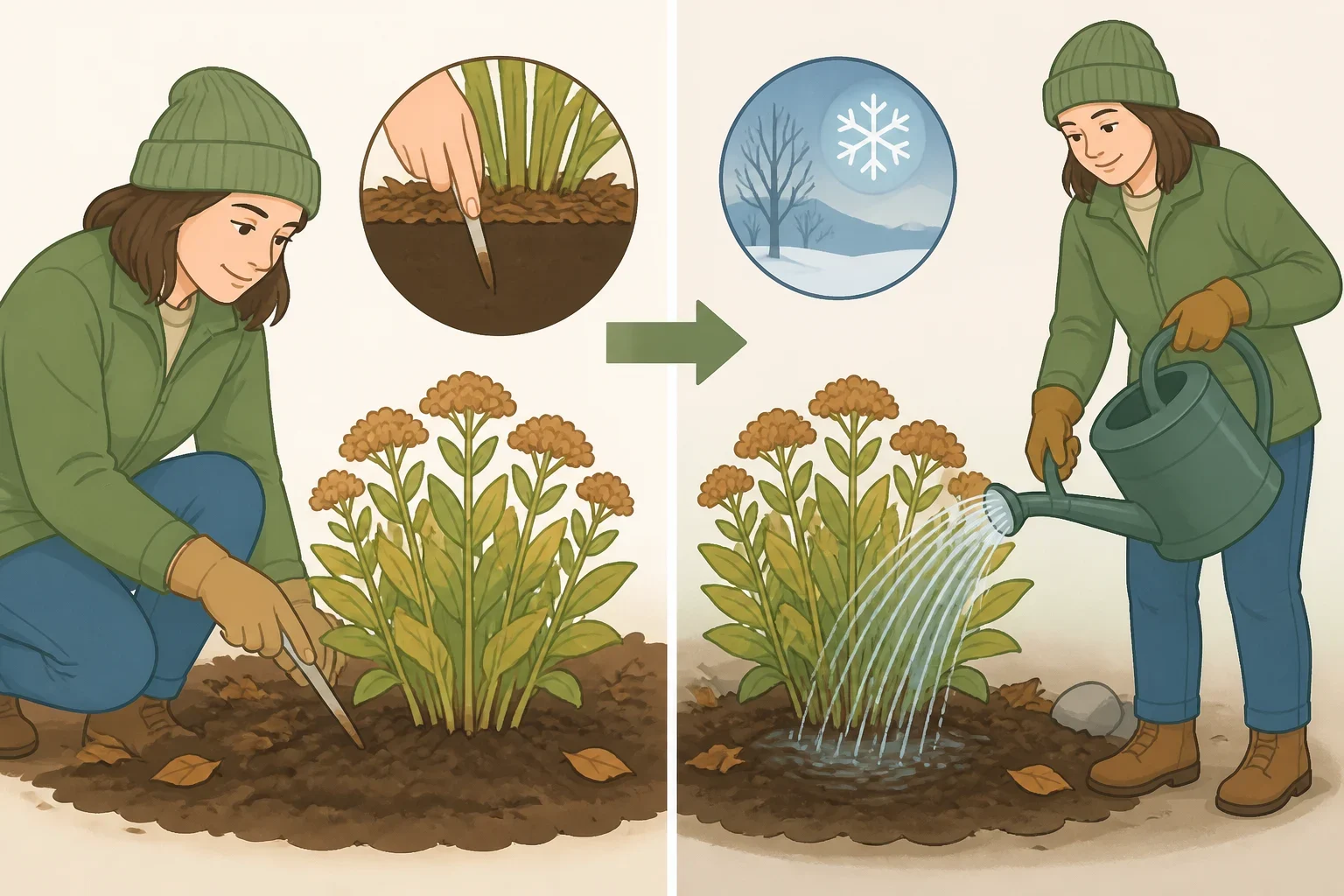
Fall care is not only about pruning. Water trees, shrubs, and perennials well before winter, particularly if the season has been dry. UMN Extension recommends making sure landscape plants are well watered as they go into winter. UMN Extension
Check the soil and local rainfall instead of watering automatically every day. The aim is to address dry conditions before the ground freezes, not to leave the bed saturated. Evergreens also need moisture through winter, and Illinois Extension advises monitoring rainfall and watering them deeply before the first freeze. Illinois Extension
Newly planted perennials deserve extra attention. They should generally be in the ground four to six weeks before the ground freezes, giving the roots time to settle before winter. Calculate that window from the expected freeze date in the local area, not from a September or October planting date borrowed from another region. UMN Extension
6. Add mulch after the season cools
Mulch can help conserve moisture, moderate soil temperatures, and provide insulation during winter. It is especially useful where snow cover is limited, though the amount and timing of protection depend on the plant and climate. UMN Extension
Organic materials such as shredded bark or wood chips are common choices for landscape beds. Leaves can also remain in garden beds when the space allows. They provide winter cover for insects and soil, help protect roots from temperature swings, and break down to add nutrients by spring. Illinois Extension
Keep loose leaves out of streets and roadways. When rainwater mixes with leaves on hard surfaces, it can carry concentrated phosphorus into waterways and contribute to harmful algae growth, according to Illinois Extension. Move leaves into beds or another suitable location instead of letting them collect where water runs toward a storm drain.
Use mulch as a layer of protection, not as a replacement for inspecting the plant. A mulch-covered diseased perennial is still diseased, and a tender plant does not become hardy simply because its base is covered. Leave healthy stems standing, then use mulch to support the roots and soil around them.
When to cut back perennials in fall and when to wait
Fall is also a useful planting, transplanting, and dividing season because the soil can remain warm while heat and water stress ease. Illinois Extension recommends planting warm-season plants while soil is still warm in September and handling cool-season bloomers in October, but those windows reflect regional conditions rather than a nationwide schedule. Illinois Extension
For the larger cleanup, wait until spring unless a plant has a specific problem or care requirement. Check local extension guidance for the best timing in the area. In general, postpone cutting healthy stems and removing leaf litter until the season is appropriate for the plants and overwintering insects in that region.
The decision rule is simple: if the plant is healthy and hardy, leave it standing. If it is diseased, infested, frost-damaged, or tender, handle it separately. That approach keeps fall cleanup manageable while preserving stored plant energy, useful habitat, and winter protection where they belong.
