
How to Increase Fiber Intake by Eating Vegetable Peels
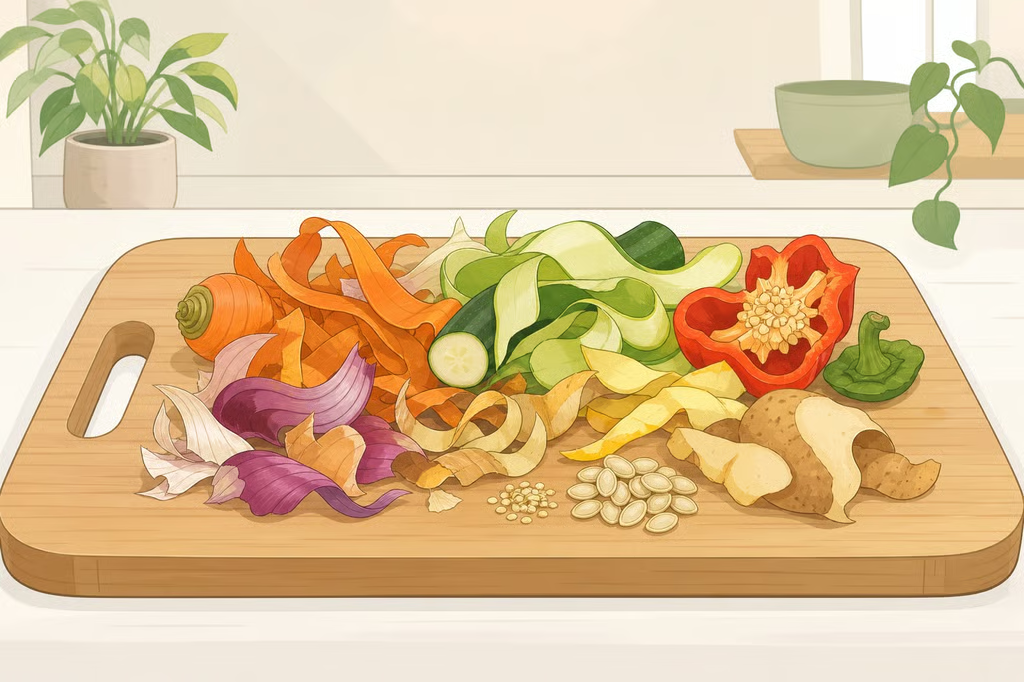
The easiest way to test root-to-tip eating for fiber is to keep a few edible fruit and vegetable peels, seeds, and skins you would normally toss, then use them in meals where the texture works. Not every discarded part contains more fiber than the portion you already eat, and not every peel belongs in a raw snack.
A King’s College London study of 12 common types of fresh produce found that the parts usually discarded, including peels, skins, stalks, seeds, and cores, contained more fiber than the commonly eaten portions in 10 of the 12 cases, according to Taylor & Francis Newsroom, published three days ago. The study looked at laboratory comparisons, not the amount a typical household serving will provide.
That distinction matters. A number reported as grams per 100 grams of a tested component does not mean a person needs to eat 100 grams of squash skin or pineapple peel. The useful question is simpler: Which parts can be washed, prepared, and added to an ordinary meal without making it unpleasant?
This guide covers the safety checks to make first, four practical swaps, and the scraps that are better viewed as waste-reduction options rather than fiber upgrades.
What root-to-tip eating can and cannot tell you
The research offers a helpful nudge, not a new serving plan. The study found that discarded components represented between 25% and 48% of the total weight of the produce examined, according to Taylor & Francis Newsroom. Those parts are often paid for, brought home, and thrown away before they reach the plate.
The same research reported that only 4% of British adults meet the UK recommendation of at least 30 grams of dietary fiber per day, while average intake is 16.4 grams, according to Taylor & Francis Newsroom. The findings suggest that using more produce could contribute to fiber intake, but they do not prove that a particular peel or seed will materially change an individual’s daily total.
The researchers also caution against turning the results into a challenge to eat large quantities of scraps. Dr. Balazs Bajka, who led the laboratory fiber testing, said the point is to work overlooked parts into everyday meals rather than eat 100 grams of butternut squash skin and seeds in one sitting, as Taylor & Francis Newsroom reported.
Use the numbers as comparisons between tested components. If a part tastes unpleasant, stays tough, or makes a dish harder to enjoy, leaving it out is a reasonable choice. Root-to-tip cooking should reduce waste, not turn dinner into a test of endurance.
Wash and inspect produce before keeping the scraps

Start with clean hands. Then rinse fresh produce under running water, rubbing the surface with your hands or using a soft, clean brush for firmer items. Wash around stem and blossom ends, where germs can collect, and cut away bruised or damaged areas before using the surrounding peel, according to Tufts Journal.
Wash produce before cutting it. Otherwise, a knife can carry contamination from an unwashed exterior into the flesh as it passes through the peel. Washing reduces surface contamination, but it does not make every discarded part suitable to eat. Discard moldy or badly damaged produce rather than trying to salvage the peel or rind.
Organic produce still needs washing. Organic farming does not mean the surface is free from dirt, bacteria, or residue, as Tufts Journal explains. Follow package directions for pre-cut produce instead of assuming that a label such as “prewashed” means every handling concern has disappeared.
A specialty produce wash is not necessary for this approach. In testing cited by Tufts Journal, plain running water removed 98% of surface bacteria, while a commercial wash and vinegar solution performed no better. The practical routine is hands, running water, gentle rubbing, and a clean cutting surface.
Four edible fruit and vegetable peels and scraps to try
1. Keep kiwi skin for raw dishes

What to keep: The skin of a kiwi.
How to prepare it: Scrub the whole fruit gently under running water with a soft, clean brush. Slice it with the skin still on, or blend the whole fruit into a smoothie.
Where to use it: Add the slices to fruit salad, layer them into a breakfast bowl, or blend them into a drink where the texture is less noticeable.
What to expect: The skin changes the mouthfeel more than the flavor. Start with a single fruit if the fuzzy surface is unfamiliar, and remove the skin if the texture makes the dish less appealing. Researchers specifically mention leaving kiwi skin on as a realistic household change, according to Taylor & Francis Newsroom.
This is one of the simplest edible fruit peels to test because it does not require a separate recipe or cooking step. The preparation is the change.
2. Leave bell pepper seeds in cooked dishes
What to keep: The seeds inside a bell pepper.
How to prepare it: Wash the pepper before cutting. When chopping it for a cooked dish, stop automatically scraping out every seed. Remove the stem and any part you do not want in the finished food, then chop the pepper as usual.
Where to use it: Try the seeds in a stir-fry, roasted pepper dish, or sauce. They can stay with the chopped pepper instead of going straight into the bin.
What to expect: This is best treated as a low-waste cooking option, not a proven fiber increase for every meal. The research team suggested incorporating bell pepper seeds into dishes, but the study does not establish that every reader will enjoy their texture or that keeping them produces a meaningful change in daily fiber intake, according to Taylor & Francis Newsroom.
If the seeds distract from a smooth sauce or finished dish, strain them or remove them next time. The point is to find uses that fit the way the household already cooks.
3. Roast butternut squash skin and toast the seeds

What to keep: The skin and seeds of a butternut squash.
How to prepare it: Wash the squash, leave the skin on, and cube it for roasting. Reserve the seeds and toast them separately as a topping, using the same general approach used for pumpkin seeds. Cook the squash until it is fork-tender.
Where to use it: Add the roasted squash to a grain bowl, serve it as a side dish, or scatter the toasted seeds over the finished meal.
What to expect: The study measured the skin and seeds together at 9.25 grams of fiber per 100 grams of the tested component, according to Taylor & Francis Newsroom. That figure is a laboratory comparison, not a typical serving recommendation. It also does not mean every piece of skin will become tender at the same rate.
Check the squash before serving. If the skin remains tough after cooking, remove those pieces rather than forcing them into the meal. The seeds can still be used separately, so one part of the squash does not have to determine what happens to the rest.
4. Turn watermelon rind into a cooked side or pickle
What to keep: The white rind beneath the green outer layer.
How to prepare it: Trim away the green exterior, then cube the white rind. Stir-fry it as a cooked vegetable or quick-pickle it in a vinegar brine.
Where to use it: Serve the cooked rind alongside a meal, fold it into a vegetable dish, or use the pickled pieces as a sharp topping.
What to expect: The tested watermelon rind contained 2.10 grams of fiber per 100 grams, according to Taylor & Francis Newsroom. The source describes that amount as roughly comparable to the fiber in a slice of wholemeal bread, but serving sizes are not defined, so treat that as a rough comparison rather than a promise about your plate.
The green outer layer is not part of this swap. Trim it away, and stop if the prepared rind stays unpleasantly firm or does not suit the dish.
Scraps to use for less waste, not more fiber

Broccoli stalks are useful in the kitchen, but they are not one of the study’s fiber wins. They contained 28.4% less fiber than the florets, according to Taylor & Francis Newsroom. Peel the tougher outer layer if needed, slice the stalk, and add it to a stir-fry anyway. That is good waste reduction, even if it does not increase the fiber of the meal compared with eating the florets.
Pineapple shows why a striking number needs context. The study found that pineapple skin and core contained 453.7% more fiber than the flesh, according to Taylor & Francis Newsroom. That is a comparison between tested components, not an instruction to eat the outer skin. A more practical household use is chopping the softer core into a smoothie, while leaving out any part that does not work in the finished drink.
The researchers’ broader point is selective. Dr. Rachel Gibson said the goal is not to force people to eat unpalatable food, but to recognize value in parts that are routinely discarded, as Taylor & Francis Newsroom reported.
Choose two swaps and keep the ones that work
The study found more fiber in discarded components in 10 of 12 produce types, but that does not make every peel, stalk, seed, or core a good addition to dinner. Wash produce before cutting, inspect it carefully, and use small amounts that fit meals already on the table. No laboratory result can predict whether a household will enjoy a particular texture.
For a first trial, choose kiwi skin for a raw option and roasted squash skin or seeds for a cooked one. Use broccoli stalks when the goal is reducing food waste, and treat pineapple skin as a comparison from the study rather than a practical serving suggestion.
The broader waste issue is substantial: fresh fruits and vegetables represent 36% of roughly 10 million tonnes of food wasted annually in the UK, according to Taylor & Francis Newsroom. Keeping one or two pleasant, edible scraps in rotation is enough to start. If a part stays tough or makes the food less enjoyable, leave it out and use the rest of the produce well.
