
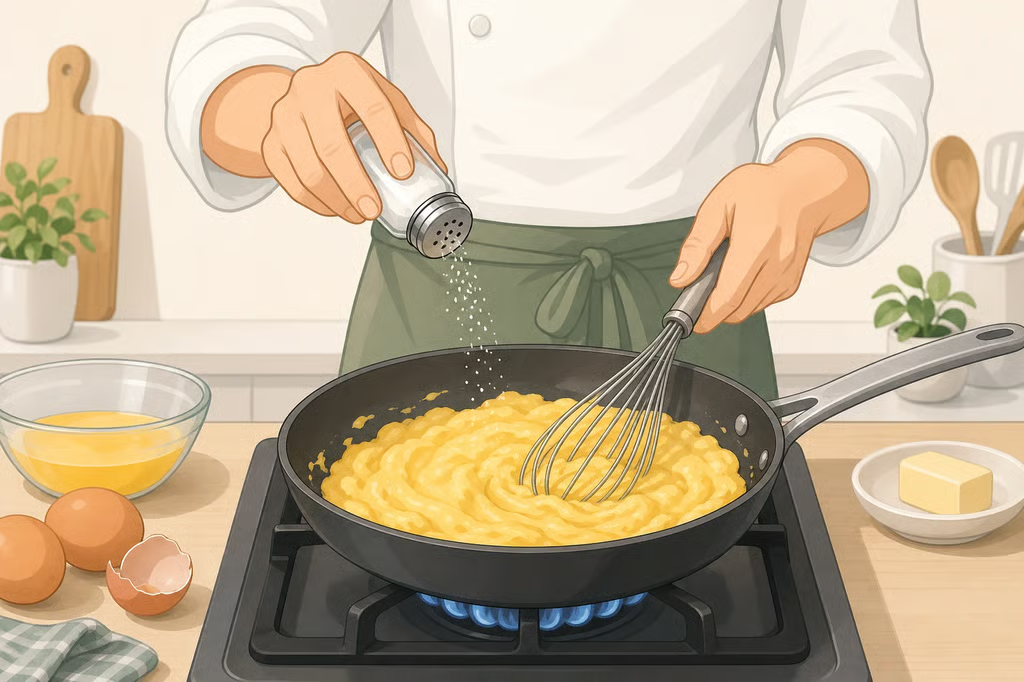
Should You Salt Scrambled Eggs Before Cooking? How to Make a Creamy Scramble
If scrambled eggs turn rubbery before they reach the plate, salt them before they go into the pan. Pre-salting seasons the eggs evenly and helps produce more tender curds, but heat control and timing matter just as much.
The short answer to “should you salt scrambled eggs before cooking?” is yes. Whisk in the salt before cooking, either immediately before the eggs hit the skillet or a little earlier if the morning allows. Then add a small amount of water or dairy, cook gently, and remove the pan while the eggs still look slightly underdone.
The reason comes down to egg proteins. Heat makes them unfold and bond into a network that traps water. If that network tightens too much, it pushes out moisture and leaves dry, firm eggs. America’s Test Kitchen explains that salt can limit those protein interactions, while Serious Eats also identifies pre-salting as a way to produce moist, tender eggs.
When to salt scrambled eggs
Salt the eggs before cooking, not after they have already set. For a four-egg scramble, use four small pinches of salt, one pinch per egg, and whisk it directly into the bowl. America’s Test Kitchen recommends a pinch per egg for even seasoning and a more delicate protein network.
That amount seasons the mixture evenly instead of leaving some bites bland and others overly salty. It also gives the salt time to affect the egg whites, which can make them easier to blend fully with the yolks. The mixture should become smooth and evenly golden, without clear or white strands.
There is no need to build a special waiting period into the recipe. If the skillet is already heating, salt and whisk the eggs, then cook them. If other breakfast tasks are happening first, the seasoned mixture can sit briefly before cooking. America’s Test Kitchen says the salt can be added just before cooking or in advance, with advance seasoning helping the whites mix more easily into the yolks.
Salt is helpful, but it is not a substitute for good technique. In testing discussed by Serious Eats, milk and cream improved the eggs’ texture, but the cooking method had the larger effect. Pre-salting is a practical first step, not a promise that salt matters more than every other choice.
How to make creamy scrambled eggs without milk or cream
This method uses four eggs, water instead of milk, butter, and a low-heat approach. An 8-inch skillet can handle up to six eggs, according to America’s Test Kitchen, so it gives four eggs enough room without requiring a large pan.
Gather:
- 4 large eggs
- 4 small pinches of salt
- 4 to 8 teaspoons water
- A pat of butter for the skillet
- A flexible spatula
- An 8-inch skillet
The water range comes from the recommended 1 to 2 teaspoons of liquid per egg. Water can dilute the egg proteins and encourage lighter curds, just as dairy can. Milk and cream still bring their own flavor and richness, so use them when that is the result you want. America’s Test Kitchen identifies water, dairy, and nondairy alternatives as workable choices, while Serious Eats notes that milk and cream affect flavor as well as texture.
1. Whisk the eggs thoroughly
Crack the eggs into a bowl and whisk until the yolks and whites are fully blended. Add the salt and water, then whisk again until the mixture looks uniform and pale yellow.
Do not stop as soon as the yolks break. Egg whites and yolks cook at different temperatures, so poor mixing can leave streaky eggs with some portions overcooked before the rest has set. Thorough whisking also creates a more even color and texture, according to Serious Eats.
A few white streaks are a sign to keep whisking. The mixture should look consistent from edge to edge. A fine-mesh strainer can make the eggs especially smooth, but it is optional for an everyday breakfast. Serious Eats notes that some chefs strain whisked eggs for an especially smooth result.
2. Heat the skillet with butter
Place the skillet over low heat and add a pat of butter. Wait until it melts and the bubbles spread evenly across the pan, then add the eggs.
The bubbling butter provides a useful visual cue. Butter contains water, and that water turns to steam as the butter melts. When the bubbles are spread across the cooking surface, the pan is ready for the eggs. America’s Test Kitchen describes butter as both a source of flavor and a way to judge when the skillet has heated.
The pan should not be smoking. If the butter browns quickly or the eggs begin setting in a thick sheet the moment they hit the skillet, lower the heat before continuing.
Butter can also be added at the end for extra richness. Serious Eats recommends using butter to cook the eggs and adding a little more before serving when a richer scramble is the goal.
3. Stir slowly and keep the eggs moving
Pour in the egg mixture and wait for soft curds to begin forming. Use the flexible spatula to sweep across the bottom and sides of the skillet, gently folding the cooked egg into the liquid portion.
Low heat allows the eggs to cook more slowly and evenly, reducing the risk of overcooking. Scraping moves cooked egg away from the hottest surface and gives the uncooked mixture access to the bottom of the pan. You do not need to stir frantically. Slow, regular movement creates smaller, more delicate curds. Serious Eats recommends low heat and steady movement for soft, creamy eggs.
As curds form, use the spatula to break up any large pieces. Large curds can become dry on the outside while the center continues cooking. A flexible spatula helps keep the pieces smaller and lighter, according to Serious Eats.
4. Remove the pan before the eggs look finished
Take the skillet off the burner when the eggs are mostly formed but still glossy, with a small amount of loose egg remaining. Transfer them to a plate immediately, or let the residual heat finish setting them in the pan if they need a little more time.
The eggs will continue cooking after the pan leaves the burner. Removing them just before they look fully done gives that carryover heat room to finish the job without pushing the curds into the rubbery stage. Serious Eats warns that tender curds can seize up within seconds.
For a softer result, serve as soon as the eggs leave the pan. For slightly firmer eggs, break up any large curds and let the pan’s remaining heat set the loose portions before plating. Watch the eggs rather than relying on a fixed cooking time. The skillet and burner can change how quickly they set.
How to prevent rubbery scrambled eggs
Rubbery eggs usually come from too much heat, too much cooking, or both. Salt and water can help create a more tender structure, but neither can rescue eggs that stay on a hot burner after they are already set.
Keep these visual checks in mind:
- The butter is bubbling evenly: The skillet is ready for the egg mixture.
- The eggs form soft curds: Begin sweeping the spatula across the bottom and sides.
- The curds are glossy: They still contain moisture and are close to done.
- Only a little loose egg remains: Remove the pan from the heat.
- The eggs look completely dry in the skillet: They have probably gone too far for a creamy scramble.
There is another heat approach worth understanding. America’s Test Kitchen describes relatively aggressive heat as a way to convert moisture to steam quickly, producing puffed, fluffy curds. That is a different texture goal from the low-and-slow method described by Serious Eats for soft, creamy eggs.
For the method here, use low heat and prioritize small, custardy curds. Do not combine fast, high-heat timing with the expectation of a slow-cooked scramble. Either approach can work, but they produce different results and require different timing.
Adding liquid also has limits. The recommended range is 1 to 2 teaspoons per egg, and the liquid can be water, dairy, or a nondairy alternative. The added moisture can help dilute the proteins and encourage the curds to puff, but pouring in much more liquid would change the mixture rather than simply making it creamier. America’s Test Kitchen supports the measured range and the use of water.
Milk and cream remain good choices when flavor and richness matter. They can dilute the egg proteins and help produce soft, moist curds. They are not required for a tender scramble, though. Water is a useful option when there is no dairy in the refrigerator or when a lighter result is preferred.
The practical answer
Yes, salt scrambled eggs before cooking. For four eggs, whisk in four small pinches of salt and 4 to 8 teaspoons of water, then let the mixture sit briefly only if it fits naturally into the morning. Cook it in an 8-inch skillet with butter over low heat, stir with a flexible spatula, and remove the pan while the curds are still glossy. America’s Test Kitchen supports the salt, liquid, skillet, and butter cues used here.
Salt helps keep the proteins from linking too tightly, and water provides a useful alternative to milk or cream. The final safeguard is timing: take the eggs off the heat before they look completely set. That small pause between “nearly done” and “dry” is where the creamy texture is won.
