
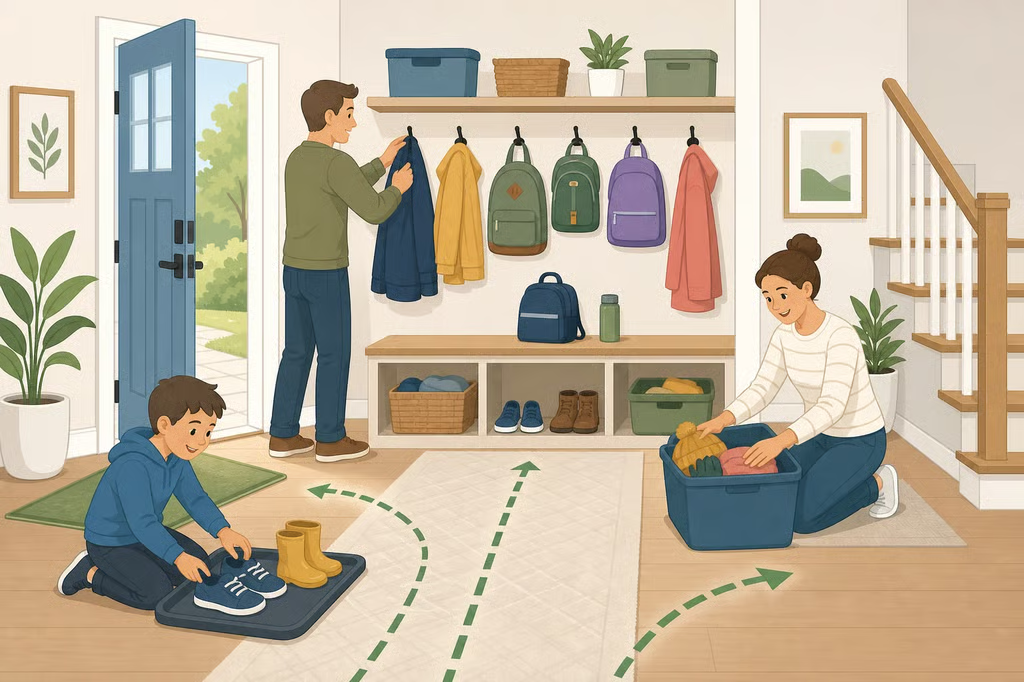
September has a way of making a home feel busier almost overnight. School papers start appearing on counters, jackets and closed-toe shoes work their way back into the entryway, and calendars begin filling up ahead of the holidays.
Instead of responding with a whole-house purge, focus on the places that make everyday routines easier or harder. Clear the walking paths, give frequently carried items a home, and reclaim the surfaces your household actually uses.
These 11 manageable resets work for renters, couples, families with young children, and households with older adults. Each has a clear stopping point, so getting organized does not have to consume an entire weekend.
Start where clutter gets in the way
There is some evidence that the home environment can affect stress. One study analyzed self-guided home tours from 60 spouses in dual-income households and tracked cortisol over the following three weekdays. Women who described their homes with more references to clutter and unfinishedness had flatter daily cortisol patterns and increases in depressed mood over the day. The study found an association, however, not proof that clutter caused those effects.
A separate experiment involving 96 women ages 18 to 25 found higher levels of salivary alpha-amylase, a physiological stress marker, in a deliberately chaotic room than in a neutral one while participants cared for an infant simulator.
You do not need a perfectly tidy home to act on the practical takeaway: start with spaces that interfere with movement and daily routines.
1. Clear the main walking paths
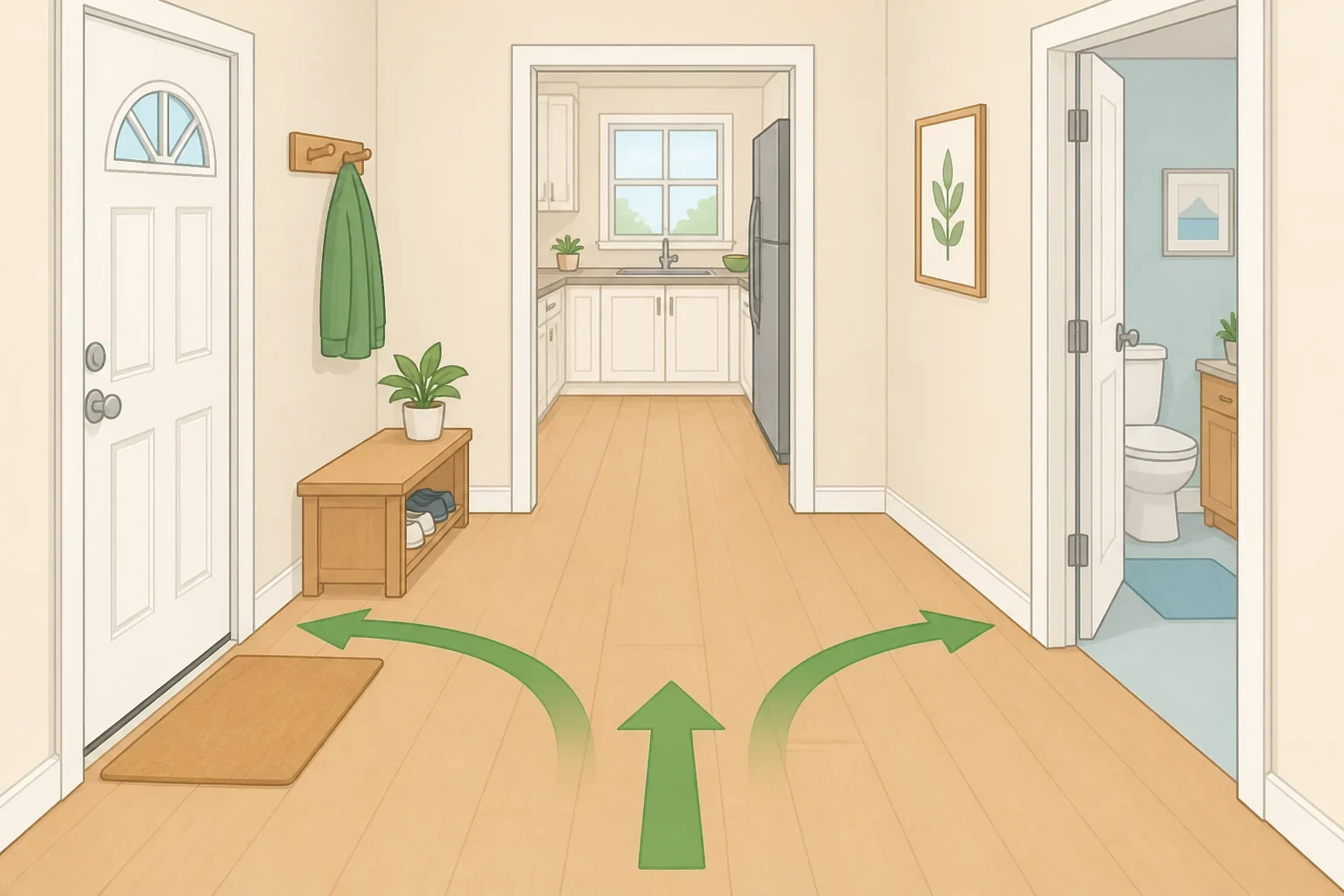
Walk the routes your household uses most, such as from the front door to the kitchen, bathroom, or bedrooms. Move shoes, bags, toys, boxes, cords, and anything else people regularly step around.
In a home with an older adult, pay particular attention to nighttime pathways. The National Institute on Aging recommends keeping walking areas tidy, maintaining good lighting, and moving electrical cords away from pathways to reduce fall hazards.
Renters can simply use an existing basket or temporary holding spot for loose items. Stop once the paths are open rather than turning the job into a full-room sort.
2. Create one drop zone by the door
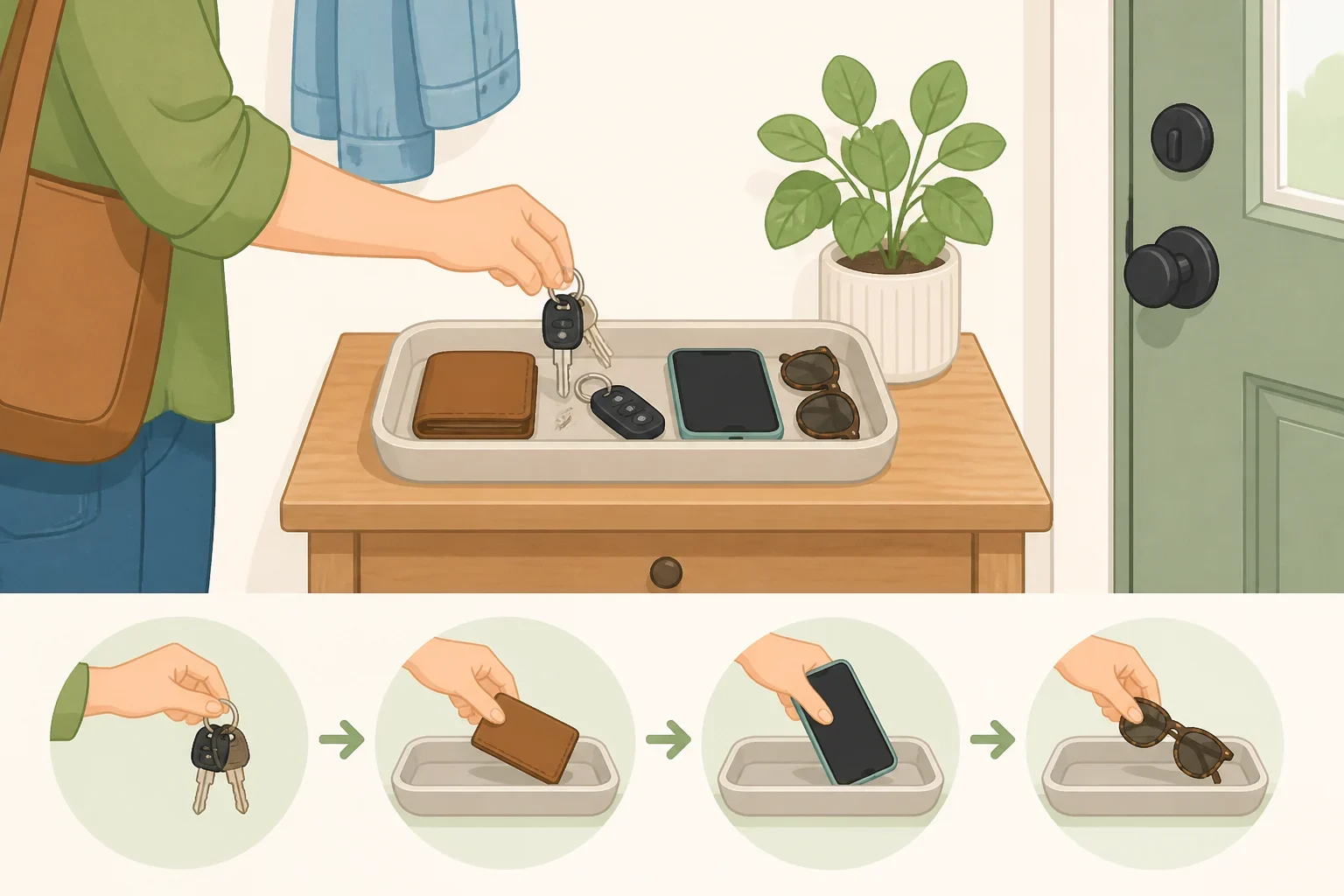
Choose the place where people naturally put things down when they arrive home. Add a small basket, tray, table, or renter-friendly hook system for keys, bags, shoes, mail, or anything that needs to leave with you again.
Keep the setup small at first. For couples sharing the space, make sure both people can reach what they need without shifting someone else's belongings.
Before buying a storage unit or label maker, live with the setup for a few days. If everyone uses it naturally, it is probably in the right place.
3. Close out one stalled project
Pick one unfinished job that keeps occupying physical or mental space: a donation bag, paperwork pile, loose cabinet handle, or small repair.
Give it a specific next action. "Deal with paperwork" can expand indefinitely; "recycle the expired notices and put the two forms that need attention in the tray" has an endpoint.
If a repair needs professional help, note what needs to happen next and move the item out of the way until it can be handled.
4. Try a 15-minute reset
Set a timer and choose one contained area, such as a kitchen drawer, coffee table, or the floor beside the sofa.
Sort what you find into three destinations: put away, recycle or discard, and decide later. Keep the last group small enough that it does not become another permanent pile.
When 15 minutes are up, stop or take a break. The limit keeps one drawer from unexpectedly turning into an entire afternoon of organizing.
Reset the spaces you use every day
Once the main pathways are clear, focus on the surfaces and storage areas that carry the most work. They do not need to look empty; they need enough room to function.
5. Reclaim one heavily used surface
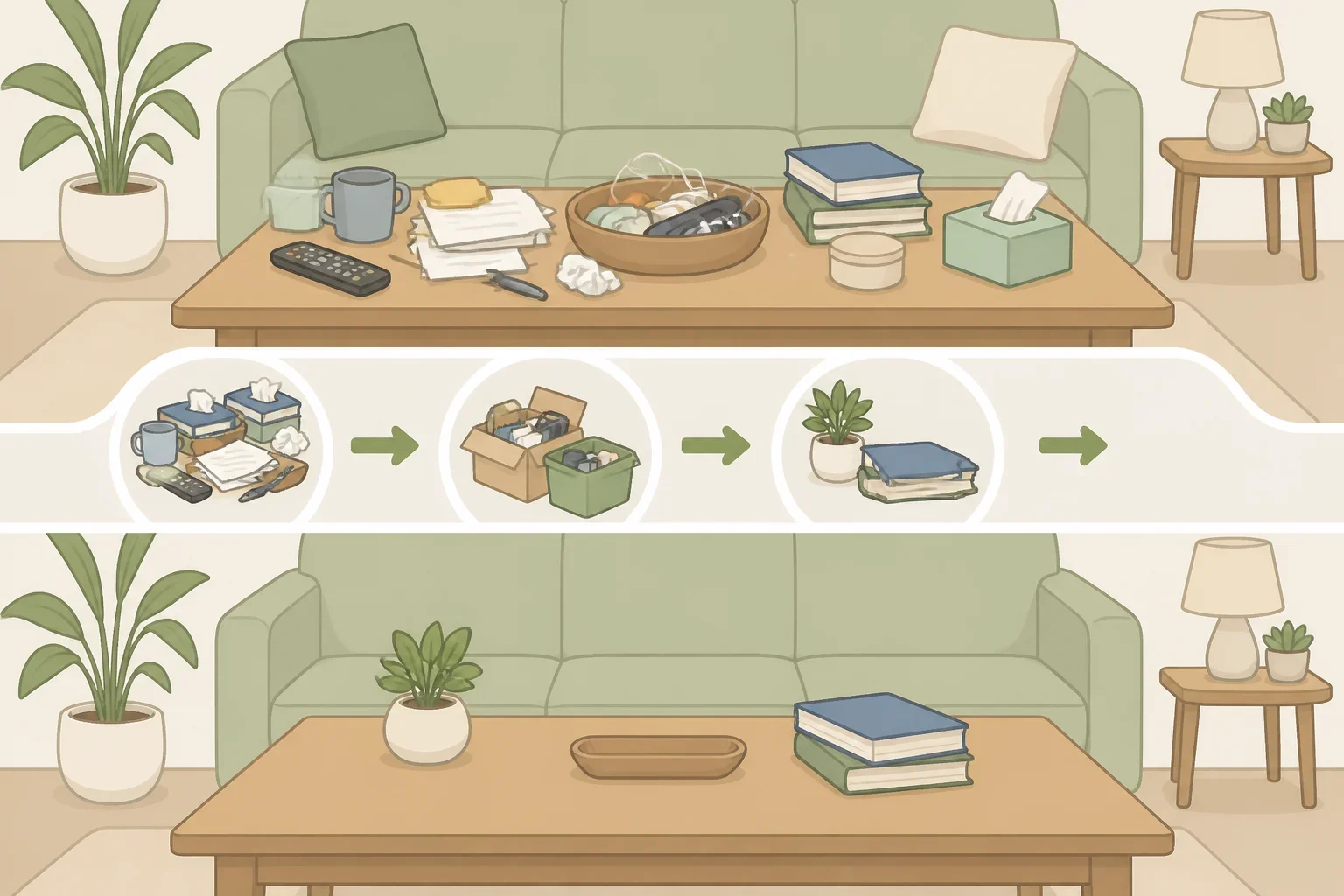
Choose the coffee table, kitchen counter, console, or another surface people use constantly. Remove what does not belong there, then return only what is regularly used or intentionally displayed.
Leave enough open space for what actually happens there, whether that means eating breakfast, doing homework, playing a game, or setting down a cup of coffee.
If the same objects return the next day, consider that useful information. Their permanent home may simply be too inconvenient.
6. Rotate one seasonal storage zone
Choose one closet shelf, coat rack, entryway bin, or other storage area and move warm-weather items you are unlikely to use often this fall out of prime space.
Bring jackets, rain gear, closed-toe shoes, school bags, or other frequently used seasonal items within easier reach. Adjust the mix to your climate rather than unpacking every sweater simply because September has arrived.
If storage is tight, one labeled tote for off-season items may be enough.
7. Give paperwork one landing spot
Set up one tray, folder, or shallow box for mail, receipts, school forms, and documents that need attention.
For couples, decide whether the system will be shared or whether each person needs a section. Families can keep papers awaiting signatures in the same place each time.
Then decide who handles action items or pick a short weekly review time. The immediate goal is not perfect filing; it is keeping papers from migrating across several counters.
8. Clear the meal or homework surface
Choose the dining table, kitchen counter, or another spot used for meals, homework, planning, or bills. Remove objects that belong elsewhere and leave enough room for the next regular activity.
In a small home, clearing one usable section of a counter may be enough. Families can keep homework supplies in a portable basket so they can be moved quickly at mealtime.
Judge the reset by whether the space works, not by whether it looks perfectly styled.
Make the new systems easier to keep
An organization system is only useful if the household can maintain it. Finish with a few small changes designed around what people actually do.
9. Simplify one routine zone
Choose one toy bin, closet shelf, bathroom drawer, or other small area tied to a daily routine. Move rarely used items out of the easiest-to-reach space and put frequently used things within reach.
Do not empty an entire closet or child's room. One shelf or bin is enough. When appropriate, let children help decide where their regularly used belongings should go.
Stop when the important items are easy to find and equally easy to put back.
10. Reset one morning-ready surface
Pick a bathroom counter, dresser, nightstand, or bedside shelf. Remove what does not belong and return only the things regularly needed in the morning or before bed.
A shared bathroom may work better with a small container for each person's everyday products. In a rental or small bedroom, a drawer or portable caddy can do the same job without adding furniture.
If something is used every day but never gets put away, its assigned storage spot may be the problem.
11. Schedule a small weekly reset
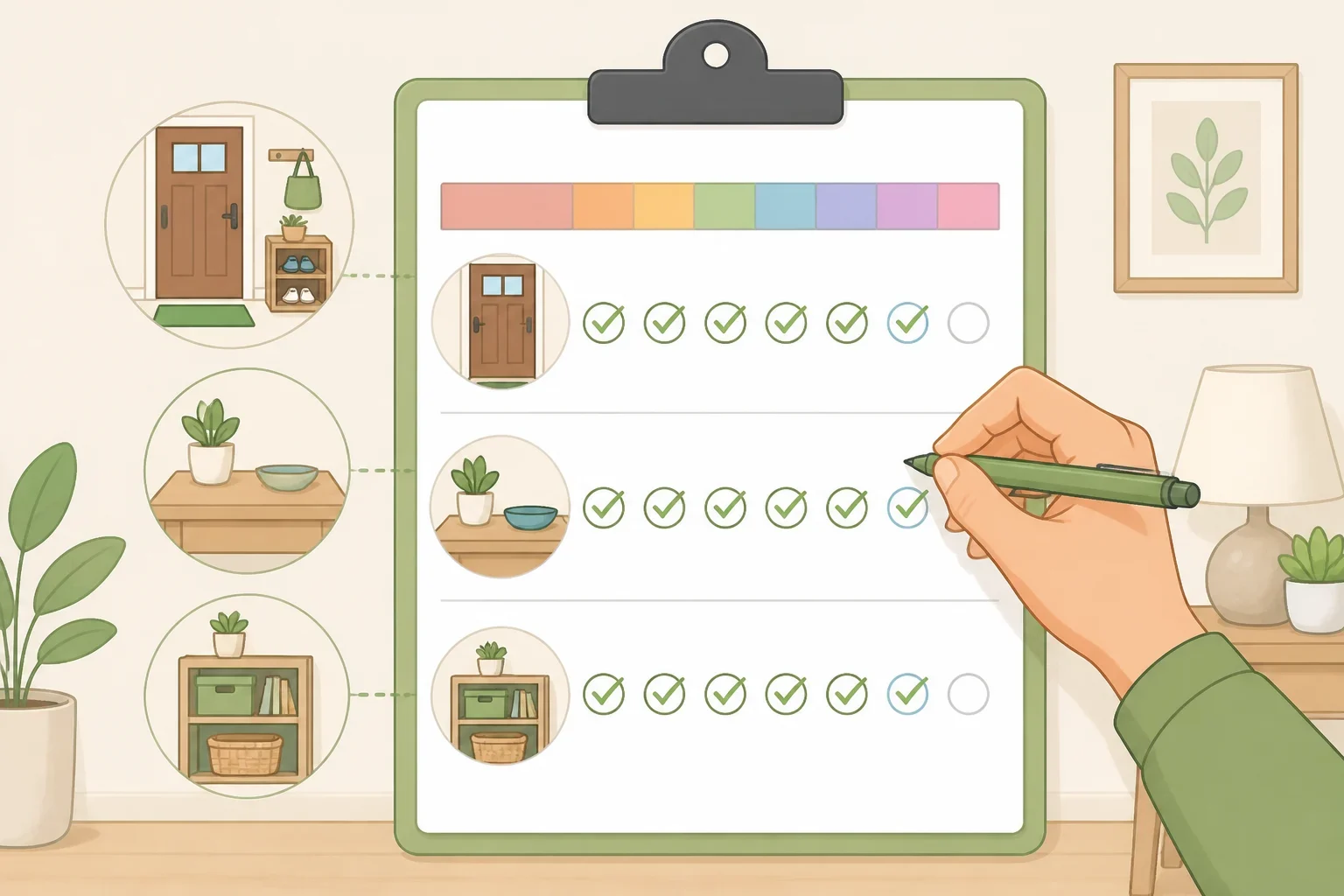
Choose one regular time for a 10- to 15-minute check of the entryway, one shared surface, and one routine zone. Return misplaced items, clear new papers, and reopen walking paths as needed.
The timing can change with the household. A couple might do it before the weekend, while a family might find Sunday evening more practical.
Keep the routine small enough to repeat. Elaborate bins, labels, and bigger organizing projects can wait until the basic system has proved useful.
Give it two weeks
You do not need to complete all 11 resets at once. Start with the walking paths and entryway, then reclaim one frequently used surface. Over the following week, try a couple of 15-minute sessions, rotate one seasonal storage zone, and simplify one routine area.
