
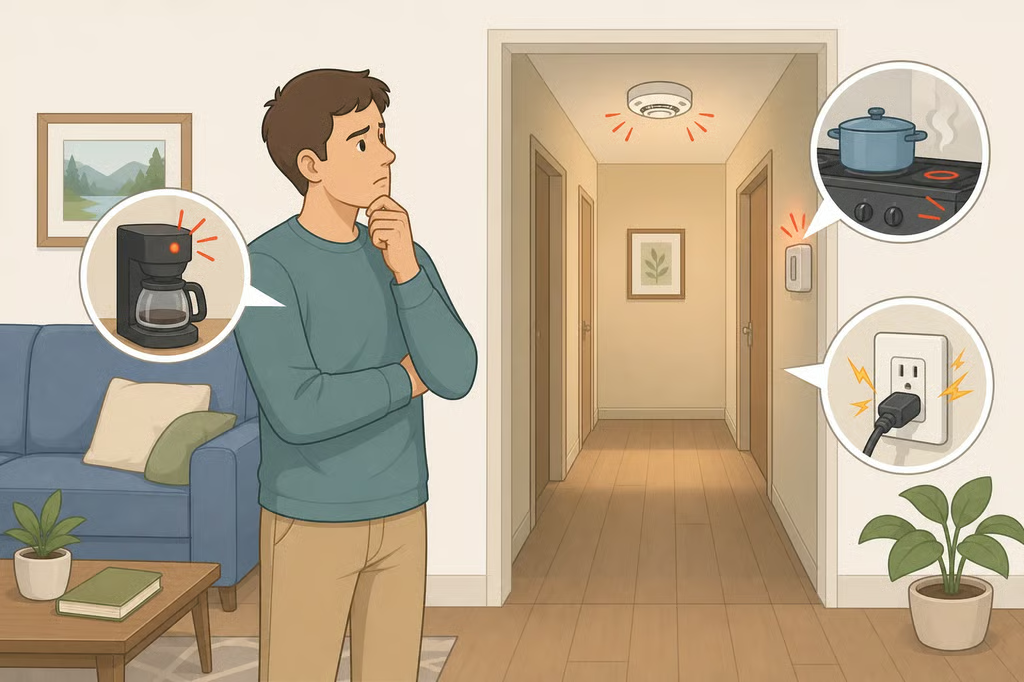
Strange noises in your house: 5 causes and what to do
If a carbon monoxide alarm sounds, leave for fresh air immediately. If a battery is smoking or burning, evacuate, alert others, and call 911. Other strange noises in your house usually call for a calmer approach: notice what was running, what the weather was doing, and whether the sound comes with visible damage.
That trigger is often more useful than the noise itself. Banging after a washing machine stops points in a different direction than rattling during a storm, while scratching overhead deserves a different response than a few harmless pops at sunset. The five sounds below cover the warning signals worth taking seriously, along with what can be checked safely and when to call for help.
1. A carbon monoxide alarm sounding
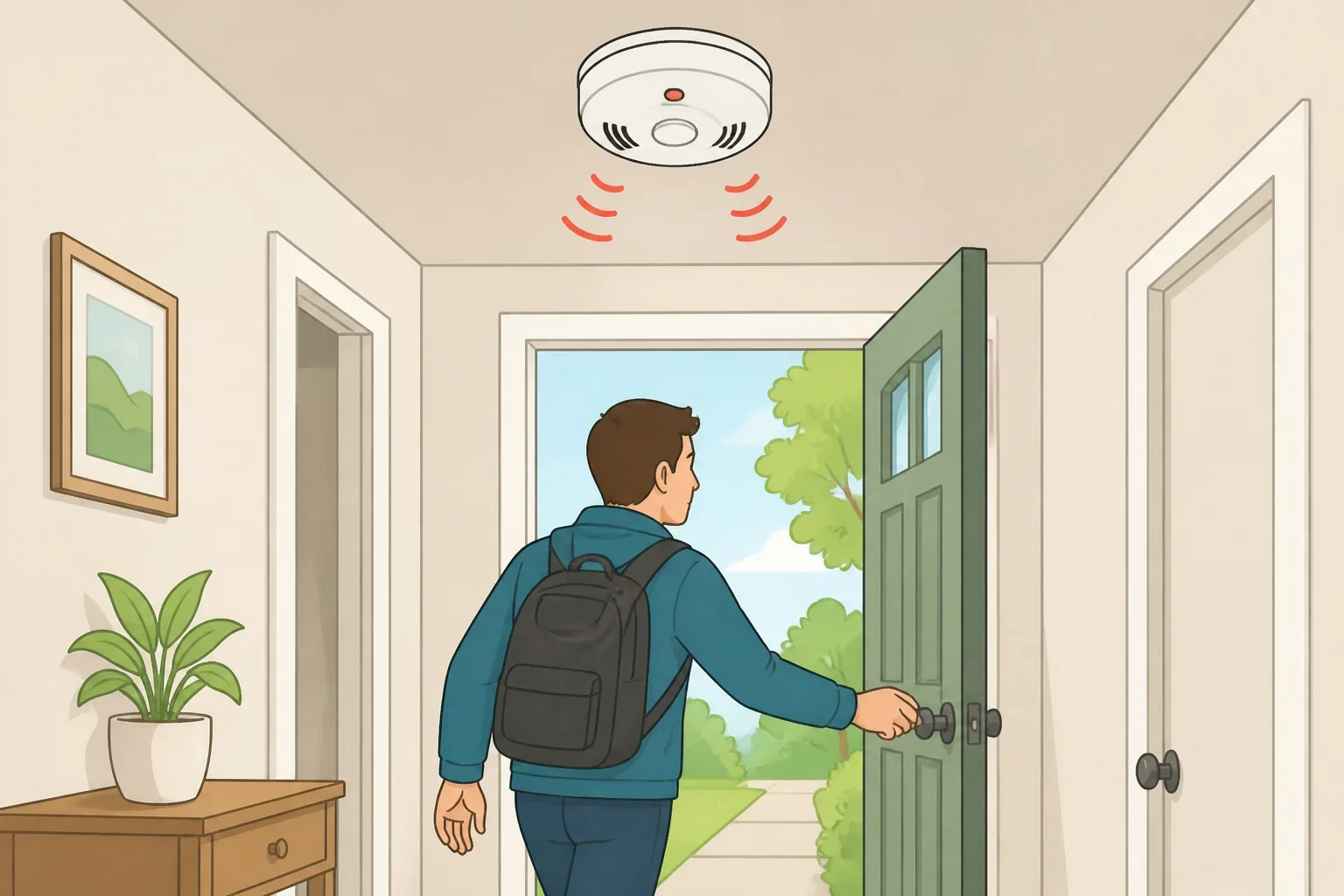
A CO alarm is not a household mystery to investigate. Carbon monoxide is an odorless, colorless, toxic gas. Possible sources include improperly installed, maintained, or ventilated fuel-burning appliances, furnaces, fireplaces, gas stoves, wood stoves, and unvented gas or kerosene heaters, according to the EPA.
Leave the home immediately and get to fresh air. Alert everyone else in the household, and seek medical attention if exposure is suspected. Do not stay inside to search for the source or troubleshoot the alarm first.
Symptoms can include headache, dizziness, nausea, weakness, shortness of breath, confusion, and flu-like symptoms without a fever. The type and severity of the effects can vary with a person’s age, health, length of exposure, and the concentration of carbon monoxide, so the absence of symptoms is not a reason to wait.
The safe check happens before or after an emergency, not during one. The EPA recommends placing CO alarms in a central location on every level of the home’s livable space, including the basement, near sleeping areas, and at least 15 feet from fuel-burning appliances. Test them monthly and follow the manufacturer’s instructions, local laws, and building codes for placement and replacement.
A certified professional should install and annually inspect, clean, and tune fuel-burning appliances, fireplaces, and chimneys or flues. Never run a vehicle inside a garage, even with the garage door open. Carbon monoxide can build to deadly levels in that space.
2. Hissing, crackling, or popping from a battery
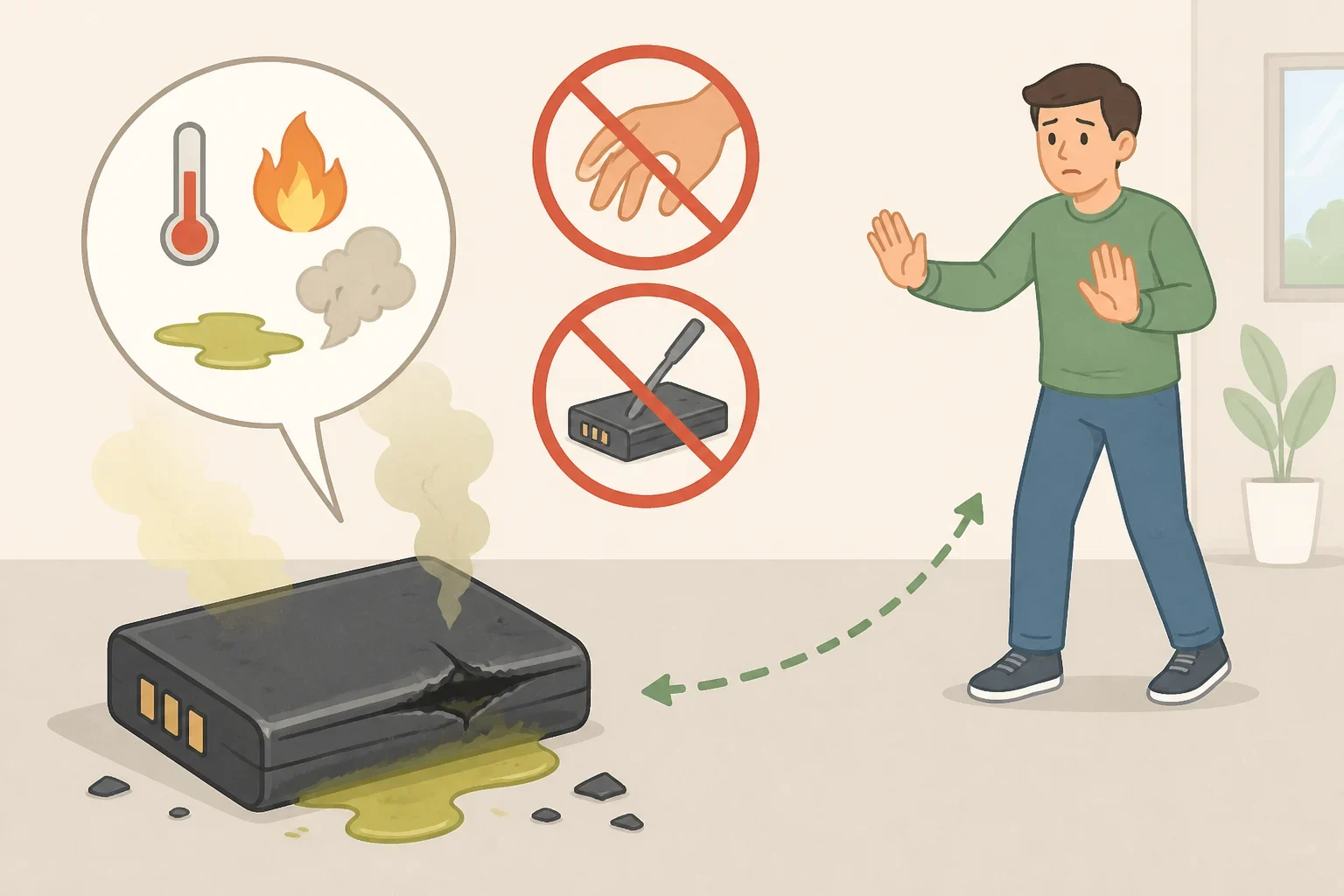
A phone, laptop, electric bike, scooter, toothbrush, or backup battery making an unusual noise deserves attention, especially when the sound comes with leaking, a change in shape or color, smoke, or a sweet electrical burning odor. Those are warning signs listed by ESFI in guidance published two years ago.
Do not continue charging a battery that shows these signs. If it is clearly safe to do so, the battery or device can be moved away from the structure or placed in a fireproof container. Do not put hands near a smoking, actively venting, or visibly burning battery.
If a battery fire starts, evacuate the area, alert others, and call 911. Batteries can explode, and a damaged battery may release toxic gas that is not visible. Avoid going back inside for the device or trying to manage the fire yourself.
A damaged battery also does not belong in household trash, a curbside recycling bin, or a regular waste container. Batteries should go only to approved battery recycling drop-off locations, and damaged, defective, or recalled batteries require special handling. Keep the device out of normal waste while arranging the appropriate drop-off.
The sound may be the first thing noticed, but the combination of sound and physical changes is what should end the experiment. A battery that is simply old is one thing. A battery that is noisy, leaking, misshapen, discolored, smoking, or giving off an electrical odor should be treated as damaged.
3. Banging pipes when water stops
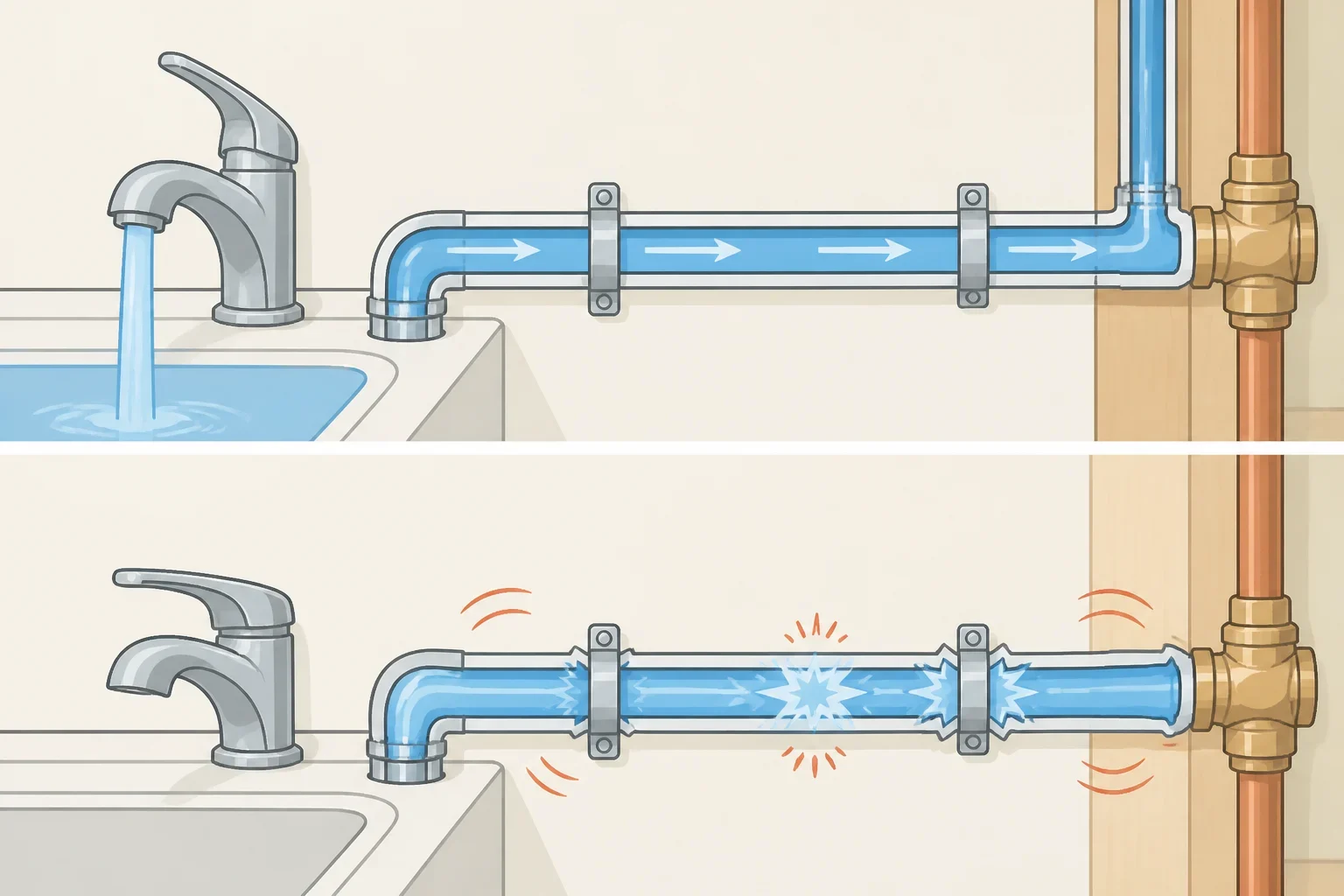
A loud bang that happens when a washing machine, dishwasher, faucet, or other fixture turns water on or off may be water hammer. Automatic valves in washing machines and dishwashers close quickly, stopping the water’s momentum and causing the pipes to shake. Family Handyman described the problem two years ago as loud and intermittent.
Start by recording which fixture was running and whether the bang happens when water starts, stops, or both. Listen from a safe, accessible area, and check whether supply hoses or nearby pipes are visibly striking a cabinet or wall. Do not open walls or dismantle plumbing based on the sound alone.
A water hammer arrestor uses a piston or diaphragm and an air-filled chamber to absorb some of the water’s momentum. It is a possible fix, not a requirement for every home. Aaron Adams, a master plumber quoted by Family Handyman, explains that arrestors are not always necessary when plumbing is properly sized and secured, though they can be a preventive measure in many homes.
Repeated shaking should not be ignored indefinitely. It can loosen connections or wear holes through pipes over time. Adams cautions that “cutting corners to save dollars in plumbing can lead to nightmares for homeowners,” which is a good reason to avoid guessing at a repair that could create a leak behind a wall.
Call a plumber if the shaking is severe, worsening, or accompanied by leaking, dampness, or a change in water pressure. A water hammer arrestor costs $15 to $50 for the part, while professional installation typically runs $250 to $500 and can reach $1,000 when access requires opening and repairing drywall, according to Family Handyman. Those figures vary by location, plumbing layout, and the work involved, so treat them as planning information rather than a promise.
4. Scratching or thudding overhead
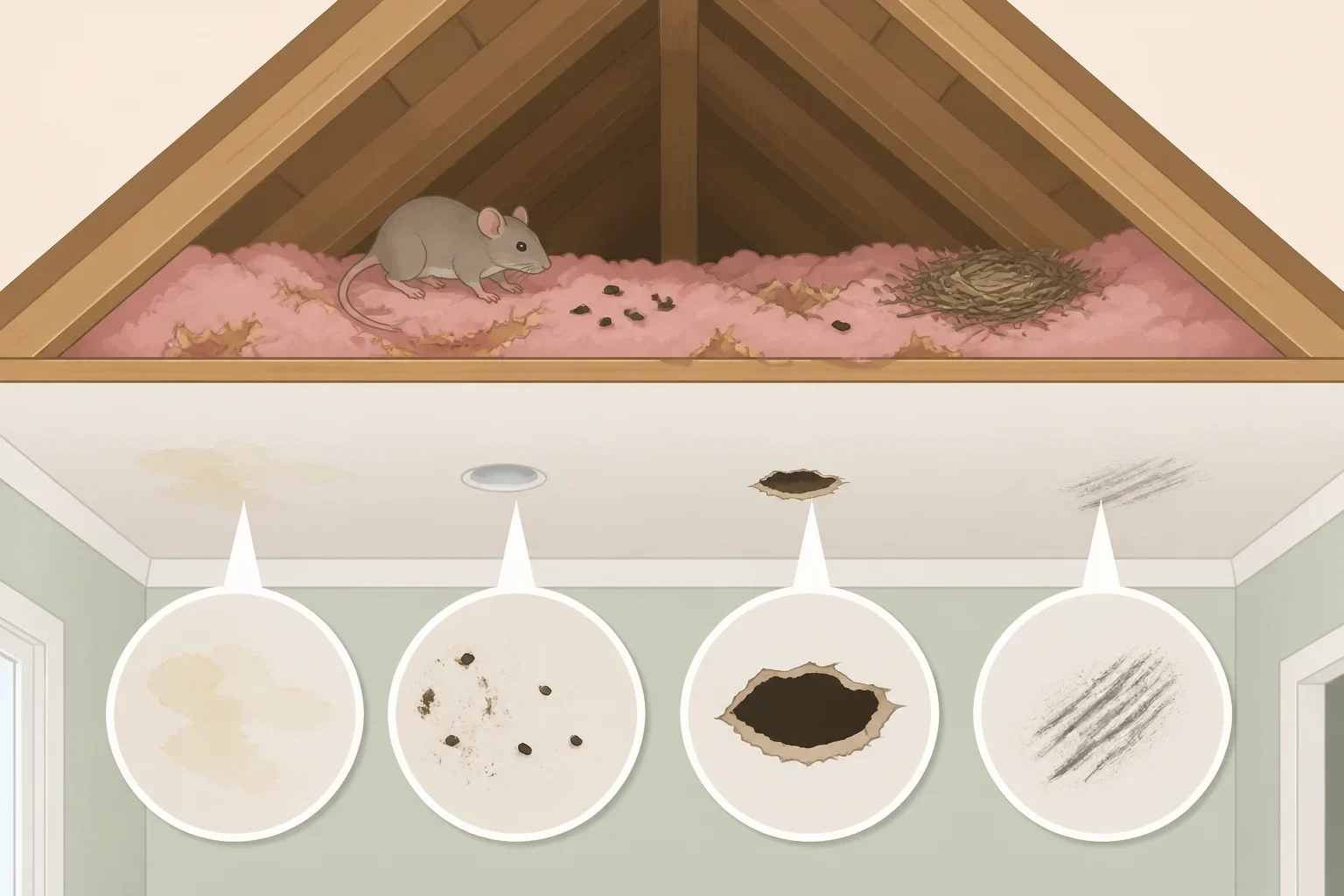
Scratching, scurrying, or a loud, random thud above a ceiling can come from an animal in the attic or ceiling space. Daytime activity is more consistent with squirrels, while nighttime activity is more consistent with raccoons, although timing alone cannot confirm what is there. Angi notes that loud, random thuds may be associated with larger pests.
First, listen for a pattern. A few taps that occur when the HVAC runs, a ceiling fan moves, or ductwork expands are different from irregular scratching and heavy thuds that continue when those systems are off. Branches moving in nearby trees can also create noise, particularly on windy days.
Do not climb into an unsafe attic or reach into a space you cannot see clearly. Do not disturb an animal, nesting area, or unknown droppings. From the living area, look for signs that do not require entering the space, such as ceiling damage, sagging, droppings, or nesting material.
Persistent activity plus any of those signs is a pest-control call, not a wait-and-see project. The timing of the noise can help describe the situation, but it should not be treated as a diagnosis.
If the sound is paired with cracks in the ceiling or walls rather than pest evidence, use a ceiling-repair professional instead. The cause may be minor, but it could also involve the roof or foundation. Angi lists average ceiling repair costs of $438 to $1,720, with the final price depending on the scope and access.
5. Persistent dripping or rattling
Dripping is one of the easiest sounds to misread. A drip heard after a shower or other plumbing use may simply be water draining or pipes expanding. A sound that continues through the day, appears without recent water use, or begins after the air conditioner is turned on may point to a clog or leak.
Track when the sound starts and what happened just before it. Check visible ceilings and walls for water stains, dampness, or sagging, but do not cut into a ceiling to find the source. If the dripping is constant or comes with visible water damage, call a plumber. Angi also recommends calling a plumber when dripping may be connected to an HVAC clog or leak.
Rattling needs the same trigger-based approach. If it appears only during windy weather, the cause may be loose roof fasteners. If it occurs only while the HVAC system runs, ductwork, filters, or air vents may be involved. Angi identifies faulty installation, loose roof fasteners, ductwork, filters, and noisy air vents as possible sources.
From the ground, look for visible damage or something loose around the roofline, vents, or other exterior areas. Do not climb onto the roof to chase a noise. Inside, check accessible air vents and light fixtures for an obvious loose component, but leave electrical panels and wiring alone.
Cracking, creaking, and popping around sunrise, sunset, or a shift in weather are often associated with roof or framing materials expanding and contracting. Those sounds are generally less concerning when they follow that pattern and are not accompanied by cracks, sagging, leaks, or other visible changes.
Use the trigger and visible damage to decide what to do next
Sound alone rarely gives enough information to diagnose a home problem. For a few days, if there is no immediate hazard, write down the time, weather, appliance activity, recent water use, and exact location of a new noise. A short recording can also help a professional understand the pattern.
Keep the boundaries simple:
- Leave immediately for fresh air if a CO alarm sounds. Seek medical attention if exposure is suspected.
- Evacuate and call 911 for a battery fire. Do not handle a damaged battery unless moving it is clearly safe.
- Call a plumber for severe or worsening water hammer, persistent dripping, or any related leak.
- Call pest control for ongoing scratching or random thudding paired with droppings, nesting material, sagging, or visible damage.
- Call a roofer for a new wind-related rattle, especially when it comes with a leak.
- Call a ceiling-repair professional for noise paired with cracks in the ceiling or walls.
The practical rule is straightforward: if a strange sound comes with CO symptoms, smoke, fire, water, sagging, visible damage, or worsening activity, leave the hazard or call a professional. Otherwise, identify the trigger first. That small bit of information can keep a normal house sound from becoming an unnecessary repair, while helping a real problem get the right attention sooner.
