
- How to make your kitchen smell good for guests
- Prepare the kitchen before adding scent
- Clear the surfaces guests will see
- Choose one mild scent, if it suits the guest list
- Use scent methods safely
- Make the countertops ready for serving
- Add lighting only if it is already easy
- Finish with a quick entrance-to-counter check
- Remember the simplest order
How to make your kitchen smell good for guests
To learn how to make your kitchen smell good for guests, start with the odor itself, not the fragrance. Empty the trash, check the sink and dishwasher, clear food from the counters, and wipe the surfaces guests will see. Only then decide whether the room needs added scent.
That order keeps the routine practical. A candle or diffuser cannot fix spoiled food, a damp towel, or a forgotten container of leftovers. The goal is a kitchen that smells clean, gives guests room to set down a plate, and feels ready for company without becoming heavily perfumed.
Prepare the kitchen before adding scent
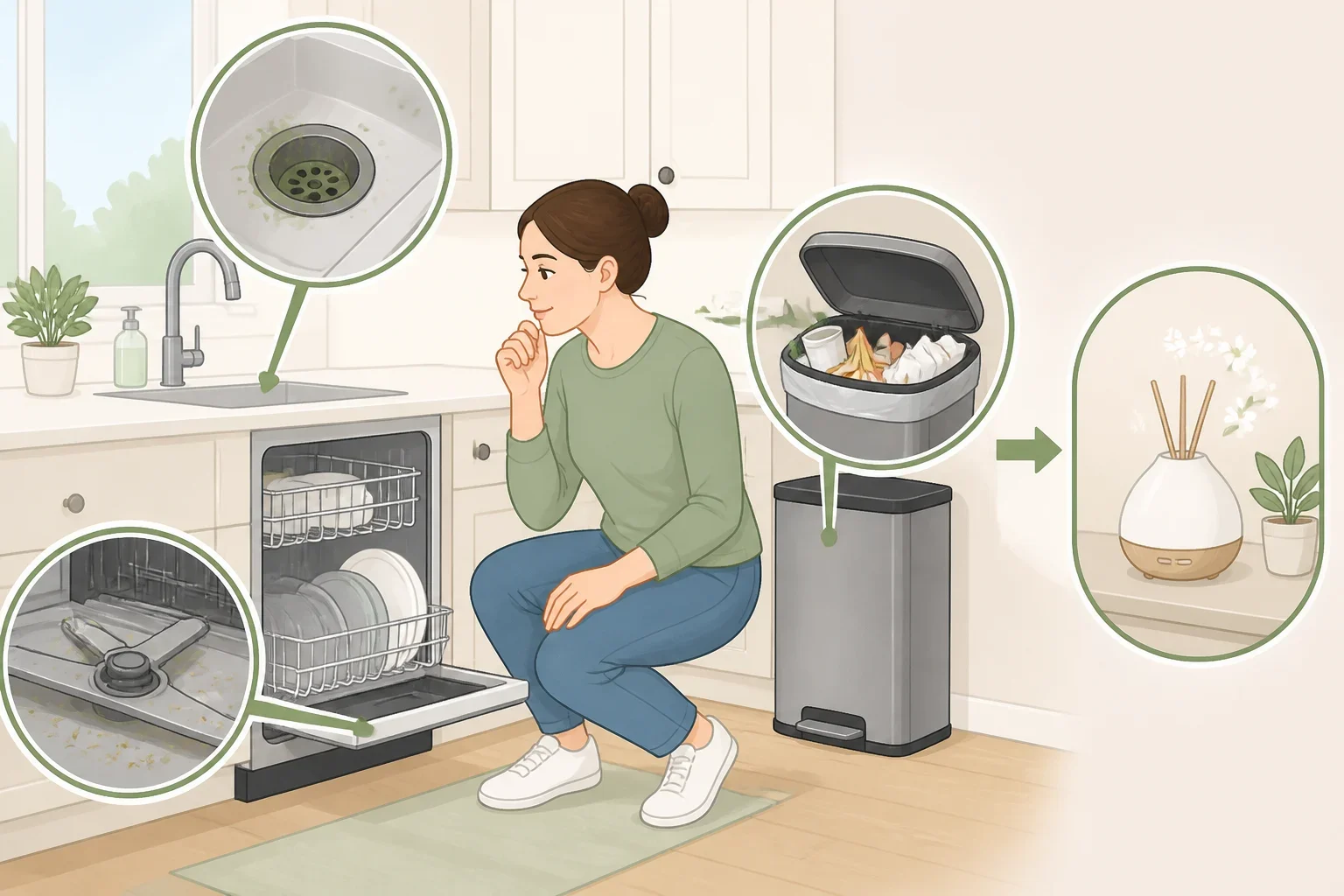
Walk through the kitchen as if you have just arrived. Check the trash can, recycling bin, sink drain, disposal area, dishwasher, damp towels, pet items, and any food left uncovered. A small spill or wet towel can affect the room more than the scent you planned to add.
Empty the trash and replace the liner. If you use a garbage disposal, remove visible debris safely and follow the appliance’s instructions before running it. Wipe the sink and the area around the drain. Check the dishwasher for forgotten dishes, especially if it has been closed since the last load.
Look inside the refrigerator, too. A container of leftovers or a leaking package may be the source of an odor that seems to fill the whole kitchen. Check the stovetop, cutting board, cabinet handles, and counter edges for food residue or grease.
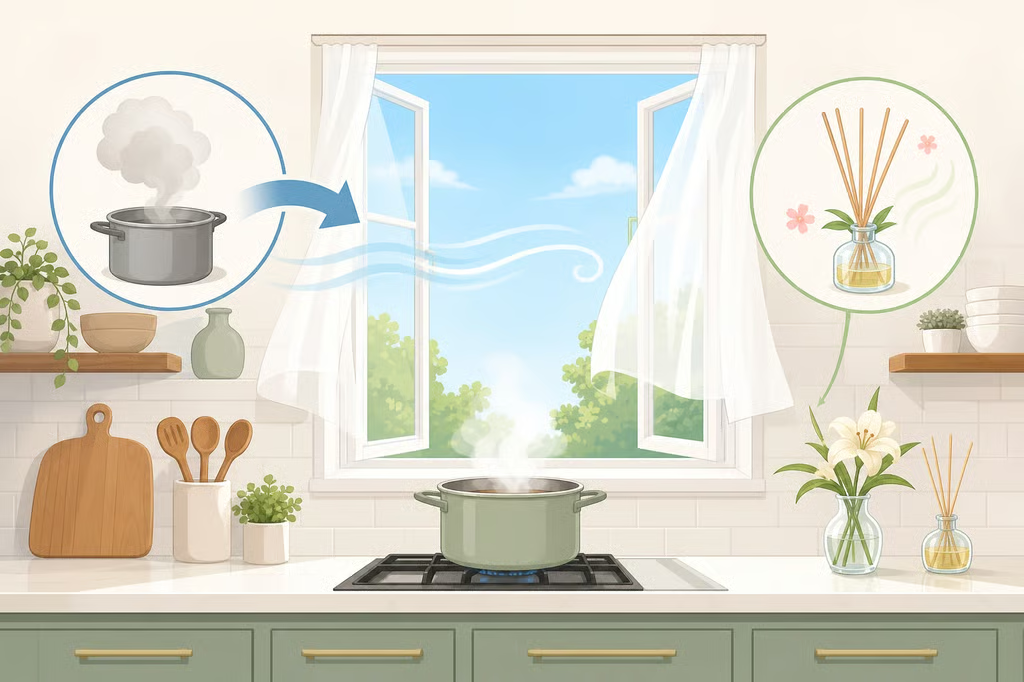
If the room feels humid, smoky, or stale, open a window or run the exhaust fan if practical. Moving air may be all the kitchen needs. It also gives any added scent a cleaner starting point.
Do not use fragrance to cover spoiled food, a drain problem, mold, or a persistent gas-like or chemical smell. Stop and investigate those issues instead. For a gas-like or chemical odor, leave the area and seek appropriate help rather than lighting a candle or starting a simmering pot.
Smell can also connect with memory and emotion. The reporting available on home scent psychology describes personally meaningful smells as more closely tied to emotional responses than generic pleasant fragrances, but that does not mean a particular scent will calm every guest. Familiar and gentle is still a sensible hosting choice.
Clear the surfaces guests will see
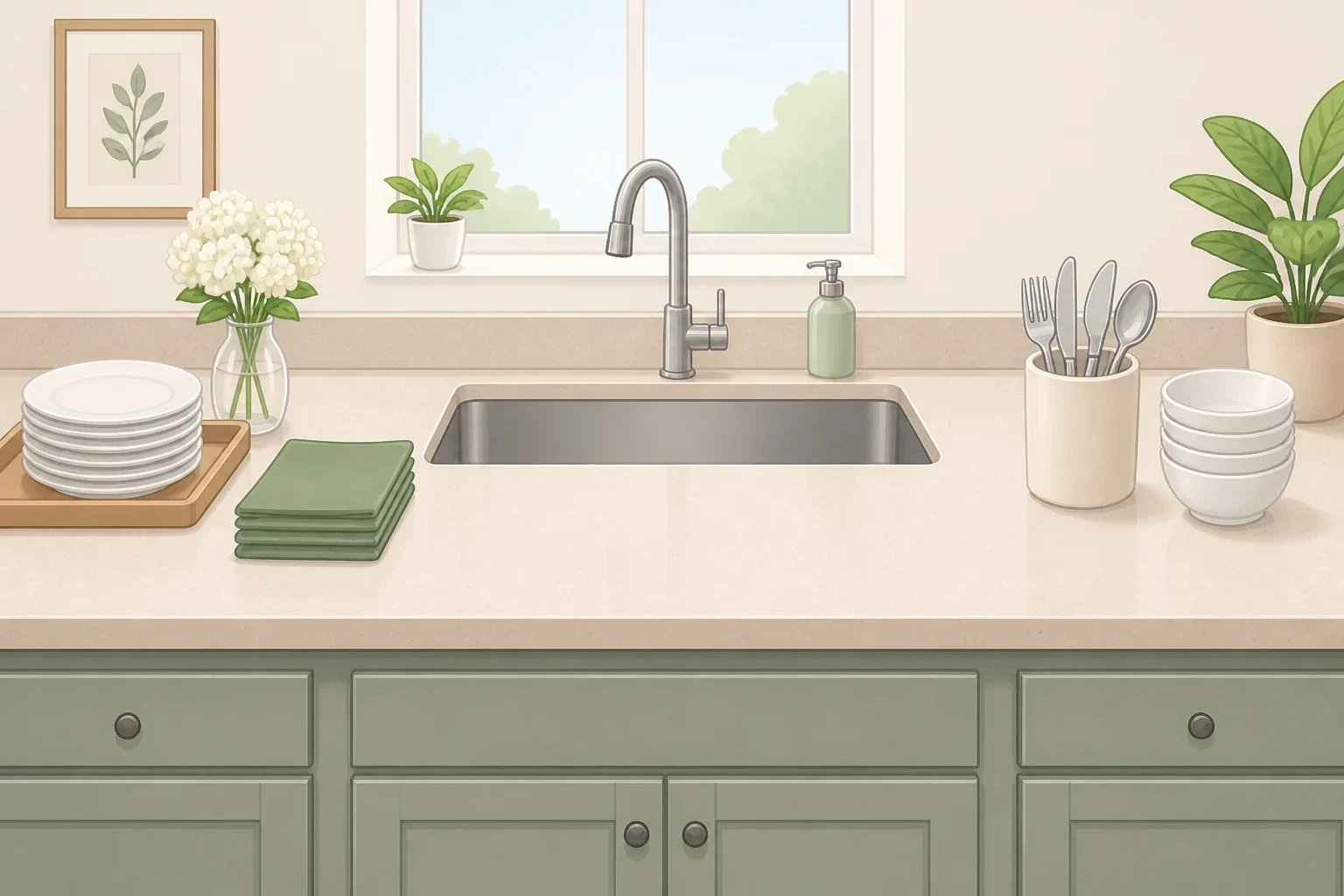
Once odor sources are handled, turn to the countertops. A lived-in kitchen does not need to look empty, but it should look clean enough to prepare or serve food comfortably.
Work through the visible surfaces in this order:
- Put dirty dishes in the dishwasher or wash them.
- Clear away mail, delivery packaging, grocery bags, and appliances that are not being used.
- Remove crumbs, food scraps, and anything sticky.
- Wipe grease from the stovetop and nearby counter.
- Clean the area where drinks, appetizers, or serving dishes will go.
- Leave out only useful or intentional items, such as a fruit bowl or cutting board.
Pay attention to the counter edges and the area around the sink. These spots collect moisture and residue, and they are easy to skip when the rest of the room is getting attention.
If guests will help themselves to food, create a clear landing spot for plates, napkins, and utensils. Do not push everything into one crowded corner. A little open space makes the kitchen easier to use while people are moving around it.
There is also a reason to avoid presenting a visibly grimy surface as a minor detail. Research indexed by PubMed found that people perceived as having disgusting habits were judged more harshly in several social evaluations. The study did not test kitchens, countertops, or hosting, so it cannot prove how a guest will respond to a crumb-covered counter. It does offer context for why visible signs of mess can influence snap judgments.
A quick wipe removes surface residue and improves the appearance. It is not automatically the same as sanitizing or disinfecting. Unless a product is labeled and used according to its instructions for that purpose, describe the result as clean and ready for serving.
Choose one mild scent, if it suits the guest list
After cleaning, smell the kitchen again. It may already smell fresh enough. If it does, skip the added fragrance.
If the room needs a little atmosphere, choose one method rather than combining several competing scents. Options include:
- A pot with citrus peels or cinnamon
- A lightly scented candle
- A diffuser used according to its instructions
- Fresh baking, if there is enough time to do it without creating extra mess
The available research does not establish one option as the best kitchen scent for guests. Treat the choice as personal preference, not a guaranteed hospitality formula.
Familiar scents may become associated with a place or memory, but the supporting reporting discusses scent and memory broadly rather than testing a specific kitchen setup. Keep the claim modest. A consistent scent may make a home feel recognizable to regular visitors, but it cannot ensure that everyone finds the fragrance pleasant.
Start the scent shortly before guests arrive, then check its strength from the hallway or another room. It should be easy to miss rather than the first thing announced at the door. If the fragrance is obvious before anyone reaches the kitchen, reduce it or turn it off.
Heavy fragrance can read as an attempt to cover something up. Subtle fragrance gives the room a softer backdrop. That is a practical reason to err on the lighter side, particularly when the odor source has already been removed.
Fresh baking can make a kitchen feel inviting, but it is not a shortcut if it creates a rushed project. Consider the time needed to bake, cool, decorate, and clean up. Check the guest list for relevant food allergies before choosing baked goods as part of the welcome.
Use scent methods safely
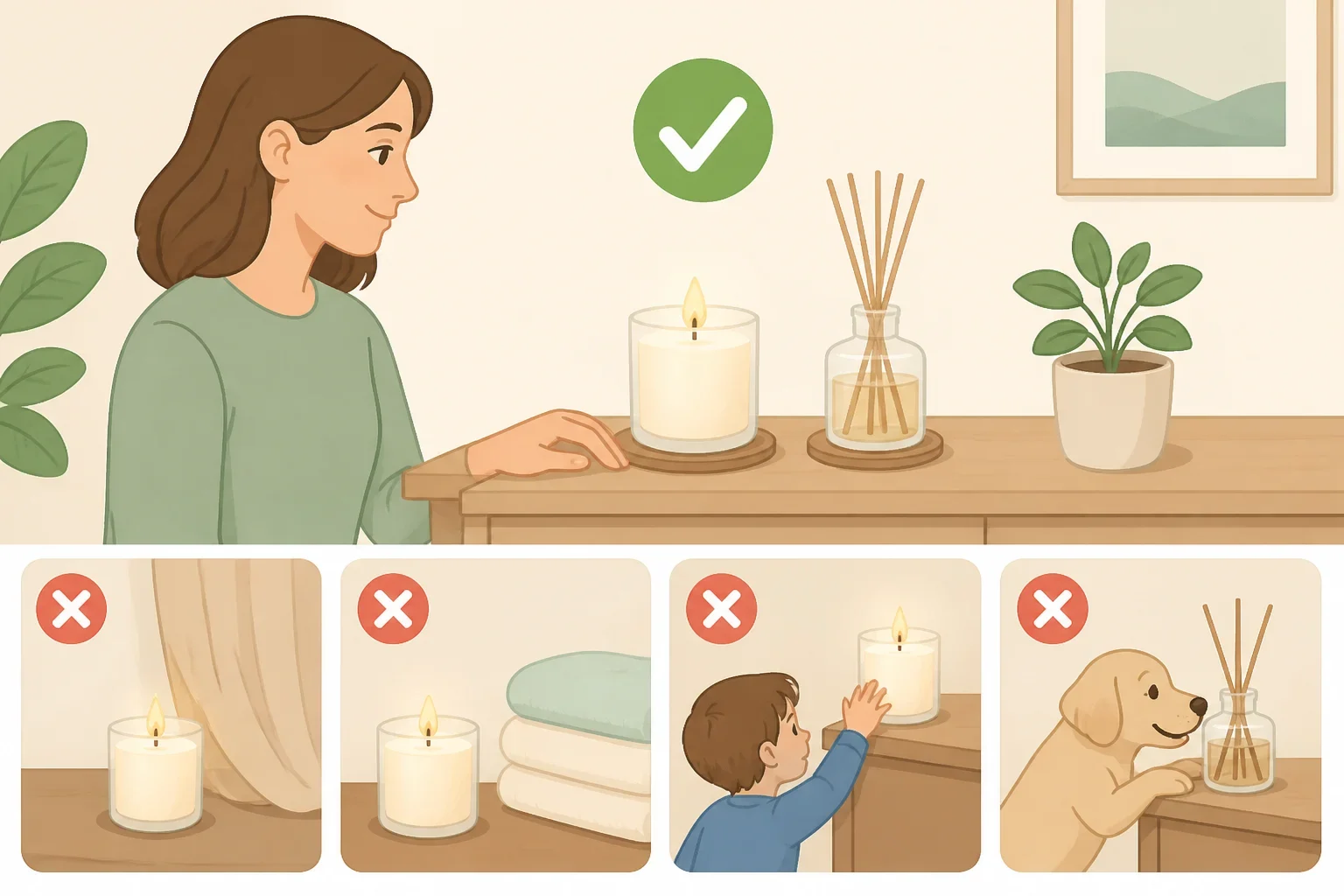
Scent methods are not interchangeable when it comes to supervision.
Never leave a simmering pot unattended. Keep the liquid from boiling dry, turn off the heat before leaving the kitchen, and move the pot away from children and pets. A simmering pot is a cooking task, not a set-and-forget room freshener.
Burn candles only while an adult is present and alert. Keep them away from towels, paper, curtains, cabinets, children, and pets. Do not place a candle beside napkins or under a low shelf simply because the fragrance seems strongest there. Extinguish it before leaving the room if no one will be watching it.
Use diffusers according to the product’s instructions, and put them where they cannot be knocked over. If a guest has said they avoid scented products, leave the diffuser off. Added fragrance is optional. Odor removal and ventilation are enough.
Pay attention to the room once guests arrive. If anyone coughs, feels uncomfortable, or comments that the air is too strong, turn off the fragrance and ventilate. A welcoming kitchen should not require guests to tolerate an avoidable scent.
Make the countertops ready for serving
Once the room smells clean and the surfaces are clear, decide what needs to remain within reach. Keep serving utensils, plates, napkins, and drinks accessible without crowding the main work area.
Put away cleaning products, dish brushes, and anything that makes the room feel like a task is still underway. Hang up damp towels or replace them with dry ones. Wipe the handles and the area around the sink, since these are the places guests may touch without thinking about it.
Leave a few signs of normal kitchen life if they are clean and useful. A fruit bowl, cutting board, or serving tray can make the space feel prepared without making it look staged. The aim is not to hide evidence that food was made. It is to make the room comfortable to use.
If the kitchen is small, prioritize the route guests will take and the places they will touch. Clear the doorway, the counter where food will land, and the area around the sink before worrying about a less visible corner.
Add lighting only if it is already easy
Lighting is optional and should not displace odor removal or surface cleaning.
If the kitchen feels harsh at night, switch off an overly bright overhead light and use an existing lamp or under-cabinet light if available. Justin Miller of Showplace HQ described softer LED lighting and under-cabinet strips to The Kitchn, linked here only as a source in the available research data: The Kitchn. His comments concern atmosphere and design experience, not a controlled test of dinner guests, so keep the adjustment simple.
There is no need to buy new fixtures for a single gathering. A reversible change, such as using an existing lower light, is more sensible for a rental or a kitchen with finishes that require specific care.
Finish with a quick entrance-to-counter check
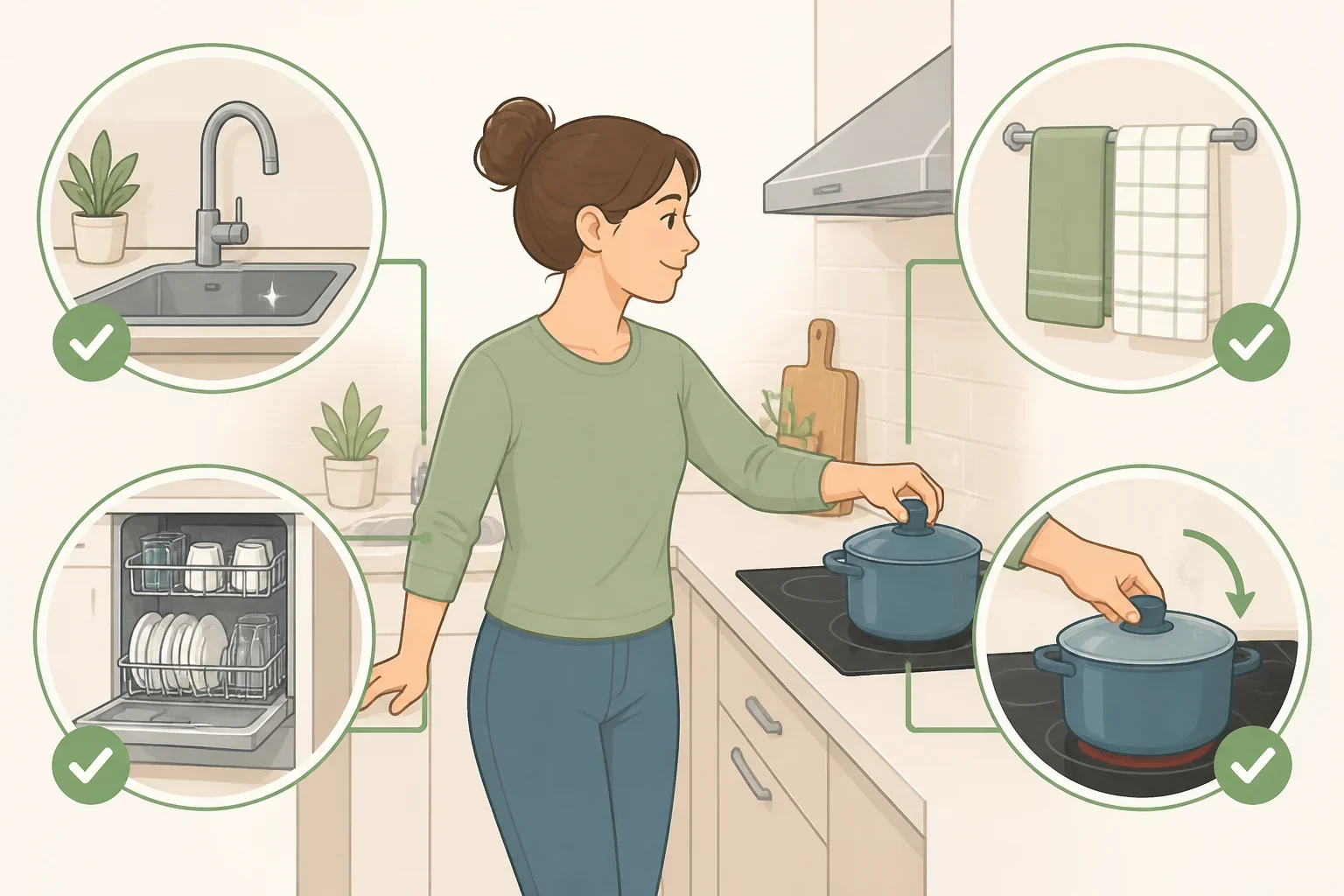
Right before guests arrive, look at the kitchen from the entrance. Details that disappear while cleaning are easier to spot from the doorway.
Check the following:
- The trash and recycling
- The sink and dishwasher
- Damp towels
- Cleaning products left on the counter
- Handles and the main serving area
- Space for bags, drinks, plates, or coats
- The strength of any added scent
- The placement and supervision of a candle
- The simmering pot, which should be turned off when it has done its job
Do not begin a major cleaning project at this stage. Guests are not inspecting the inside of every cabinet. Focus on what they will see, touch, smell, and use.
If a strong odor remains after the trash, sink, dishwasher, towels, food, and refrigerator have been checked, do not keep adding fragrance. A persistent smell deserves a closer look rather than a stronger cover.
Remember the simplest order
For the next gathering, follow this sequence:
- Remove the source of the odor.
- Ventilate if the room is stale, smoky, or humid.
- Clear and wipe the visible countertops.
- Make space for serving and setting things down.
- Add a mild scent only if it suits the guests.
- Supervise candles and simmering pots.
- Turn off anything unnecessary before greeting people.
The most welcoming kitchen is not the one with the strongest fragrance. It is the one that smells clean, gives guests somewhere to set a plate, and does not ask anyone to tolerate an avoidable scent. If fragrance sensitivity is a concern, stop after odor removal, ventilation, and a clear counter. That is enough.
