

How to Protect Your Money From a Crash: Emergency, Diversify
If you are wondering how to protect your money from a stock market crash, start with your household plan, not a prediction about what the market might do next. The useful questions are practical: When will you need this money? How much cash could cover an unexpected bill? Is your portfolio spread across investments, or does one holding carry too much weight?
This five-step plan helps organize those decisions before a downturn puts pressure on the budget. It adapts guidance from regulatory and investor-education sources, including FINRA and Investor.gov. Market fluctuations are outside an investor’s control, but goals, cash reserves, diversification, account choices, and investing habits are all worth reviewing. FINRA includes clarifying goals, diversifying assets, focusing on the future, understanding changing interest rates, and protecting your money in its guidance for turbulent markets. This article focuses on the household actions you can take, rather than trying to forecast interest rates or the next market move.
1. Write down each goal and its date
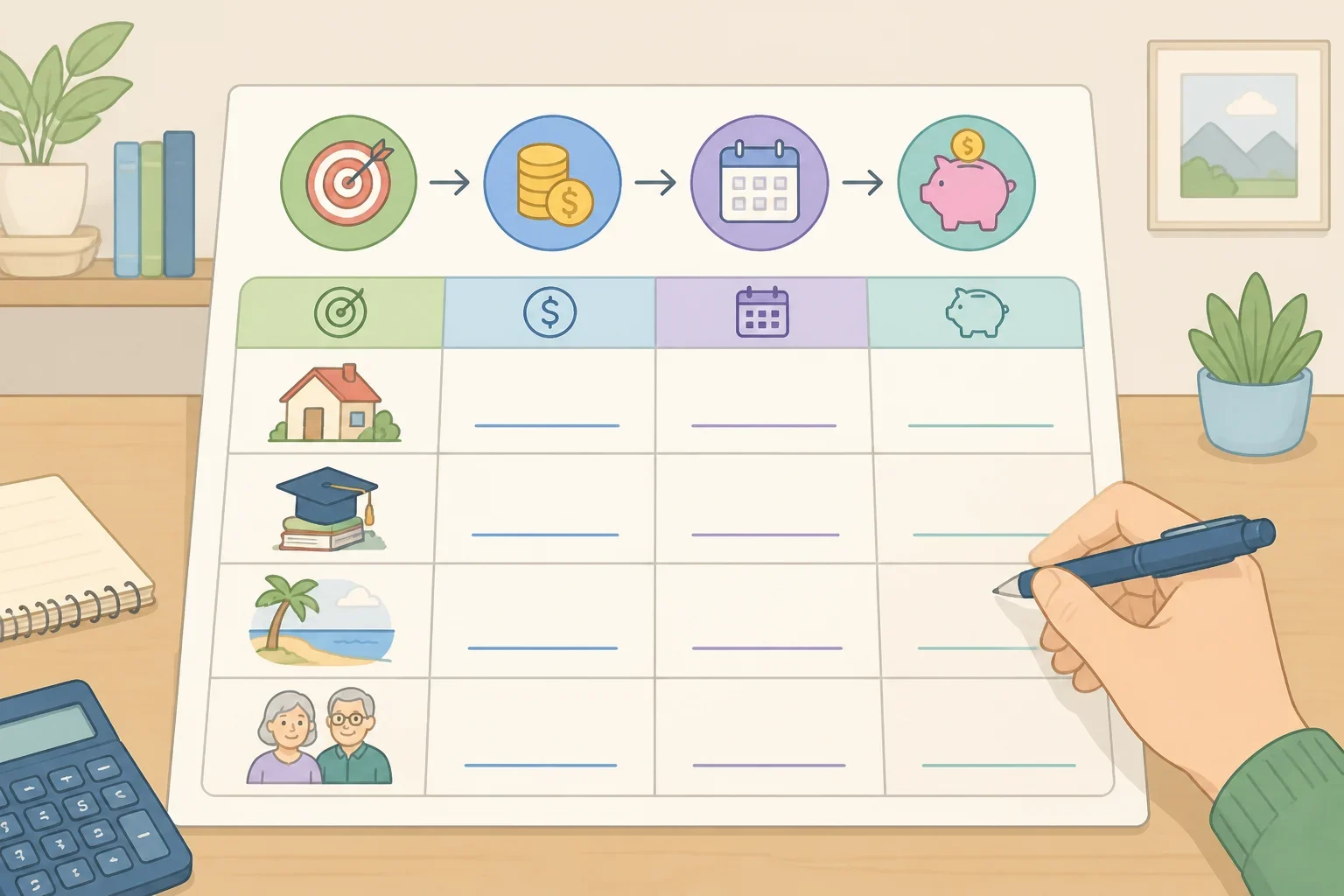
Before moving money, make a simple inventory of what each account is meant to do. Write down the goal, the amount you expect to need, and the date or life event connected to it. “Retirement” is a starting point, but “retirement contributions for a future retirement date” is more useful than a label with no timeline. Do the same for a home purchase, tuition, a wedding, a vehicle, or another planned expense.
Keep known near-term spending separate from emergency savings. A down payment or tuition bill may be an important planned expense, but it is not the same as an unexpected car repair or job loss. The distinction matters because money needed soon may not be suited to a volatile investment, while money intended for a distant goal may have more time to remain invested. Time horizon alone does not settle the right allocation. Risk tolerance, income stability, the goal itself, the account type, and your ability to tolerate losses belong in the decision too.
FINRA recommends clarifying financial goals and focusing on the future when markets become turbulent. Its newer-investor guidance also says to stay focused on your goals, do your research, and remain skeptical of “hot tips” and investment fads (FINRA). Those ideas become easier to follow when the goals are written down before the headlines start competing for your attention.
What should be finished after this step: a list showing what each pool of money is for, when it may be needed, and whether a change in your goal, income, or comfort with losses requires a conversation with a qualified financial professional.
2. Set an emergency-fund target
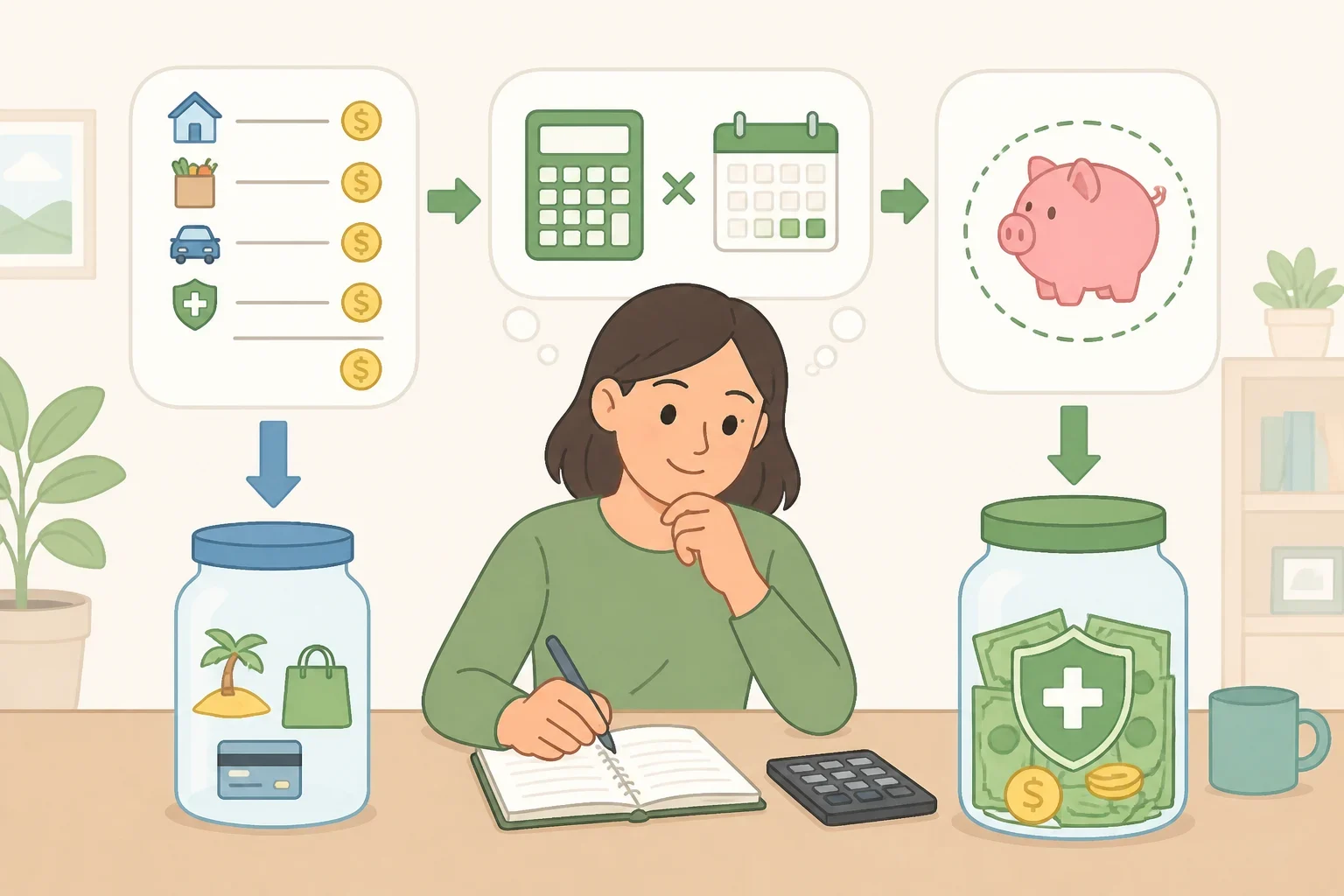
Create a cash reserve that is separate from investments. Investor.gov describes emergency savings as “rainy-day money” kept at a bank or credit union for unexpected costs such as a car repair, a cracked phone screen, or a family emergency. Its investor-resilience guidance recommends a savings goal of three to six months of living expenses (Investor.gov).
Use your household budget to calculate the target. Include the expenses that keep the home running, such as housing, utilities, food, transportation, insurance, and required debt payments. If the target feels too large to build at once, choose an amount that can be started now, then schedule automatic transfers from each paycheck. Investor.gov also suggests directing one-time money, such as a tax refund or gift, toward savings.
Do not count an investment account as the emergency fund simply because it can be sold. Its value may be lower when the cash is needed, and selling can disrupt the plan for the goal attached to it. A cash buffer gives the household another option when an unexpected expense arrives, rather than requiring an immediate decision about investments.
What should be finished after this step: a written emergency-fund number, the current amount saved, and an automatic contribution or other plan for closing the gap. The three-to-six-month range is a guideline, not a personal guarantee that every household needs the same amount. Income stability, dependents, insurance, debt, and other circumstances can change the right target.
3. Check your portfolio for concentration
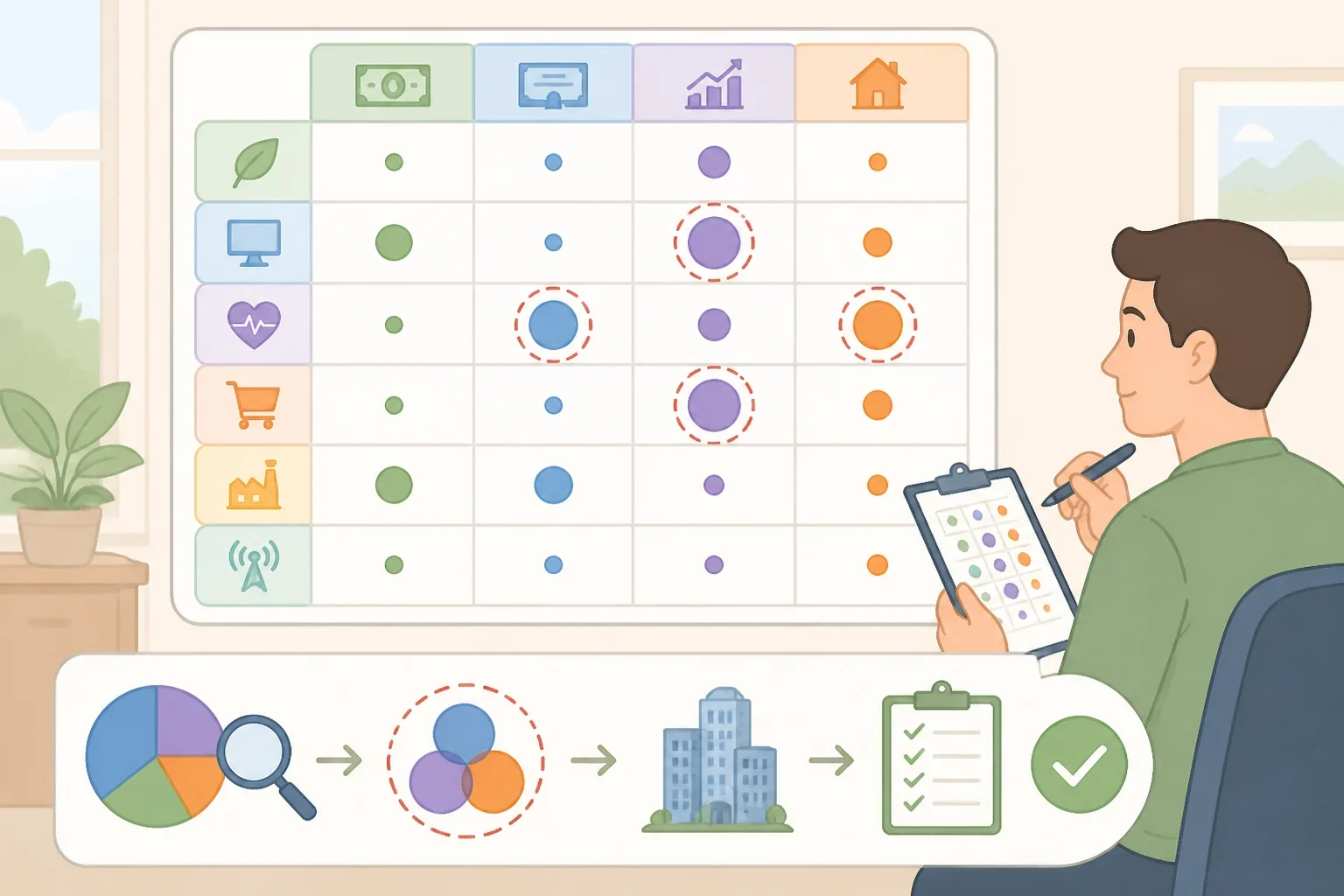
Review your investments at two levels. First, look across asset classes, such as stocks, bonds, and cash. Then look within those categories at sectors, company sizes, individual securities, and the holdings inside any funds. FINRA defines diversification as spreading investments across different asset classes and within those asset classes. Because asset classes generally do not move in lockstep, diversification can help reduce the effect of a poorly performing security or sector and may smooth some overall portfolio volatility (FINRA).
Make a list of your largest positions and repeated exposures. For example, several accounts may appear diversified because they contain different funds, but those funds may hold many of the same companies or focus on the same sector. Check the fund descriptions and account statements rather than relying only on the fund name. The goal is to understand what you actually own.
Mutual funds and exchange-traded funds may make diversification easier for some investors than selecting individual stocks or bonds. That does not make every fund safe, and diversification cannot eliminate investment risk. Investor.gov recommends diversification both between asset categories and within them, while also cautioning investors to consider carefully how much, if any, of a portfolio belongs in speculative investments such as crypto assets (Investor.gov).
Pay special attention to products that magnify exposure to one security. Investor.gov says used or inverse single-stock ETFs can be more volatile, do not provide the benefits of diversification, and can be riskier than holding the underlying stock or a traditional ETF. That is a different risk profile from simply holding a diversified investment.
What should be finished after this step: a short concentration checklist identifying your biggest holdings, repeated sector exposure, speculative positions, and any investment you do not understand. If the review reveals a complicated tax or account issue, pause before selling and seek qualified advice.
4. Automate contributions and set a rebalancing rule
Confirm that regular contributions are still going to the accounts and investments chosen for your goals. Automatic contributions help remove the pressure of deciding when to buy and can reduce the temptation to time the market. FINRA refers to this approach as dollar-cost averaging and notes that automatic contributions may help smooth the effect of price fluctuations, without promising better returns (FINRA).
Next, decide how the portfolio will be reviewed. Market changes can shift the balance of a portfolio over time, so rebalancing can bring investments back in line with the intended goals and time horizon. A useful review asks whether the current mix still matches the plan, rather than asking whether the market feels comfortable today.
Rebalancing does not mean making a dramatic move every time prices change. It means comparing the current allocation with the allocation chosen for the goal, then considering whether a change is needed. Contributions or withdrawals may also be part of the adjustment. The right frequency and method depend on the account, taxes, costs, and personal circumstances, so the account’s rules deserve a check before placing trades.
Check account taxes and fees before changing investments
Tax treatment can affect where contributions belong, but it should not be treated as a reason to choose an investment without understanding the account. Traditional 401(k)s and IRAs generally postpone taxes until money is withdrawn. Roth IRAs can offer tax-free withdrawals when the relevant rules are followed. 529 plans and HSAs have tax benefits for qualified education or medical expenses, with restrictions that differ by account type (FINRA).
Read the fee information before opening an account or changing investments. Investment products and services can carry transaction costs, advisory fees, and ongoing expenses. Investor.gov notes that fees may look small but can have a major effect on a portfolio over time, so compare what you will pay and what you receive for that cost (Investor.gov).
What should be finished after this step: automatic contributions that match the written plan, a personal reminder to review the allocation, and a fee and tax check before making changes.
5. Avoid panic trades, use, and urgent pitches

A market decline does not automatically mean every holding should be sold. Selling may be reasonable when a goal, cash need, risk tolerance, income situation, or investment plan has genuinely changed. Selling solely because a headline is frightening can turn a long-term strategy into a rushed decision. Return to the goal-and-date inventory from Step 1, then ask whether the reason for the trade is a durable change in your circumstances or a reaction to the day’s news.
Avoid borrowing to increase investment exposure. Investor.gov warns that margin can require additional cash or securities on short notice through a margin call, and losses can exceed the amount originally invested. Some options strategies and short sales can also expose investors to unlimited losses (Investor.gov). These tools do not turn uncertainty into protection.
Watch for investment offers that use urgency, impersonation, or promises of high returns with little or no risk. Investor.gov advises checking whether an investment professional is licensed or registered through Investor.gov or BASIC, and verifying that the person is who they claim to be. A guaranteed high return is a fraud warning, not a dependable crash strategy (Investor.gov).
The same caution applies to advice from someone met only online or through an app. Do not share brokerage, bank, tax, or identity information with that person, even if the profile appears to copy a legitimate firm or professional.
What should be finished after this step: a decision rule that requires a written reason before selling, borrowing, or buying a complicated product. If the reason is a changed goal or cash need, review the plan. If the reason is only fear, wait and return to the household numbers.
Your stock market crash checklist
Protecting your money from a stock market crash is less about finding a perfect escape route and more about reducing the chance that a market drop forces a bad household decision.
This week, complete these five checks:
- Write down each goal, amount, and date.
- Separate known upcoming expenses from emergency savings.
- Set an emergency-fund target of three to six months of living expenses, using your circumstances to judge what is realistic (Investor.gov).
- Review your holdings for concentration across and within asset classes.
- Confirm automatic contributions, review the intended allocation, and compare fees before changing investments.
Then ask one final question: Does the portfolio still match the goals, cash needs, risk tolerance, and time horizon written at the beginning? If the answer is unclear, gather the account documents and speak with a qualified financial professional before making a major move.
