
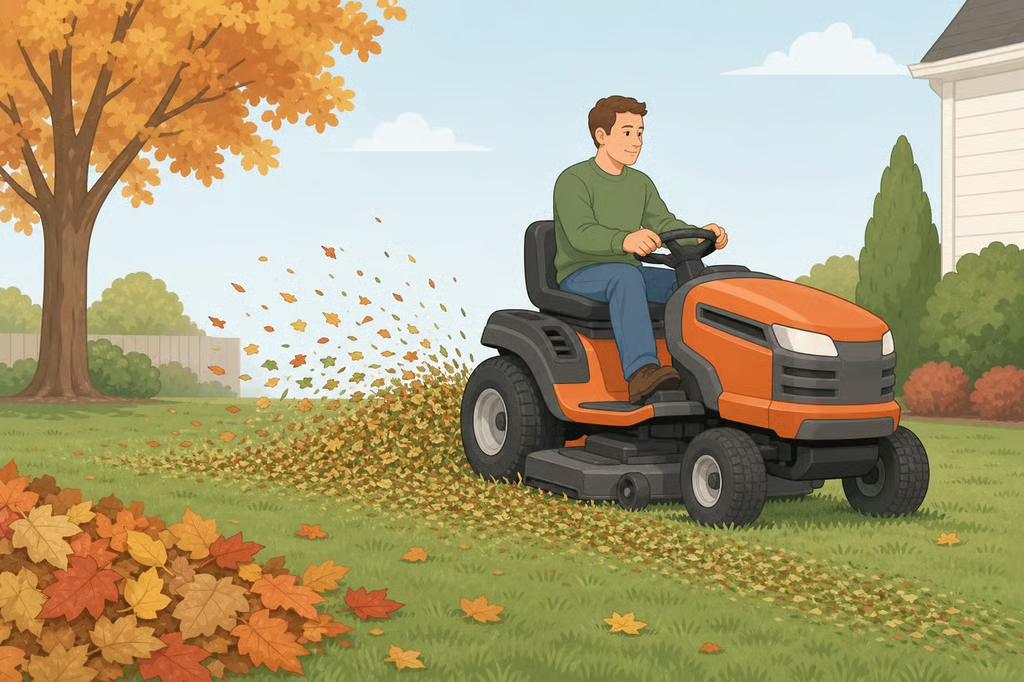
- How to Mulch Leaves Instead of Raking: Step-by-Step
- Should you mulch or rake leaves? Start with the lawn
- How to mulch leaves with a lawn mower, step by step
- Understand the benefits of mulching leaves into lawn and garden beds
- Where to put leaves you cannot leave on the lawn
- Keep leaves away from storm drains
- The decision rule for fall cleanup
How to Mulch Leaves Instead of Raking: Step-by-Step
Learning how to mulch leaves instead of raking can turn a fall cleanup into useful lawn and garden material. Run the mower over a light layer, leave the chopped pieces on the grass when they settle between the blades, and move the excess to beds, compost, leaf mulch piles, or suitable plant protection.
The important limit is leaf volume. Chopped leaves can remain on a lawn without damaging turfgrass, while thick, whole leaves can block sunlight and trap moisture against the grass, according to UMN Extension. The practical approach is simple: mulch what the lawn can handle, and relocate the rest.
Should you mulch or rake leaves? Start with the lawn
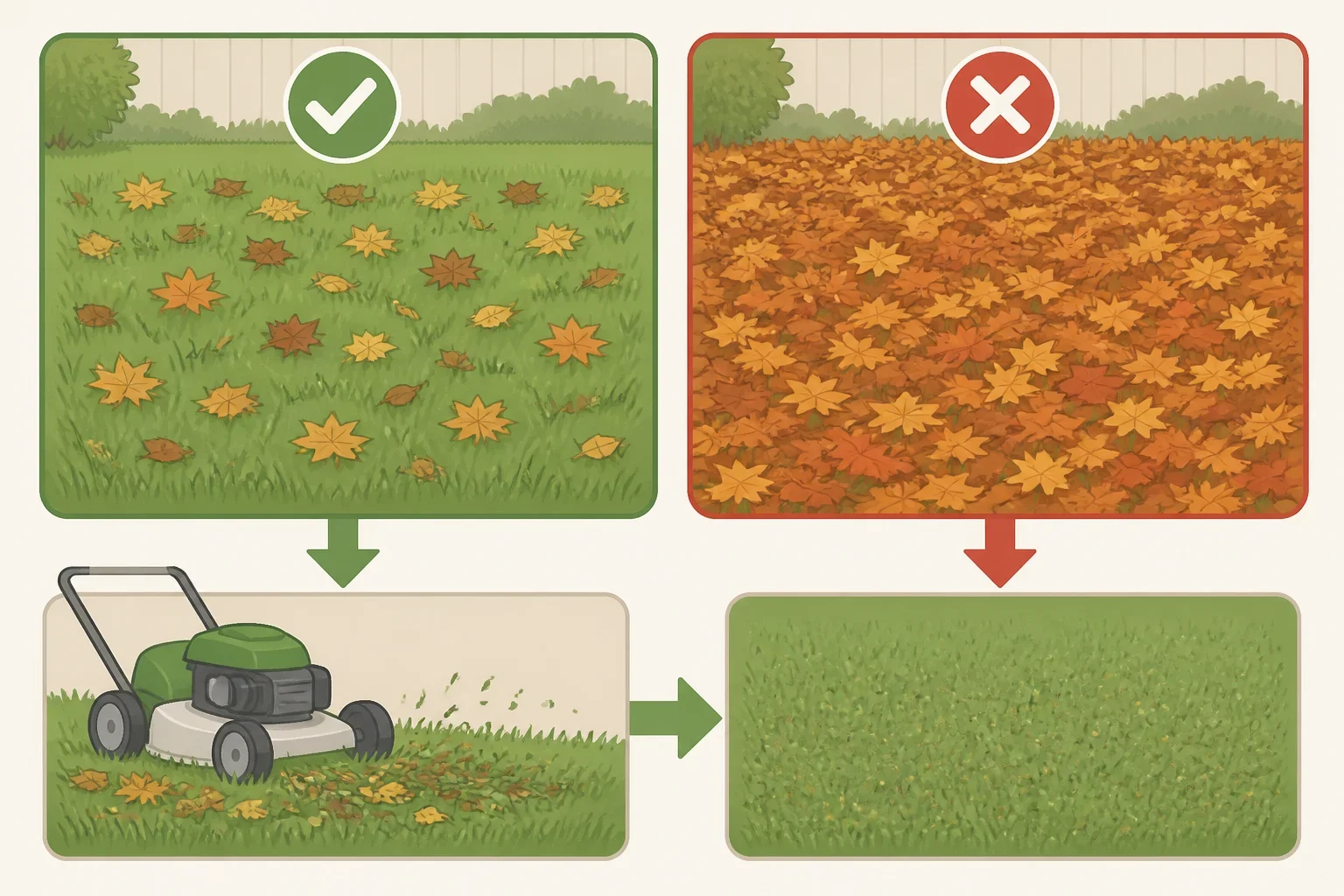
Look at the grass before deciding what to do. If the leaves are scattered and the lawn is still easy to see, mowing them in is a reasonable choice. Illinois Extension gives about 20% leaf coverage as a rough rule of thumb, saying the grass should be okay when that amount is covered and the leaves are chopped. Use the number as a guideline, not a measurement that overrides what the lawn is showing. Illinois Extension’s fall-leaf discussion recommends removing excess leaves when healthy turf is the goal.
Remove leaves when they form a thick, continuous layer, hide the grass, or remain piled after mowing. You should be able to see the turf between the fragments. If the chopped leaves still look like a blanket, the lawn has more material than it should receive in one session.
A light, dry layer is easier to mulch than a wet, matted one. For instructions about whether your mower can operate in wet conditions, how to clear its deck, and how to use its blade, bag, or discharge settings, follow the manufacturer’s manual. Do not improvise by reaching under a running or powered mower.
Keep leaves out of streets and storm drains. Leaves that enter drains can reach nearby waterways, where they decompose and release nutrients. Illinois Extension’s water-quality guidance notes that storm drains usually outlet to the nearest body of water.
How to mulch leaves with a lawn mower, step by step
The same process answers how to shred leaves for mulch. The mower chops them into smaller pieces that can be left on the lawn or moved to beds, compost, and other destinations.
1. Prepare the mower according to its manual
Check the mower before starting. Use the cutting height, mulching setting, bag, and discharge configuration recommended for that model. If the mower is designed to collect material in a bag, use the bag when you want to remove extra leaves. If it has a permitted side-discharge or mulching setup, use that configuration as the manual directs.
The mower does not need to be a separate leaf shredder. Illinois Extension says running a lawn mower over fallen leaves can create material suitable for landscape beds and areas around shrubs and trees.
Follow the manufacturer’s instructions for blade changes, deck clearing, wet conditions, and keeping children and pets away from the machine. If the mower struggles or becomes clogged, shut it down and clear it only as the manual instructs.
2. Mow the light layer
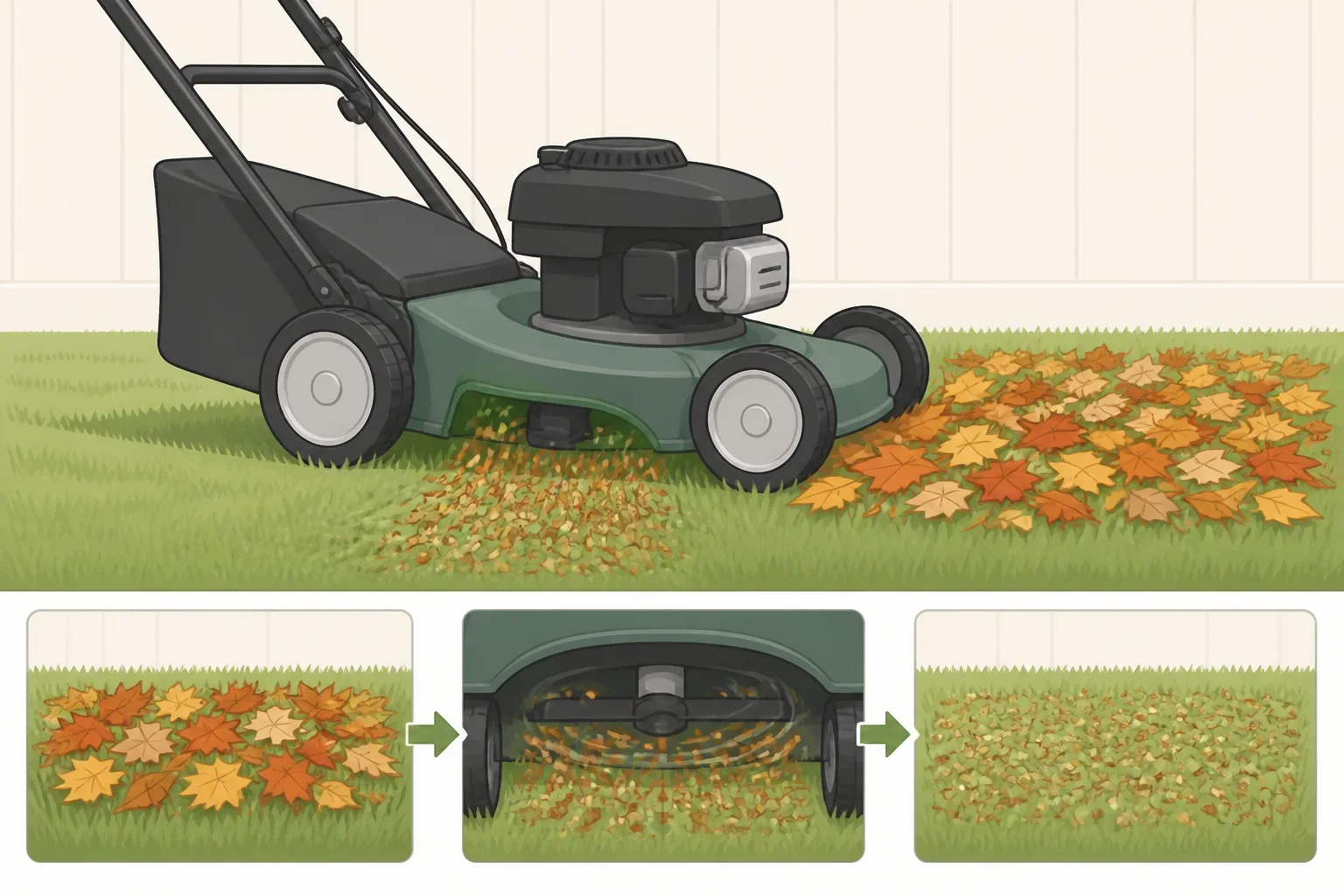
Start where the grass remains visible beneath the leaves. Run the mower over the area as usual instead of raking first. The goal is to distribute small fragments through the turf, not to press a heavy pile into it.
Make the first pass at a pace the mower can manage. If the result is a layer of large pieces sitting on top, make another pass only if the lawn still has visible space between the fragments. Shredded leaves break down faster and are less likely to blow away than whole leaves, according to Illinois Extension’s leaf-mulching guidance.
3. Inspect the result
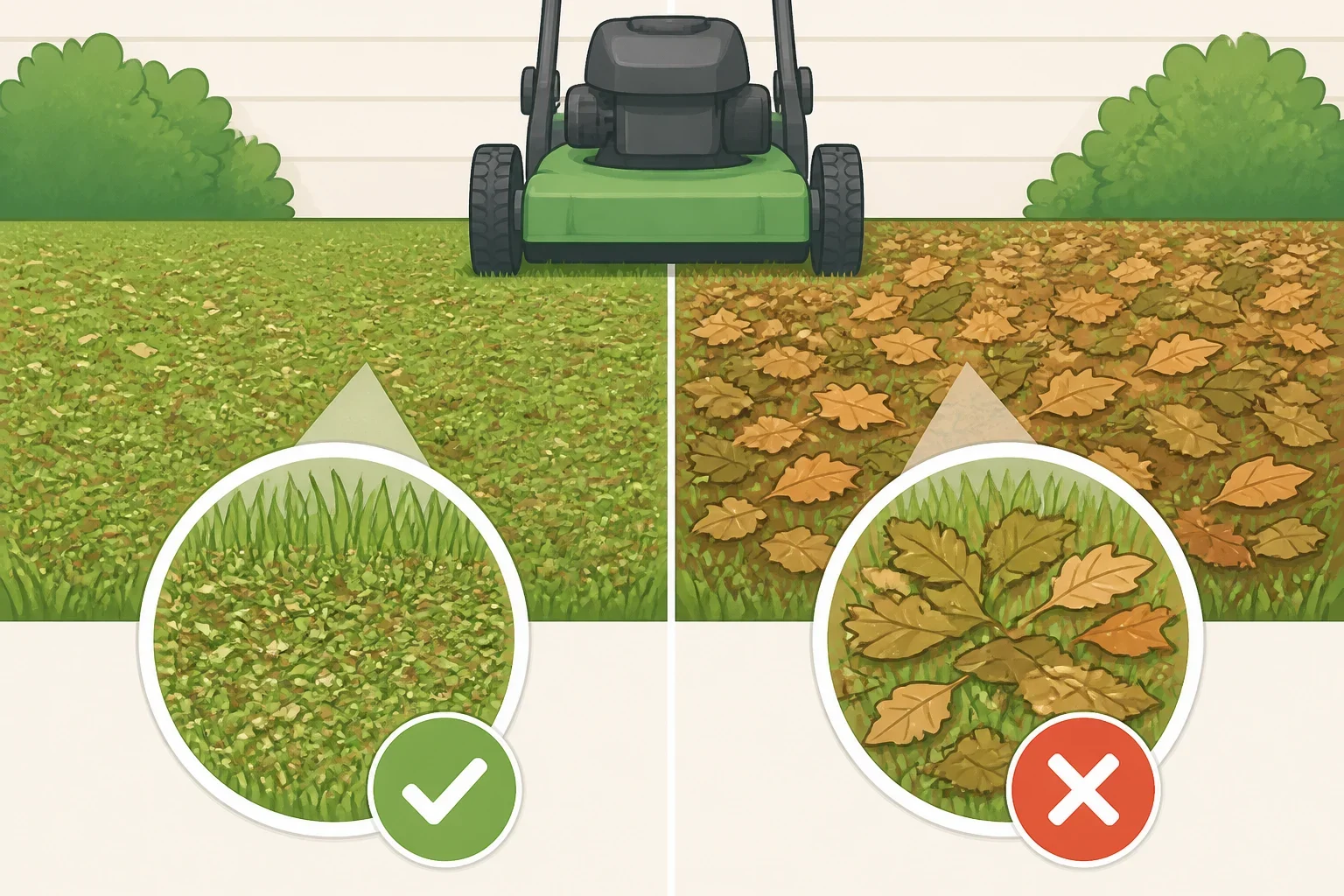
Turn off the mower before examining the lawn. Look for the visual signs that the pass worked:
- Grass remains visible.
- Leaf fragments are scattered rather than clumped.
- Pieces have settled between the blades instead of forming a mat.
- No thick layer remains in one area.
You can leave mulched leaves on grass when the fragments settle into the turf and do not cover it. If the pieces remain in clumps or hide the lawn, collect the surplus rather than making repeated passes.
4. Make another pass only when the lawn can handle it
A second pass can shred larger pieces and spread them more evenly. It cannot solve a volume problem. Once the lawn is visibly covered, stop mowing and remove the excess.
That distinction matters more than achieving a particular fragment size. The finished lawn should look sprinkled with leaf pieces, not covered with a chopped-leaf layer.
5. Repeat as leaves continue to fall
Fall cleanup may take more than one session. UMN Extension notes that homeowners may remove leaves several times before most of the yard is clear. Each time, mulch the light layer that settles into the grass and move the material that remains on top.
Areas beneath large shade trees and along fences may need a different plan because leaves gather there more heavily. If grass is no longer visible, rake or collect those sections instead of trying to force them into the turf.
Understand the benefits of mulching leaves into lawn and garden beds
Mulching leaves is more than a way to avoid filling bags. A light layer mowed into the lawn decomposes and adds organic matter and nutrients, according to Illinois Extension’s leaf-mulching article.
The same source reports that a 2-inch layer of leaf mulch contributes approximately 3.44 pounds of nitrogen, 0.46 pounds of phosphorus, and 1.49 pounds of potassium per acre. Those figures describe the nutrient contribution of that layer, not a promise that every lawn needs no other care.
Decomposed leaves generally have little effect on soil pH. Illinois Extension notes that even oak leaves, which are acidic when fresh, break down to become neutral to slightly alkaline. That makes shredded leaves a practical organic material for suitable beds and lawn areas without treating fresh leaf acidity as a permanent soil problem.
Garden mulch has a separate role. UMN Extension defines mulch as a protective layer spread over soil to conserve moisture, suppress weeds, and regulate soil temperature. Organic mulches such as shredded leaves also break down over time and return nutrients to the soil.
Where to put leaves you cannot leave on the lawn
The extra leaves still have value. Move them to a destination where they can cover soil, become an amendment, or protect selected plants.
Spread shredded leaves in beds
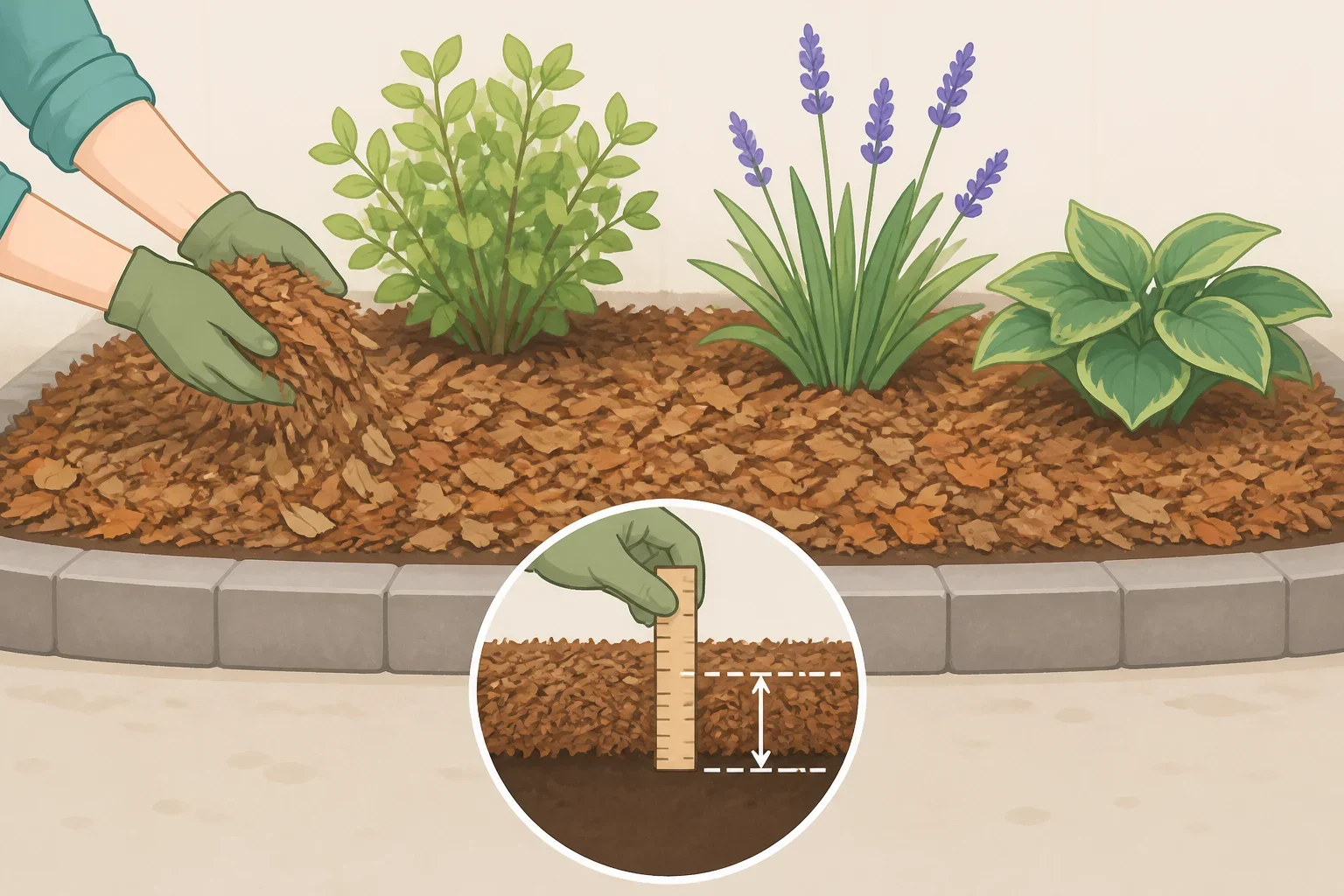
Place a 2-inch layer of shredded leaves over a landscape bed. Illinois Extension says the material can become a soft brown leaf mulch by spring, reducing weeds and helping hold soil moisture for the following summer. Keep the layer over soil rather than allowing it to wash toward a road or drain.
For a suitable garden area, Illinois Extension also describes placing 6 to 8 inches of whole leaves on the soil and tilling them in to improve tilth, drainage, and organic matter. That option applies to garden soil where tilling is appropriate, not automatically to established beds or every planting area.
Add them to compost
Whole or shredded leaves can go into a compost pile with kitchen fruit and vegetable scraps. UMN Extension says the material can break down into a garden amendment in the coming years, while Illinois Extension describes an amendment being available by the following summer.
Use a simple pile or wire bin in a location allowed by local rules. Composting gives the leaves a useful destination without moving them to the curb, street, or drainage system.
Make leaf mulch
For a slower option, rake leaves into a pile or place them in a simple wire bin and let them sit. Illinois Extension estimates that shredded leaves can be ready in about 6 months, while whole leaves may take 9 to 12 months. These are estimates, not guarantees, so conditions can affect the timing.
Shred first when a shorter wait matters. Leave the leaves whole when time is less important and the pile has enough room to sit.
Protect appropriate plants
Leaves can insulate some perennials and hardy garden vegetables from cold temperatures. Illinois Extension gives tender perennials such as tea roses as an example, noting that a wire or burlap cage filled with leaves can provide protection. Leaves placed around root crops and hardy vegetables can also offer freezing protection in late fall.
Do not assume every plant needs a leaf cage. UMN Extension says plants suited to the local climate should be able to overwinter without extra help, while borderline-hardy plants may need mulch or another protection method. Choose the method based on the plant and local conditions.
Leave some leaf litter in suitable areas
A perfectly cleared yard is not the only goal. Illinois Extension reports that removing autumn leaves from residential yards reduces the spring emergence of overwintering insects. Where lawn access and appearance do not require a cleanup, leaving some leaves beneath large shade trees or around shrubs can preserve that habitat.
The leaves do not have to remain across the entire property. Mulch the lawn, clear paths and other areas that need to stay open, and leave suitable pockets beneath trees or shrubs.
Keep leaves away from storm drains
Leaves that wash into storm drains, rivers, lakes, and streams decompose in aquatic systems and release nutrients. Phosphorus can encourage algae growth in excess, and algae blooms can reduce oxygen in the water.
An Illinois Extension report cites a Wisconsin study finding that leaf litter accounted for nearly 60% of annual phosphorus in urban water systems there, with timely management capable of mitigating up to 80% of it. Those figures apply to that study and its urban water systems, not to every property or watershed.
The household rule is easy to follow: never rake, blow, or sweep leaves into the street or a storm drain. Put them in beds, compost, a leaf-mulch pile, or an appropriate plant-protection area instead.
The decision rule for fall cleanup
Use 20% leaf coverage as an extension-service rule of thumb, then check what you can see. A light, dry layer can be mowed into the lawn. If the fragments settle between the blades and the turf remains visible, leave them there.
Remove thick, wet, or matted coverage. Use the mower’s approved collection setup for the excess, then move those leaves to garden beds, compost, leaf mulch, or suitable winter protection. Keep every destination away from streets and storm drains, and follow the mower manufacturer’s instructions whenever the setup or conditions are unclear.
