
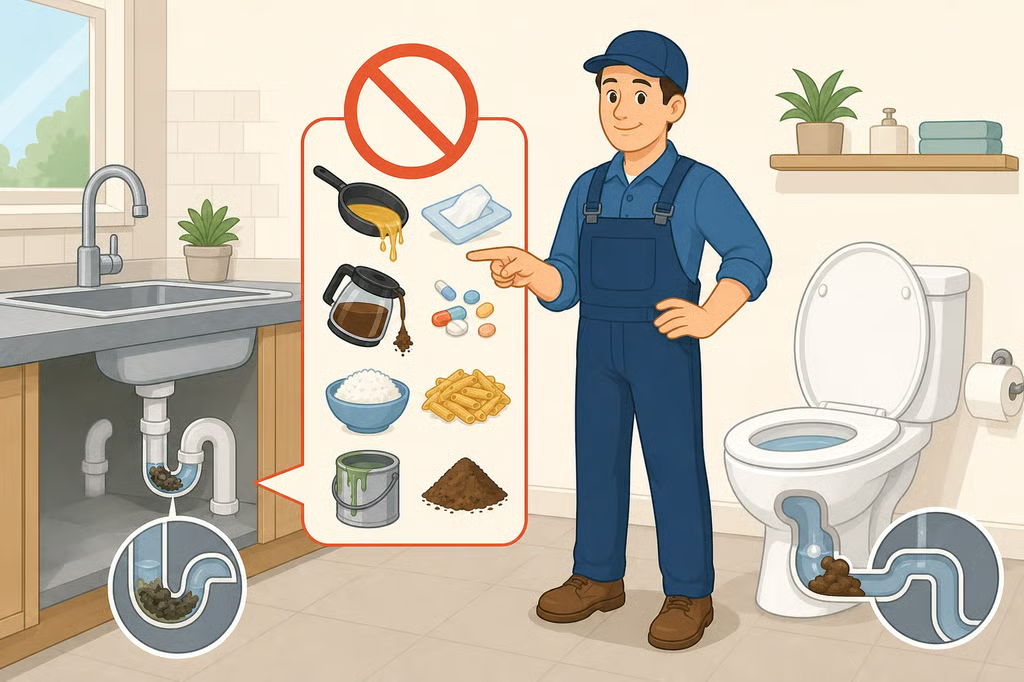
Things Plumbers Wish You Would Stop Doing (7 Tips)
If you are unsure whether a wipe, a pan of grease, or a bottle of drain cleaner belongs in your plumbing, start with three rules: flush only human waste and toilet paper, keep fats and solids out of drains, and try a mechanical fix before a chemical one. Those are the things plumbers wish you would stop doing because ordinary household habits can lead to clogs, backups, and expensive septic repairs.
The caution is especially important if your home uses a septic system. In a report published last year, Consumer Reports noted that more than one in five U.S. households rely on individual or small-community septic systems. The same report cited an estimate that wipes add $441 million a year to U.S. clean-water utility operating costs.
Before changing your routine, find out which system your home uses. Items that clog household drains are worth avoiding everywhere; water-volume, bacteria, drainfield, and tank-maintenance warnings apply specifically to septic systems.
Check your plumbing system before you start
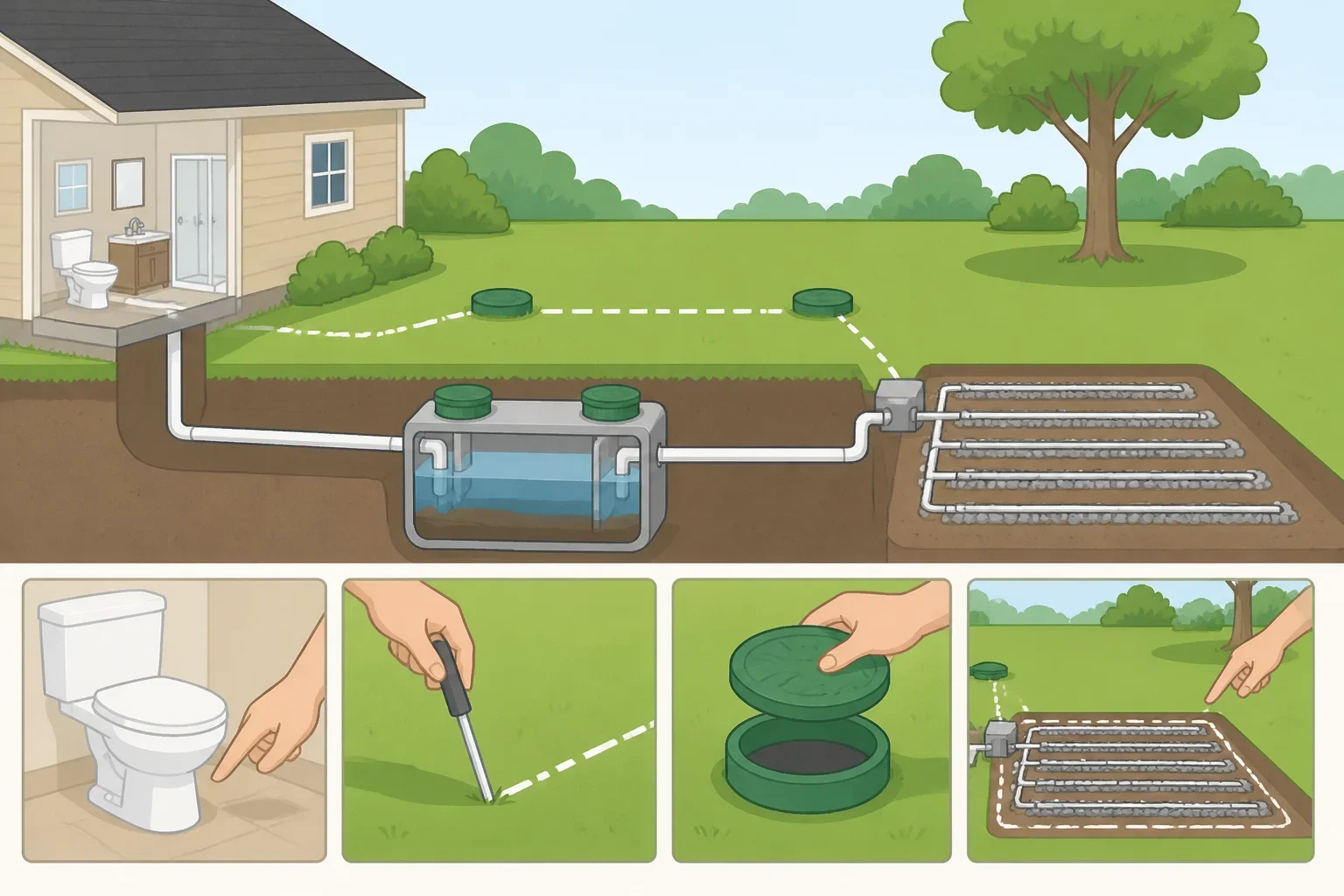
Look through property or service records, ask a previous owner, or contact a neighbor or local health department. If you suspect a septic system, trace where the main plumbing line leaves the house and look for a green or black access riser about 10 feet away. A flat, treeless patch of lawn or an unexplained mound may indicate the drainfield.
Those are clues, not proof. Consumer Reports recommends learning the location of the tank and drainfield before a problem starts, then finding a qualified service provider through local agencies or neighbors. Do not open an access point to confirm what is underneath.
Common plumbing mistakes homeowners make
The first three habits are useful to avoid in any home because they send unsuitable solids or grease into pipes. The remaining warnings become especially important when a property has a tank and drainfield.
1. Stop flushing wipes, even ones labeled “flushable”
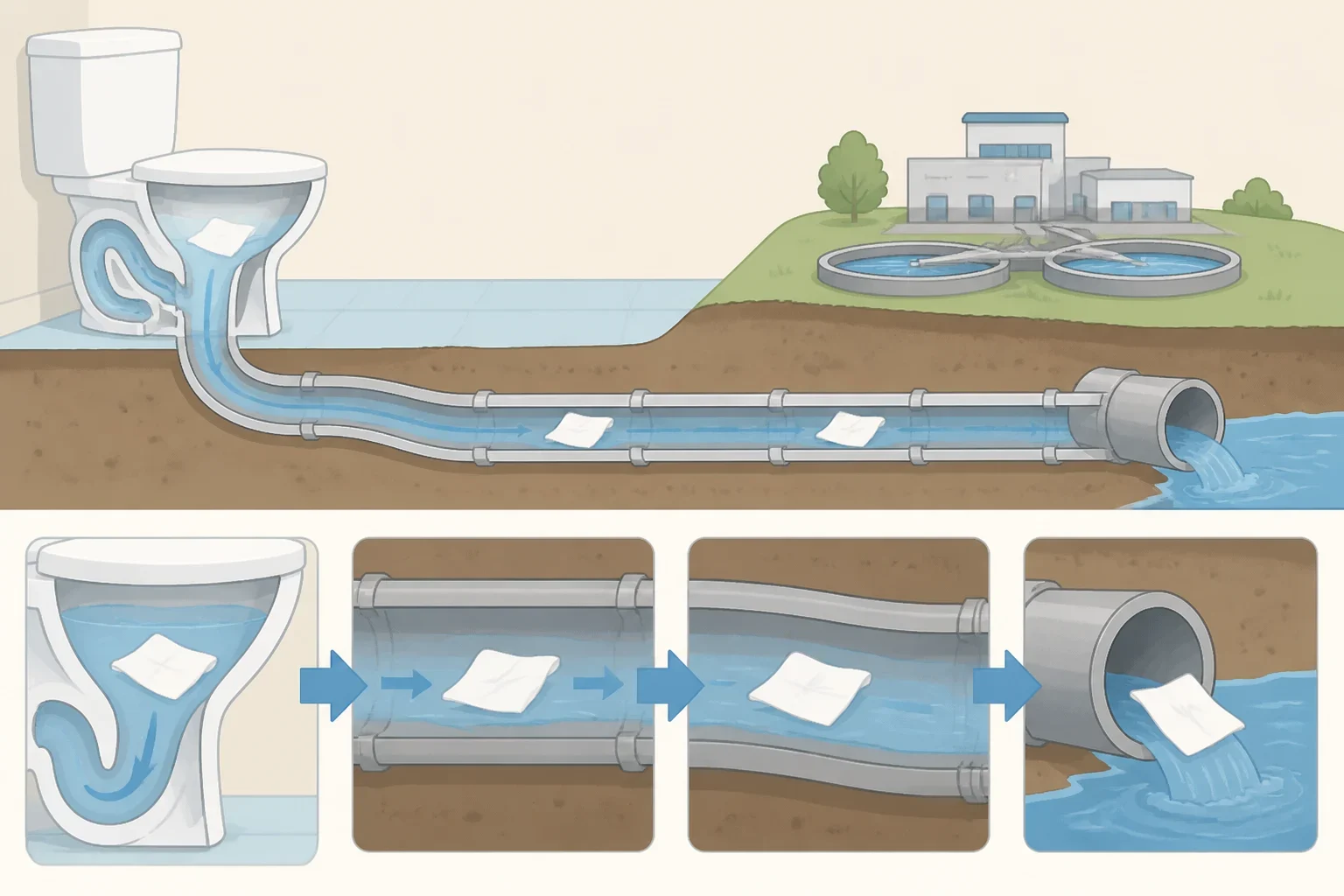
A wipe can pass through a toilet without breaking down later in the wastewater system. In a report published last year, Consumer Reports tested 11 brands labeled “flushable” and found that none caused a blockage when tested with an intermediate load in the toilet or when a single wipe was flushed without a load in the drainpipe. One nonflushable wipe did clog the toilet under testing.
That result describes those test conditions. It does not show that wipes are safe for every household pipe, septic tank, or wastewater system. A product that makes it through the toilet can still remain intact farther downstream.
Consumer Reports also cited a study finding that more than 50 percent of biodegradable and flushable wipes contained both biodegradable cellulose and low-degradability synthetic fibers. Yates, a plumbing trade professional interviewed for the report, called the “flushable” label “a dodge,” since the products can move through a toilet without disappearing from the system.
Put used wipes in the trash. If a bidet is appealing, Yates identified a bidet toilet seat or bidet as an alternative, although it has a higher upfront cost. That swap avoids asking the plumbing system to handle a product that may not break down as advertised.
2. Stop treating the toilet like a trash can
Diapers, wipes, feminine hygiene products, coffee grounds, cigarette butts, and cat litter do not belong in the toilet. EPA’s SepticSmart guidance, reported by ASPE last year, specifically warns that these items can damage septic systems.
Consumer Reports’ simpler rule is useful for every bathroom: flush only human waste and toilet paper. Keep a lined trash can beside the toilet so the correct disposal choice is the easy one. For medication and other household waste, use the disposal instructions provided for that item rather than treating the toilet as a general-purpose trash chute.
3. Stop pouring grease, oil, and food scraps down the drain
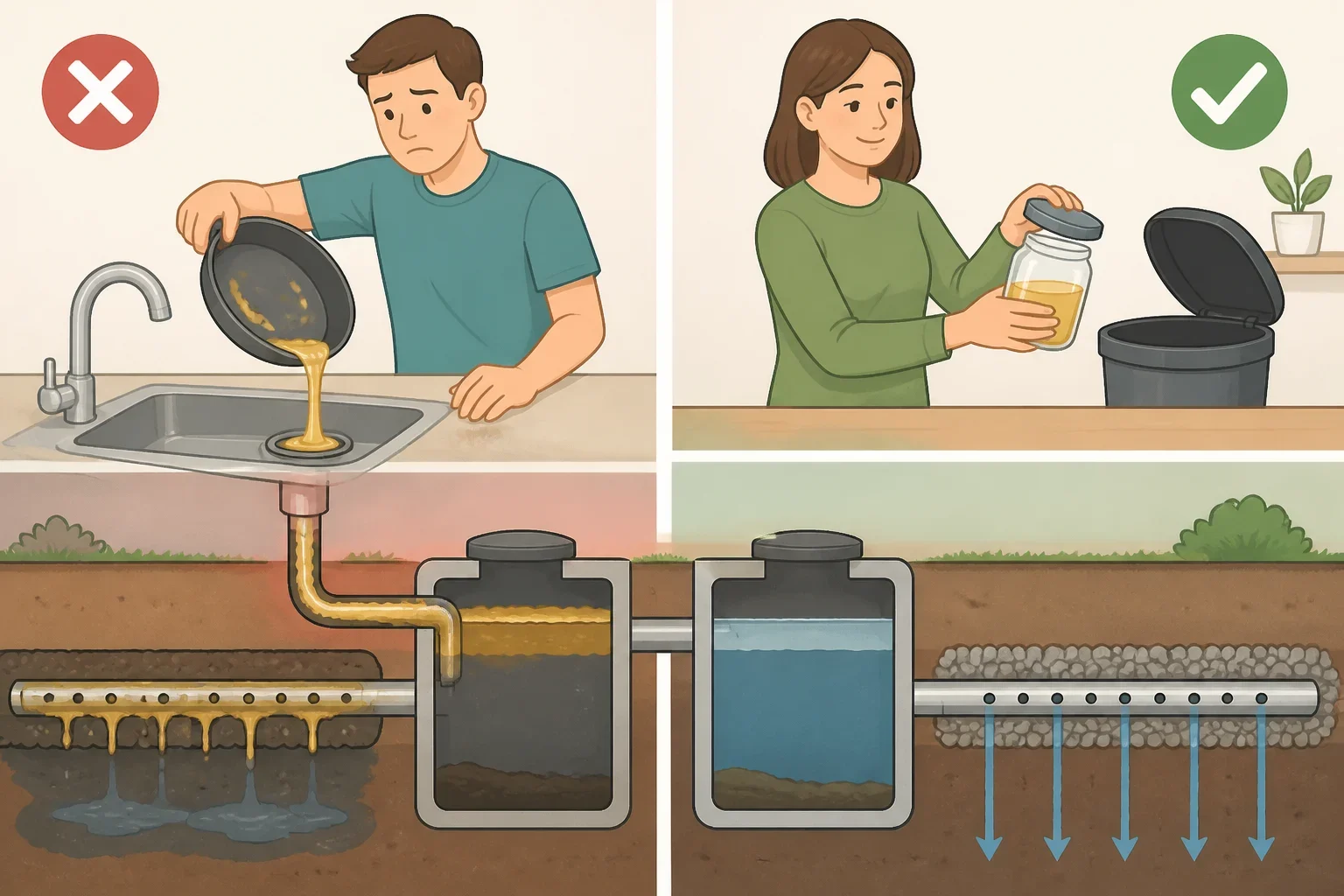
Warm grease may slide down the sink, but that does not mean it has left the plumbing safely. In a septic tank, grease and oil rise to the top as scum. Too much scum can clog the system, while fats, grease, and solids can block septic pipes and drainfields.
Scrape plates and pans into the trash before washing them. Pour cooled grease and oil into a disposable container, and use a sink strainer to catch food solids. For septic homes, a garbage disposal is a particularly poor fit because it sends too many solids and greases into the tank, according to Consumer Reports.
Even a sewer-connected home benefits from keeping scraps and grease out of the drain. The goal is simple: do not use running water to move kitchen waste into the pipes.
4. Stop overloading a septic system with water
This is a septic-specific warning. Too much water at once can strain the system, flood the drainfield, and slow or stop the processes that occur there. EPA guidance recommends using water efficiently and staggering water-based appliances, particularly when a system has not been pumped recently.
Do not run multiple loads of laundry consecutively on a septic system. Spread laundry and other heavy water use throughout the week. Consumer Reports also recommends considering high-efficiency toilets, faucet aerators, low-flow showerheads, and Energy Star appliances that use less water.
A municipal sewer connection does not have the same tank and drainfield limits. Confirm the system before treating this as a strict household rule.
5. Stop ignoring a running toilet or dripping faucet
A faint drip can become part of the background noise of a busy home. On septic, though, that steady flow adds water the system has to process.
A septic professional quoted by Consumer Reports said a running toilet or dripping sink can fail a system within days. That is a professional’s warning, not a universal engineering timeline, so do not wait to see whether the prediction comes true. Fix the leak when you notice it.
For a toilet, check whether the flapper, fill valve, or handle is allowing water to run continuously. If the source is not obvious, call a plumber. Consumer Reports lists fixing household leaks as a basic step in protecting a septic system.
6. Stop reaching for chemical drain cleaner for every clog
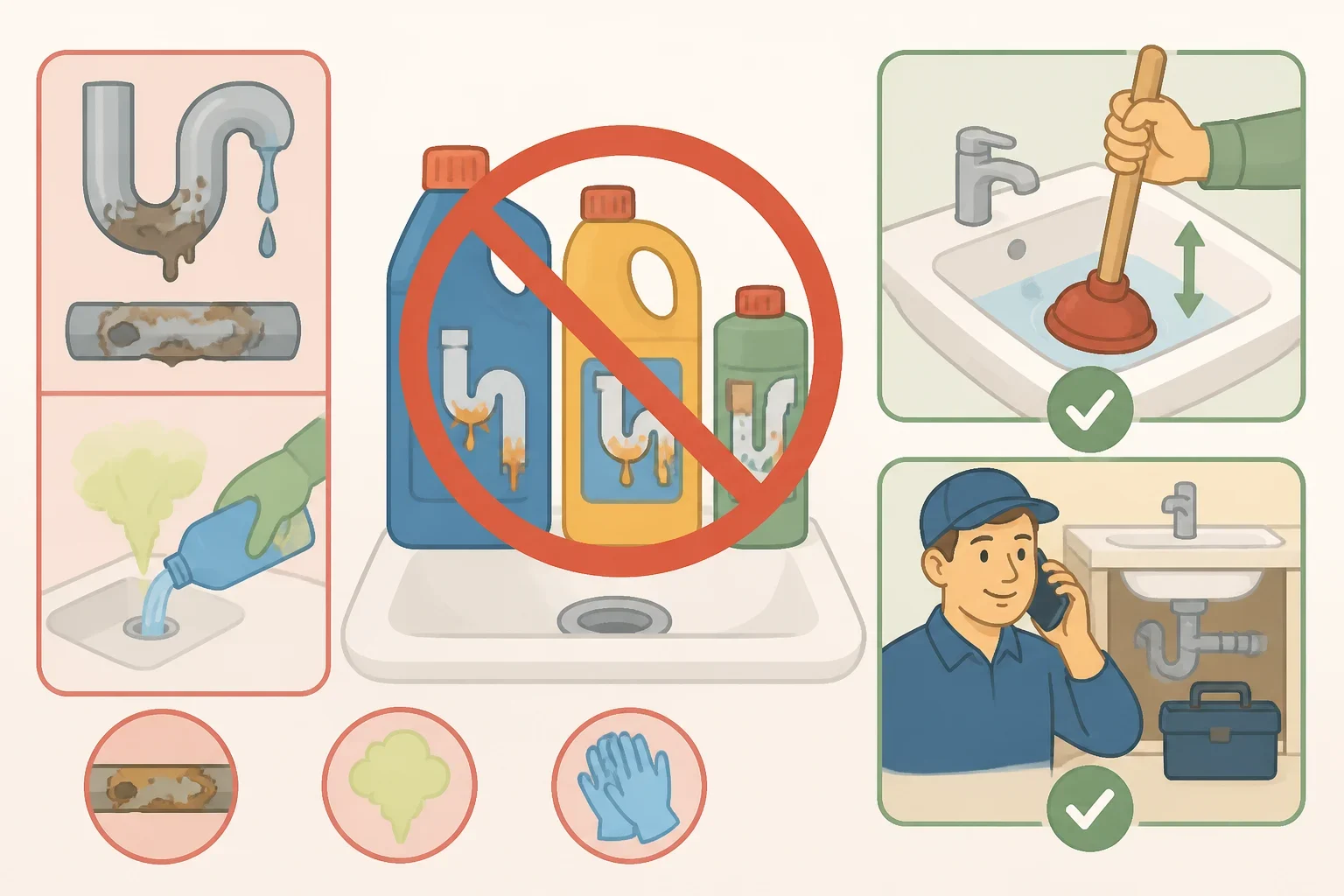
Liquid drain cleaners can contain sulfuric or hydrochloric acid, sodium hydroxide, or potassium hydroxide. Poison Control reported last year that concentrated corrosive products can cause serious burns, permanent tissue damage, and even death if swallowed. Incorrect use can also harm skin and eyes.
Baking soda and vinegar are not a dependable answer to a tough clog. The reaction forms carbon dioxide, but drains are not airtight, so the gas generally escapes before enough pressure builds to dislodge debris. The mixture is also unlikely to break through a stubborn oil-and-grease blockage.
For a straightforward clog, use a plunger first. A drain snake can be reasonable when the blockage is accessible and the tool is appropriate for the fixture. Stop and call a plumber when:
- more than one fixture backs up;
- sewage appears;
- the clog returns after a temporary improvement;
- the problem suggests a main-line blockage or damaged pipe; or
- chemical cleaner has already been poured into the drain.
Do not plunge after adding chemical cleaner unless a professional advises it. Tell the plumber exactly what product was used, and never mix drain cleaners with one another.
For septic homes, skip “natural” additives as well. Consumer Reports cautions that baking soda, vinegar, and active yeast may damage or kill the naturally occurring bacteria that break down waste. A septic tank does not need a kitchen experiment added to it.
If drain cleaner is swallowed, inhaled, or splashed on skin or in the eyes, contact Poison Control through its online tool or by calling 1-800-222-1222. The service is free and confidential. For additional poisoning guidance, MedlinePlus advises seeking immediate medical help and not making someone vomit unless Poison Control or a health care professional says to do so.
7. Stop treating the septic system like a DIY project
There are two parts to this mistake: damaging the system from above and opening it from below.
Do not park cars, boats, RVs, bulldozers, or other heavy equipment on the septic tank or drainfield. The weight can damage the underground structures. EPA’s SepticSmart guidance also warns that tree and shrub roots, cars, and livestock can damage the drainfield.
Never open a septic tank lid or access-riser cap yourself. Dangerous gases, including hydrogen sulfide and methane, may be present. Only a qualified, properly equipped professional should open, inspect, or pump the tank.
The homeowner’s role is to locate the access point, keep heavy equipment away from the tank and drainfield, and make the area reachable for the service provider. Inspection and pumping are professional work.
Make these habits easier to keep
These habits that damage your plumbing are easy to replace when the household setup supports the better choice. Put a trash can beside the toilet, keep a sink strainer in the kitchen, and label a container for cooled grease. Small changes remove the “just this once” decision from the routine.
If the home has septic, create one service record. Keep the tank and drainfield location, the provider’s contact information, the last pumping date, and local maintenance requirements together. EPA guidance recommends pumping at intervals set by a professional or local permitting authority, rather than following one universal calendar schedule.
Save every service record so the next provider can see what has already been inspected or repaired. If records are missing, locate the system and arrange a professional assessment instead of guessing at its condition.
For a simple drain clog, begin with a plunger or suitable drain snake. Call a plumber when the problem involves multiple fixtures, sewage, a recurring blockage, a suspected main-line issue, or possible pipe damage. Do not escalate a routine clog into a chemical or septic emergency.
The most useful next step is straightforward: identify whether the home connects to a municipal sewer or septic system, place a trash can and strainer where they are needed, and schedule septic service if maintenance records are missing. Then keep wipes, grease, solids, and unnecessary additives out of the system from here on.
