
How to declutter your kitchen: 20 things to remove
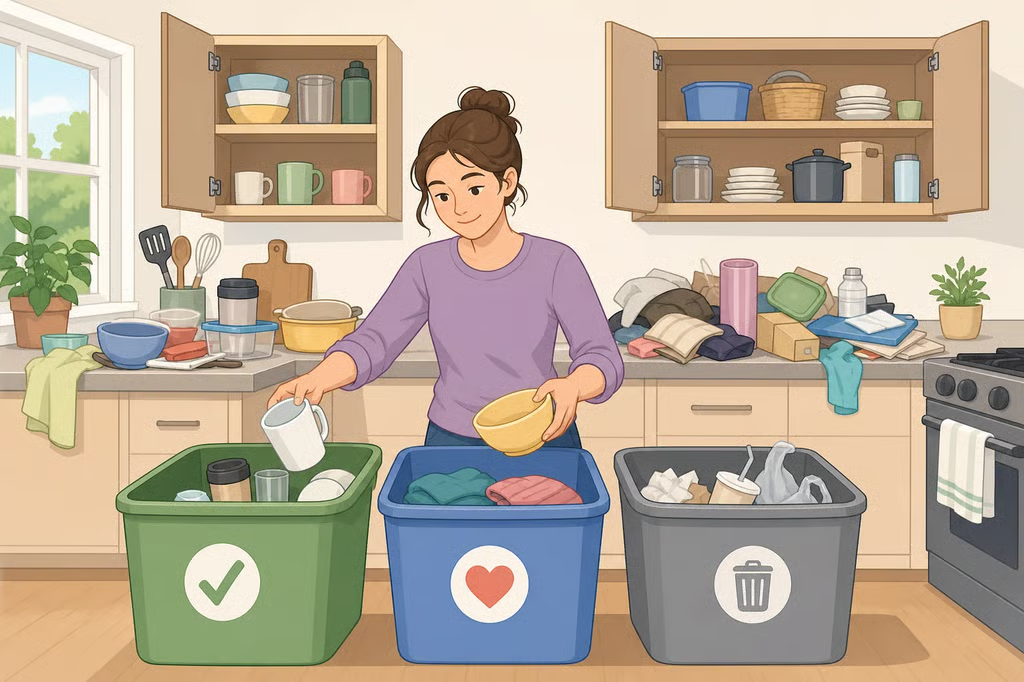
If your counters are crowded and opening a cabinet means moving three other items first, start small. To learn how to declutter your kitchen, choose one drawer, cabinet, shelf, or counter zone, then sort everything into keep, donate, and trash before putting anything back.
This kitchen decluttering checklist focuses on low-regret decisions: damaged dishware, duplicates, unused tools, expired food, and supplies forgotten under the sink. The goal is not to empty the entire kitchen in one afternoon. A focused zone is easier to finish, and a finished zone gives every remaining item a clear home.
The kitchen is one of the highest-traffic areas in a home, says organizing specialist Melanie Summers in Martha Stewart’s 2025 kitchen decluttering guidance. Clear systems can make the space more functional and less stressful, while less time spent searching for tools and ingredients leaves more time for cooking and sharing meals.
Start with one zone and three labeled spots
Before opening a drawer or cabinet, set out three clearly labeled places:
- Keep: Items that are useful and worth storing.
- Donate: Clean, functional items someone else could use.
- Trash: Broken, damaged, empty, or unsuitable items.
A box or reusable bag works for donations. Keep the donation and trash containers outside the space you are clearing so they do not become part of the new clutter. Once the zone is finished, close the donation box and remove the trash.
Choose one area for the first session: a utensil drawer, one cabinet, the pantry, the refrigerator, the freezer, or the space under the sink. Pull everything out so duplicates and forgotten items are visible. Group similar things together before making decisions. Five water bottles may seem reasonable one at a time, but the full group makes the choice clearer.
Use this test for gray-area items
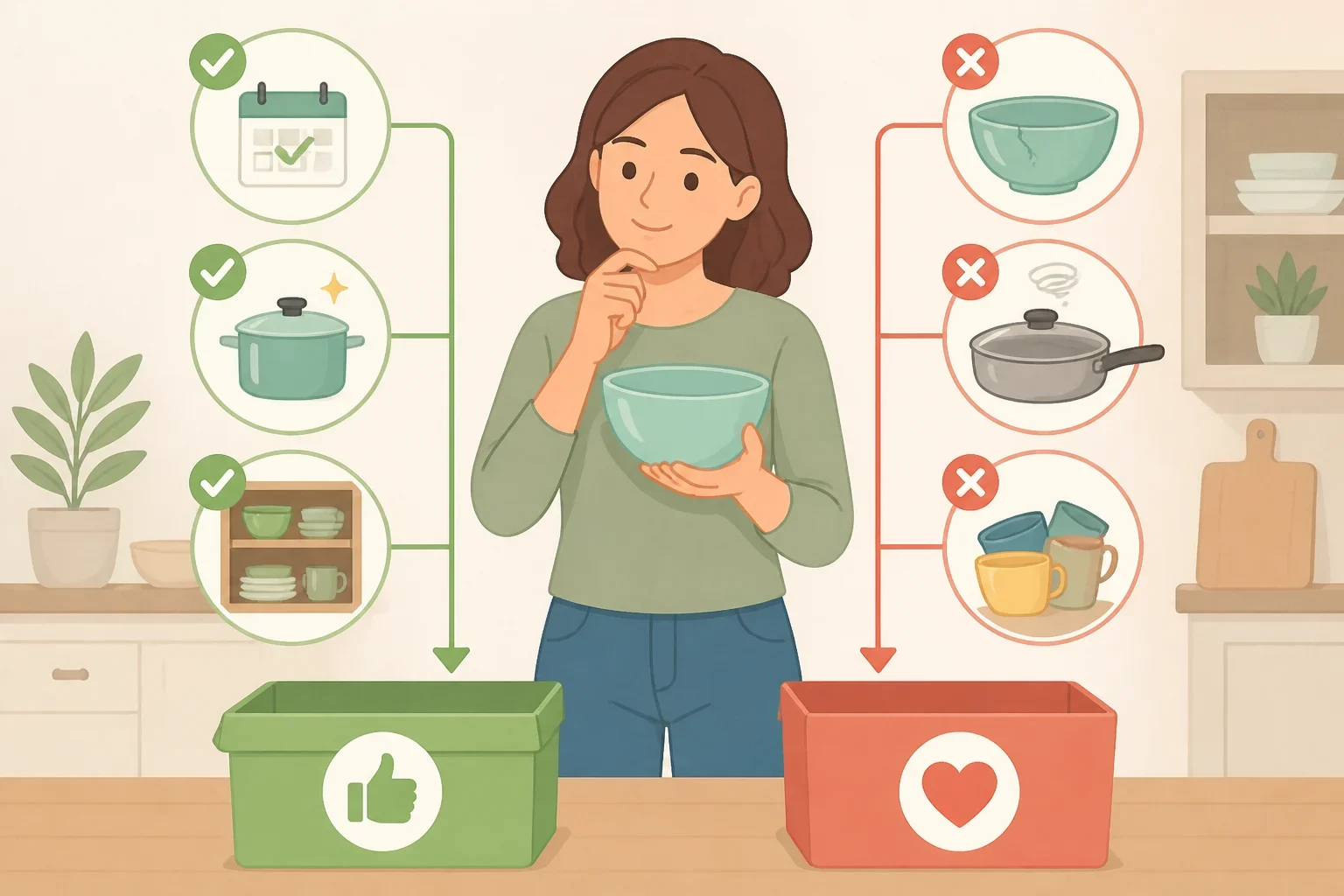
Some things to get rid of in your kitchen are obvious. Others come with a story, a gift, or the familiar thought that they might be useful someday. Summers recommends asking:
- Would this be purchased again if it were not already owned?
- If it broke, would it be repaired or replaced?
- If it were out of sight, would anyone remember having it?
- Where would someone look for it?
Tina Priestly, a home decluttering expert at Ready, Set, REFRESH, adds two useful filters: Does the item add real value to cooking or serving, and is it doing the same job as something else? A duplicate does not automatically have to leave. A household that entertains often or cooks in batches may have a reason to keep two. The better question is whether both items have a clear job and a reasonable home.
Sentimental pieces need their own decision. If a gifted mug or inherited serving dish is not used, place it in a labeled box marked “sentimental” rather than allowing it to take up daily cabinet space. Organizing expert Sarit Weiss recommends separating the object from the guilt attached to it. Keeping something out of obligation is not the same as giving it a useful place in the home.
Kitchen decluttering checklist: 20 things to remove first
Work through the list inside the zone selected above. Each item has a practical next step.
Dishware and drinkware
- Chipped plates, bowls, and mugs: Remove cracked or chipped pieces from regular use. Put them in the trash or recycle them if applicable. Do not place damaged dishware in the donate box.
- Souvenir mugs and shot glasses: If the item is sentimental but not part of daily use, place it in a labeled keepsake box. If it has no personal value and is clean and intact, donate it.
- Takeout plastic cups: Keep only cups that are genuinely reused. Dispose of the rest rather than letting a stack of “maybe someday” containers take over a cabinet.
- Extra reusable water bottles: Line up the bottles used during a typical week. Keep the favorites and donate clean, functional extras, as Weiss recommends.
Cookware and kitchen tools
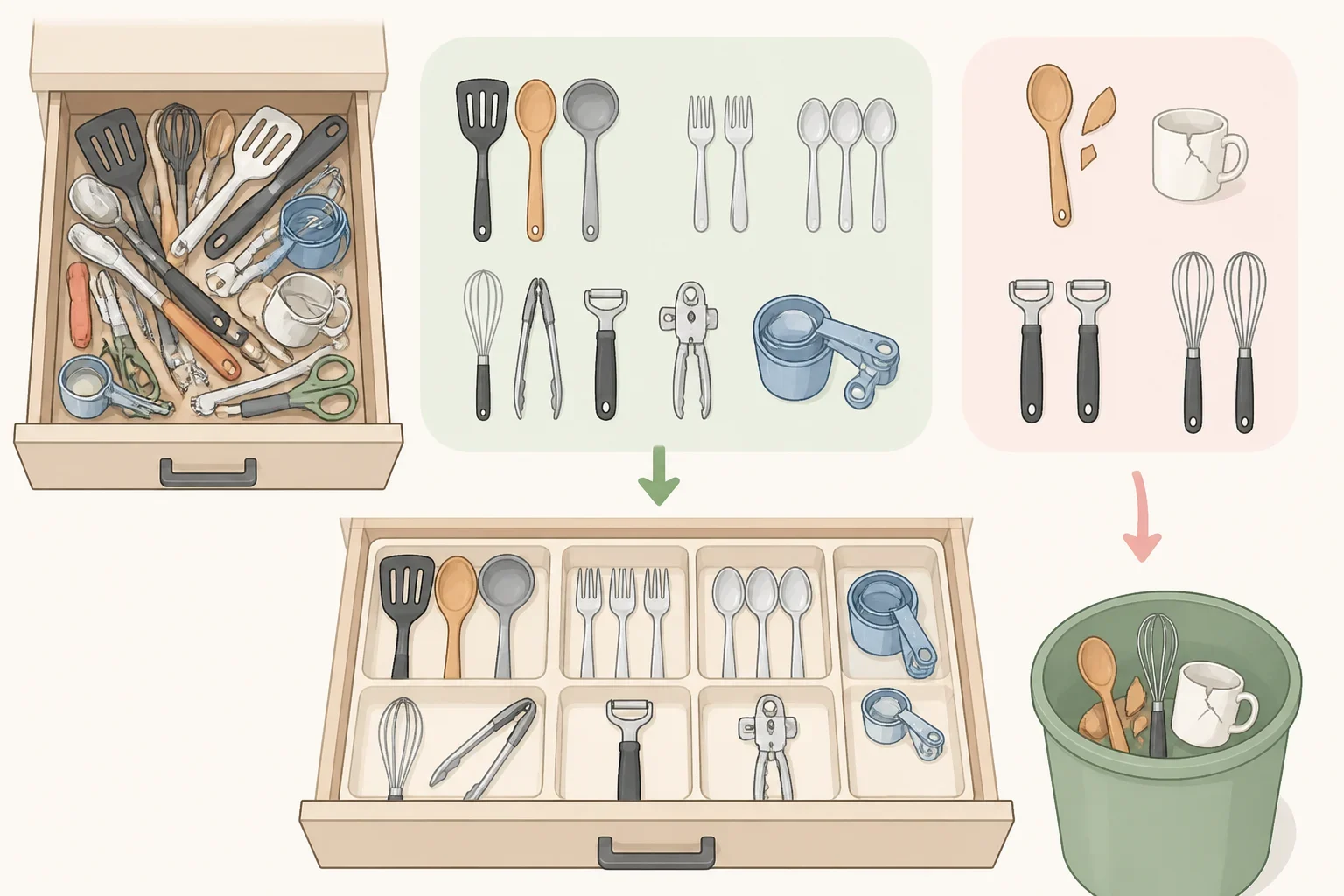
- Duplicate cookware: Group pots, pans, baking dishes, or Dutch ovens by type. If a second piece has no clear purpose, donate it to save cabinet space. Keep duplicates that support a real household need, such as frequent entertaining or batch cooking.
- Scratched nonstick pans: Remove scratched nonstick cookware from the rotation. Martha Stewart’s 2025 guidance recommends ditching scratched nonstick pans rather than keeping them in use. Do not donate damaged cookware.
- Broken or duplicate utensils: Empty the drawer and group similar tools together. Remove anything broken, duplicated without a clear use, or unused for a year, using Summers’s benchmark. Keep the tool that works best and has a designated home.
- Single-use gadgets: Apply the question, “Would this be purchased again?” If a gadget was used once, never used, or has no realistic job in the household, donate it if it is clean and functional.
Small appliances and counter clutter
- Small appliances untouched for six months: If an appliance has not been used in six months, consider donating or selling it. Seasonal appliances can move to a higher cabinet or another out-of-the-way storage area.
- Bulky knife blocks: Consider whether a wall-mounted option could free counter space, as Priestly suggests. If it does not suit the kitchen, leave the knife block in place and look for another way to reduce counter clutter.
- Decor and appliances that are not used daily: Clear the counters and keep daily-use essentials within reach. Relocate decorative pieces and appliances that are taking up valuable work space. Apply the six-month test to rarely used appliances rather than allowing them to live permanently on the counter.
- Freestanding mug trees and utensil crocks: If these accessories crowd the work surface, consider hooks or shelves to use vertical space. Keep the storage method that makes mugs and tools easy for everyone to return.
Pantry, refrigerator, and freezer
- Expired spices: Check the dates and remove spices past their useful prime. Martha Stewart’s 2025 guidance suggests tossing or repurposing expired spices to reclaim pantry or rack space.
- Duplicate pantry staples: Pull the pantry contents out and group similar foods together. Consolidate duplicates when appropriate, then give the remaining items a visible home.
- Nonperishables that will not be eaten: Set aside unopened, intact foods the household will not use for donation. Place them in the donate area rather than allowing them to occupy useful pantry space.
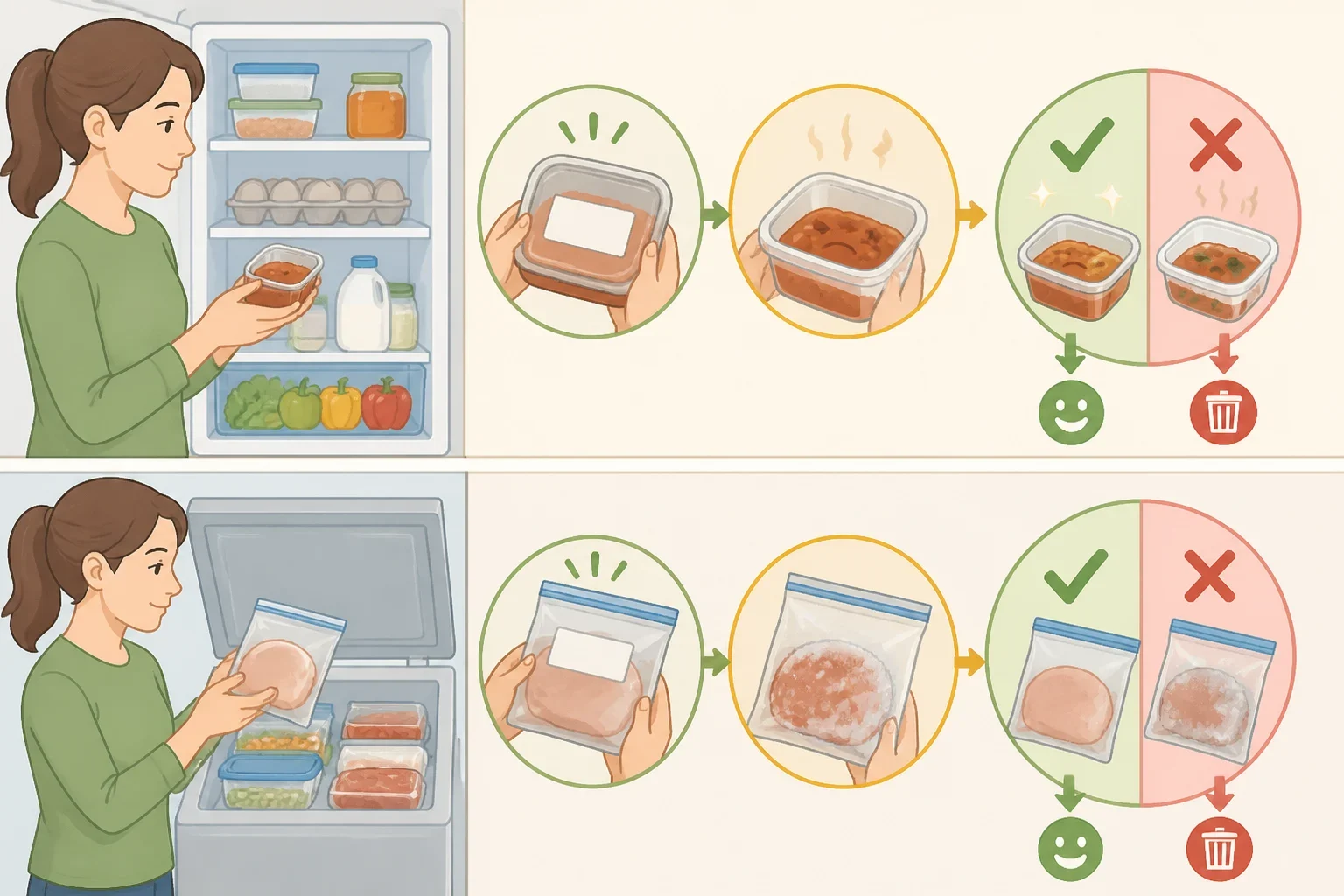
- Refrigerator and freezer items past their prime: Check dates and sort items by food category, as recommended in Martha Stewart’s 2025 guidance. Discard anything that is past its prime, and use the sorting process to make meal preparation easier. Food labels and safe handling can require more judgment than a simple date check, so do not donate food that has been opened or that you are unsure about.
Under the sink
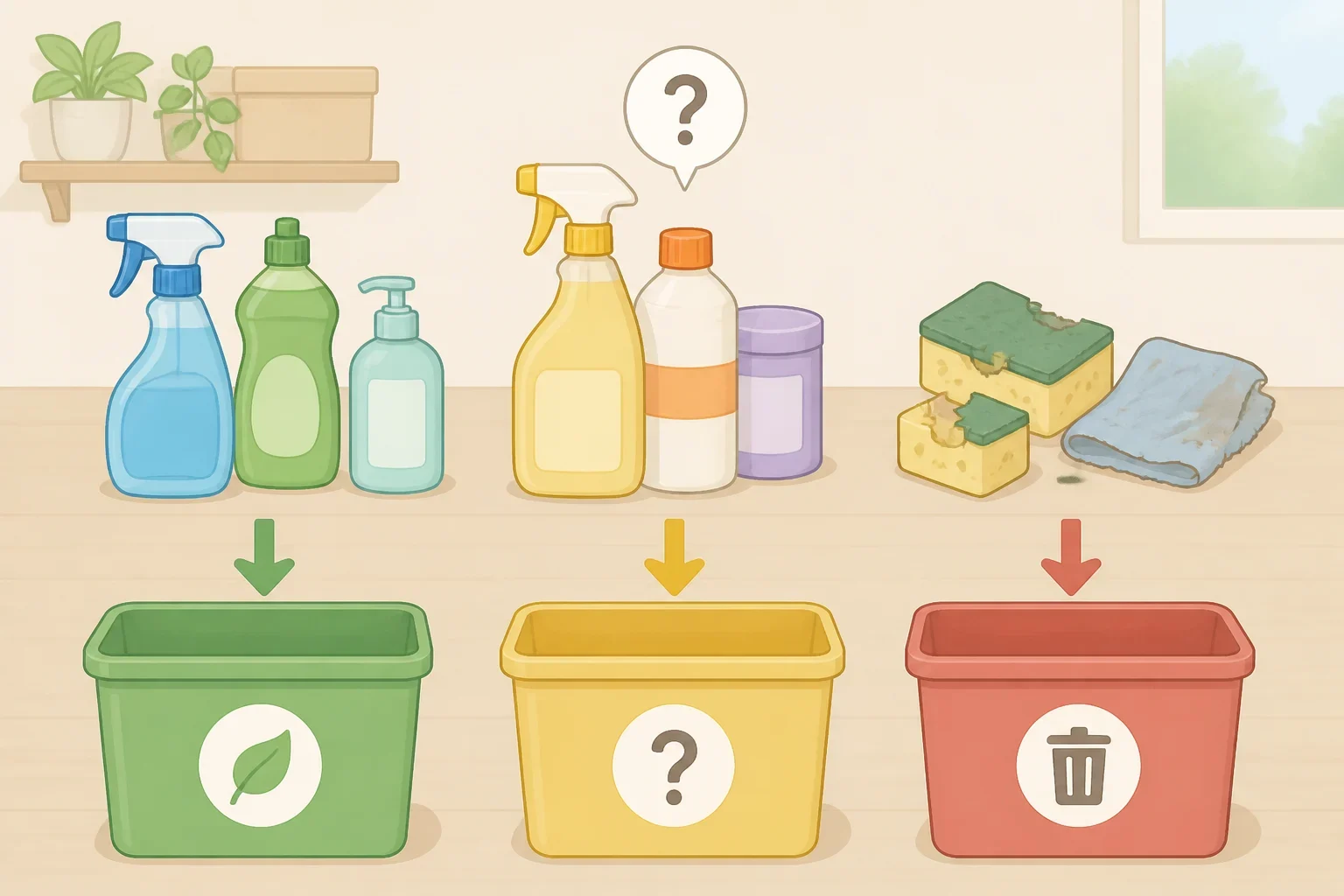
- Nearly empty or questionable cleaning products: Check the label before deciding what to do with a product. Keep cleaners in their original, clearly labeled containers, and never mix products. The EPA’s household hazardous waste guidance advises checking the label and local household hazardous-waste instructions before disposal. Do not pour an unfamiliar cleaner down the drain simply to empty the bottle.
- Old, worn sponges: Remove sponges that are falling apart or no longer useful. Keep only cleaning tools in usable condition, and give replacements a defined storage spot so they do not collect around the sink.
- Excess backup soap and cleaner: Gather unopened backups and decide whether they deserve the storage space. If the bottles are duplicates you will not use, remove them rather than continuing to buy more and letting the supply grow.
- Stained or threadbare towels and rags: Sort cloths by condition. Assign sturdy towels to cleaning and remove anything that is falling apart. A rag that is no longer useful does not need to remain in the kitchen.
Put the cleared zone back in working order
After sorting, return items according to where they are used, not just where there happens to be room. Store coffee filters near the coffee maker and place daily-use items at an accessible height, as Weiss advises.
Clear bins, turntables, and drawer dividers can make categories easier to see and reach. Use them only when they solve a specific storage problem. The goal is not to add more products to the kitchen. It is to keep similar items together and prevent them from sliding back into a jumble.
Labels can help a shared kitchen stay predictable. Label a bin, shelf, or drawer when several people use the space, and choose wording everyone will understand. The point is to make each item’s home obvious enough that it can be returned without a search.
Keep the next zone from becoming another pile
A short nightly reset protects the work already done. Wipe the counters, load and run the dishwasher, and return items to their assigned spots before bed, a routine Summers recommends. The kitchen starts the next day with fewer decisions waiting on the counter.
Use a “one in, one out” rule for mugs, gadgets, bottles, and similar items. When a new item arrives, decide which existing item should leave before the cabinet fills again. The rule can be adjusted for a household’s actual needs, but it keeps new purchases connected to the space available.
Start with one drawer today. Sort it into keep, donate, and trash, return only the useful items, and move the donation and trash containers out of the kitchen. Then schedule the next zone instead of pulling apart the entire room at once.
