
How to Get Rid of Cat Urine Smell: Step-by-Step
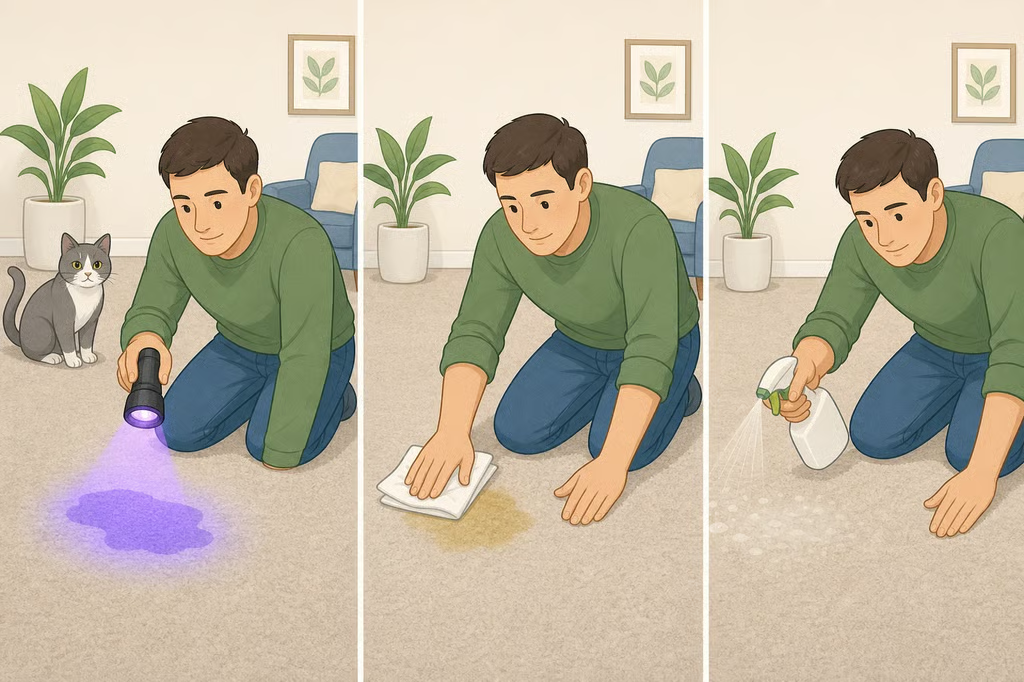
To learn how to get rid of cat urine smell, start with the part that makes the biggest difference: blot fresh urine, apply a carpet-labeled enzymatic or microbial cleaner exactly as directed, let the area dry fully, and stop repeating DIY treatment if the odor comes back. A returning smell usually means urine reached the carpet backing, padding, or subfloor instead of staying on the surface, as Kung Fu Carpets & Cleaning explains.
This method is for recent, localized spots on carpet or compatible rugs. It is not a universal treatment for hardwood, unfinished wood, upholstery, or specialty fibers. Check the care label and manufacturer instructions before applying anything. If the odor is old, widespread, or recurring, the right next step may be an inspection below the carpet, not another bottle of spray.
Before you start
Gather:
- Absorbent white towels or paper towels
- A carpet-labeled enzymatic or microbial cleaner made for urine
- Disposable gloves
- A UV blacklight, if the source is unclear
- A fan or another way to improve ventilation
- A clean container, if the product label requires dilution
Read the cleaner’s label and the carpet manufacturer’s care instructions. Follow the label’s directions for testing, dilution, application, ventilation, and re-entry for pets or children. Never mix cleaning products, and do not use bleach or ammonia on the spot.
Do not begin with vinegar, a strong oxidizer, or a high-pH cleaner if an enzyme or microbial treatment is planned. Harsh products can interfere with some formulas, and combining cleaners can create an unsafe reaction, as Allstate Cleaning cautions.
For a fresh, localized spot
1. Blot the urine without scrubbing
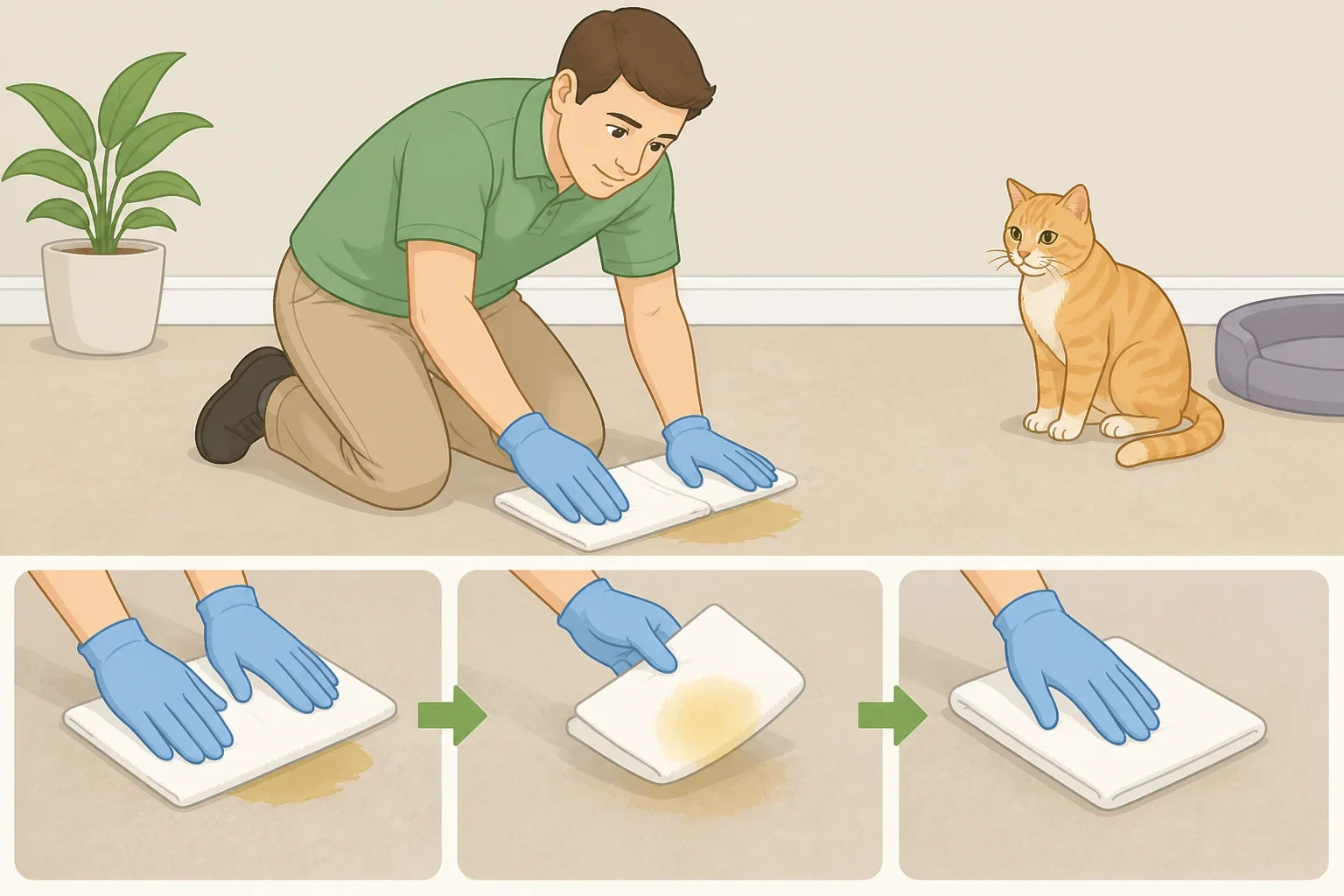
Press a white towel firmly over the wet area. Replace it as it becomes saturated and continue until little liquid transfers. Scrubbing can spread contamination and push it farther into the carpet backing, Eagle Restoration reports.
Stop once the liquid has been absorbed as well as practical. The purpose of this first step is to remove fresh urine before adding a treatment, not to make the carpet look finished.
If the spot is on a removable rug, check its care label before continuing. A rug backing, dye, or specialty fiber may need a different approach.
2. Choose a urine-specific cleaner
Look for a product labeled for cat urine, carpet use, and enzymatic or microbial treatment. There is no single universally best enzyme cleaner for cat urine. Formula, coverage, contact time, and the depth of the contamination all affect the result.
A urine-specific enzymatic or microbial cleaner is the most practical DIY category because it is intended to act on the organic source of odor rather than simply cover it with fragrance. The supplied industry guidance describes enzymes and microbes working together, but product formulas differ, so treat that explanation as a description of how these products are designed to work, not a guarantee for every bottle. Allstate Cleaning also emphasizes moisture, contact time, full coverage, and avoiding chemical interference.
Use the product only on surfaces named on its label. If the label calls for a hidden-area test, follow that instruction and do not continue if the carpet changes color or texture.
3. Apply enough cleaner, but do not flood the floor
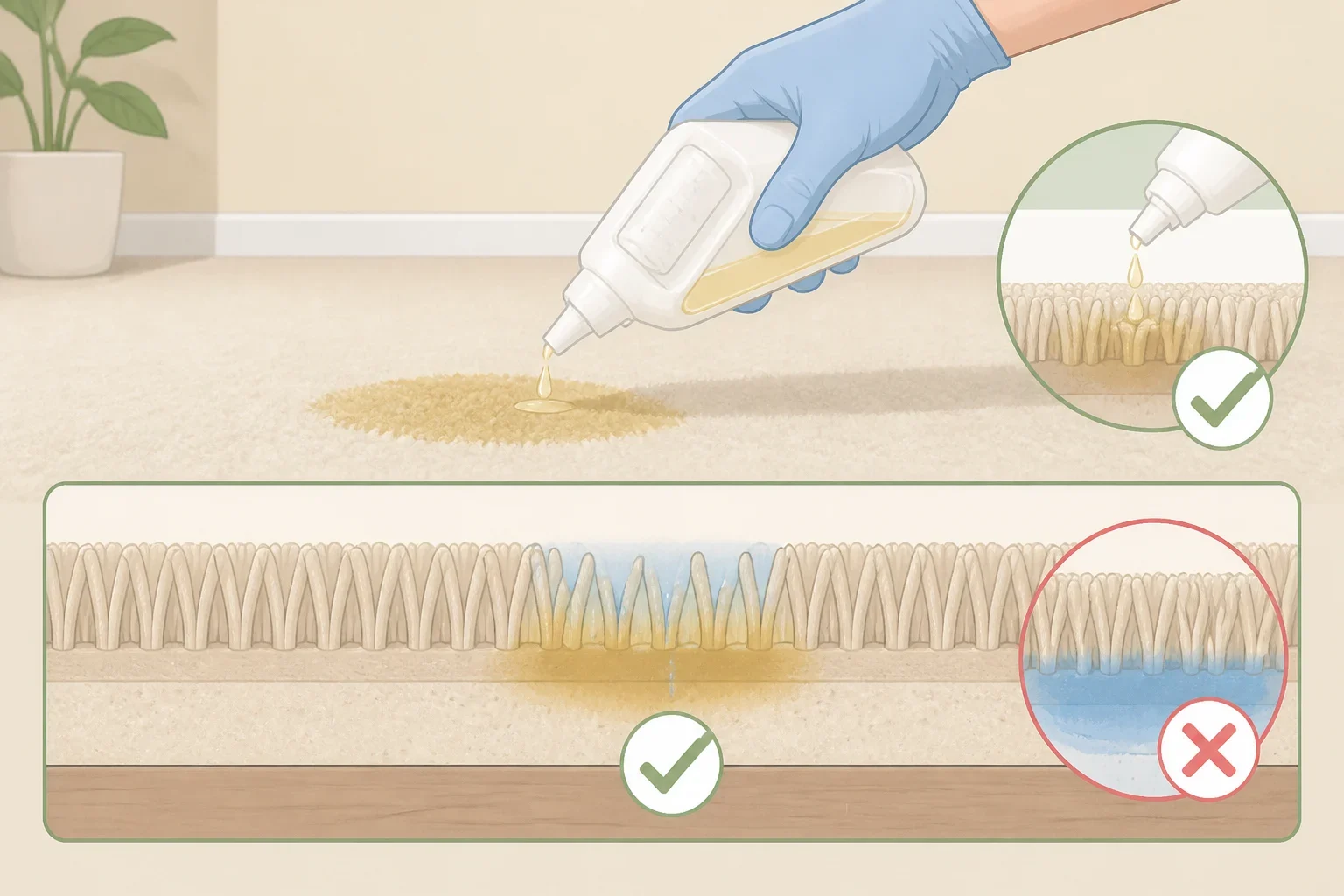
A light mist may freshen the top fibers without reaching the material underneath. The cleaner must reach the contaminated layer, but more liquid is not automatically better. Use the label’s application method and do not flood the carpet or pad.
This is the central moisture balance:
- A surface-only spot may need a targeted application.
- Urine that entered the backing or padding may not respond to a surface spray.
- Excess liquid can drive contamination farther down, damage carpet backing, and leave padding wet for too long.
Apply only the labeled amount. If the accident is large, has spread to the carpet edges, or appears to have soaked through the backing, pause before saturating the area and arrange professional advice.
4. Let the treatment work for the labeled time
Leave the cleaner in place for the full dwell time on the label. Do not remove it immediately because the carpet looks wet. A treatment blotted up too soon may not have enough contact time to act, Eagle Restoration says.
The carpet may need to remain damp during the labeled treatment period, but that is not universal for every product. Follow the instructions for covering the spot, ventilation, repeat applications, and drying. Do not add fragrance, soap, vinegar, or another cleaner during the dwell period.
5. Remove the remaining moisture as directed
When the dwell time ends, blot or extract the product according to the label. Use pressure rather than scrubbing, and replace towels as they pick up moisture.
Improve ventilation with a fan if the product and carpet instructions allow it. Avoid high heat unless the manufacturer specifically permits it. Do not judge the result while the carpet is damp. Wet fibers can smell stronger temporarily, and moisture can make old residue noticeable again.
Wait until the carpet and any affected padding are fully dry. If the odor is gone, the spot may have been surface-level. If the smell returns, the cleaner may not have reached every contaminated layer.
Why ordinary cleaners often fall short
Soap and shampoo can lift surface soil, but they may leave dried urine residue behind. Uric-acid crystals are described as resistant to basic cleaning, and moisture can make the odor noticeable again, according to Allstate Cleaning.
That is why familiar household fixes can disappoint:
- Vinegar-only treatments may reduce odor temporarily without addressing deeper residue.
- Baking soda on top of a spot may absorb some surface odor without reaching the backing or pad.
- Fragranced sprays mask the smell while leaving the source in place.
- Soap-heavy cleaning may leave residue that attracts soil, Eagle Restoration notes.
These products may have other household uses. They are not substitutes for a carpet-safe urine treatment when the goal is cat urine odor removal.
Find hidden odor before repeating treatment
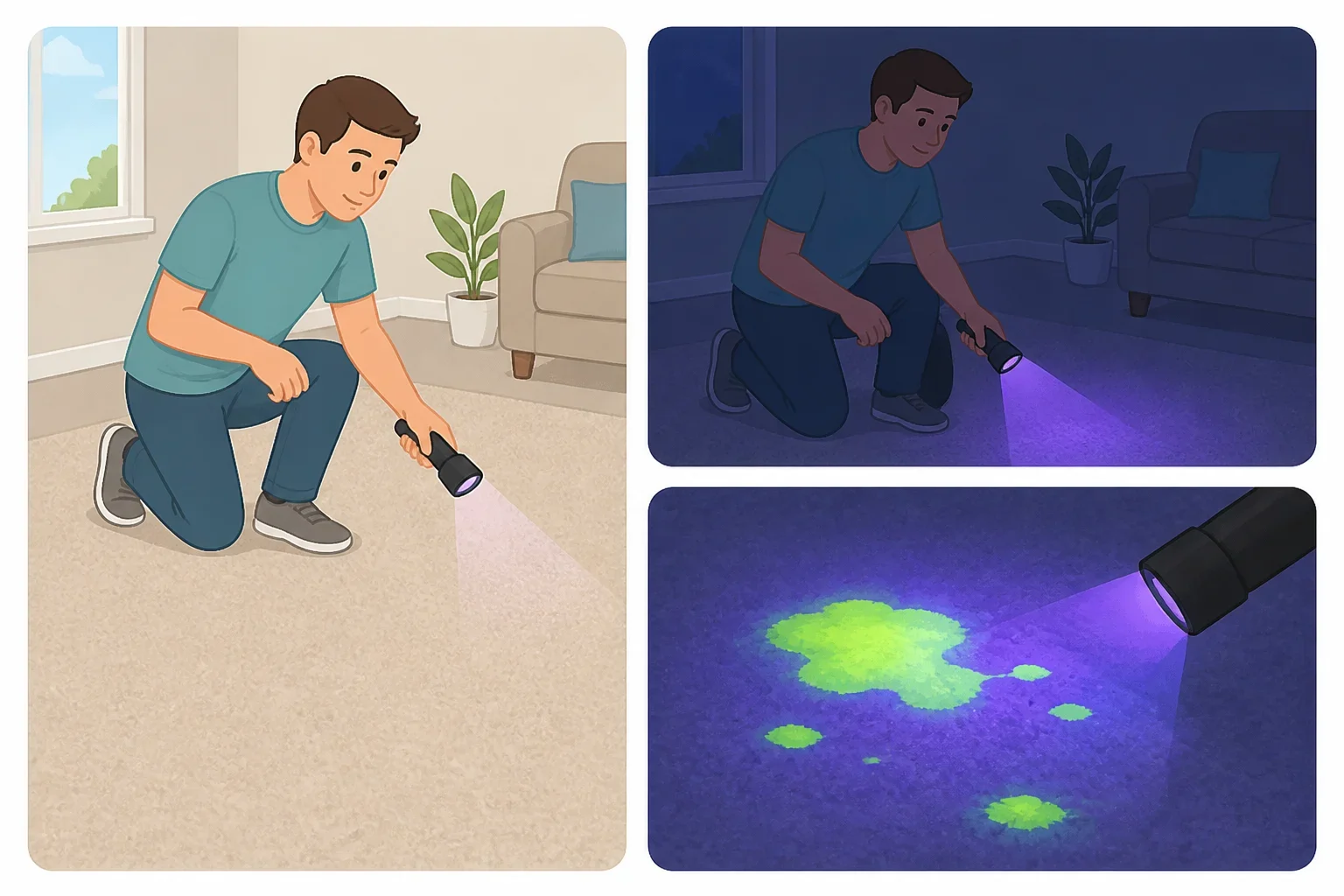
If the source is unclear, darken the room and scan the carpet with a UV blacklight. Some fresh and older residues may fluoresce, which can help reveal areas behind furniture, near baseboards, along pet routes, and in corners. A blacklight is a locating aid, not proof of urine or a measure of how deeply it traveled.
Mark suspicious areas with removable tape, then reassess them after the carpet is dry. Check for:
- Shiny, matted, or discolored fibers
- Odor with no visible stain
- A smell that returns after cleaning and drying
- Odor that becomes stronger in humid conditions
- Repeated accidents in the same location
- Water stains on a ceiling below the carpeted floor
A ceiling stain does not establish that cat urine is the cause. It may point to a separate moisture or structural problem.
Professional tools can help assess the scope of contamination. UV inspection can locate some deposits, while moisture meters indicate dampness in carpet, padding, or subfloor. pH testing may support an assessment on certain surfaces, but none of these tools identifies cat urine by itself. A technician may need to lift a seam or inspect a small carpet section when surface clues suggest deeper penetration, according to Kung Fu Carpets & Cleaning.
When old odor needs deeper remediation
How to get old cat urine smell out of carpet
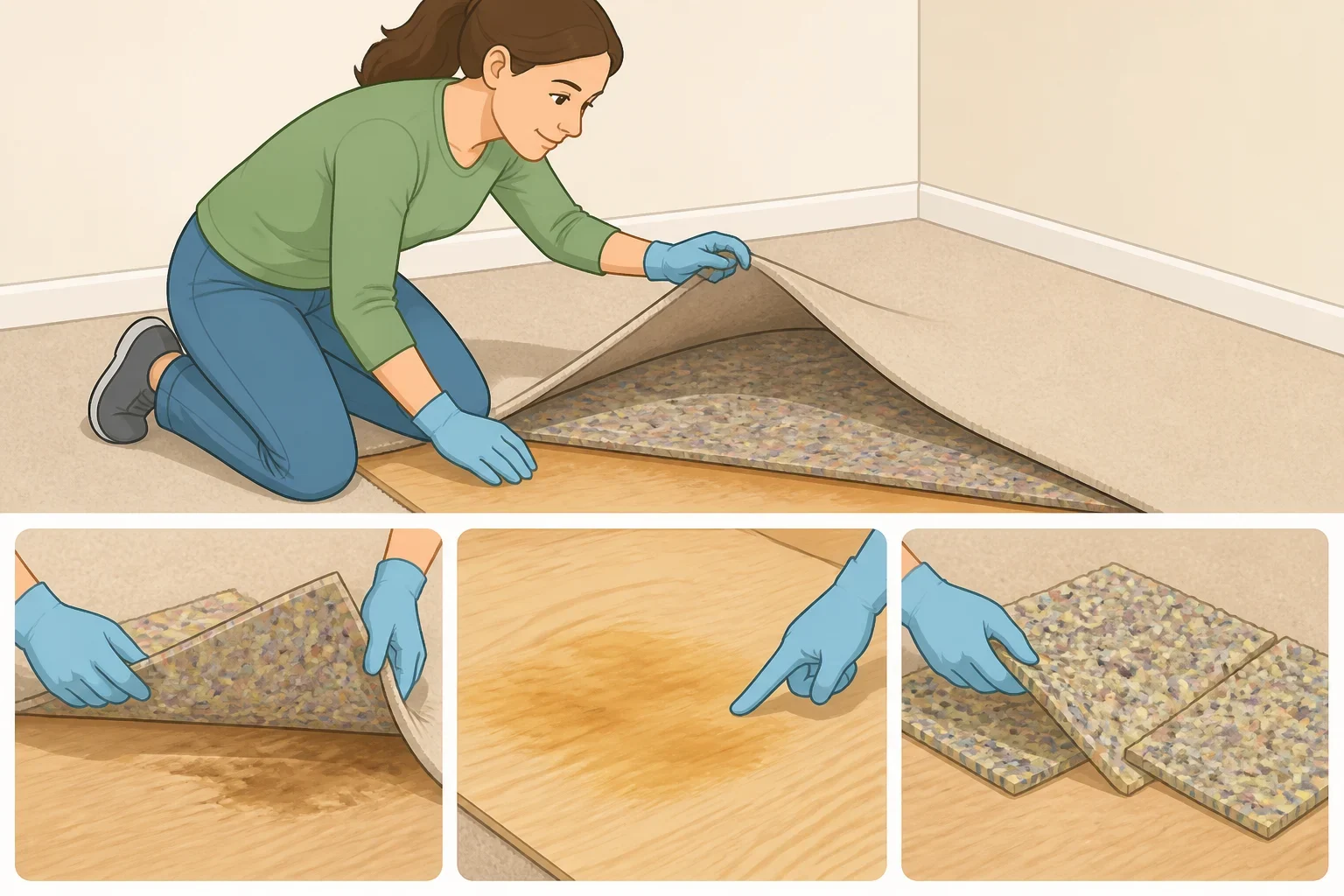
Old, recurring, or widespread odor calls for a different decision than a recent, localized accident. Dried residue can remain in the carpet, padding, or subfloor, and a surface treatment may not reach it. Depending on what an inspection finds, remediation may involve lifting the carpet, inspecting or replacing the padding, treating the underside, and cleaning or sealing the subfloor. Allstate Cleaning describes source-level treatment for set-in deposits.
Do not use a rented carpet cleaner as a blind first step for an old or deeply soaked stain. A professional may use controlled extraction after assessing the carpet and padding. Professional hot-water extraction can be part of a broader remediation plan, but uncontrolled DIY over-wetting can make the area harder to evaluate and may move moisture into lower layers.
Replacing carpet alone can also leave the odor behind if the padding or subfloor is contaminated. Before approving new flooring, ask whether the contractor inspected below the carpet and what will happen to the affected pad and subfloor. A repair plan may include removing damaged padding, cleaning the exposed surface, and sealing or replacing contaminated flooring, as OnSite Pro notes.
Call for an inspection when:
- The odor returns after careful treatment and complete drying.
- The smell is present in several rooms.
- A blacklight suggests multiple areas.
- The padding remains damp.
- The same location has been marked repeatedly.
- The stain is old, widespread, or connected to a previous pet.
- Carpet must be lifted or padding replaced.
Do not apply primer, solvent, peroxide, or another strong treatment to a subfloor without checking compatibility, ventilation requirements, and manufacturer instructions. When carpet must be lifted, padding replaced, or a subfloor sealed, professional help is the safer boundary.
Prevent repeat accidents
Cleaning will not solve the household problem if accidents continue. Note where and when they occur, whether the same area is being used repeatedly, and whether the cat’s bathroom routine has changed. A source published six months ago, OnSite Pro, advises contacting a veterinarian when bathroom habits change suddenly because conditions such as a urinary tract infection, bladder stones, or kidney disease can affect urination.
Contact a veterinarian promptly if urination outside the litter box is sudden, frequent, painful, or accompanied by straining or blood. Those signs should not be treated as a simple behavior or cleaning issue.
Litter-box setup also varies by household and cat. The often-cited recommendation is one box per cat plus one extra, with waste scooped at least daily, but space, mobility, age, and the cats’ preferences matter. Use that recommendation as a starting point rather than a rigid rule.
For the carpet itself, treat one fresh, localized spot with a tested, carpet-labeled urine cleaner and the full labeled dwell time. Let it dry completely. If the smell returns afterward, stop adding products and inspect below the carpet. That is the point when source-level cat urine odor removal matters more than another round of surface cleaning.
