

- 2027-28 FAFSA deadline and how to apply: key steps
- Confirm the 2027-2028 FAFSA opening date and deadline
- Complete this 2027-28 FAFSA checklist first
- Create separate accounts for every contributor
- Identify contributors before starting the application
- Start the real form at fafsa.gov
- Know what changes for 2027-28
- Handle changed finances through the school
- Check these items before submitting
2027-28 FAFSA deadline and how to apply: key steps
The 2027-28 FAFSA deadline and how to apply are two separate questions this fall. A limited test version became available to selected students and institutions on August 2, 2026, and Federal Student Aid posted a partial preview on September 3. Neither means the live application is open to every student.
The full 2027-28 FAFSA is promised to be available to all applicants no later than October 1, 2026. As of September 24, 2026, the official 2027-28 federal submission deadline has not been confirmed in the supplied research. That opening date is not the same thing as the final deadline to submit the form.
There is still useful work to do before the live form opens. Set up the required accounts, identify every contributor, gather tax and asset information, and make a school list. Then, when the official form is available at fafsa.gov, the application can move in an orderly sequence instead of becoming a family scavenger hunt.
Confirm the 2027-2028 FAFSA opening date and deadline
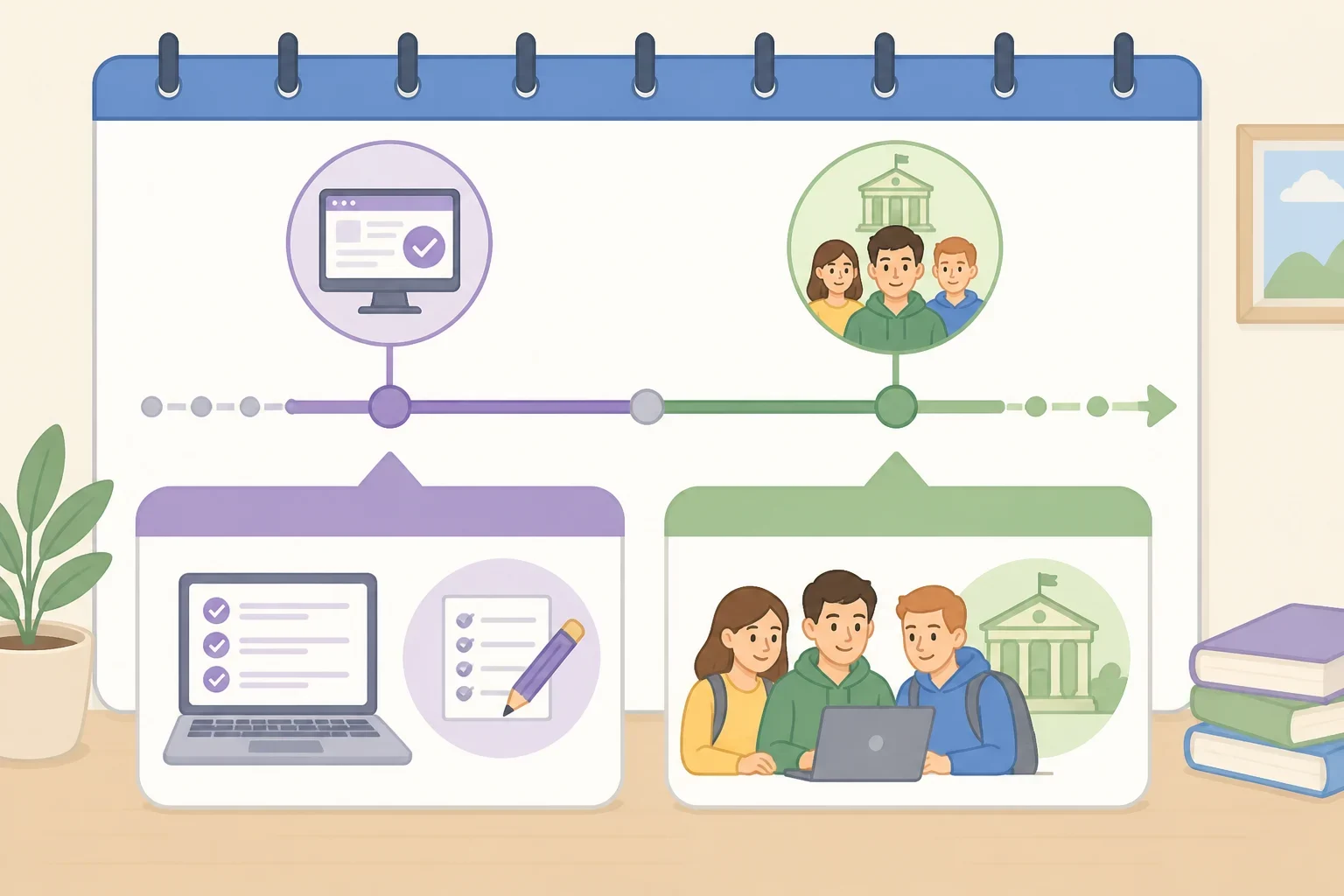
The August 2 testing release included the online and paper FAFSA, processing systems, and corrections for a limited group of students and institutions. The testing period included submission, processing, and corrections, but it was not the general public launch. A Federal Student Aid specifications guide published earlier this month says the application will be available to all applicants no later than October 1, 2026. (Federal Student Aid)
That wording matters. “No later than October 1” sets the latest promised availability date. It does not establish that every applicant can submit the form today, and it leaves room for the live application to become available earlier.
The public prototype is useful for getting familiar with the screens, but it is not a substitute for filing. Federal Student Aid describes it as a partial preview rather than a complete replica. It does not store data, interact with IRS or email systems, calculate a Student Aid Index, validate information, or provide all the interactive features of the actual form. The live version may also have different helper text and other small changes. (Federal Student Aid)
The prior cycle can create another point of confusion. For the 2026-27 school year, the federal FAFSA deadline was June 30, 2027, according to USA.gov. That date belongs to the prior cycle and should not be used as the 2027-28 deadline. Check FAFSA.gov for the official 2027-28 federal date once it is posted, and check each college and state program separately for the deadlines that apply to the student.
Complete this 2027-28 FAFSA checklist first
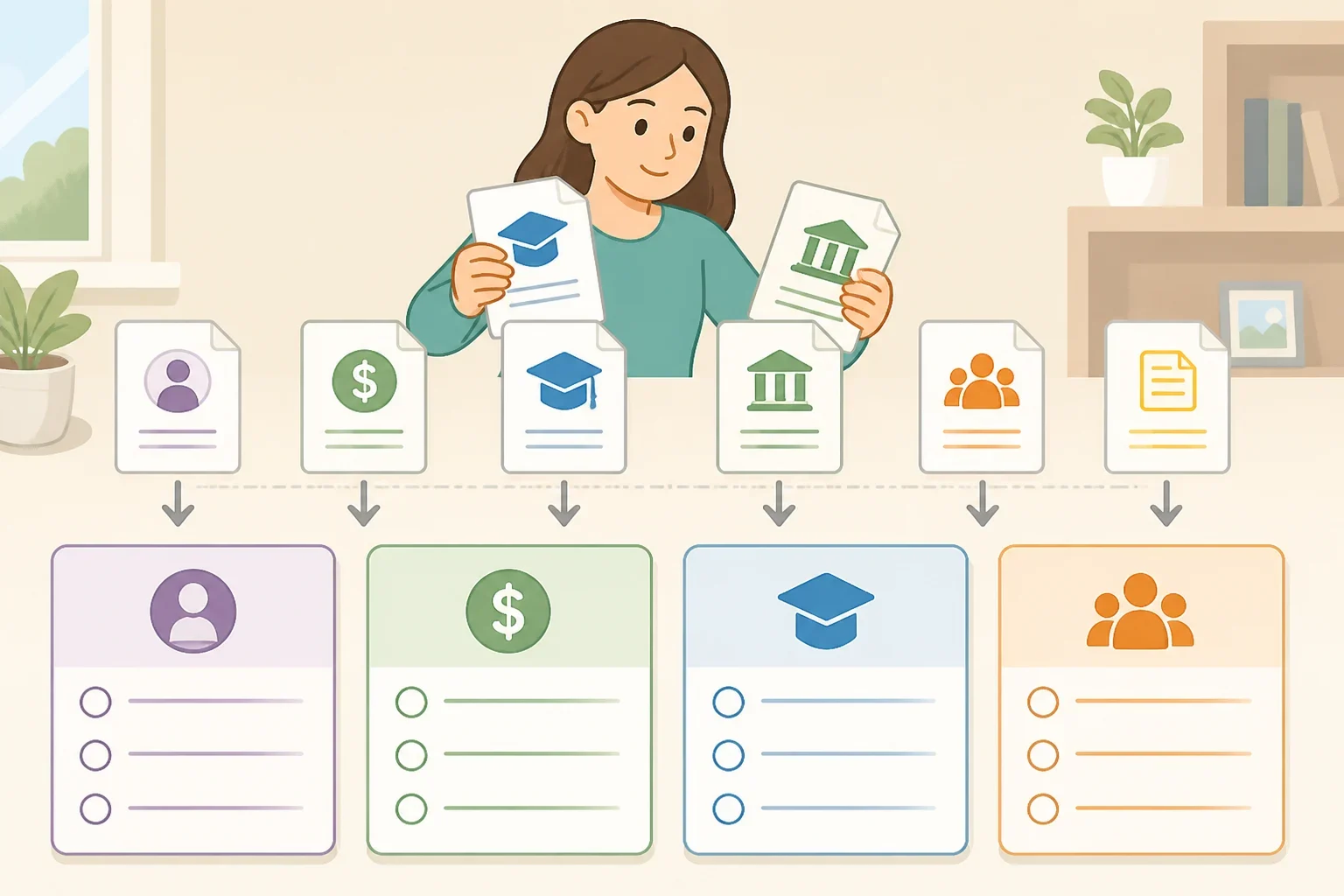
Federal Student Aid’s checklist identifies six categories to have ready:
- A StudentAid.gov account
- Contributor information
- An accessible federal income tax return
- Records of child support received
- Asset records
- A list of schools under consideration
The same materials may be needed by contributors participating on the student’s form. Gather the information before starting, but do not substitute a different tax year for the one the FAFSA requests. The form lets applicants check which income and tax information is required before they begin. (Federal Student Aid)
Assets require a little extra care. The FAFSA asks for current amounts as of the date the form is signed, not the amounts from a tax year. Check current balances for cash, checking, and savings accounts, along with the current net worth of businesses or income-producing farms and investments. Cash, checking, and savings are treated as assets, not investments.
The school list does not need to be limited to colleges where the student has already applied or been accepted. Add schools still under consideration. The online form allows up to 20 schools, and the schools listed receive FAFSA results electronically after the form is processed. (Federal Student Aid)
Create separate accounts for every contributor

Start with the student’s own StudentAid.gov account. Each contributor must create and use a separate account as well. A contributor may be the student, the student’s spouse, a biological or adoptive parent, or a parent’s spouse, depending on the student’s circumstances.
Do not share the student’s account with a parent or another contributor. The account can be used to sign legally binding documents, so it belongs to the person who created it. An email address and phone number can be associated with only one StudentAid.gov account, which means each contributor needs separate contact information.
Create these accounts before the live form opens, rather than waiting until everyone is trying to log in at once. The student and contributors should keep their own sign-in details available. A contributor’s participation does not make that person legally responsible for paying the student’s education costs.
Identify contributors before starting the application
Contributor rules depend on household and tax-filing circumstances. A married student who is not separated and filed taxes jointly with a spouse reports the spouse’s information, but the spouse is not identified as a contributor. If the couple is married and not separated but did not file jointly, the spouse is considered a contributor.
A dependent student must invite one parent to participate. That parent may need to invite the other parent if the parents are married and not separated but did not file taxes jointly. The parent’s marital and tax-filing status helps determine who must provide information.
If the family is unsure which parent belongs on the form, use the “Who’s My FAFSA Parent?” wizard before filing. Federal Student Aid says the interactive tool takes most people less than five minutes and asks questions to determine which parent or parents need to participate. (Federal Student Aid)
Once the student reaches the Contributor Invite section, enter the contributor’s email address. The contributor then uses their own StudentAid.gov account to access the invitation and complete the portion assigned to them. A parent who needs extra direction can review Federal Student Aid’s parent instructions before accepting the invitation.
Start the real form at fafsa.gov
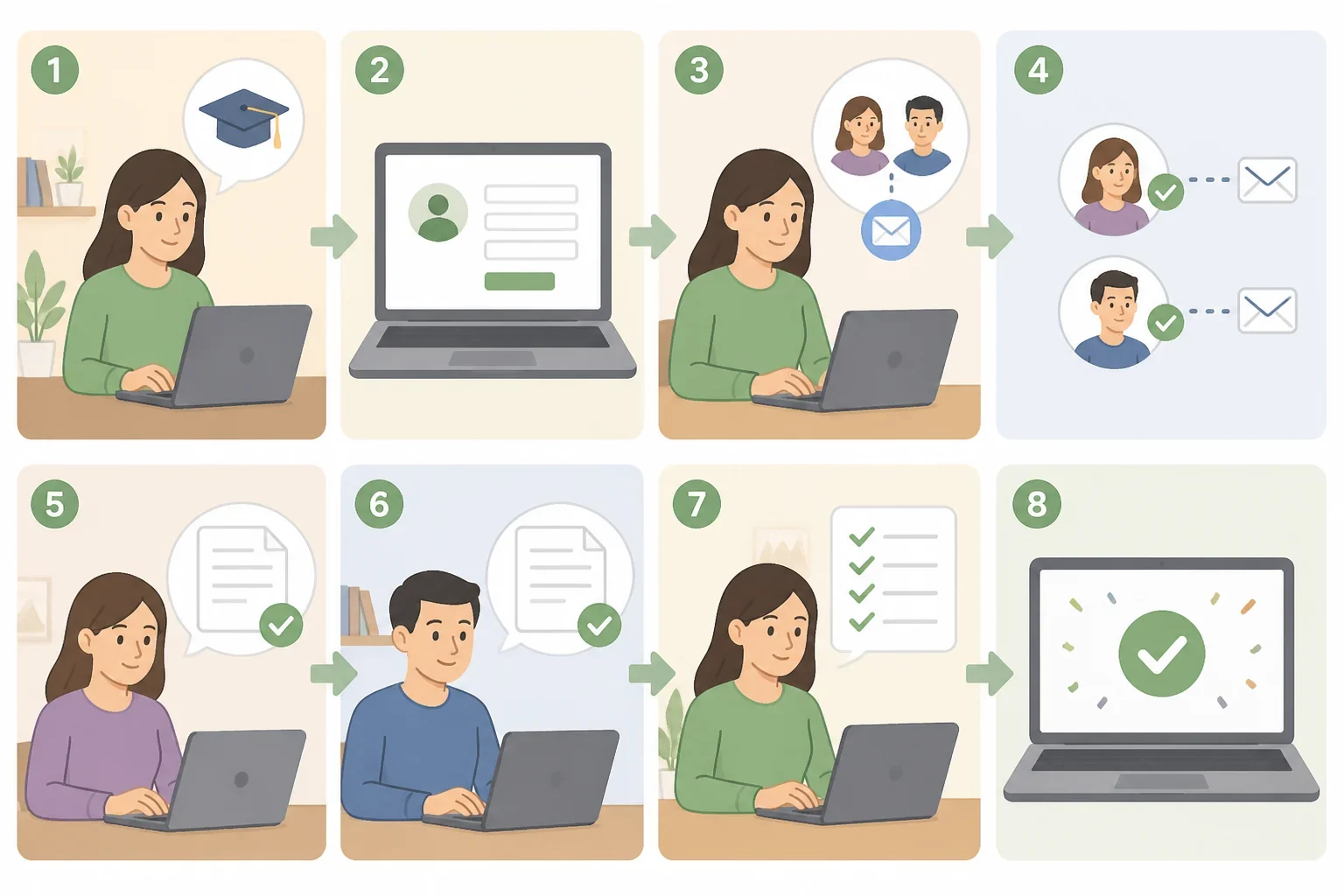
When Federal Student Aid confirms that the 2027-28 application is available to all applicants, start at fafsa.gov rather than relying on the prototype. Sign in with the student’s StudentAid.gov account and begin the new FAFSA for the correct school year.
Work through the application in order:
- Start the student section. Enter the student’s information and answer the questions that establish which contributors must participate.
- Invite each required contributor. Use the Contributor Invite section and enter the correct email address. Double-check the address before moving on, since the contributor needs access to the invitation.
- Complete the contributor sections. Each contributor signs in with a personal StudentAid.gov account and provides the requested information. Contributors may need their own tax, child-support, and asset records.
- Provide tax-information consent. The student and every contributor must consent to the transfer of federal tax information from the IRS, even if that person did not file a federal tax return or any tax return.
- Review the financial information. Use the tax year requested by the form. Report assets at their current value as of the date the FAFSA is signed.
- Add the school list. Include every college, career school, or trade school under consideration, even if an application has not yet been submitted or accepted.
- Review and sign. Check the contributor sections, school list, tax information, asset amounts, consent, and required signatures before submitting.
- Submit the application. Each required participant must complete their part so the form can be processed.
Consent is not a box to skip when the tax information seems complicated. The student and contributors must provide consent and approval for IRS information to transfer into the FAFSA. If the required consent is not provided, the student is not eligible for federal student aid. (Federal Student Aid)
Know what changes for 2027-28
The 2027-28 application includes three new questions for each contributor. They address whether the contributor filed, or will file, a 2025 income tax return from Puerto Rico or another U.S. territory, as well as combined adjusted gross income and combined income tax paid. (Federal Student Aid)
The form’s labels have also been updated in places. For example, “Personal Circumstances” is now “Background,” and “Signature” is now “Review and Sign.” Those changes should not alter the basic preparation process, but they may make the live form look different from older screenshots or instructions.
Online FAFSA forms are now processed in real time for most users. A real-time fraud-detection system introduced in April 2026 checks every form as it is submitted. Most applicants will complete the FAFSA without interruption, but a small number may be asked to take extra steps to verify their identity. If identity cannot be verified, the application is rejected, and financial aid cannot be distributed until the identity is verified and updated in the system. (Federal Student Aid)
Renewal applications are planned for students who filed in a prior year, but the implementation date had not been confirmed in the supplied research. Returning students should watch for official timing rather than assume a renewal option will appear on a particular day.
Handle changed finances through the school
The FAFSA asks for the tax and financial information required for the cycle. A job loss, pay cut, tuition expenses for an elementary or secondary school, or high medical expenses may mean that the information used on the form does not reflect the family’s current situation.
Do not replace the requested tax information with a newer year or guess at different numbers. Complete the FAFSA as instructed, then contact the financial aid office at the school the student plans to attend and request an aid adjustment, also called professional judgment. The school may request documentation of the changed income or expense.
A processed FAFSA cannot be updated by the student with new tax information, including an amended tax return. Any adjustment must go through the school’s financial aid office. (Federal Student Aid)
Check these items before submitting
Before the student signs and submits, confirm:
- The application is for the 2027-28 school year.
- The student is using the real form at fafsa.gov, not the preview prototype.
- Every required contributor has been identified.
- Each contributor has a separate StudentAid.gov account.
- Contributor invitations use the correct email addresses.
- The requested tax year is being used.
- Child-support and current asset records are available.
- The school list includes every school under consideration.
- The student and all required contributors have provided consent.
- Required signatures are complete.
- The application has been submitted for processing.
After processing, the schools listed on the FAFSA receive the results electronically and use the information to determine the types and amounts of financial aid the student may be eligible to receive. Keep checking FAFSA.gov and each school’s financial aid page for the official 2027-28 federal, state, and institutional deadlines. As of September 24, 2026, the federal deadline for this cycle is still unconfirmed in the supplied research, while the promised public opening date is no later than October 1, 2026.
