
How to Make Pumpkins Last Until Halloween: Guide
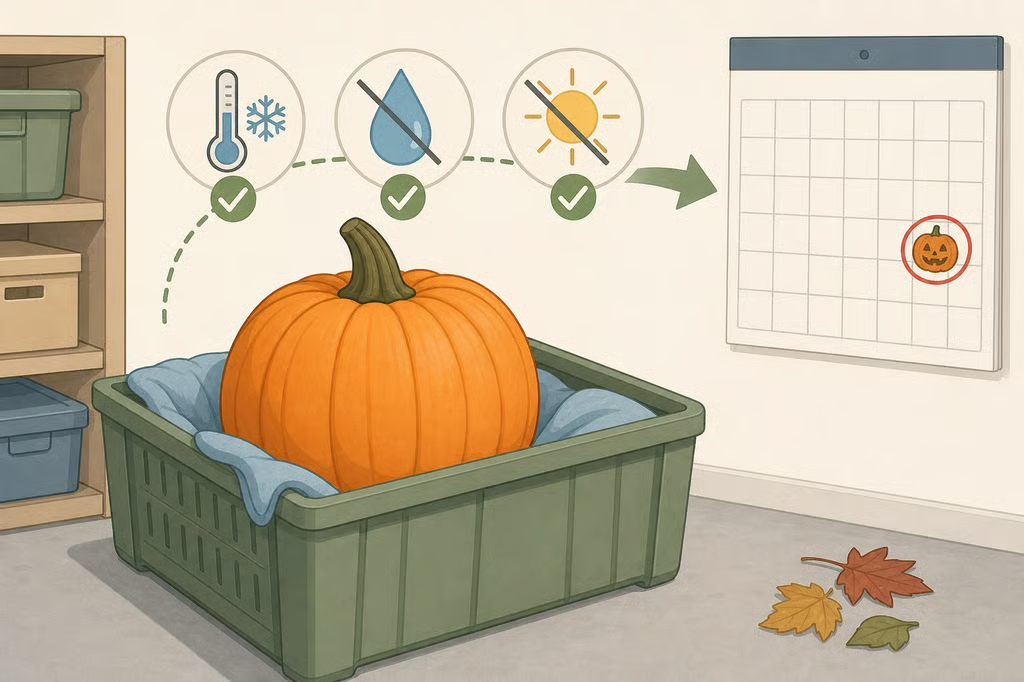
If Halloween is still several weeks away, leave the pumpkin whole. A sound, uncarved pumpkin can last far longer than a jack-o’-lantern when it stays dry, protected from frost, and free from bruises. Learning how to make pumpkins last until Halloween comes down to four decisions: choose carefully, store properly, wait to carve, and keep the carved pumpkin cool.
Whole pumpkins can last anywhere from one to six months, depending on the variety and how they are handled, but that range is not a promise for every decorative pumpkin. Once cut, a pumpkin may discolor, collapse inward, or develop a foul odor within a few days. Virginia Tech reported that carving as close to Halloween as possible is one of the simplest ways to extend its display life.
If you are wondering how to preserve a pumpkin, timing and storage conditions matter more than any coating. Buy and display it now, but save the knife for the final stretch before October 31.
1. Choose a pumpkin that can hold up
How to keep a pumpkin from rotting starts at the store
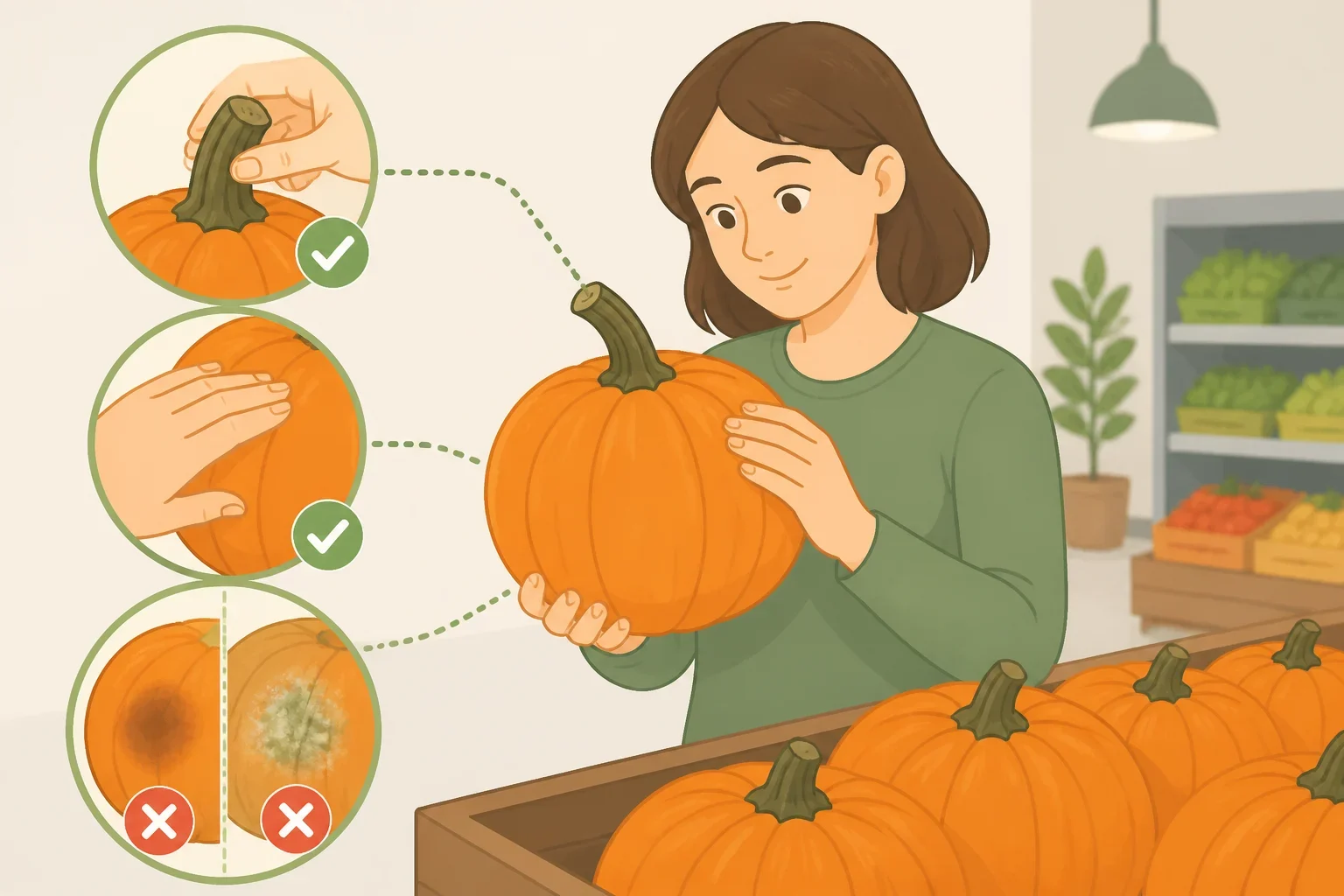
Inspect the pumpkin before paying for it. Look for a firm, dark stem that is fully attached, along with a deep, solid color appropriate for the variety. The rind should feel hard and resist a fingernail scratch or firm finger poke. Virginia Tech advises choosing a mature pumpkin with a hard rind and a healthy stem, signs that it may have better keeping potential. (Virginia Tech)
Pass over any pumpkin with:
- Bruises or deep nicks
- Soft or sunken spots
- Mold or visible rot
- Pest damage
- A loose, broken, or missing stem
A pumpkin without a stem will not store well, and a weak stem can fall off as the pumpkin sits. Carry it from the base rather than lifting it by the stem. Do not drop or pile pumpkins on top of one another. Injured produce spoils quickly, according to Oregon State University Newsroom.
For a pumpkin grown at home, harvest before the first frost and cut the stem instead of breaking it. Store-bought pumpkins have already gone through that step, so the useful advice is simple: handle them gently from the store to the porch.
2. Store whole pumpkins in the right place
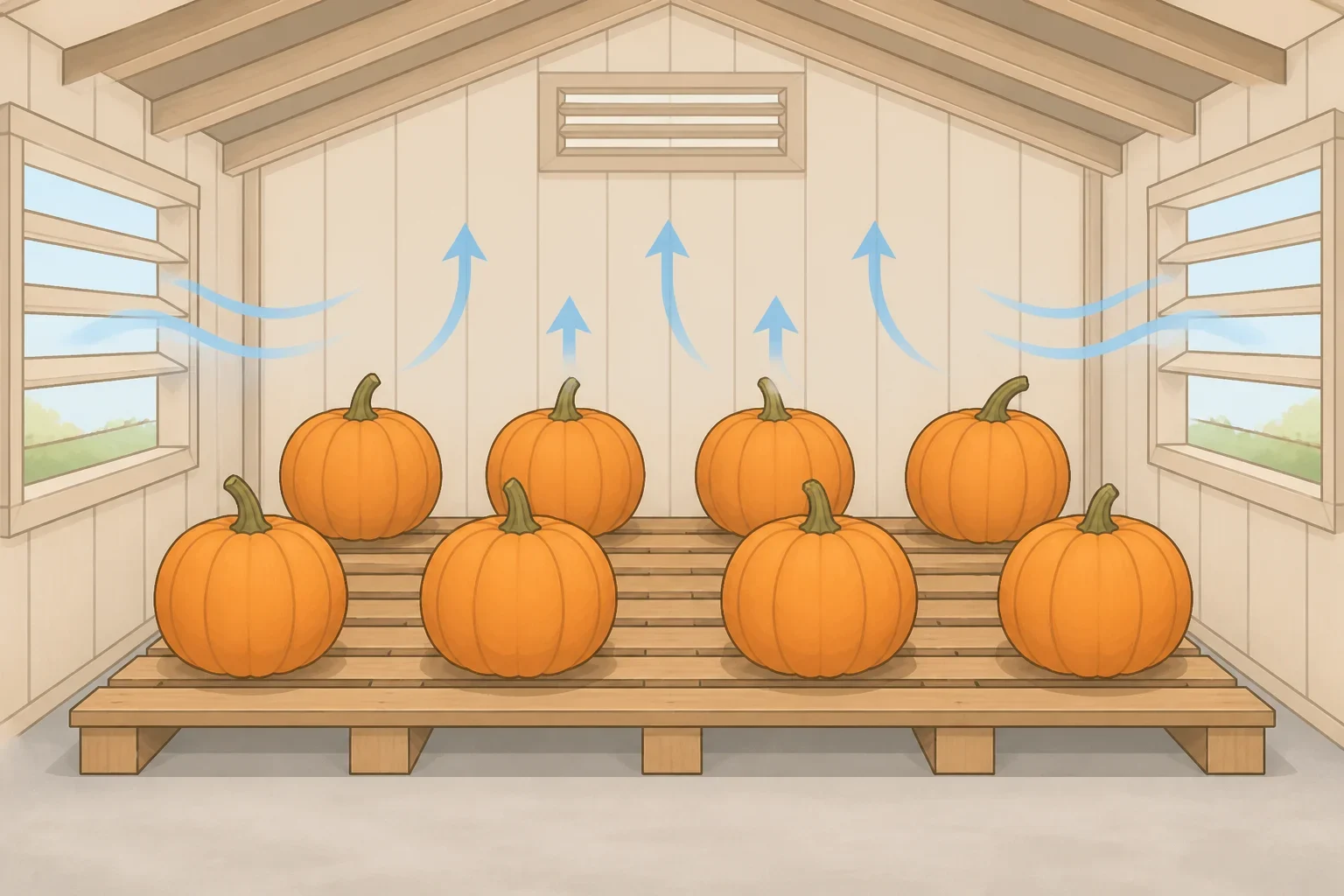
The storage spot needs to be cool, dry, and well ventilated. For most pumpkins, about 50 to 55 degrees Fahrenheit and 50% to 70% relative humidity are considered ideal. Oregon State University Extension also warns that pumpkins and winter squash deteriorate rapidly below 50 degrees. (Oregon State University Extension)
That threshold is worth watching alongside Virginia Tech’s warning that pumpkins are especially sensitive below about 45 degrees. In practical terms, a covered porch can work while the weather remains dry and mild. A garage or sheltered storage area is a better choice during extended rain, frost, or a prolonged stretch below the recommended range. A garage is suitable when the pumpkins sit on shelves off the floor, according to Oregon State University Newsroom.
Follow this sequence:
- Inspect the pumpkin before bringing it home. Check the stem and rind for damage.
- Set it under cover. Protect it from rain and direct sunlight, and keep it off damp ground.
- Leave space around it. Good air circulation helps prevent moisture from lingering against the rind.
- Check it once a week. Look for soft spots, mold, discoloration, or other visible deterioration.
- Move it before a weather shift. Bring it into a sheltered area ahead of forecast frost, extended rain, or prolonged temperatures below the recommended range.
- Carve it as close to Halloween as your schedule allows.
A layer of straw can help keep a pumpkin dry. Skip newspaper and paper bags, which can hold too much moisture. Keep pumpkins away from apples and pears, too. As those fruits ripen, they release ethylene gas, which can yellow the rind and shorten storage life. These storage recommendations come from Oregon State University Extension. (Oregon State University Extension)
Storage figures vary considerably by variety and condition. Under proper conditions, Oregon State reports that acorn squash may last one to two months, while pumpkins and butternut squash may last two to three months. Some longer-keeping squash, including Hubbard and Sweet Meat, may last up to six months. Those are variety-specific storage potentials, not a guarantee that every grocery-store decorative pumpkin will look perfect through the season. (Oregon State University Newsroom)
A weekly wipe-down with disinfecting wipes or spray may also help limit bacterial growth. Virginia Tech recommends this once-a-week treatment for stored pumpkins. Follow the product label, and never mix disinfecting products. The wipe-down cannot repair a bruised pumpkin or reverse decay that has already started. (Virginia Tech)
3. Wait to carve until the final stretch
How long do pumpkins last before Halloween after carving?
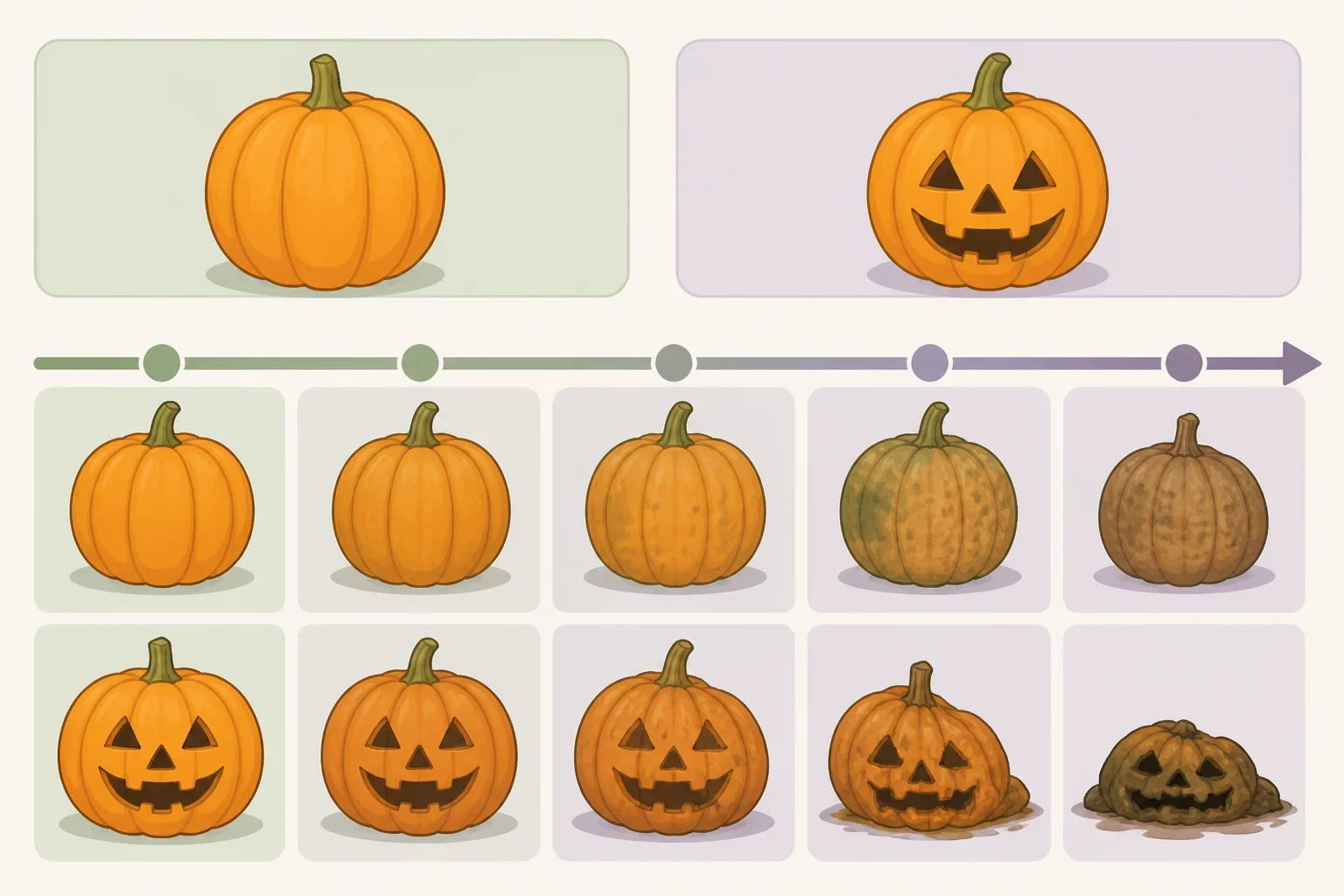
Carving removes the pumpkin’s protective surface and exposes the rind and pulp to temperature, light, humidity, fungi, and bacteria. The newly opened cavity gives decay more opportunity to take hold. SDSU Extension reported last year that discoloration, inward collapse, or a foul odor may appear within a few days of carving. (SDSU Extension)
Moisture loss also begins as soon as the pumpkin is cut. Mold spores are common in the environment and can settle on the exposed tissue, then grow when conditions are warm and humid. That makes waiting the most effective preservation step.
A whole pumpkin displayed now and a jack-o’-lantern carved on October 30 are on very different timelines, even when they are the same fruit. If the household wants a carving tradition before Halloween, choose the latest reasonable weekend rather than carving at the beginning of the month.
4. Use preservation steps if you carve early
How to make carved pumpkins last longer once they are cut
These methods can slow drying and decay, but they cannot make a carved pumpkin last indefinitely. If the carving has to happen early, work through the following steps.
Clean the pumpkin and tools
Clean soil and debris from the outside of the pumpkin before cutting. Clean and disinfect spoons, knives, saws, and other carving tools, especially when preparing more than one pumpkin. SDSU Extension recommends sterilizing carving equipment to reduce the spread of organisms between surfaces. (SDSU Extension)
Scrape out as much of the seeds and stringy interior as possible. Removing that material reduces the surface area where organisms can grow and leaves the cavity cleaner.
Apply the bleach solution carefully
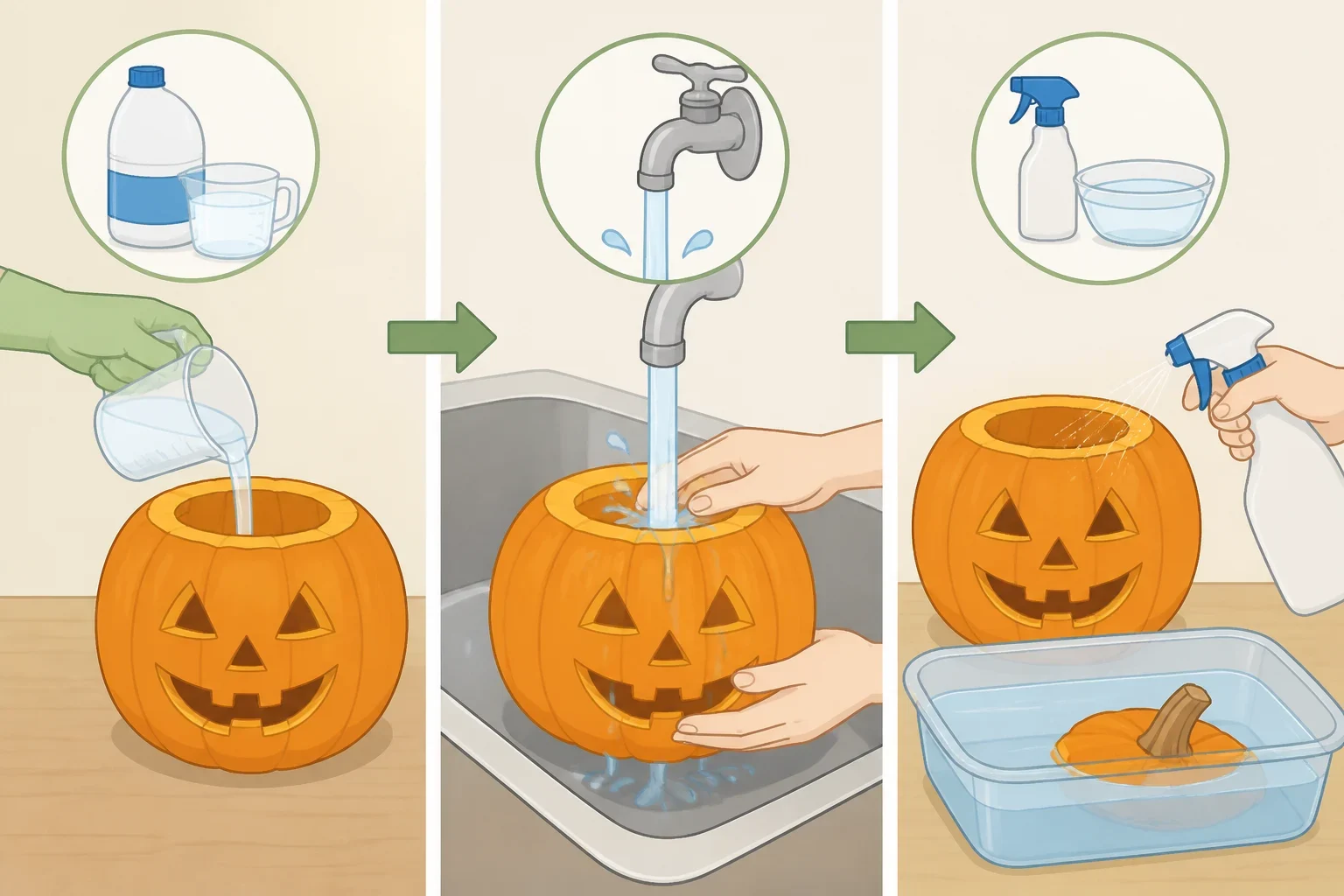
Virginia Tech recommends washing a pumpkin with cool, soapy water, then rinsing it in one part chlorine bleach to nine parts water, the ratio Virginia Tech describes as a 10% bleach solution. After carving, the same source recommends submerging the pumpkin or spraying the solution on the cut surfaces and inside the pumpkin. SDSU Extension also lists a 10% bleach solution or another disinfectant as an option. (Virginia Tech; SDSU Extension)
Use the solution only as directed by the source and product label. Never mix bleach with another cleaner. The treatment is intended to reduce microorganisms on the pumpkin, not to guarantee that mold or soft rot will stay away.
Because this treatment is for a decorative jack-o’-lantern, keep the pumpkin out of food use. As a conservative household rule, do not eat a pumpkin or its seeds that have come into contact with bleach, disinfectant, paint, oil, or sealant.
Coat the exposed edges
Rub petroleum jelly on the exposed cut surfaces to help lock in moisture and slow drying. A thin coating is enough. Virginia Tech also mentions sealants as an option, but any sealant should be used only according to its label and treated as a decorative product. (SDSU Extension)
Keep the jack-o’-lantern cool
Aim for 50 to 60 degrees Fahrenheit after carving. Warmer temperatures accelerate the growth of organisms associated with decay, while temperatures below 32 degrees can damage the pumpkin’s tissue. Once frozen tissue thaws, it decays quickly. These temperature recommendations come from SDSU Extension. (SDSU Extension)
Pay attention to both indoor and outdoor conditions. Keep the jack-o’-lantern out of direct sun and away from a heat source. If freezing weather is expected, move it to a sheltered location rather than leaving it exposed overnight.
Use an electric light
Choose a battery-operated LED candle or glow stick instead of a real flame. A candle heats the inside of the pumpkin, which can speed spoilage. Virginia Tech has also recommended battery-operated lights to help prevent the pumpkin from wilting. (Virginia Tech)
Once carved, check the pumpkin each day. Soft or sunken areas, fuzzy mold, inward collapse, and a foul smell all indicate that decay is underway. At that point, remove the pumpkin from the display rather than trying to extend its use.
After Halloween
When the pumpkin is no longer suitable for display, composting is the simplest next step. Remove candles, batteries, decorations, and other non-organic materials first. Virginia Tech notes that rotting pumpkins add useful nitrogen-rich organic matter to a compost pile or garden. Pumpkins treated with oils or paint should not be fed to animals. (Virginia Tech)
For future cooking, choose a smaller sugar or pie pumpkin instead of a large decorative one. Those varieties are sweeter, less stringy, and better suited to baking, according to Oregon State University Extension. (Oregon State University Extension)
The plan for making pumpkins last until Halloween is uncomplicated: choose an undamaged pumpkin with a firm attached stem, store it cool and dry, check it weekly, and carve late. If the knife comes out early, clean the pumpkin, treat it carefully, keep it cool, and expect preservation steps to slow decay rather than stop it.
