
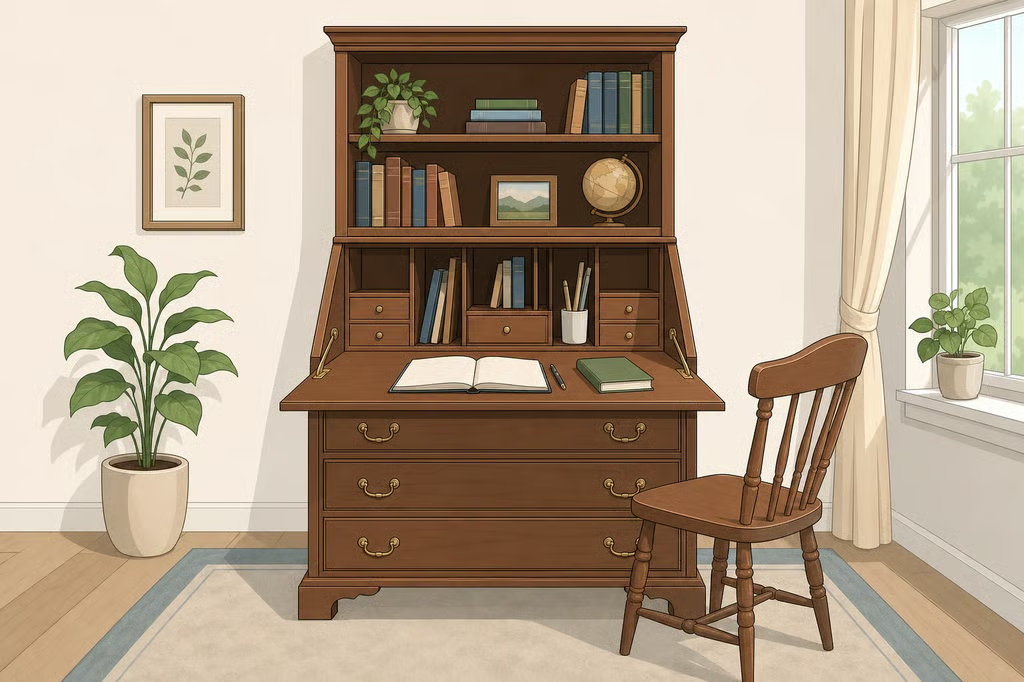
Vintage Secretary Desk Guide: Desk, Bookcase, and Storage
A vintage secretary desk can give a small room a writing surface, enclosed storage, and display space without asking three separate pieces of furniture to share the same wall. That makes it worth considering for an apartment, guest room, dining area, or compact home office.
It is not a universal replacement, though. The writing surface may be too shallow for a monitor, the chair clearance may be awkward, and a tall upper cabinet needs a careful inspection before it comes home. The best purchase is the one that fits the room when open, supports the work and storage you actually need, and does not turn into an expensive repair project.
What a secretary desk actually is
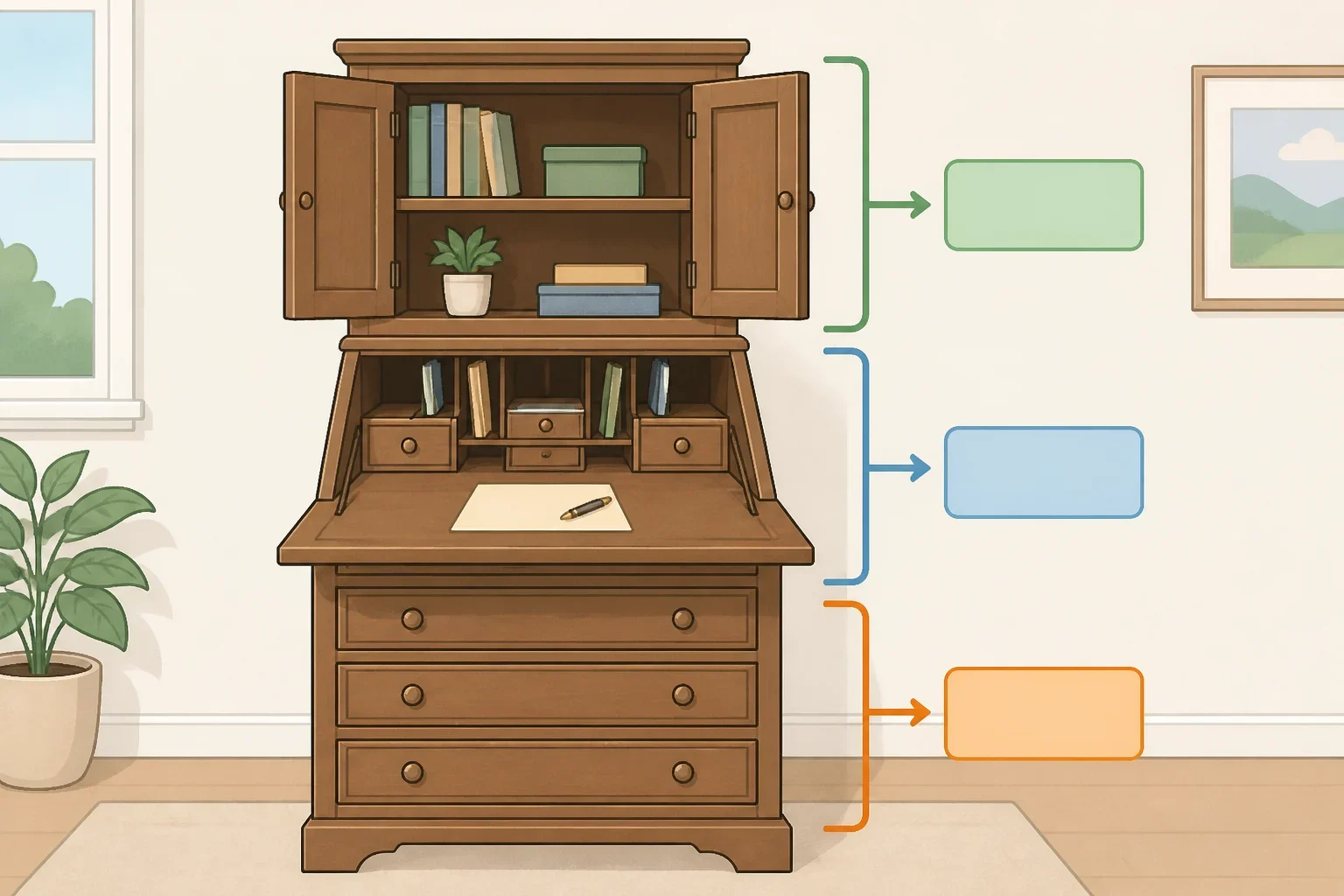
A secretary desk is arranged vertically around a writing surface. A fold-down or slant-front panel creates the desk area, drawers or cupboards provide storage below, and shelving or an upper cabinet occupies the space above. Some versions have glass doors, while others are open or enclosed behind a solid panel.
The name alone does not tell you what a particular piece can do. One desk may have a broad writing surface and several drawers, while another may offer only a narrow compartment beneath a decorative front. A hutch or china cabinet can look similar from across the room but may not include a usable work surface at all.
When shopping, open the front and examine the usable surface rather than judging the silhouette. Look at the drawers, shelves, hardware, and interior compartments. A piece can be attractive while still being a poor fit for a laptop, printer, collection of cookbooks, or family paperwork.
That distinction is what makes the inspection worthwhile. A secretary desk can combine several household functions, but each section has limits. The goal is to find a piece that handles the jobs your home actually needs, not to make a small cabinet perform as a full office, library, and sideboard at once.
What it can realistically replace
A secretary desk can combine the jobs of a compact desk, a bookcase, and a storage cabinet. It will not necessarily perform each job as well as a dedicated piece.
The fold-down surface may work well for writing, paying bills, sorting mail, or using a laptop for shorter periods. It may not have enough depth for a large monitor, a full-size keyboard, a separate mouse, and the other items needed for a full workday. Measure the usable surface from front to back and side to side, then compare those measurements with the equipment that must sit there.
The writing surface needs to remain level without someone holding it in place. Check how the hinges, support arms, brackets, or other hardware function while the panel is open. If the surface droops, shifts, or depends on a makeshift prop, treat that as a repair question before treating it as a usable desk.
Chair clearance matters just as much. The chair needs to fit beneath the open panel without forcing knees against drawers or the underside of the desk. Armrests can prevent a chair from sliding in even when the seat itself fits. If the chair cannot be pushed back or tucked away, the piece may obstruct the room every day.
The upper section can serve as a bookcase or display cabinet, but its capacity depends on the shelves, supports, span, and condition. Look for sagging, cracked panels, loose shelf pins, and improvised brackets. Keep heavier items lower unless the shelves and supports have been checked for that use. Do not assume a vintage cabinet can safely hold a television, several electronics, or a tightly packed row of heavy books.
Drawers can hold office supplies, linens, papers, or entertaining pieces. Their size determines whether they replace a storage cabinet in any meaningful way. Narrow drawers may be excellent for stationery, chargers, and keys but useless for folded blankets or kitchen equipment.
The useful compromise is simple: one piece can handle several light-duty jobs when each section has a clear assignment.
Measure the desk open
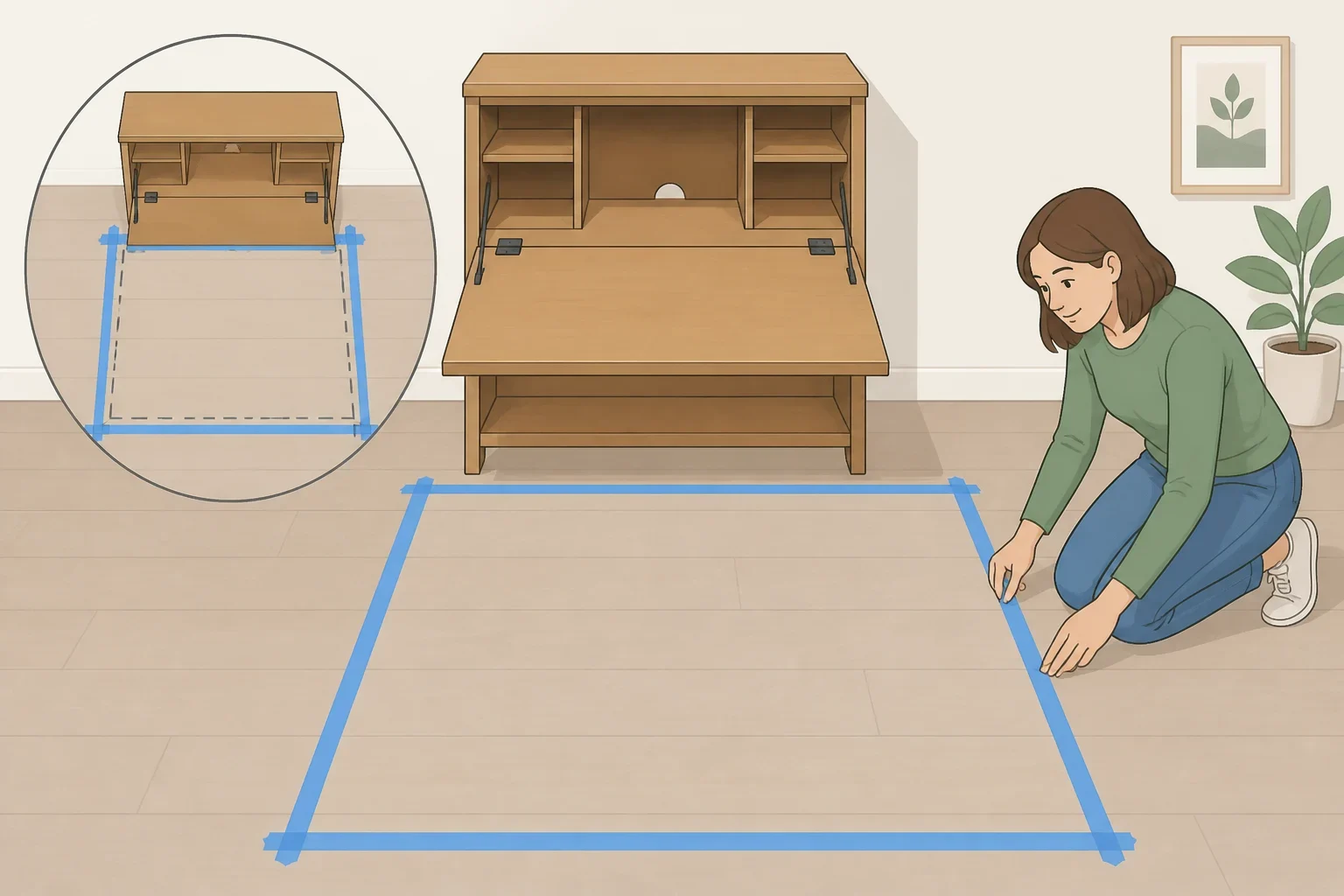
A closed secretary desk can look surprisingly compact. That measurement helps determine whether it fits against a wall, but it says little about how much room the furniture needs in use.
Before shopping, record:
- Wall width and total height
- Depth when the desk is closed
- Depth of the drop-front when fully open
- Space needed for a chair and for pulling it back
- Clearance for drawers, doors, baseboards, outlets, and nearby furniture
- The route through the doorway and into the room
- The size of the equipment or storage items it must hold
Use painter’s tape on the floor to mark the open footprint. A piece of cardboard can help test the writing surface and chair position. This is especially useful in a guest room or dining area, where the furniture may share space with a bed, table, or doorway.
The acceptable writing depth is the depth your setup requires, not a universal number. Place a laptop, keyboard, notebook, or monitor on a mock-up of the surface and check whether there is room to work without equipment hanging over the edge. If the desk will be closed each evening, include the time and effort needed to remove cords and supplies.
Check the height as well. A surface that looks comfortable while standing may not work with the chair available. A low surface may create an awkward typing or writing position. Decide whether the antique form suits the planned task before trying to force a full modern office into furniture that was not built for it.
Inspect condition before discussing price
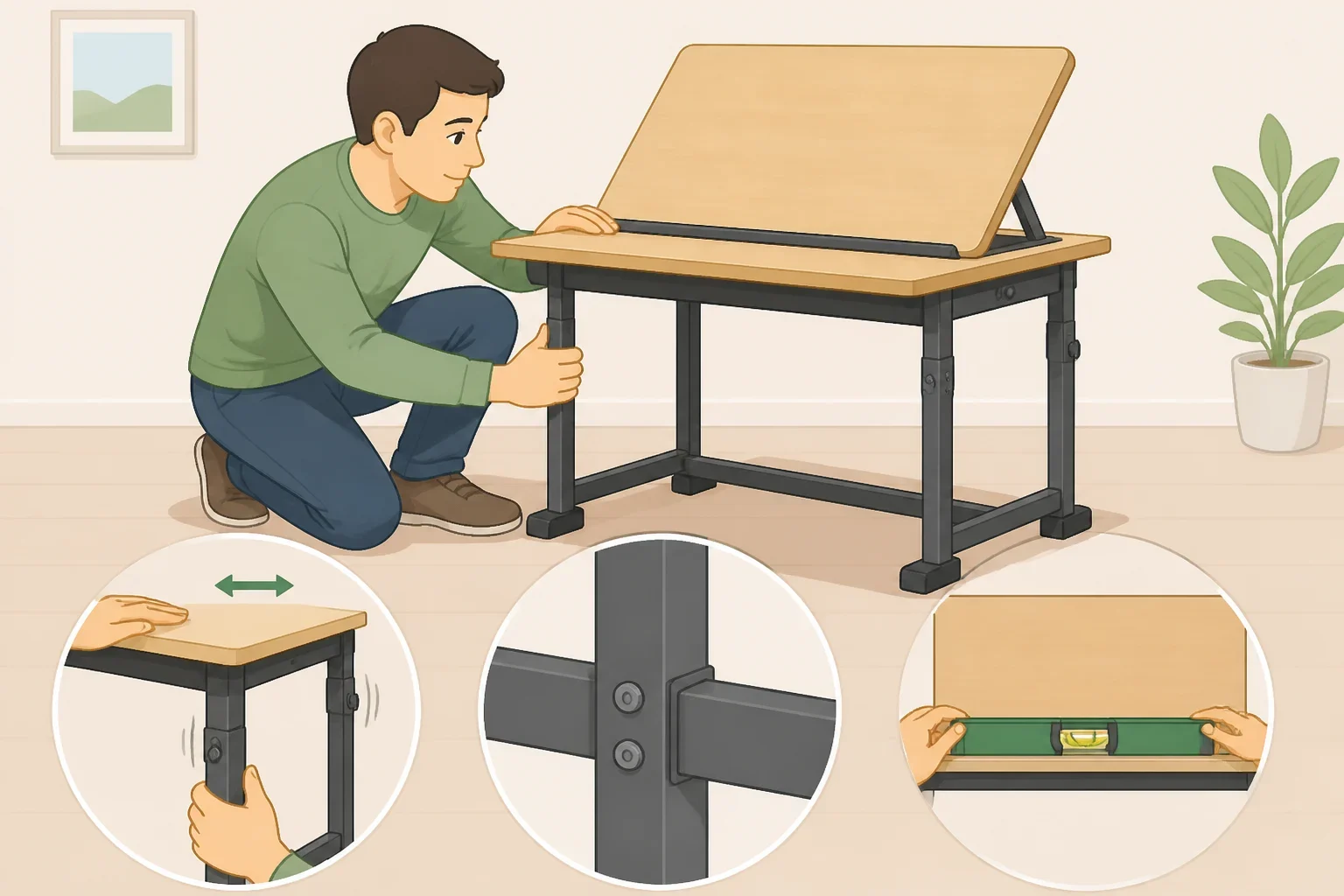
Condition matters more than age or decorative finish. A well-preserved piece may need only minor attention, while an attractive desk with structural problems can become a much larger project.
Start with the frame. Press gently on the sides and check for rocking. Look at the legs, feet, joints, and back panel. Separated joints, cracked structural parts, or a cabinet that twists out of square deserve more caution than a scuff or missing knob. Do not treat structural movement as a cosmetic flaw.
Test every moving part:
- Open and close each drawer.
- Check whether drawers stick, sag, or pull unevenly.
- Lower the writing surface slowly.
- Look for loose hinges, cracked edges, missing supports, or warped panels.
- Confirm that the open panel sits level and stays supported.
- Inspect locks, pulls, shelf pins, and brackets for missing or improvised parts.
- Look inside for water damage, stains, pests, or a musty smell.
Cosmetic hardware and structural supports are not equivalent repairs. A missing knob may be manageable; a missing support for the writing panel affects whether the desk can be used safely. Matching unusual hardware can also take time, so ask whether replacement parts are available before assuming the repair will be quick.
Look underneath and behind the piece, too. A clean front can conceal loose backing, old repairs, or damage from storage. Ask whether the desk has been refinished, repaired, or moved recently, then compare the answer with what the inspection shows.
Handle old finishes carefully
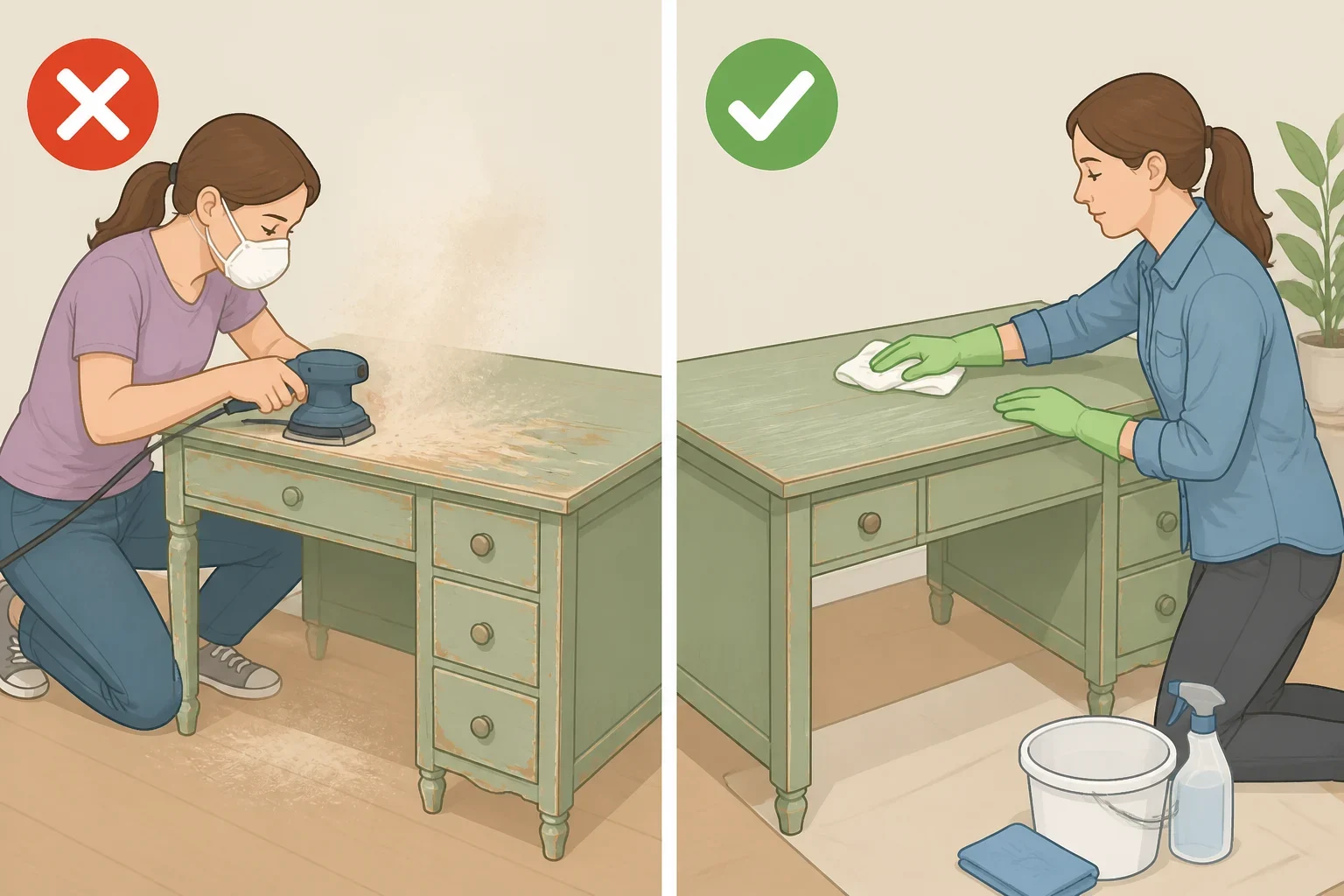
Furniture made or painted before 1978 may contain lead-based paint. The Environmental Protection Agency explains lead exposure risks and precautions for protecting a household.
An intact, undisturbed finish is a different situation from flaking or peeling paint that may release dust during use or repair. Do not casually sand, scrape, strip, or use a power tool on a suspect finish indoors. If the paint is damaged, seek appropriate testing and lead-safe handling guidance before disturbing it, especially in a home with children.
The question is not simply whether the desk is old. Check the finish’s condition and decide whether it can remain undisturbed. If the piece needs extensive stripping or refinishing, include that work in the total cost and consider whether another desk would be the safer, simpler choice.
A tall secretary desk also needs a stability plan. Place it on a level surface and inspect the feet, joints, and back before loading the upper cabinet. Keep the upper section from becoming top-heavy, and do not allow children to climb on the desk or use the open writing panel as a step.
If the piece remains unstable after placement or needs anchoring, stop using it until the furniture, wall construction, and anchoring hardware have been assessed together. Follow the hardware manufacturer’s instructions rather than improvising with a weak attachment. When the correct method is unclear, a qualified furniture or home-repair professional can help determine whether the piece should be anchored or left in a different location.
Give every section one job
The easiest way for a secretary desk to become frustrating is to treat every compartment as general storage. Assign the sections before the furniture arrives.
For example, reserve the fold-down surface for a laptop and notebook. Use one drawer for chargers and pens, another for household documents, and the upper shelves for books or lighter display pieces. In a dining room, drawers might hold cloth napkins and placemats while the cabinet stores infrequently used serving items.
Leave enough empty space to close the front without catching cords, papers, or objects. If the desk is meant to disappear at the end of the day, test that routine before filling it. A setup that requires several minutes of rearranging every evening may not stay contained for long.
The room should determine the assignment, too:
- In a home office, use it for a laptop, papers, and office supplies.
- In a guest room, make it a small writing station that does not take over the room.
- In a dining room, reserve drawers for napkins and placemats and use the upper section for dishes.
- In a living room, use the closed compartment for paperwork or small household items.
- In an entry area, organize mail and keys only if there is enough clearance and the finish can handle the setting.
Avoid storing damp, unusually heavy, or leak-prone items unless the interior and finish are suitable and protected. Electronics need sensible cord management and whatever ventilation their own instructions require. A closed cabinet is not automatically the right place for every device.
When to pass on the piece
A secretary desk is probably the wrong choice when the open footprint blocks a doorway, leaves no usable chair clearance, or makes the main walking path difficult to use. A smaller desk with less storage may serve better if daily work is the priority.
Choose another solution if the setup requires a deep monitor, multiple screens, a printer, or equipment that cannot fit safely on the writing surface. A separate desk and wall-mounted shelving may be more practical than asking a vintage cabinet to perform a job it was never sized to do.
Pass when the repairs are unclear or the total cost no longer makes sense. Structural instability, damaged writing-surface supports, severe water damage, extensive finish work, or missing custom hardware can outweigh the savings of buying secondhand. For a piece with sentimental or significant value, a furniture restorer may be worth consulting before modification.
The final decision comes down to three questions:
- Does it fit the room with the writing surface fully open?
- Does it safely support the work, books, and storage planned for it?
- Are the purchase, transport, and repairs worth the result?
Measure the open footprint, test the actual equipment and chair, and inspect the frame and moving parts before discussing price. If the answers are yes, a vintage secretary desk can earn its space by handling several modest household jobs without becoming a cluttered catch-all.
