
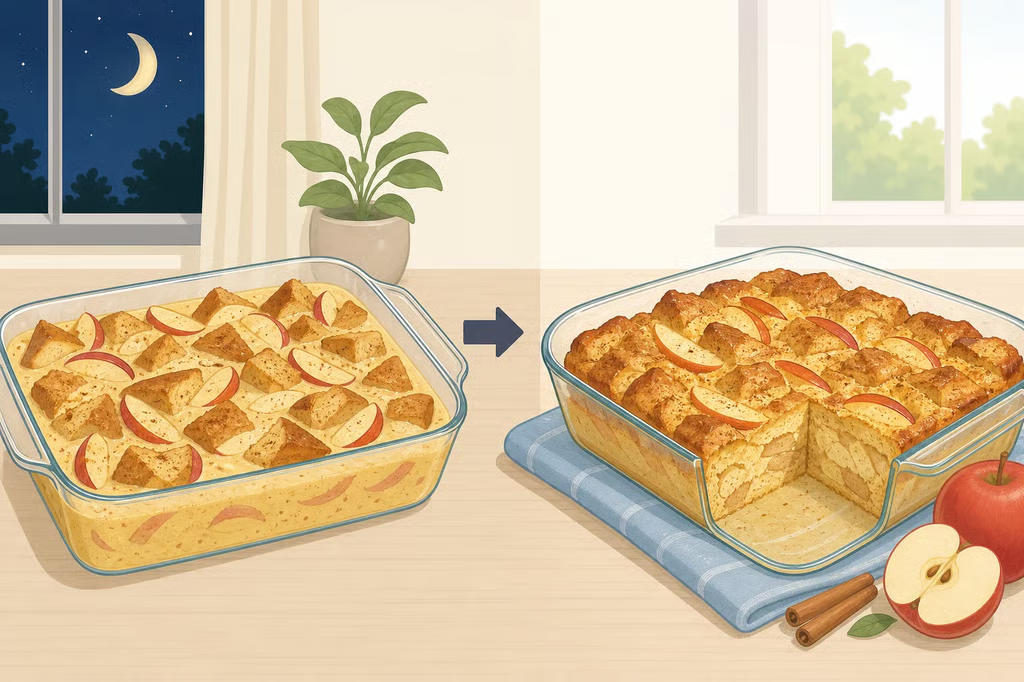
- Baked Apple Cinnamon French Toast: Custardy, Not Soggy
- What to gather before starting
- 1. Choose sturdy, dry bread
- 2. Prepare the apples
- 3. Assemble the overnight apple French toast bake
- 4. Bake until the center is set
- 5. Fix the texture before serving
- Store and reheat leftovers
- The easiest schedule to follow
Baked Apple Cinnamon French Toast: Custardy, Not Soggy
Baked apple cinnamon French toast gives you a warm, apple-pie-like breakfast without standing at the stove flipping slices while everyone waits. The dependable method is simple: choose dry, sturdy bread, assemble the casserole ahead, refrigerate it overnight, and bake until the center is set but still soft. Since the bread does most of its soaking before breakfast, the morning job is mostly putting the pan in the oven. The Kitchn uses the same make-ahead approach for its apple version.
The dish combines thick brioche or challah with diced apples, brown sugar, cinnamon, and an egg-based custard. The result has the flavors of apple pie in a breakfast casserole, with tender fruit, a soft middle, and a browned top. The instructions below focus on the choices that decide the texture: the bread, the soak, the bake, and the rest afterward.
What to gather before starting
You will need a large bowl, a whisk, a knife, a sauté pan if you plan to soften the apples, a 9-by-13-inch baking dish, and foil or plastic wrap. A greased 9-by-13-inch pan is used for the comparable casserole from Love and Lemons.
For the casserole, gather:
- Brioche or challah, preferably dry and cut into 1-inch cubes
- Tart apples, peeled, cored, and diced
- Eggs
- Milk, with cream if using a richer custard
- Brown sugar
- Vanilla
- Ground cinnamon
- Ground nutmeg
- Salt
Use the ingredient quantities from the apple French toast recipe being followed rather than combining measurements from different casseroles. The recipes vary in their custard and topping proportions, which changes the finished texture and sweetness. Maple syrup, confectioners’ sugar, or whipped cream can be served at the table.
The casserole contains eggs and dairy, so keep it refrigerated during the make-ahead soak. Do not assemble it and leave it sitting out for a later meal.
1. Choose sturdy, dry bread
Use day-old challah or brioche. Dry bread absorbs custard while keeping its shape, whereas fresh, soft bread is more likely to collapse during a long soak. Love and Lemons lists challah as a favorite, with brioche, French bread, and crusty sourdough as other suitable choices.
Buy the loaf a day or two before assembling the casserole so it has time to dry out. Love and Lemons explains that dry bread absorbs more custard than fresh bread, which helps produce a soft, moist middle without leaving the cubes waterlogged.
Thin or very soft sandwich bread is the wrong starting point. It can become mushy and fall apart during the soak, and changing the bake time will not fully fix bread that cannot hold the custard. The Mom 100 specifically recommends challah or brioche and warns against thin, soft sandwich bread.
If the loaf is still soft, cut it into cubes and dry the pieces in a 300°F oven for about 10 minutes, turning them once. Remove them when they feel dry but have not taken on color, then let them cool before assembling. The Mom 100 uses this drying method.
2. Prepare the apples
Peel, core, and dice the apples into small pieces so they spread through the casserole instead of collecting in a few large pockets. Toss them with brown sugar and cinnamon before layering them with the bread. The Kitchn uses this raw-apple approach, and the fruit softens in the oven while its juices add sweetness to the custard.
Raw apples keep the assembly quick. If a softer fruit texture is preferred, sauté the diced apples in butter over medium heat for about five minutes, stirring often, then let them cool briefly. Thriving Home uses this step before assembling its casserole.
The two methods serve different purposes. Raw apples are simpler and retain more bite, while sautéed apples start softening before they meet the bread. Do not layer very hot apples into the dish, since the casserole still needs to go into the refrigerator for its soak.
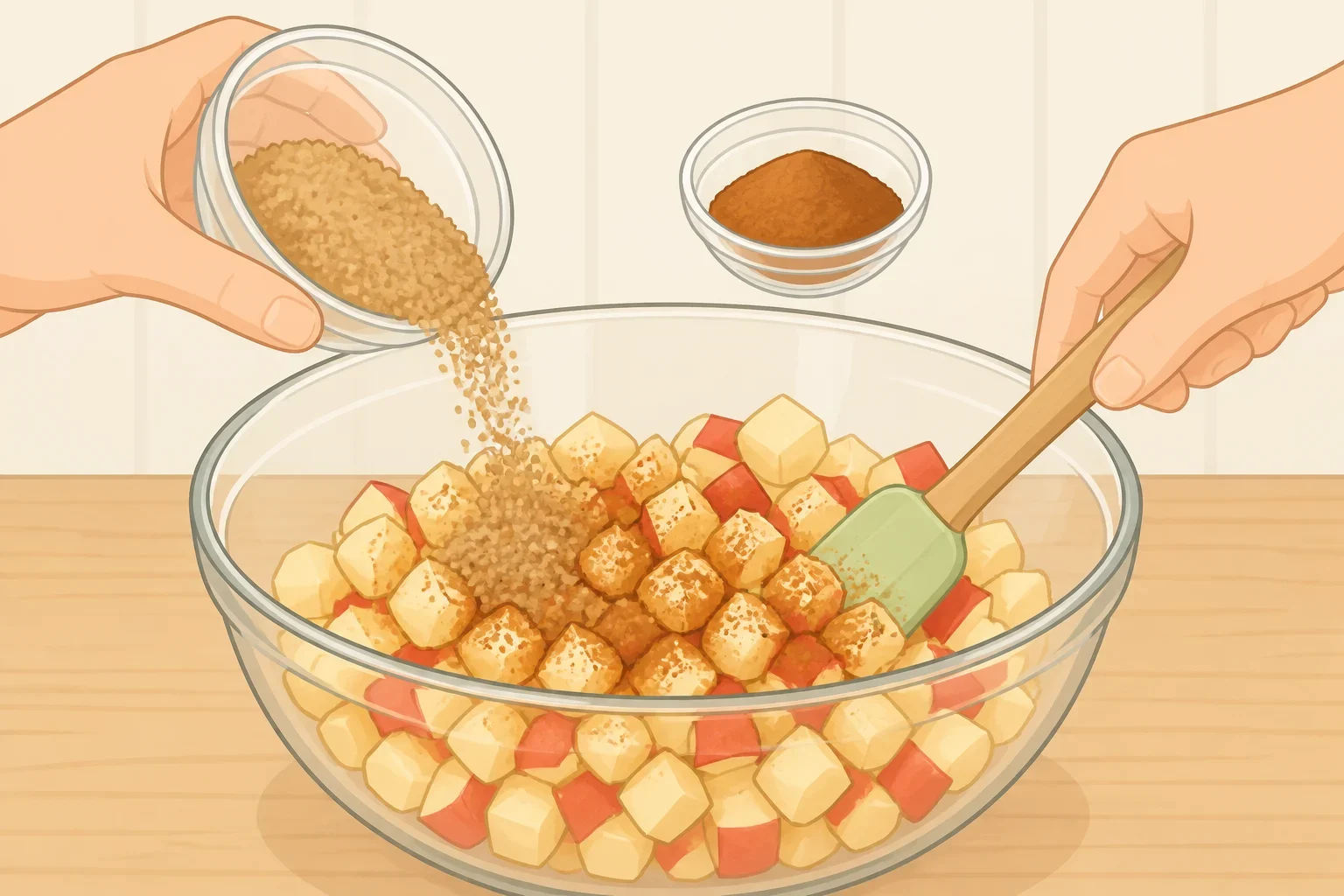
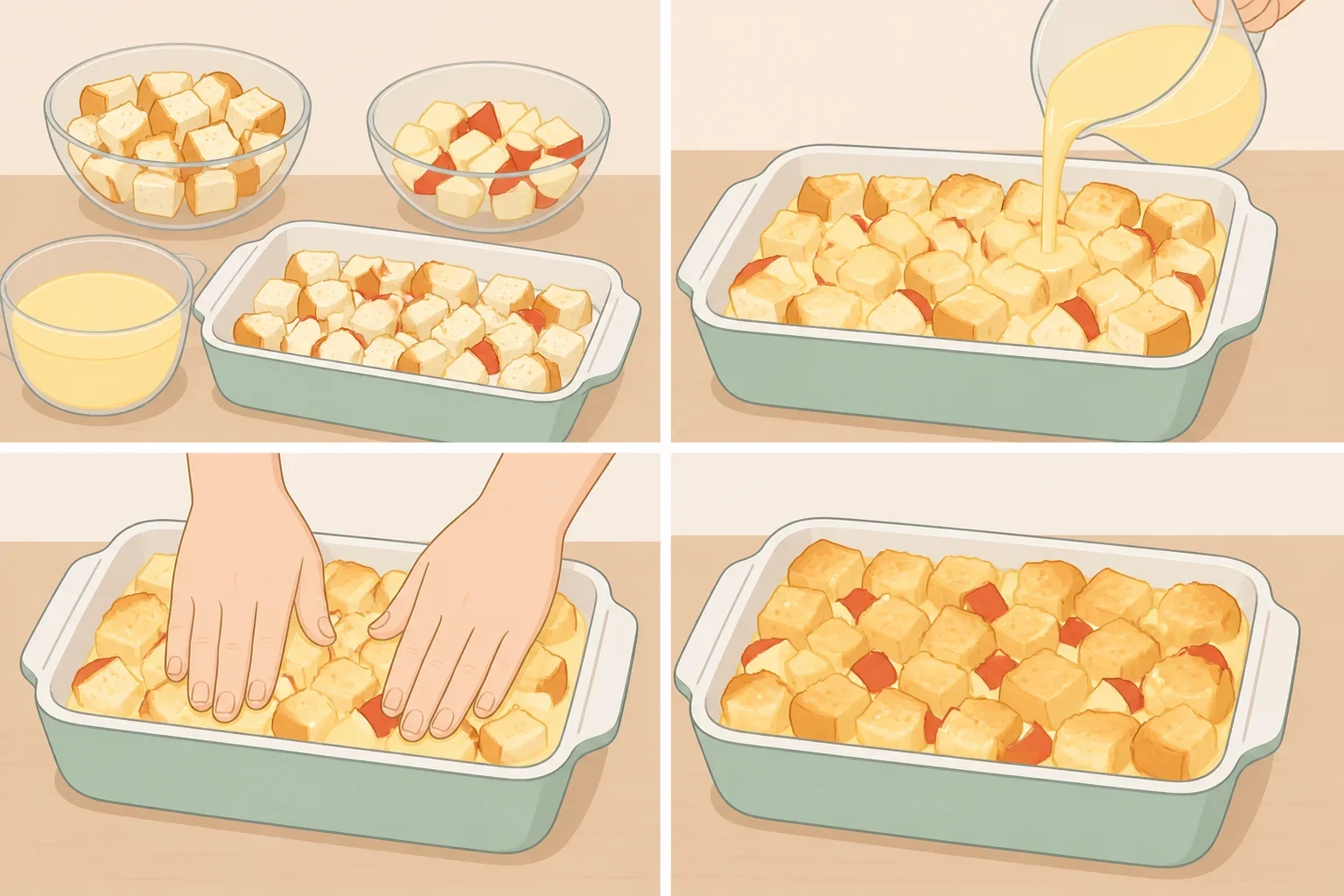
3. Assemble the overnight apple French toast bake
- Grease the dish. Coat the bottom and sides of the baking dish so the soaked bread is easier to serve after baking.
- Add the bread. Spread the cubes in an even layer. Leave them loose rather than packing them down, since exposed edges can brown and crisp.
- Layer in the apples. Tuck the seasoned fruit between the bread cubes so the apples are distributed through the casserole rather than sitting only on top.
- Whisk the custard. Combine the eggs, milk or cream, sweetener, vanilla, spices, and salt in a large bowl. Whisk until the eggs are fully blended and the spices are spread throughout.
- Pour slowly. Work around the dish so the custard reaches the corners. Press the bread down lightly with a spatula or clean hands until the cubes are moistened, but do not crush them into a solid layer. Thriving Home also recommends pressing the bread into the custard.
- Cover and refrigerate. Seal the dish with foil or plastic wrap and refrigerate overnight. Love and Lemons recommends assembling ahead and letting the casserole sit overnight so the bread can absorb the custard.
An overnight soak gives the bread the most time to absorb the liquid. If that is not possible, allow at least four hours and press the bread down periodically during the soak, as Thriving Home advises. This is the better shortcut when the casserole still needs to be made ahead.
For a same-morning version, let the covered dish stand at room temperature for about 30 minutes before baking. Love and Lemons includes that option, but it is not a replacement for the overnight soak. The shorter rest gives the bread less time to absorb the custard, so the texture may be less even.
4. Bake until the center is set
- Heat the oven to 350°F. Take the casserole from the refrigerator while the oven heats, but do not leave it out for an extended period. The cited overnight recipes use 350°F, with bake times varying by recipe and pan. King Arthur Baking gives a bake range of 60 to 70 minutes, while The Mom 100 uses 45 to 55 minutes for its challah casserole.
- Add the topping. Sprinkle on cinnamon sugar or another topping specified by the recipe just before baking. Adding it at this stage keeps the top available to brown instead of burying the topping in the custard.
- Cover, then uncover. Bake the dish covered for 30 minutes, then remove the foil and continue baking uncovered for about 20 to 25 minutes. Thriving Home uses this approach to let the middle set before the top finishes browning. Uncovered baking can also work. The Mom 100 bakes its casserole uncovered, while Love and Lemons uses a covered-then-uncovered bake. The covered method is especially useful when the top is browning before the center is ready.
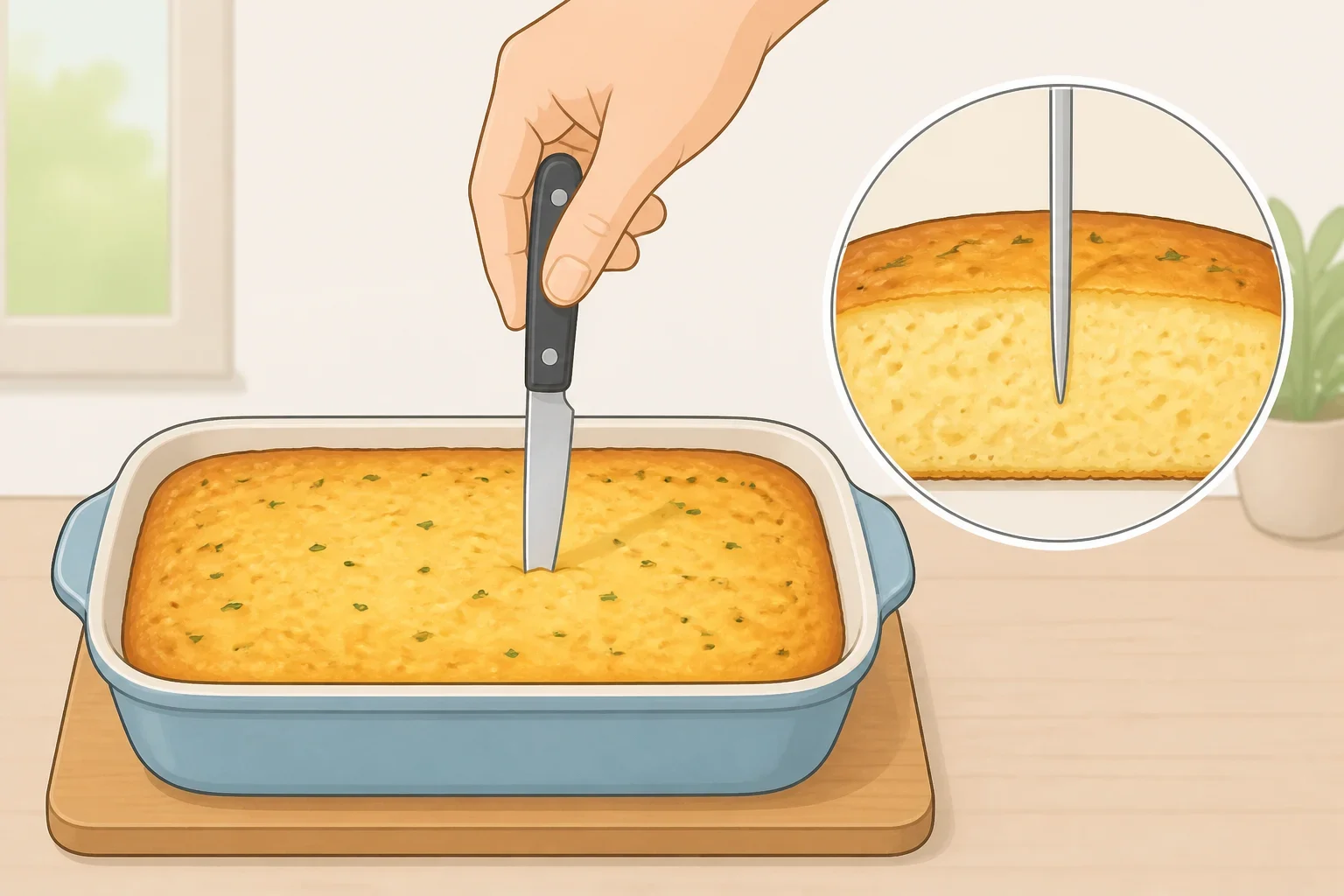
- Test the center. The top should be golden, and the middle should look set rather than fluid. Insert a knife, toothpick, or cake tester into the center. It should come out without liquid custard clinging to it, a test also recommended by King Arthur Baking. Start checking near the shorter end of the recipe’s bake range. Pan depth and oven behavior can change how quickly the surface browns and the center sets. One reader reported that the Love and Lemons version burned after 35 minutes in their oven, so watch the top instead of trusting the timer alone. Love and Lemons
- Rest before slicing. Remove the casserole from the oven and let it stand for at least 10 minutes. That pause lets the custard settle so the portions hold together while the center stays soft. Love and Lemons and the cited apple casserole both use a 10-minute rest.
5. Fix the texture before serving
If the casserole is soggy, check the bread first. Fresh, soft cubes can collapse during an overnight soak. A few dry spots before baking are acceptable, but large pools of liquid suggest the custard has not been distributed evenly. Press the cubes down lightly during the soak, then use the center test rather than adding extra baking time automatically.
If the top is dark but the middle is wet, cover the dish loosely with foil and continue baking until the center sets. The foil protects the surface while the custard finishes cooking.
If the casserole is dry, it may have baked past the point of a tender center. The cubes may also have been cut too small, causing them to absorb the custard unevenly. Keep the pieces close to the recipe’s stated size and begin checking the casserole earlier next time.
If the apples are too firm, sauté them before assembly for about five minutes. Raw apples are convenient, but pre-softening changes the finished texture. Thriving Home uses this method.
Serve the casserole warm with maple syrup, confectioners’ sugar, or whipped cream. The Kitchn pairs its apple version with brown sugar whipped cream, while maple syrup works as a simpler finishing touch.
Store and reheat leftovers
Transfer leftovers to an airtight container and refrigerate them for up to three days. That storage window is supported by Love and Lemons and Thriving Home.
For the best texture, cover individual portions and warm them in a 325°F oven until heated through. The microwave is faster, but it softens the topping. Love and Lemons gives the covered oven method, while the apple casserole guidance calls for reheating individual pieces at 350°F for 10 to 15 minutes.
Baked French toast casserole can also be frozen for up to three months. Thaw it overnight in the refrigerator before reheating, as Love and Lemons recommends. For a shorter freezer period, The Mom 100 lists up to two months.
The easiest schedule to follow
After dinner, dry or cube the bread, prepare the apples, whisk the custard, and assemble the casserole. Cover it and refrigerate overnight. In the morning, heat the oven to 350°F, add the topping, and bake until the center is set and the top is browned.
The three choices that matter most are sturdy day-old bread, a long refrigerated soak, and a covered-then-uncovered bake. Let the casserole rest before serving, then use the knife test instead of the clock alone. That is how a make-ahead apple cinnamon French toast becomes soft and custardy rather than soggy.
