
- Why You Should Never Plug a Space Heater Into an Extension Cord
- Why extension cords and power strips are the wrong choice
- Step 1: Read the heater’s label and instructions
- Step 2: Choose the outlet before arranging the room
- Step 3: Inspect the cord, plug, and outlet
- Step 4: Stop at the first warning sign
- Step 5: Decide what to do when the outlet is too far away
- Make the check before plugging in
Why You Should Never Plug a Space Heater Into an Extension Cord
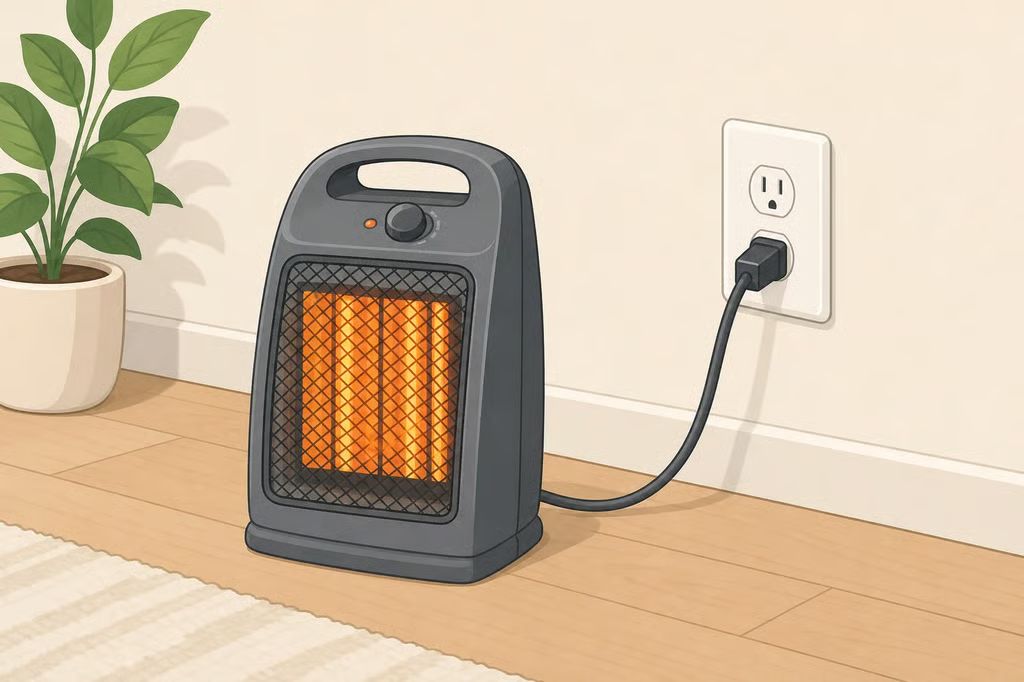
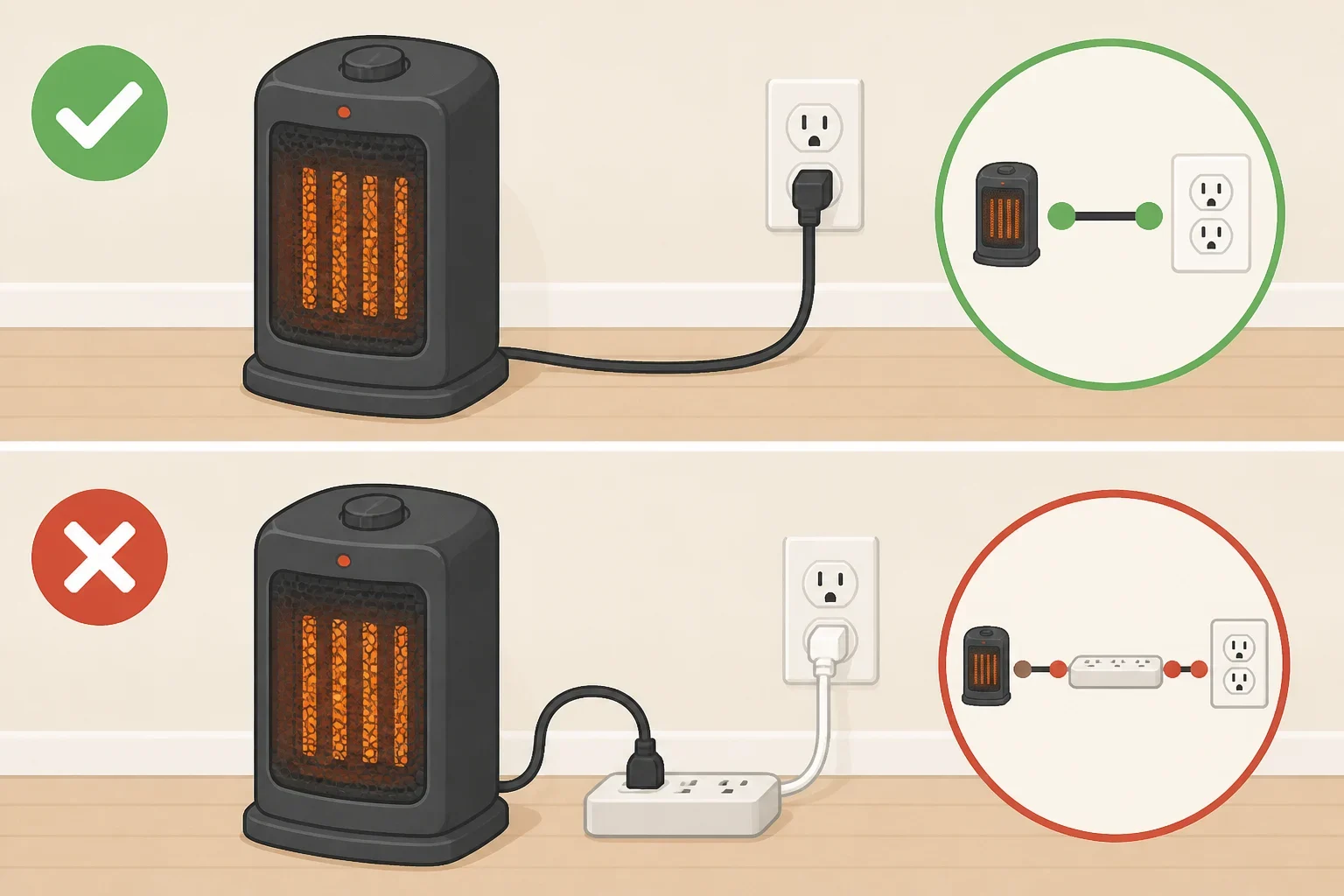
Never plug a portable space heater into an extension cord, power strip, or surge protector. Use the heater only where its own cord can connect directly to a suitable wall outlet, following the manufacturer’s instructions.
That rule still applies if the extension cord looks heavy-duty, the power strip includes surge protection, or the heater will run for only a short time. The Electrical Safety Foundation International advises connecting a space heater directly to a wall outlet.
A direct connection does not make every setup safe. Before switching the heater on, check the model, cord, plug, outlet, and placement. If anything looks damaged, feels unusually warm, fits loosely, or smells burned, stop using the setup and arrange an inspection instead of trying another connection.
Why extension cords and power strips are the wrong choice
A portable electric heater sends power through its cord, plug, and outlet while it operates. Adding an extension cord or power strip creates another connection between the heater and the wall.
Space heaters draw a steady, high level of power while running. That sustained demand can overheat cords and connectors that are not suitable for the appliance. ESFI specifically advises against using an extension cord, power strip, or surge protector with a space heater because those products are generally intended for lower-draw electronics.
A reset button or surge-protection feature does not change the heater’s connection requirements. Neither does a longer cord or an advertised capacity that seems adequate. If the heater’s own cord cannot reach the wall outlet, change the placement instead of adding another cord.
The direct-outlet rule also depends on the condition of the outlet itself. “Plugged directly into the wall” does not mean forcing a heater into a cracked receptacle, a loose outlet, or a connection showing signs of heat.
Step 1: Read the heater’s label and instructions
Start with the heater, not the most convenient spot in the room. Find the nameplate label and read the manufacturer’s instructions for outlet, cord, placement, and operating requirements.
The label may include the model and electrical information. If it is damaged or difficult to read, look up the model through the manufacturer’s materials. If the requirements cannot be confirmed, leave the heater unplugged.
Do not assume that a lower heat setting changes the connection rule. Follow the instructions for the heater as a whole, including any directions about how and where it may be used.
Keep the instructions available while arranging the room. Details about clearance, unattended use, sleeping, controls, or placement can affect where the heater belongs. A spot that is convenient for the furniture may not be suitable for the appliance.
Step 2: Choose the outlet before arranging the room
Pick a suitable wall outlet before deciding where the heater belongs. The heater’s own cord should reach the outlet without an extension cord, power strip, or surge protector.
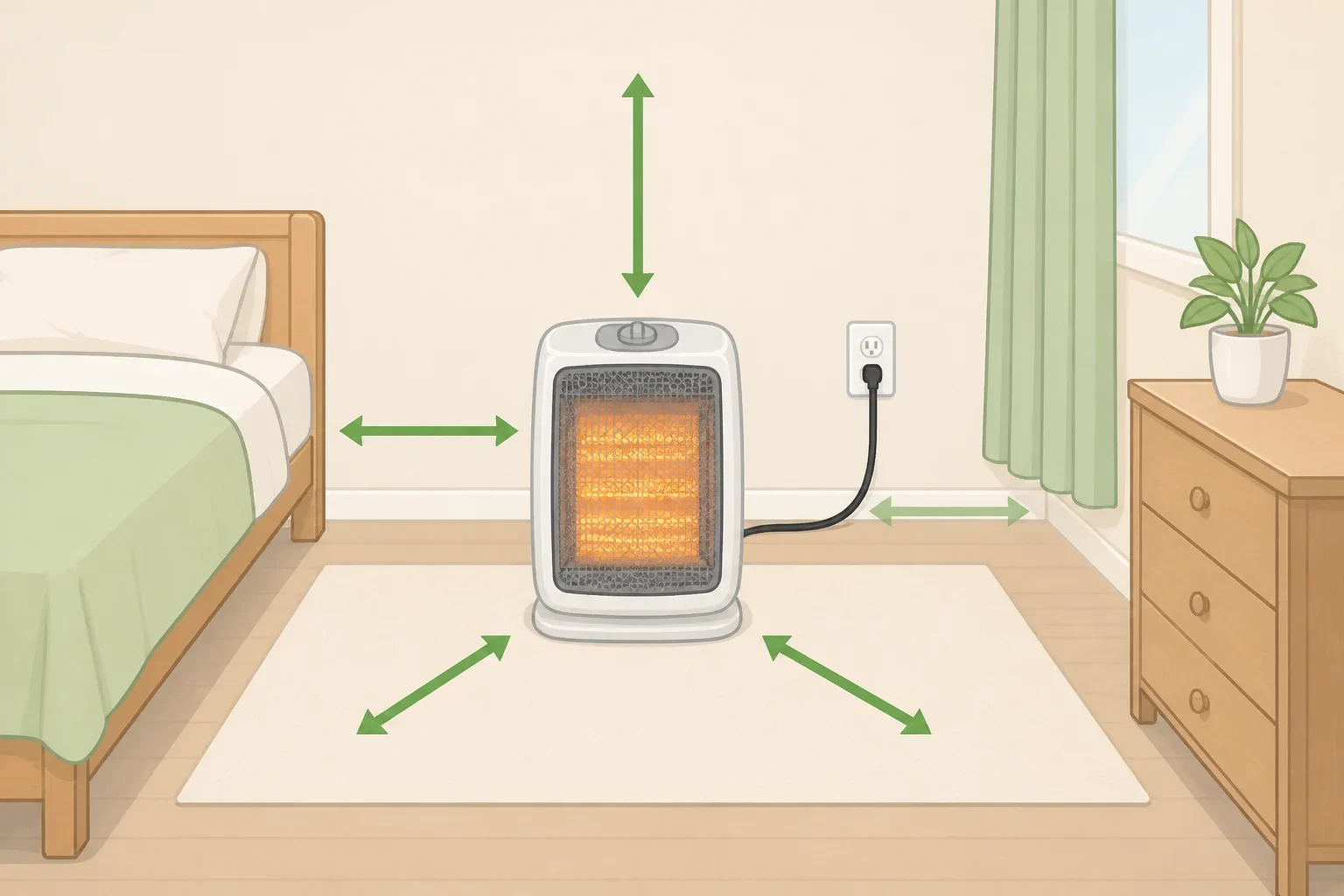
The cord should not run across a walkway or under a rug. Avoid arranging the room so someone can catch a foot on the cord, pull the heater over, or place furniture against it.
A suitable outlet is one that meets the manufacturer’s instructions and shows no visible damage, discoloration, looseness, or signs of heat. Readers do not need to diagnose the circuit or determine its capacity themselves. If the outlet’s condition is questionable, stop and have it evaluated.
Place the heater exactly as the manufacturer directs. Keep it away from bedding, curtains, furniture, and other household materials that could come into contact with the unit. Do not tuck it behind furniture or into a cramped corner to make the room arrangement work.
The room may need to change around the heater. Move a chair or desk, choose another part of the room, or skip using that heater there. A tidy-looking setup is not worth stretching the cord through a path where someone could trip.
Keep controls accessible, and do not place clothing, towels, bedding, or other items on the heater. If the instructions limit unattended use or use while sleeping, follow those limits.
Step 3: Inspect the cord, plug, and outlet
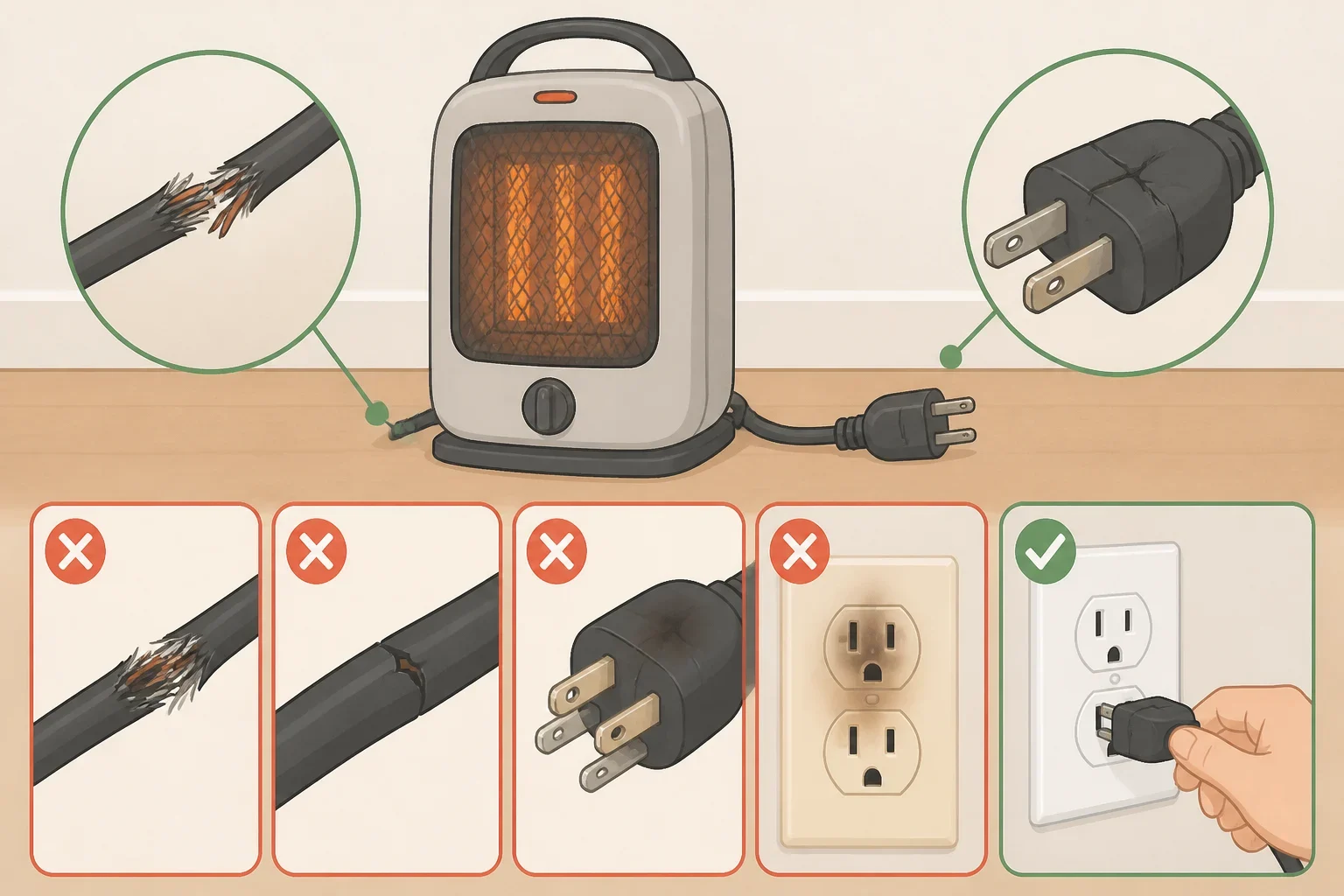
With the heater unplugged, look over its own cord and plug. Set the unit aside if you see fraying, cuts, cracks, melted areas, discoloration, or other damage. Check the point where the cord enters the heater as well, since sharp pinching or bending can damage the cord.
Examine the wall outlet before making the connection. A plug that does not fit securely, visible cracks, discoloration, or signs of heat are reasons not to use it. The National Fire Protection Association’s heating guidance identifies damaged equipment and electrical warning signs around heating setups as concerns that should not be ignored.
Do not try to correct a loose connection with a power strip or by repeatedly plugging and unplugging the heater. Those actions do not fix the outlet or the heater’s plug.
If the heater’s cord or plug is damaged, follow the manufacturer’s instructions for repair or replacement. Do not improvise a repair with electrical tape or another temporary fix. If the wall outlet is damaged or loose, leave the heater unplugged and contact the person responsible for the property.
Step 4: Stop at the first warning sign
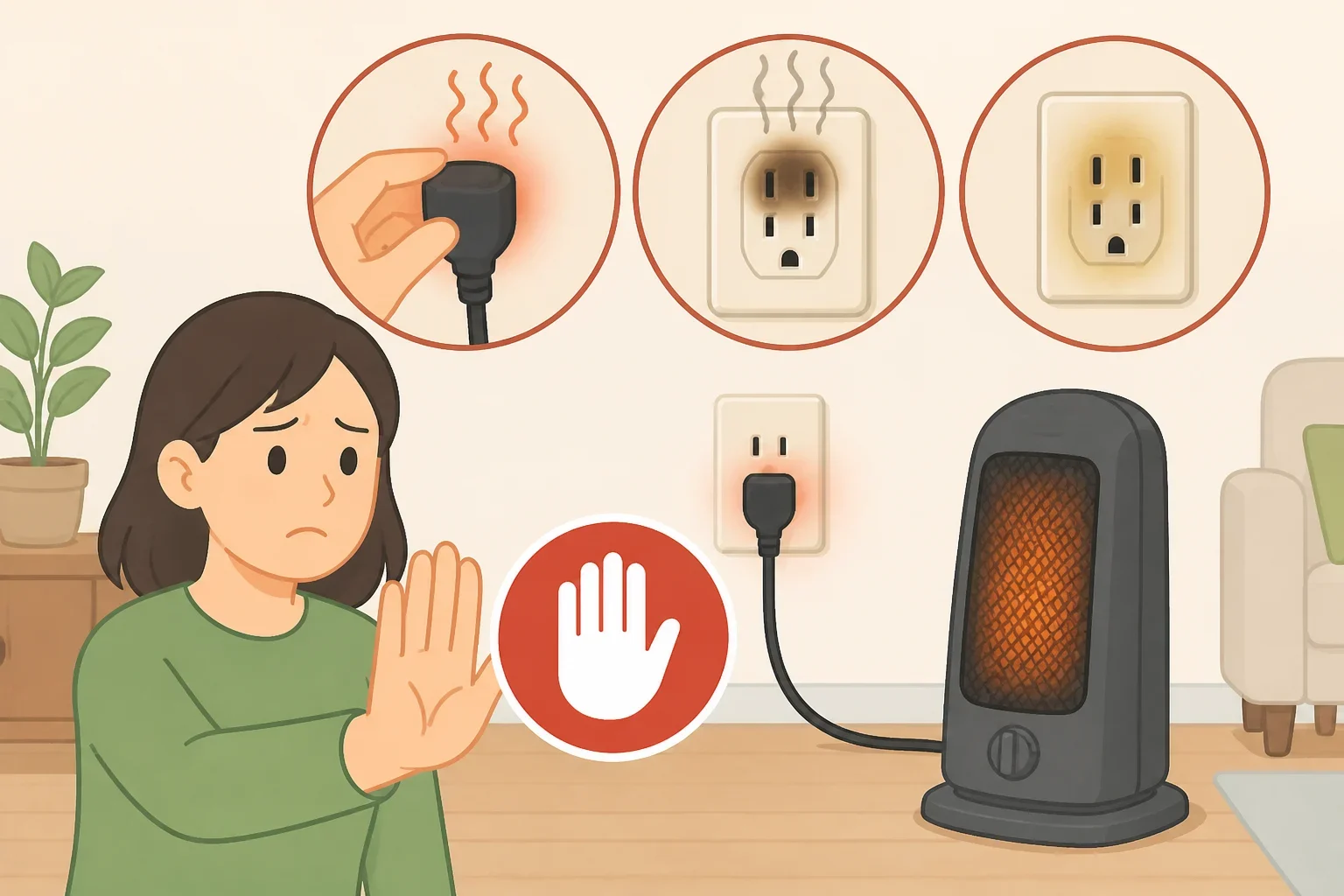
Pay attention when the heater is first connected and while it operates. Stop using the setup if the breaker trips, the plug or outlet becomes warm, the plug fits loosely, or you notice discoloration or a burning odor. These are not problems to monitor while hoping they disappear.
Do not keep resetting a breaker to make the heater run. Do not move the heater from outlet to outlet as a way to find a connection that works. A trip or warning sign can involve the heater, the outlet, the circuit, or another electrical problem. The safe next step is an evaluation, not a home diagnosis.
Warm and hot are not the same thing, but readers should not rely on touch to decide whether a questionable connection is safe. If an outlet or plug feels hot, looks damaged, smokes, sparks, or smells burned, step away. Do not touch a smoking or sparking connection.
If there is smoke or an active fire, leave the area and contact local emergency services. If there is no active fire but the outlet is warm, discolored, loose, or smells burned, stop using it and arrange an inspection. NFPA’s heating guidance treats damaged or overloaded electrical cords as warning signs that deserve attention.
For renters, report the issue to the landlord or property manager. Homeowners can contact a qualified electrician. Neither should alter wiring, replace an outlet, or add a receptacle as a quick fix for a seasonal heater.
Step 5: Decide what to do when the outlet is too far away
When the nearest suitable outlet is too far from the preferred heating spot, do not bridge the gap with an extension cord. Do not use a power strip, surge protector, or second cord either.
The practical choices are limited:
- Move the heater to a location where its own cord reaches a suitable wall outlet.
- Stop using that heater in the room if the placement cannot be arranged safely.
- Ask a landlord, property manager, or qualified electrician whether a permanent outlet solution is appropriate.
A permanent outlet may or may not be practical for the room, wiring, and property. That decision belongs with the property owner and a qualified electrical professional, not with a temporary cord arrangement.
If the only nearby outlet is loose, damaged, discolored, warm, or burned-smelling, do not try another outlet as an experiment. Report the problem or arrange an inspection first. A different wall does not establish that the heater or electrical setup is safe.
If a different heating product is being considered, check that product’s manufacturer instructions before using it. The replacement must be used only in the manner specified for that product and its electrical connection. A product’s label and instructions determine the setup, not the fact that it appears similar to another heater.
Make the check before plugging in
A portable space heater belongs directly in a suitable wall outlet, not in an extension cord, power strip, or surge protector. Read the heater’s instructions, arrange the room around the outlet, and inspect the cord, plug, and receptacle before use.
If the connection is damaged, loose, unusually warm, discolored, or burned-smelling, stop. Move the heater only if a safe direct connection is available. Otherwise, contact the landlord, property manager, or qualified electrician instead of reaching for a longer cord.
