
- 0% APR credit card traps: deferred interest explained
- How 0% intro APR credit cards can lead to debt
- 0% intro APR credit card pitfalls: deferred interest versus a standard promotion
- Why point-of-sale offers are harder to evaluate
- What happens when a 0% APR offer ends
- A checklist for avoiding a 0% APR credit card debt trap
0% APR credit card traps: deferred interest explained
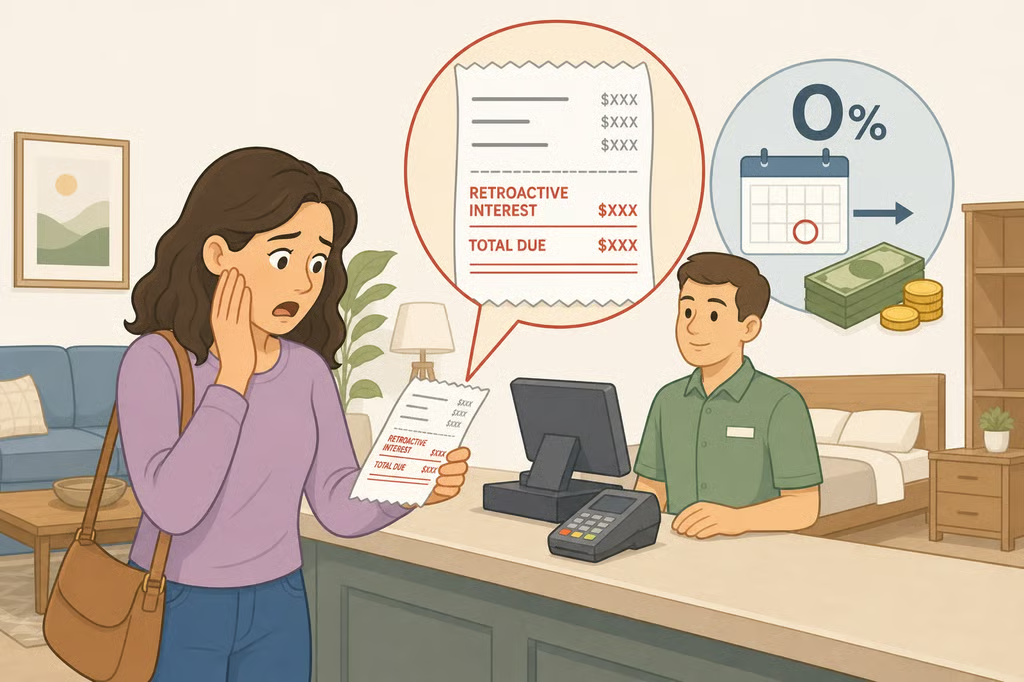
A $4,500 furniture purchase looks very different when the last $180 triggers $1,439.55 in retroactive interest. In a 2024 example, the borrower had already paid $4,320, or 96% of the original balance by calculation, but the promotional balance was not fully paid by the deadline.
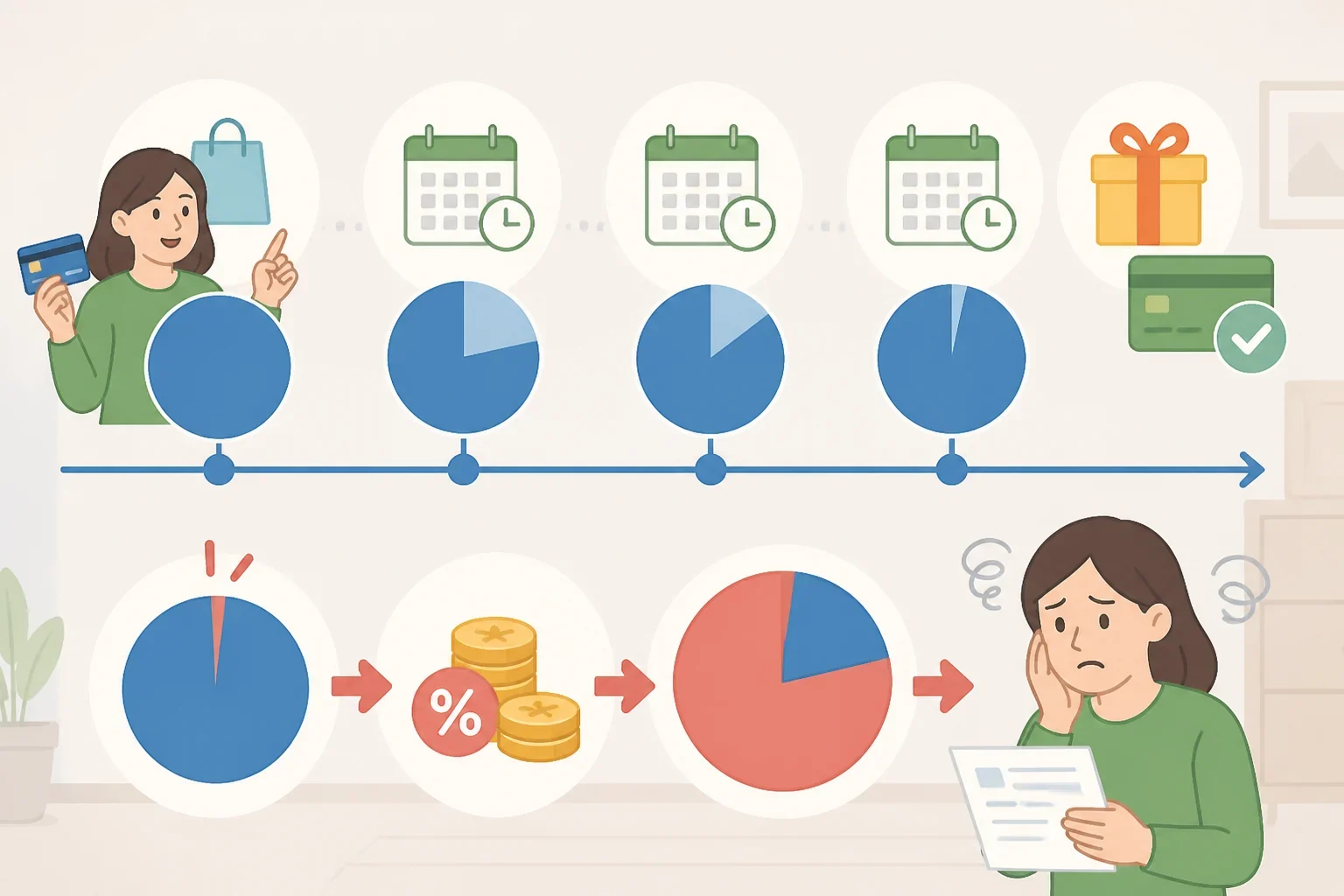
Assuming a 31.99% deferred-interest APR, the remaining balance led to a charge calculated from the original purchase, not just the $180 still owed, according to the CFPB’s retail-card review.
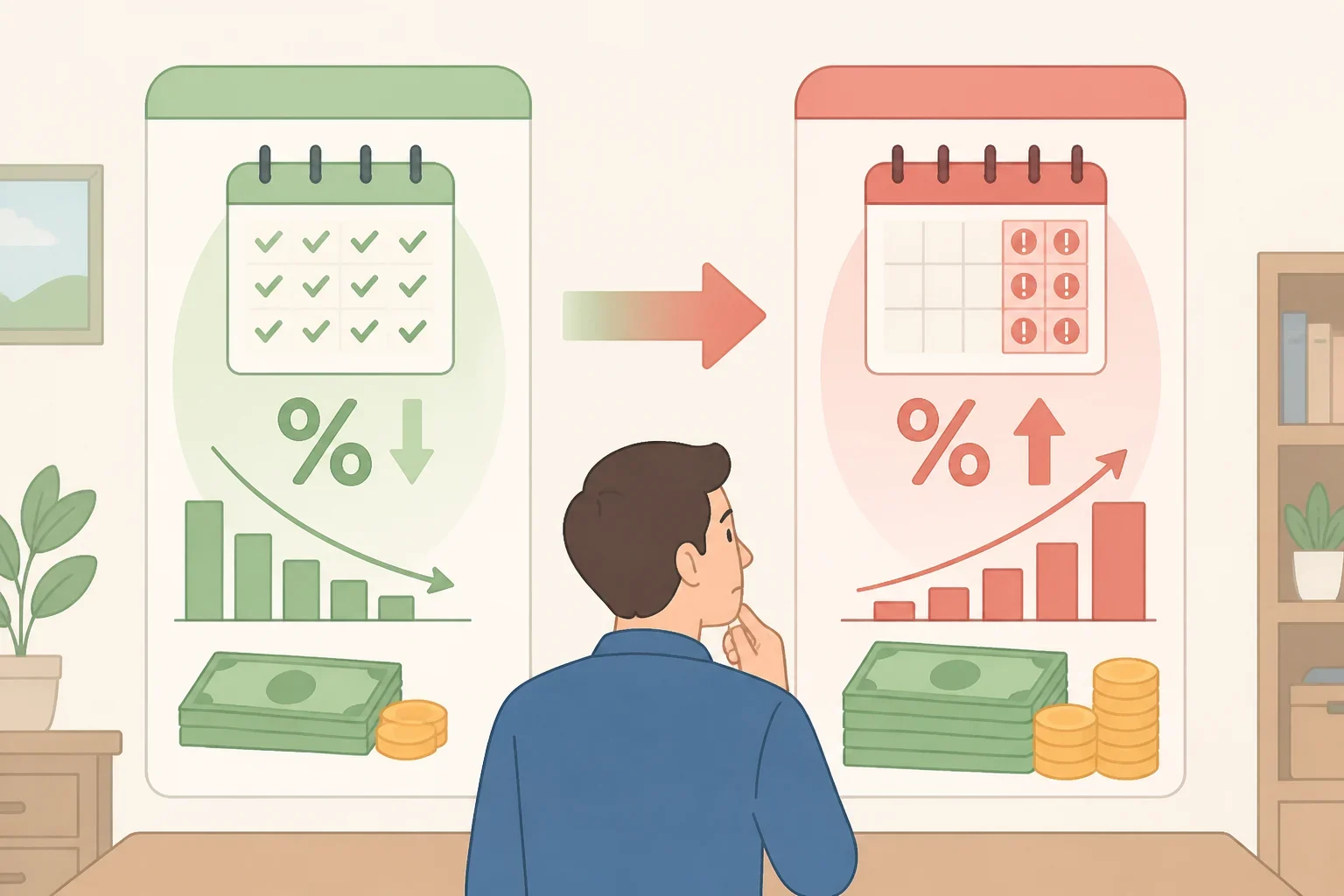
That is the kind of surprise behind many 0% APR credit card traps. A true 0% introductory APR can reduce the cost of carrying a balance for a set period. Deferred interest can make unpaid interest come due retroactively if the promotional balance is not cleared in time. The words on the offer matter more than the large “0%” printed near the register.
These offers are common enough to deserve a place in a household budget conversation. The CFPB’s 2025 market report found that cards with a zero percent introductory APR promotion represented $899 billion in purchase volume and $352 billion in balances by the end of 2024. About one-third of purchase volume and outstanding balances were on cards with some type of introductory promotional rate, according to the 2025 report.
The practical question is not whether every promotional card is bad. It is whether the promotion, payoff schedule, and post-promotion rate fit the purchase and the household’s ability to repay.
How 0% intro APR credit cards can lead to debt
Promotional rates temporarily lower the cost of revolving a balance. That can be useful when a cardholder has a firm payoff plan. But the CFPB found that accounts with introductory promotions had higher longer-term balances than cards without those promotions. The data shows an association, not proof that the offer itself causes debt. One possible explanation is that people who expect to carry a balance are more likely to seek a promotional card in the first place. The CFPB’s market report does not settle that question.
The household risk is easier to see in practice. A 0% rate may make a balance feel less urgent because no interest appears on the statement during the introductory window. A purchase that would normally be paid off quickly may instead remain on the account while other expenses take priority. That is an illustration of how debt can persist, not a measured claim about every cardholder.
The issuer also has reasons to offer the promotion. Dr. Joann Pinto of Montclair State University explains that banks can still collect fees from merchants and charge about 4% for balance transfers while using promotional offers to attract or retain customers. Her May 2025 commentary presents those features as part of the business strategy behind 0% cards.
That does not mean the cardholder is being charged interest during a genuine 0% period. It does mean the offer is not designed simply as a favor. The financial risk arrives when the balance outlasts the promotion, when new purchases are added faster than old ones are paid down, or when the account’s terms are misunderstood.
Pinto also argues that debt is not inherently immoral when it is managed responsibly. That is a useful distinction for household planning. The presence of a promotional balance is not automatically a problem. The danger is accepting a payment obligation without understanding what happens if the payoff plan fails.
0% intro APR credit card pitfalls: deferred interest versus a standard promotion
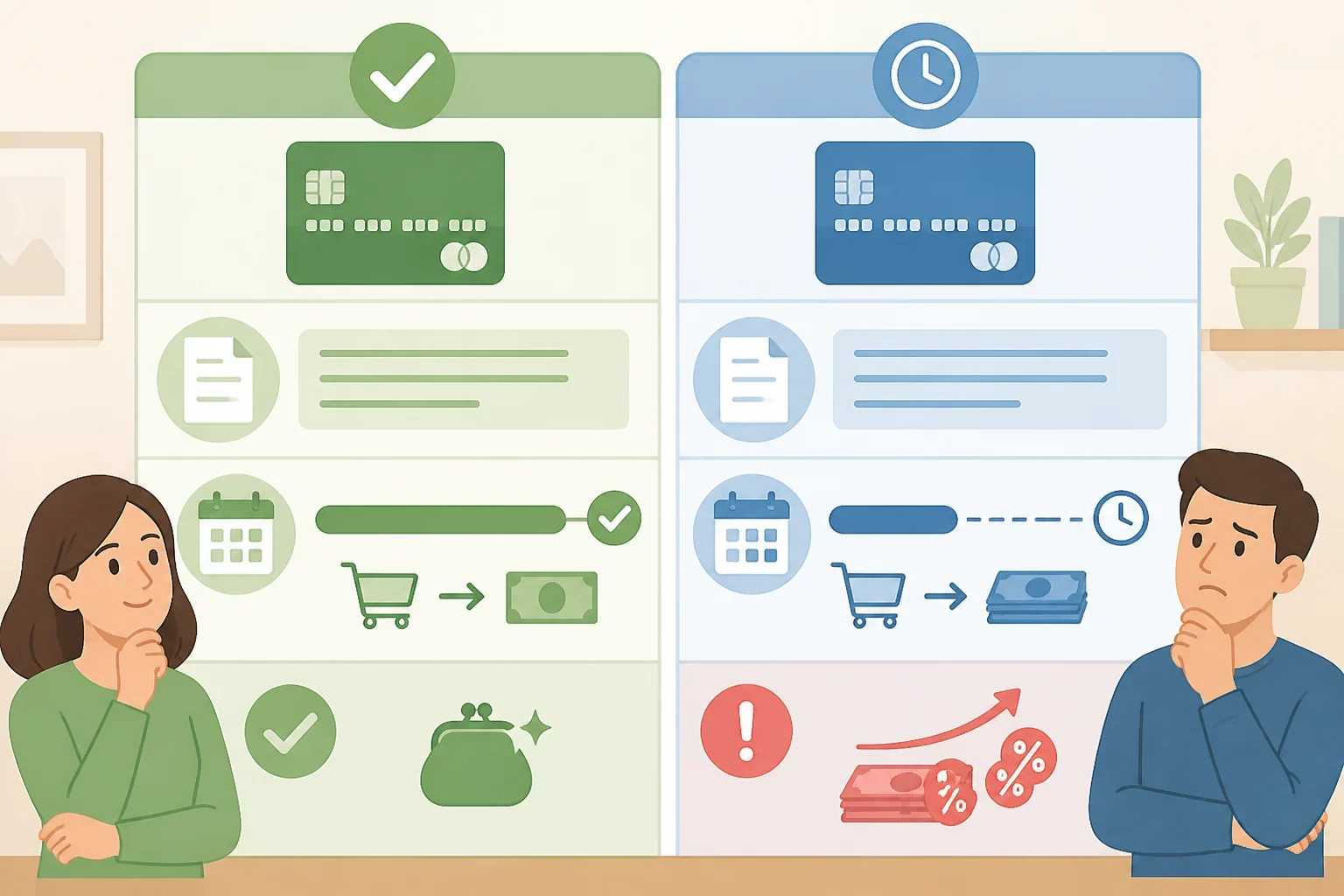
The most important distinction is whether the offer uses a standard introductory APR or deferred-interest language.
With a standard 0% introductory APR, the cardholder should verify the rate that will apply after the introductory period ends. The promotional disclosure should also explain whether the offer applies to purchases, balance transfers, or both. With deferred interest, the interest is postponed rather than necessarily erased. If the promotional balance is not paid in full by the deadline, the lender can impose interest calculated from daily balances reaching back to the original purchase amount, according to the CFPB’s explanation.
A simple example helps:
- A card says 0% introductory APR on purchases for a set period. The balance does not accrue the promotional purchase interest during that window, but any remaining balance can begin accruing interest at the regular APR after the window closes.
- A store or medical offer says no interest if paid in full or describes a deferred-interest promotion. The interest may be waived only if the qualifying balance reaches zero by the deadline. If it does not, previously deferred interest may be added.
The exact disclosure controls. A bold “no interest” message is not enough.
The CFPB found in an earlier review that about one-fifth of deferred-interest promotional balances received retroactive interest charges. That is a finding from a previous review, not a claim that the same rate applies to every offer today.
Deferred-interest promotions are commonly offered with store cards and are also used in medical financing. The stakes can be particularly high in a medical office. From 2018 through 2020, people used specialty medical cards or loans with deferred-interest periods for almost $23 billion in health-care expenses across more than 17 million medical purchases, and paid $1 billion in deferred interest, according to the CFPB’s medical-financing report.
A medical provider may offer financing even when insurance could cover the procedure or a hospital’s reduced-cost or no-cost assistance program may apply. Providers may also be unable to explain complex deferred-interest terms adequately. That makes it especially reasonable to pause, ask for the terms in writing, and check other payment options before opening an account.
A standard 0% offer can still cause trouble through overspending, fees, missed payments, or a high post-promotion APR. Deferred interest adds a separate risk: the possibility that interest from the original purchase becomes due all at once.
Why point-of-sale offers are harder to evaluate
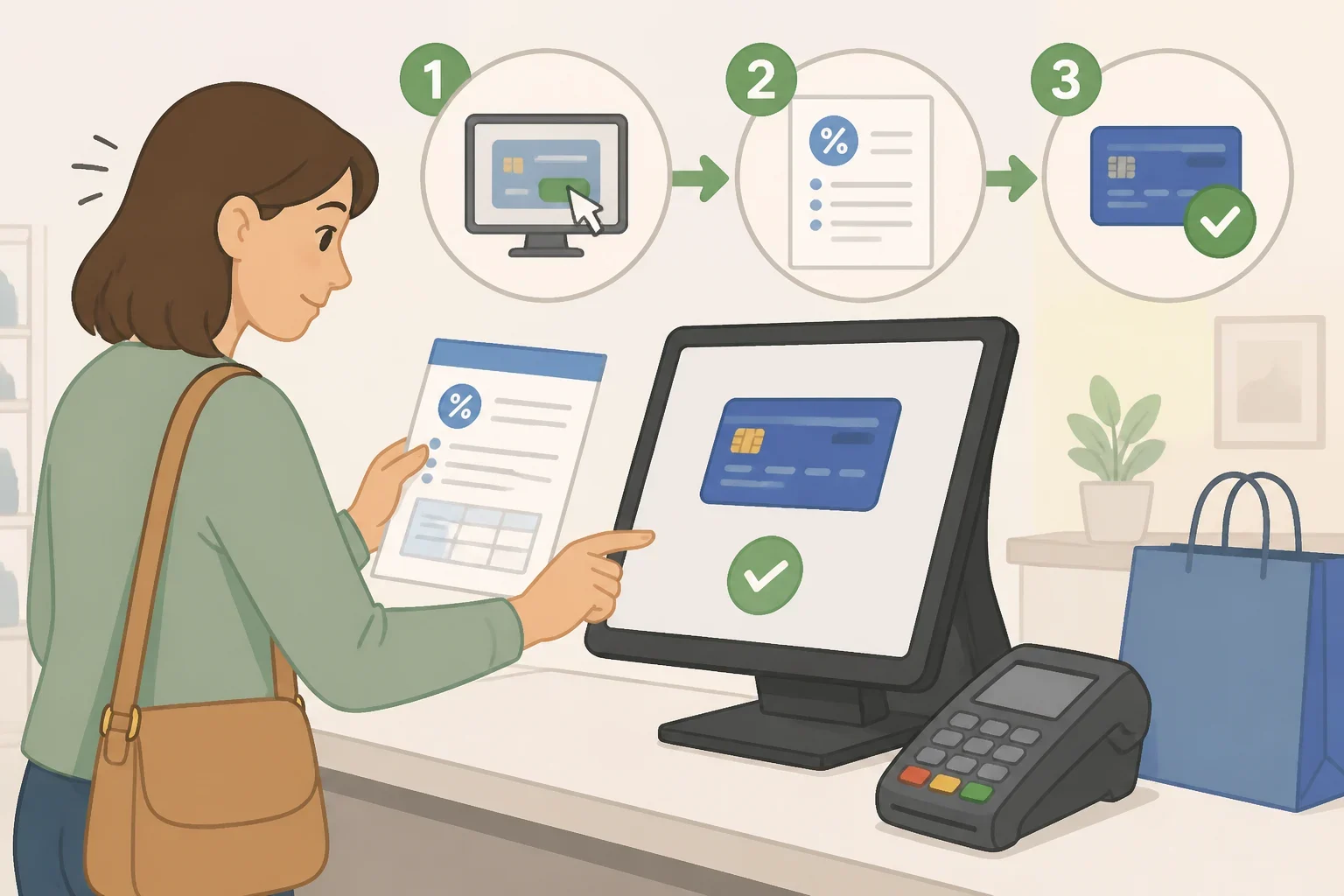
Many shoppers encounter these products while buying furniture, appliances, electronics, or medical care. Half of retail-card applications are submitted at the point of sale, and some consumers have reported aggressive sales tactics or difficulty redeeming the advertised promotion, according to the CFPB’s retail-card review.
The timing matters. A discount offered at checkout can make the card feel like part of the purchase instead of a separate borrowing decision. The application may happen while a shopper is comparing delivery dates, arranging a repair, or trying to finish a medical appointment. That setting can make it harder to read several pages of account terms calmly.
Approval rates also differ between product types. Store cards had a 50% approval rate, compared with 44% for general-purpose cards, and the gap was roughly 20 percentage points for applicants with credit scores between 620 and 720, the CFPB reported. Those figures describe approval patterns. They do not prove that approval practices cause consumers to carry balances.
Some consumers have reported that they could not redeem the offer after receiving the card. The CFPB has also described a 2019 enforcement action involving a retailer accused of opening store cards without consent and misrepresenting financing terms. A discount that disappears after the application is approved is not a discount worth rushing to claim.
Medical-office offers bring a different kind of pressure. A patient may be focused on treatment and the immediate bill, while the financing terms involve a future deadline and potentially complex interest rules. The safest response is to separate the care decision from the financing decision whenever possible.
What happens when a 0% APR offer ends
The post-promotion APR deserves attention before the card is opened, not after the first interest charge appears. In December 2024, new private-label cards offered by the top 100 retailers had an average APR of 32.66%. Ninety percent of retail cards reported a maximum APR above 30%, compared with 38% of non-retail general-purpose cards, according to the CFPB’s December 2024 review.
Nineteen percent of retail cards had APRs above 35%. The CFPB noted that those rates were at or near the legal cap under the Military Lending Act for active-duty service members and covered dependents. That cap does not apply generally to every cardholder, so it should not be treated as a limit on ordinary consumer credit-card APRs.
Balances also do not always disappear when the promotional window closes. In 2023, 54% of private-label card accounts revolved a balance from one month to the next, compared with 48% of general-purpose accounts. Seventeen percent of private-label cardholders paid only the minimum due, compared with 13% of general-purpose cardholders. The CFPB describes the minimum-payment figure as an early sign of financial stress, while the revolve rate simply measures whether balances were carried.
Fees can add another layer. Private-label accounts made up 33% of account volume but represented 46% of late-fee volume. Late fees accounted for 25% of total interest and fees on private-label cards, compared with 7% on general-purpose cards, according to the same CFPB review.
That does not mean every store card becomes expensive. It does mean a promotion can become the entry point to a more costly account if the balance remains after the offer ends. The card’s regular APR, late-payment rules, fees, and payment-allocation policies may matter more to the household budget than the initial discount.
A checklist for avoiding a 0% APR credit card debt trap
Before applying, save or print the full promotional disclosure. Look for answers to each of these questions:
- What kind of promotion is this? Does it say “0% introductory APR,” “no interest if paid in full,” or “deferred interest”? Do not assume those phrases mean the same thing.
- When does the promotion end? Write down the exact date, not just the number of months advertised.
- What balance must be paid? Confirm whether the required payoff includes only the original purchase or also fees, new purchases, and other transactions.
- What happens after the deadline? Find the regular APR and determine whether it applies only going forward or whether deferred interest can be added retroactively.
- What happens after a late payment? Check whether a late payment can end the promotion, trigger a penalty rate, or create another fee.
- How are new purchases treated? A new purchase may have different terms from the original promotional balance.
- What is the minimum payment? The required minimum may be much lower than the amount needed to reach a zero balance before the deadline.
- Are there fees? Check for balance-transfer fees, annual fees, paper-statement fees, and other charges listed in the agreement.
- How are payments applied? Ask whether the issuer can direct payments differently among promotional and nonpromotional balances.
After approval, divide the promotional balance by the number of months remaining. That estimates the monthly amount needed to pay it off, but it is not a guarantee. New purchases, fees, statement-closing dates, and payment due dates can change the calculation. Paying somewhat more than the estimate and setting a calendar reminder can provide a cushion.
If the purchase is large, the offer is being made under checkout pressure, or the balance could not be cleared by the exact deadline, pausing is sensible. Saving first, asking the provider or retailer about a direct payment plan, or comparing a personal loan may be worth considering. None is automatically safer. Compare the total cost, fees, interest rate, consequences of missed payments, and whether the repayment schedule fits the household budget.
A 0% offer can be a useful tool when the terms are clear and the payoff plan is realistic. It becomes a poor fit when the decision depends on a future income increase, an uncertain bonus, or a promise to “figure it out later.” Before accepting, write down the promotion type, expiration date, required payoff amount, regular APR, and late-payment consequences. If those details are still unclear, the offer is not ready for a yes.
