
Gas Price Forecast 2027: Will U.S. Fuel Drop Below $4?
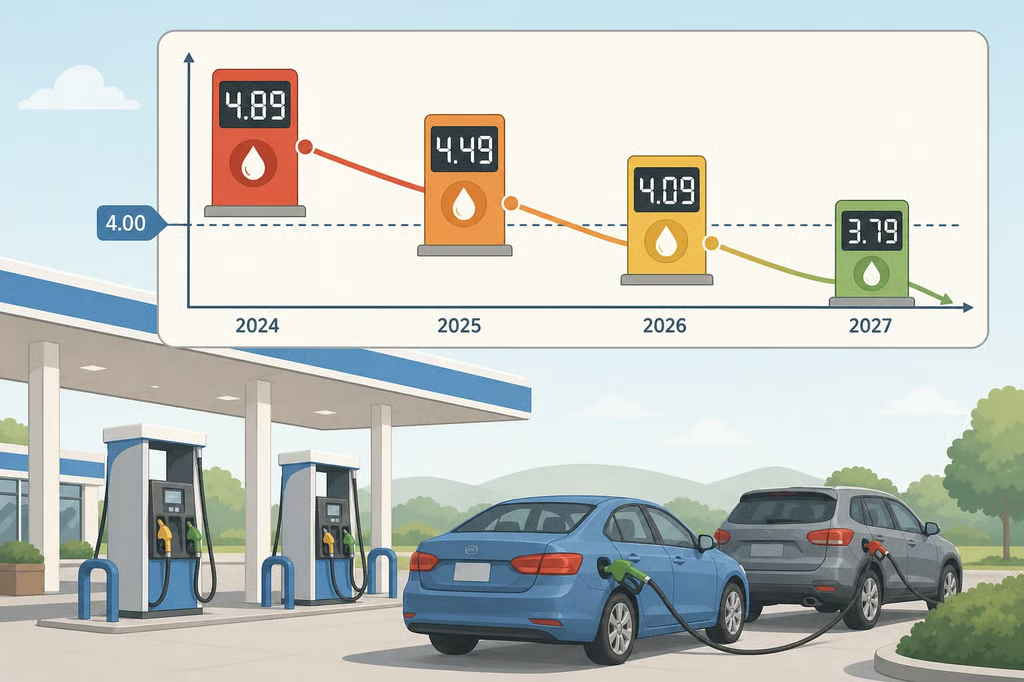
The gas price forecast 2027 from the U.S. Energy Information Administration points to an annual average just under $3.60 per gallon. It does not identify a specific month when the national average will fall below $4, however. For households paying a national weekly average of $4.331 per gallon this week, that distinction matters: relief is projected, but the timing is not guaranteed. (FRED data)
September’s monthly average was higher still, at $4.35 per gallon. EIA attributed that increase to higher crude oil prices and rising crack spreads, the margins refiners earn when converting crude into gasoline. (EIA outlook)
The forecast gives households a direction to plan around, not a date to put on the calendar or a savings amount to spend in advance.
Where gas prices stand this week
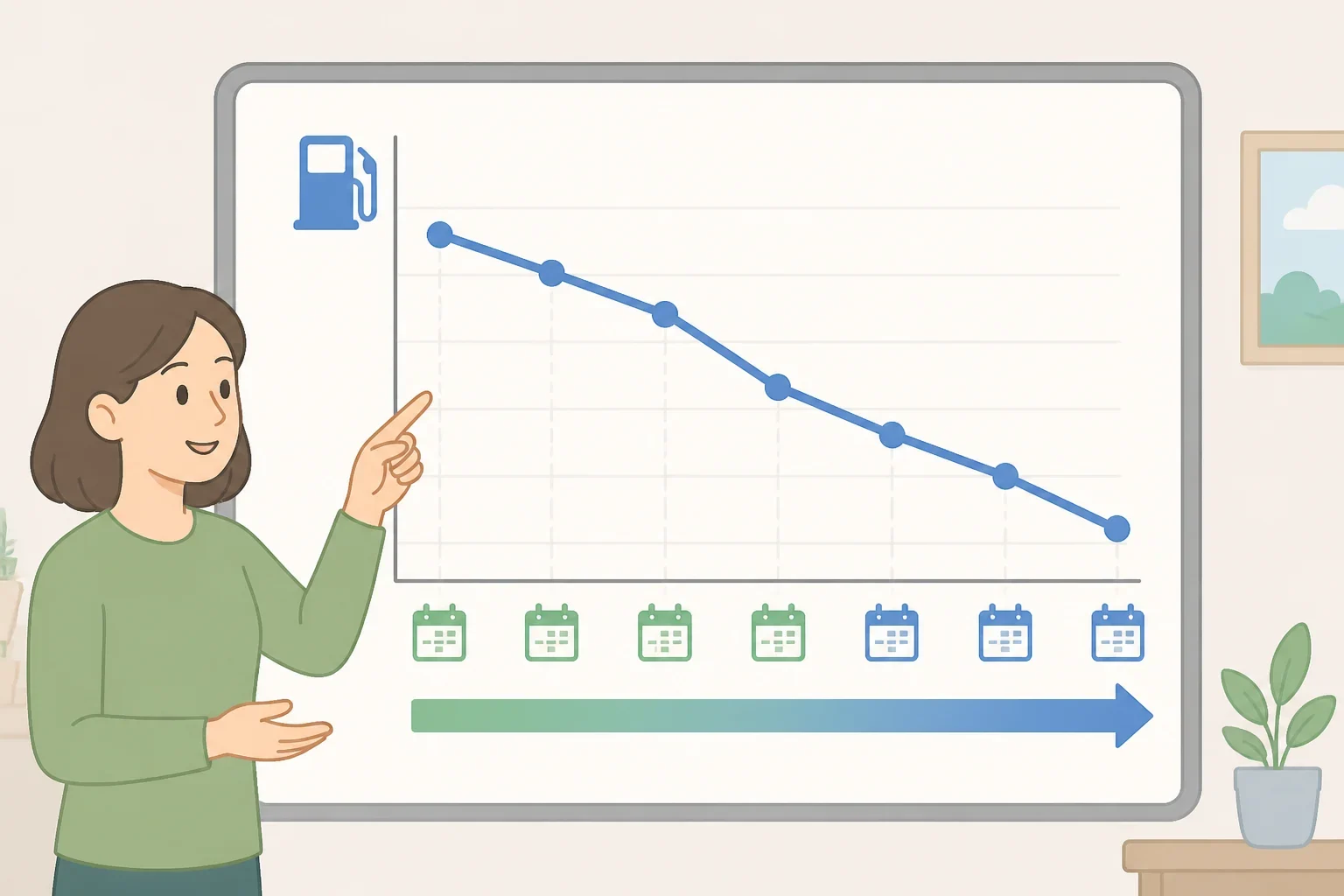
The national weekly average has moved down from its September high. It fell from $4.478 on September 21 to $4.331 on October 12, a decrease of about 15 cents over three weeks, according to FRED data.
That short-term decline does not erase the larger jump seen earlier this year. EIA linked the first-quarter increase in gasoline and diesel prices to the Strait of Hormuz closure and related production outages in a release issued earlier this year. (EIA release)
The national number is a useful benchmark, but it is not the price every driver will see. A household’s actual cost depends on the local market, so the national average cannot establish when a particular station, city, or state will move below $4. The pump price near home is the figure that belongs in a monthly budget.
What the EIA gas price forecast says

EIA expects retail gasoline to average just under $3.60 per gallon in 2027. The agency also expects prices to be about the same in October as they were in September, followed by a slow decline alongside crude oil prices. (EIA forecast)
That wording describes a gradual path. It does not say gasoline will drop sharply at the start of 2027, and it does not promise that every month will be below $4.
An annual average combines all 12 months. Some months could therefore remain above $4 even if the full-year average comes in below that level. The available forecast does not specify when the national average itself will cross the threshold, which is why the answer to “when will gas prices fall below $4?” remains open.
Refinery margins are part of that uncertainty. September’s higher crack spreads helped push the monthly gasoline average to $4.35, so a decline in crude oil prices may not produce an immediate, matching decline at the pump if refining pressures remain elevated. (EIA outlook)
Why the 2027 timeline can change
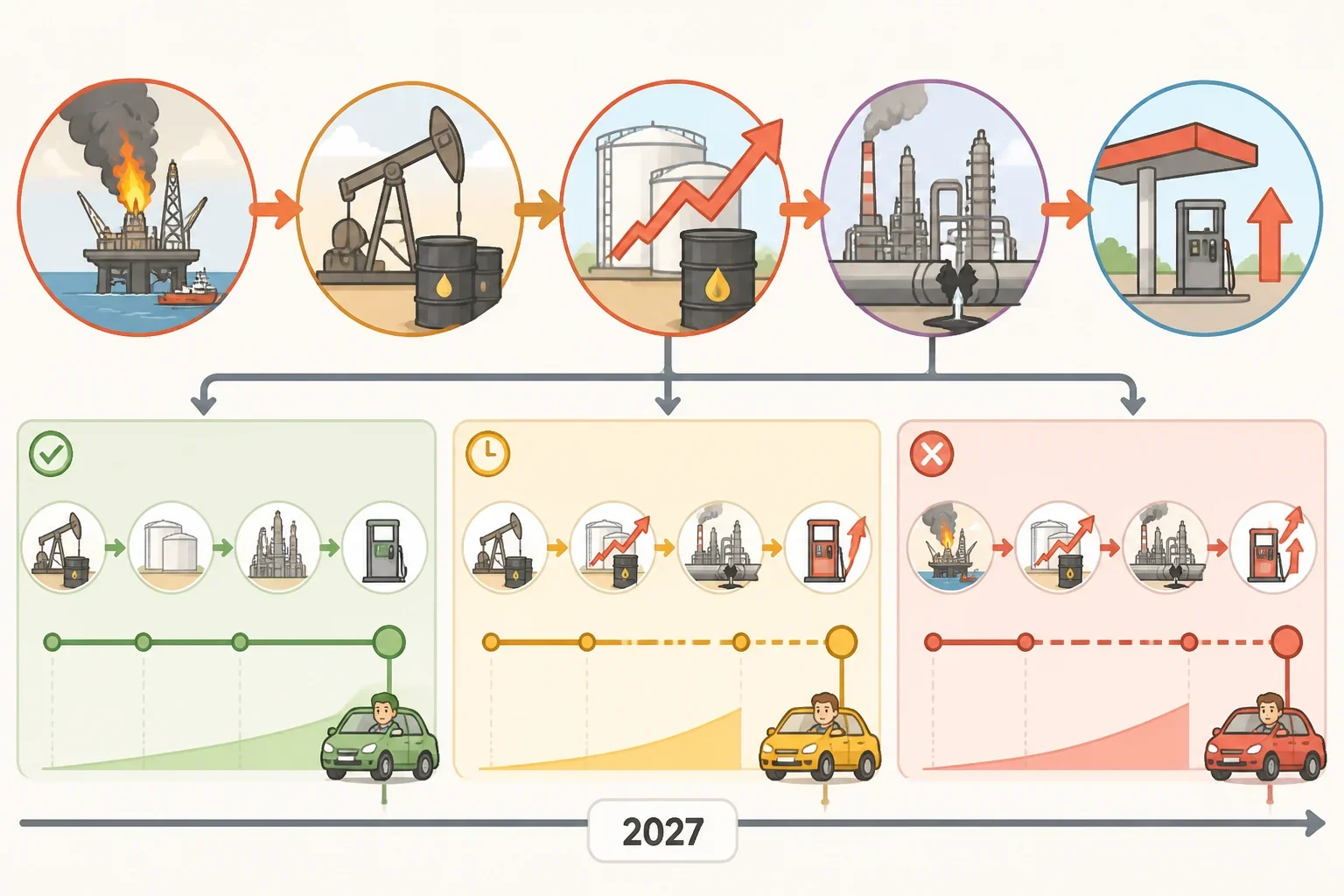
Forecasts depend on assumptions about supply, crude oil prices, and refining conditions. Those assumptions can shift when the energy market changes, and EIA’s projections have already faced conditions that were more severe than anticipated earlier this year.
Six months ago, EIA projected that gasoline would reach a monthly peak close to $4.30 per gallon and average more than $3.70 per gallon for the year. September’s $4.35 monthly average exceeded that projected peak, according to EIA’s earlier forecast.
That comparison does not establish whether the full-year forecast will ultimately be accurate. It does show how quickly a monthly price can move beyond an earlier projection when supply and market conditions change.
The same caution applies to 2027. If crude oil prices and refining pressures ease as projected, the decline could develop gradually. If those conditions stall or reverse, the path to prices below $4 could be delayed. The forecast supports a scenario, not a guaranteed schedule.
Later EIA updates will help show whether October prices remain stable and whether the projected decline continues to track crude oil prices. For households watching fuel costs closely, those changes matter more than treating the $3.60 figure as a fixed promise.
What the forecast means for a household budget
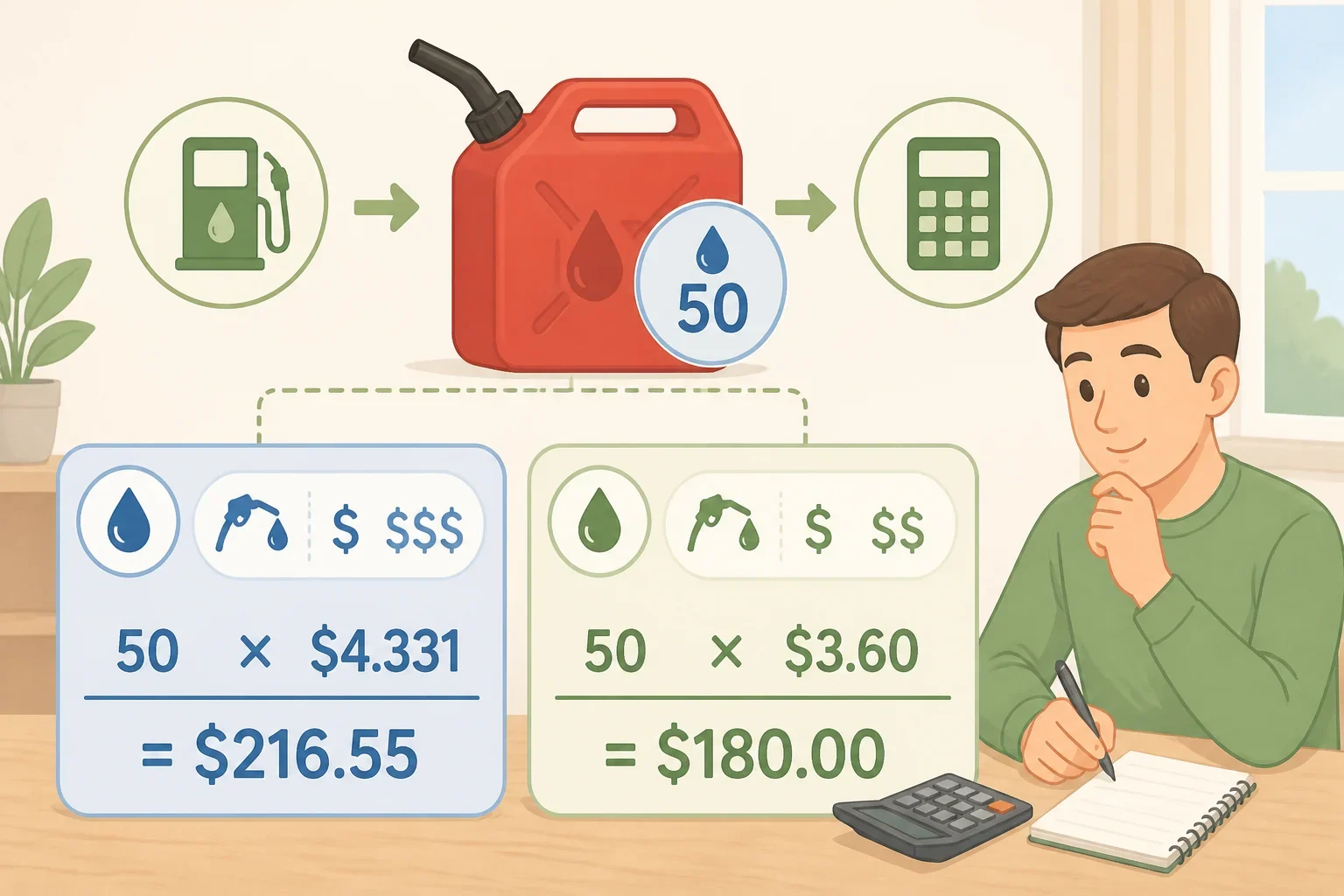
A simple calculation shows the possible difference without presenting it as guaranteed savings. A household buying 50 gallons in a month would spend about $216.55 at the October 12 national average of $4.331 per gallon. At $3.60 per gallon, the same purchase would cost $180, a difference of about $36.55. (FRED data; EIA forecast)
That is an example, not a universal household savings estimate. A driver who buys a different amount, pays a different local price, or changes driving habits would see a different result. The calculation covers gasoline only, not the full cost of commuting, car ownership, or transportation.
For a working household budget, the safest starting point is today’s local pump price. Keep a cushion for weekly changes rather than assigning the expected 2027 difference to another expense now. If prices ease, the extra room can be reassessed after it appears in actual spending.
Gasoline is also only one part of household energy costs. EIA expects a mixed winter picture: households that primarily heat with natural gas or propane, about half of U.S. households, are expected to spend less on energy expenses than last winter. Households that primarily use electricity or heating oil are expected to spend more. (EIA winter outlook)
The difference is especially important for homes using heating oil. EIA forecasts those households will pay about 21% more for the fuel than last winter. (EIA winter outlook)
A lower gasoline forecast, then, is not a broad promise that every energy bill will fall. A household may see relief at the pump while facing higher heating expenses, depending on its fuel source. Those categories should be budgeted separately.
What to watch before counting on lower prices
The most useful signals are the ones tied directly to EIA’s outlook:
- Whether gasoline remains roughly flat in October rather than rising further.
- Whether crude oil prices begin the slow decline EIA expects.
- Whether refinery margins ease after September’s increase.
- Whether a new supply disruption changes the assumptions behind the forecast.
- Whether later EIA updates continue to place the 2027 gasoline average just under $3.60.
Those markers will not predict the exact price at a household’s nearest station, but they can show whether the broader scenario is holding. Local drivers still need to compare that national direction with the amount they actually pay.
For now, the answer to “will gas prices go down in 2027?” is cautiously yes, based on EIA’s projection for a yearly average just under $3.60. The answer to when prices will fall below $4 is less precise. Households can budget with today’s local price, revisit the forecast as it changes, and treat any future fuel savings as money that becomes available only after the pump price delivers it.
