
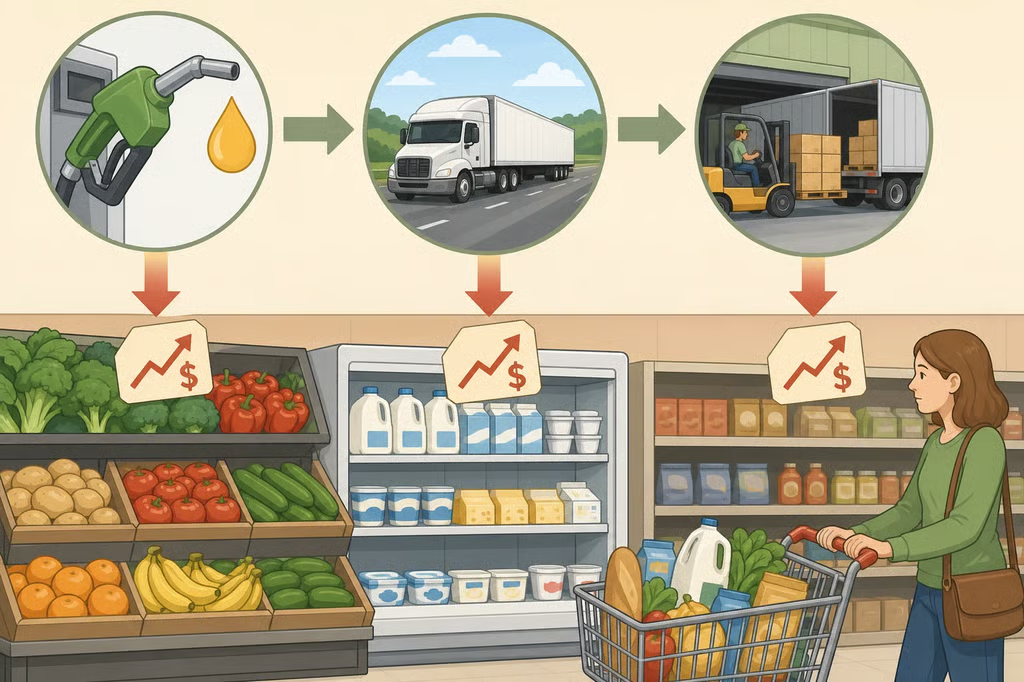
How rising diesel prices affect consumers: Which foods could cost more, and when
If diesel prices remain near record levels, shoppers are more likely to see gradual pressure on fresh and refrigerated foods than an immediate increase across every grocery aisle. That is the practical answer to how rising diesel prices affect consumers: fuel costs move through farms, carriers, processors, and retailers before they reach a grocery receipt, and they do not translate into a matching percentage increase at the register.
The average U.S. diesel price reached $6.29 per gallon this week, up 68% from $3.74 a year earlier, according to EIA data cited this week. Most households do not buy diesel for their own vehicles, but much of the food sold in the United States moves by truck, and those trucks generally use diesel. Fuel can affect a household budget even when the diesel pump is nowhere near the family car.
The effects will not appear evenly or all at once. Consumer food prices were already 2.7% higher year over year in August, before the current diesel increase had fully worked through the supply chain, according to a report published this week. The categories most worth watching are fresh produce, dairy, and meat, particularly when they require refrigerated transportation.
Which foods are most exposed to higher diesel costs?
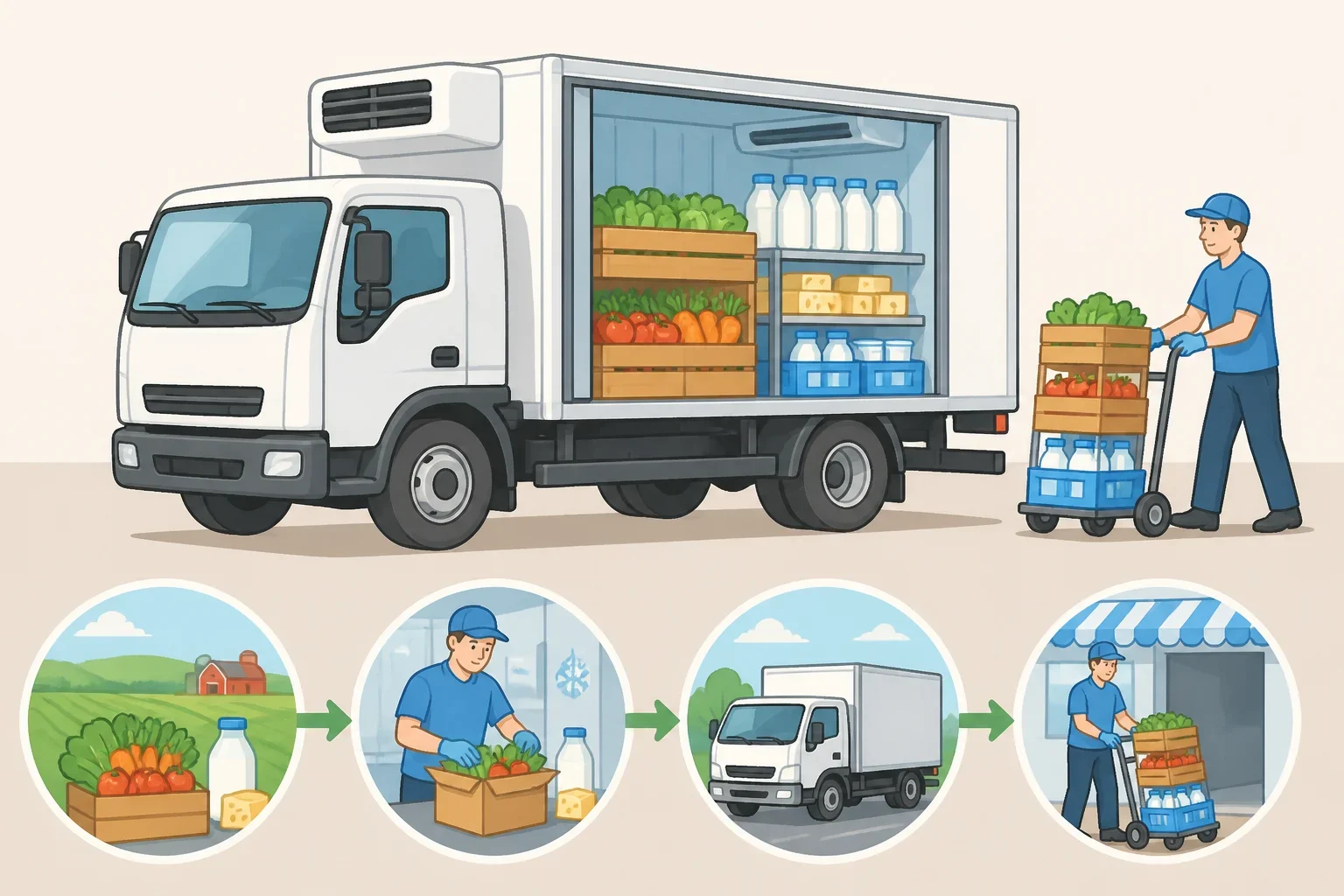
Diesel can affect several links in the food chain. It may raise the cost of harvesting crops and moving them from farms, then add expense when refrigerated trucks carry perishable foods to distribution centers and stores. Michigan State economist David Ortega said in the report that higher diesel costs reach from farm harvesting through freight delivery.
That does not mean every fresh item will become more expensive immediately. It does mean produce, dairy, and meat have a clear reason to face pressure: They often depend on fuel-intensive refrigerated trucking and can have tight delivery windows. A truck carrying apples, milk, or fresh vegetables cannot simply wait for weeks while a retailer looks for a cheaper shipping rate.
Freight data already shows strain in parts of the produce market. Rates for refrigerated trailers moving apples and pears out of Washington State’s Yakima Valley reached a four-year high while the harvest season was only halfway finished, according to DAT Freight & Analytics analyst Dean Croke in the same report. The cost of transporting produce out of California was also up 40% to 120% from the previous year, the report said.
Those figures describe transportation costs, not a guaranteed increase at the supermarket. A grocery price also reflects the farm’s costs, processing, storage, wholesaling, retail expenses, local competition, and the retailer’s pricing decisions. Still, expensive refrigerated freight gives fresh foods one more source of upward pressure.
The farm share of a food’s retail price helps explain why categories can behave differently. Farm share means the portion of the retail price represented by the value farmers receive for the underlying commodity. Since 2010, that share has ranged from 32% to 39% for a basket of 13 fresh fruit products and from 20% to 29% for a basket of 16 fresh vegetables, according to USDA ERS data.
Those ranges suggest that farm-level prices represent a meaningful part of the retail price for some fresh foods. They do not prove that a diesel-related cost will pass through faster or more completely than other costs. Weather, harvest conditions, supply, demand, contracts, and local competition can all change what shoppers see.
For a household, the sensible expectation is not that every fresh item will definitely rise first. Fresh and refrigerated groceries are simply among the more exposed categories, so they deserve closer attention than a shelf-stable product with fewer refrigerated shipping requirements.
Why diesel prices do not pass through dollar for dollar
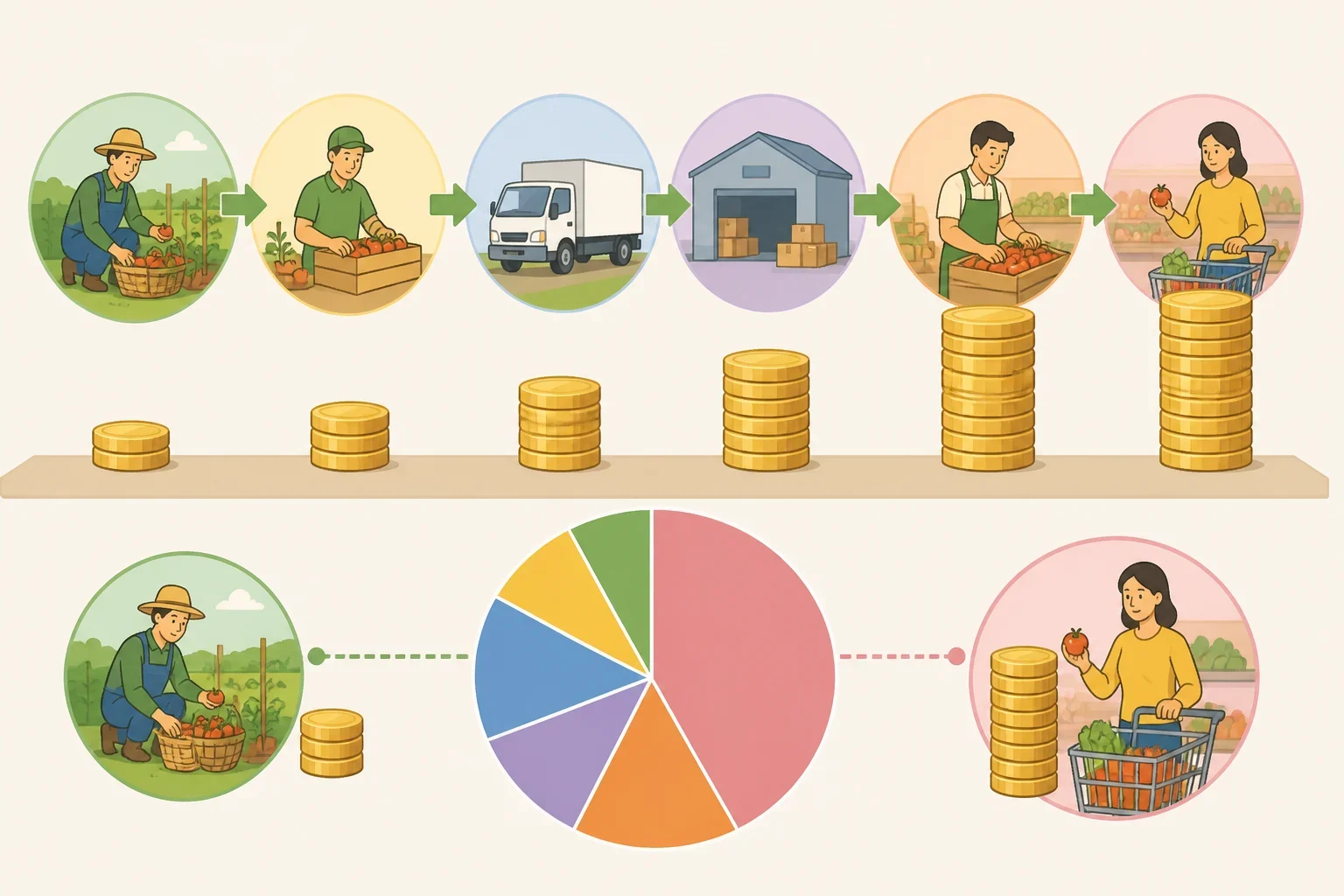
A fuel increase can be large for a farmer or trucking company without becoming an equally large increase in the price of a food item. Fuel is one part of the total cost, and a grocery item is built from several layers.
South Dakota farmer Drew Peterson expects to spend as much as $1,500 per day fueling one combine during this year’s harvest, about twice last year’s cost, according to the September report. That is a substantial farm expense, but it is not the same as adding $1,500 to the price of one crop or grocery category. The expense is spread across production, sales, contracts, and later stages of the supply chain.
Purdue economist Michael Langemeier estimated that farm fuel costs were up $11 per acre for corn and $7 per acre for soybeans compared with the previous year, the report noted. California vegetable grower Wayne Gularte said his fuel costs had risen about 40%, from roughly $5 to $7 per gallon. To reduce expenses, he put older gasoline-powered tractors from the 1950s back into service and parked one of the farm’s diesel pickups, according to the same report.
Those examples show why pressure can begin well before a shopper notices it. A farm may reduce other spending, a carrier may seek a fuel surcharge, a retailer may absorb part of a short-term increase, or a contract may delay when the higher cost appears. Ortega said some freight contracts were locked in at lower prices and had not yet caught up with current fuel surcharges, while retailers could absorb short-term increases.
The USDA’s Food Dollar figures offer useful perspective. In 2024, farms received 11.8 cents of each dollar consumers spent on domestically produced food. The other 88.2 cents represented the combined marketing share, including transportation, processing, storage, wholesaling, and retailing, according to USDA’s Food Dollar findings.
That 88.2 cents is not transportation alone. It covers the activities that turn farm commodities into food a household can buy, which is why a diesel price increase does not automatically produce a matching rise in the grocery price. Think of the supply chain like a household budget with several categories: When one bill rises, the entire budget does not necessarily rise by the same percentage. Someone may absorb the change, reduce another expense, or pass along only part of it.
USDA’s Cheddar example shows how incomplete that pass-through can be. In 2022, the farm value of the milk used to make a pound of Cheddar rose 49 cents, while the average retail price of the cheese rose 32 cents, to $5.76 per pound from $5.44, according to USDA price-spread data. That example does not predict what diesel will do to dairy prices in 2026. It does show why a higher cost at one stage does not necessarily appear dollar for dollar on the shelf.
Timing will vary, too. Some shoppers may see a change when a store’s freight contract or supplier agreement is renewed. Others may see no obvious change in a particular item because a retailer is holding the price steady, a sale is running, or another supplier has lower costs. One shopping trip cannot show whether a national trend is developing.
Why diesel prices are rising
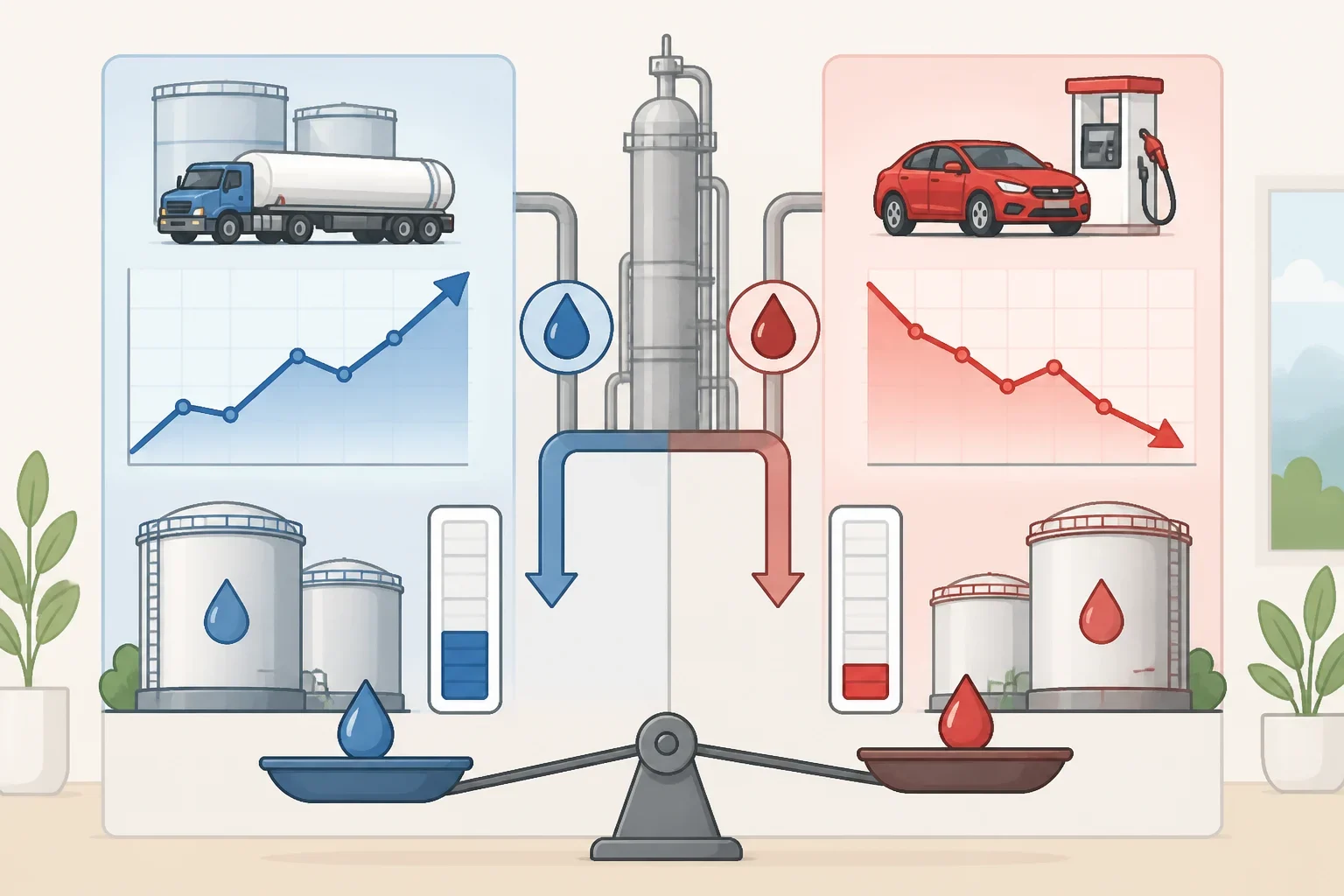
Diesel prices are being pushed by more than one part of the fuel market. The Energy Information Administration says higher crude oil prices and elevated “crack spreads” are contributing to higher pump prices. A crack spread is an indicator of the profitability of refining crude oil into products such as gasoline and diesel. It compares the price of refined fuel with the cost of the crude used to make it, as the EIA explained two weeks ago.
Diesel has faced additional pressure from tighter supplies and refining economics. Since March, the New York Harbor distillate crack spread has averaged 74 cents per gallon more than the gasoline crack spread. In the week ending August 28, U.S. distillate inventories were 14% below the five-year average, compared with a 6% shortfall for gasoline, according to EIA data.
That helps explain why a diesel increase can be especially painful during harvest and produce-shipping seasons. Farmers and carriers cannot simply stop using fuel when the price rises. Peterson said in the report that harvesting still has to happen. The higher expense has to be managed somewhere, whether through reduced spending, higher freight charges, lower margins, or prices negotiated later.
For shoppers, the fuel-market explanation mainly sets expectations. The pressure can continue through several stages, but the technical reasons behind the pump price do not tell anyone exactly which item will rise, by how much, or on what day.
How to watch your grocery budget
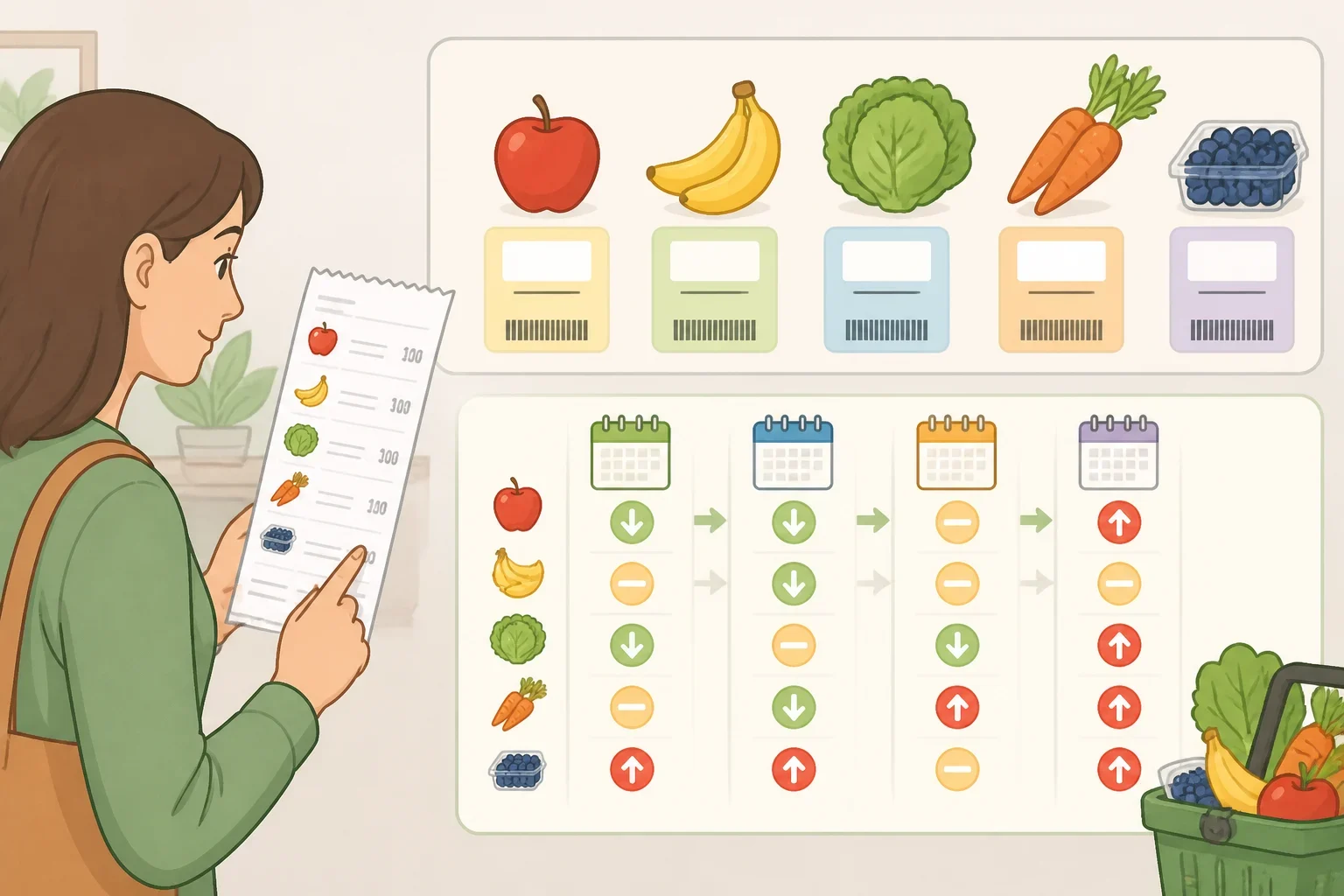
The most useful response is targeted monitoring, not a complete overhaul of the household budget.
Start with unit prices, which show the cost per ounce, pound, or another standard measure. A package may keep the same sticker price while becoming smaller, or a larger package may appear cheaper without offering a better value. Checking the unit price makes those differences easier to spot.
Track the same handful of perishables over several weeks. Write down the unit price for the produce, dairy, and meat items the household buys most often, or save a few receipts. Several weeks of information can reveal whether an item is moving beyond its normal fluctuation. One expensive carton of berries may reflect a seasonal change, a promotion ending, or a local supply issue rather than diesel costs.
Seasonality matters. Fresh produce naturally changes in price as growing regions and harvest windows change. Compare similar items over time, and avoid treating one store, one week, or one unusual purchase as proof of a national trend. The available sources do not establish a sudden, uniform increase across grocery categories.
When a fresh item rises sharply, consider a narrow substitution instead of changing the entire meal plan. Frozen or canned produce can stand in for some fresh ingredients, depending on the recipe and household preference. Sales can also help when several stores carry comparable products. These choices create flexibility around the items showing movement. They are not a reason to stockpile food or abandon fresh groceries.
The clearest plan for the coming months is modest: Keep some budget flexibility for perishables, compare unit prices, and review several weeks of receipts before making a larger adjustment. Higher diesel prices can add pressure to food costs, but the strongest evidence points to a delayed and partial effect, not a matching 68% increase across the grocery cart.
